Support our educational content for free when you purchase through links on our site. Learn more
📖 The Great Gatsby Book Summary by Chapter: A Complete 2026 Guide

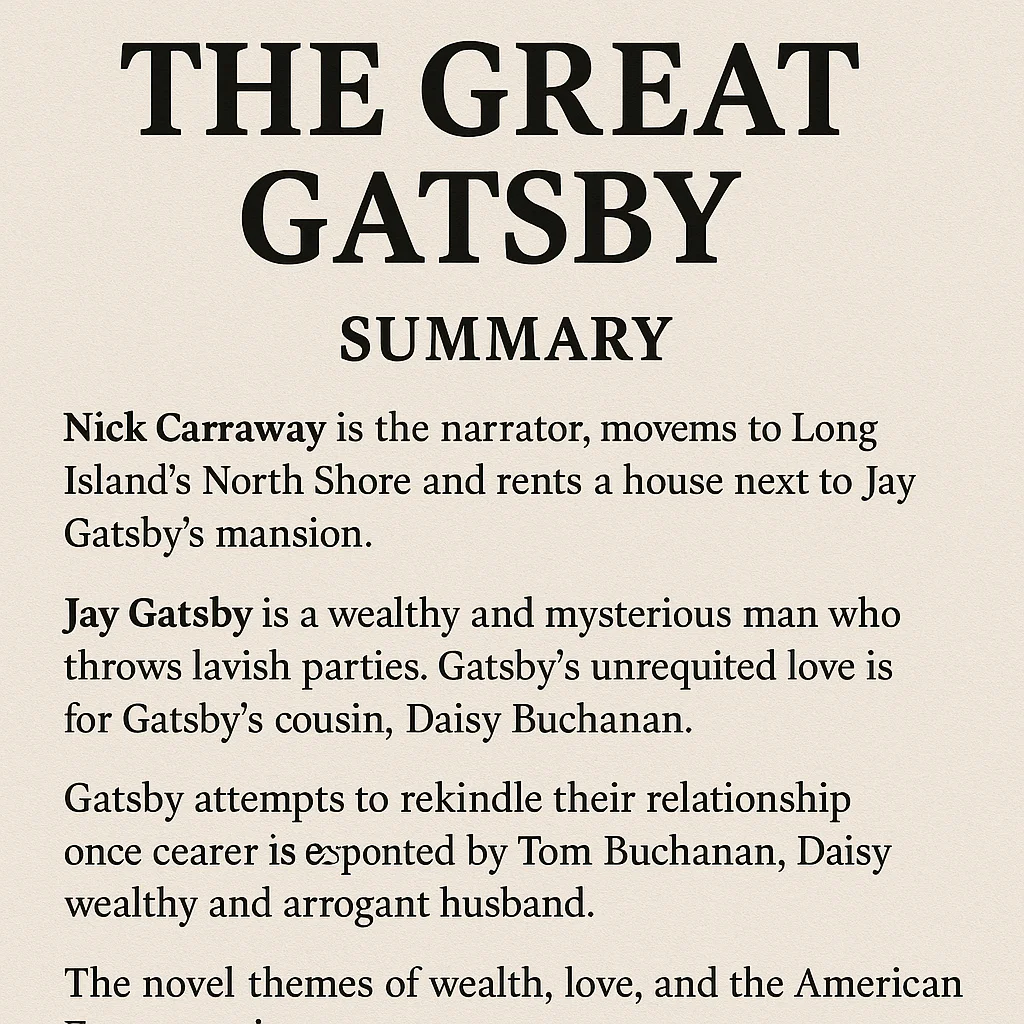
Forget the dry recaps; here is the truth: The Great Gatsby isn’t just a story about a rich man throwing parties, but a tragic disection of how the American Dream crumbles when chased through the lens of the past. Our The Great Gatsby book summary by chapter reveals exactly how F. Scott Fitzgerald builds this masterpiece, from the first glimpse of the green light to the haunting silence of the final funeral.
Did you know the book was a commercial flop when it was first published in 1925, selling fewer than 25,0 copies before Fitzgerald died? It wasn’t until decades later that it was rediscovered and crowned the “Great American Novel.” We believe understanding this journey chapter by chapter is the only way to truly grasp why the story still haunts us today.
Key Takeaways
- The Core Tragedy: The novel follows Jay Gatsby’s futile attempt to rewrite the past and win back Daisy Buchanan, ultimately proving that the American Dream is corrupted by materialism.
- Chapter-by-Chapter Arc: From the glittering parties in Chapter 3 to the fatal car accident in Chapter 7, each section pels back a layer of Gatsby’s fabricated identity.
- Symbolism Matters: The green light, the Valey of Ashes, and the eyes of Doctor T.J. Eckleburg are not just decorations; they are the moral compass of the story.
- Unreliable Narrator: Remember that Nick Caraway is the storyteller, and his bias shapes every event you read about.
Table of Contents
- ⚡️ Quick Tips and Facts
- 📜 Unearthing the Past: The History and Context of The Great Gatsby
- 📖 The Great Gatsby Book Summary by Chapter: A Complete Breakdown
- 1. 🥂 Chapter 1: The Voice of the Valley of Ashes
- 2. 🎉 Chapter 2: The Party in the Ashes
- 3. 🍾 Chapter 3: The Spectacle of Gatsby’s Saturday Night
- 4. 🚗 Chapter 4: The Long Drive and the List of Names
- 5. 🏡 Chapter 5: The Green Light Fades
- 6. 🏨 Chapter 6: The Truth About Jay Gatsby
- 7. ☀️ Chapter 7: The Heat, The Crash, and The End
- 8. ⚰️ Chapter 8: The Last Call for the American Dream
- 9. 🌊 Chapter 9: The Funeral Nobody Came To
- 🔍 Deep Dive: Themes, Symbols, and Character Analysis
- The Green Light: More Than Just a Beacon
- Old Money vs. New Money: The Invisible Wall
- The Eyes of Doctor T.J. Eckleburg: God or Just a Billboard?
- Nick Caraway: The Unreliable Narrator?
- 🧠 Why This 1925 Classic Still Matters Today
- 📚 Recommended Links for Further Reading
- ❓ Frequently Asked Questions (FAQ)
- 🔗 Reference Links
⚡️ Quick Tips and Facts
Before we pour ourselves a glass of 1920s champagne and wade into the glittering, tragic waters of F. Scott Fitzgerald’s masterpiece, let’s hit the highlights. If you’re here for a The Great Gatsby book summary by chapter, you likely want the goods without the fluff, but we believe the context is the secret sauce.
Here is the lowdown on the novel that defined a generation:
- 📅 Publication Date: April 10, 1925.
- 📍 Setting: The summer of 192, split between the fictional West Egg and East Egg on Long Island, and the gritty Valley of Ashes.
- 👤 The Narrator: Nick Caraway, a Yale grad and bond salesman who claims to be “one of the few honest people” he has ever known (a claim we’ll be dissecting later).
- 🏆 The Legacy: Initially a commercial flop, it is now considered the Great American Novel.
- 🎬 Adaptations: From the 1974 Robert Redford classic to the 2013 Baz Luhrmann spectacle, this story has been retold endlessly. You can explore more on our Book-to-Film Adaptations page.
Did you know? Fitzgerald originally titled the book Trimalchio in West Egg before settling on The Great Gatsby. The name “Trimalchio” refers to a character in Petronius’s Satyricon, a nouveau riche man who throws lavish parties to buy respect—a perfect parallel to Jay Gatsby.
If you need a quick overview before diving into the chapter-by-chapter breakdown, check out our dedicated The Great Gatsby Book Summary for a condensed version of the plot.
📜 Unearthing the Past: The History and Context of The Great Gatsby

You can’t understand the Great Gatsby book summary by chapter without understanding the soil in which it grew. The Roaring Twenties, or the “Jazz Age,” was a time of unprecedented economic boom, Prohibition, and a radical shift in social mores.
The Jazz Age and the Lost Generation
F. Scott Fitzgerald coined the term “Jazz Age” to describe the era. It was a time when flappers danced the Charleston, speakeasies served bootleg gin, and the stock market was on a tear. But beneath the glitter lay a deep anxiety. The “Lost Generation,” a term popularized by Gertrude Stein, referred to the generation that came of age during World War I. They were disillusioned by the war’s horrors and skeptical of traditional values.
- Prohibition (1920–193): The ban on alcohol didn’t stop drinking; it just made it illegal and profitable for criminals. This is where Meyer Wolfsheim, Gatsby’s shady business partner, fits in. He represents the criminal underworld that fueled the wealth of the new rich.
- The Great Migration: African Americans moved north in massive numbers, changing the demographic landscape and fueling the nativist anxieties of characters like Tom Buchanan.
The Great Gatsby and the American Dream
At its core, this is a story about the American Dream—the belief that anyone can achieve success through hard work. But Fitzgerald asks a piercing question: What happens when the dream is corrupted by materialism?
“So we beat on, boats against the current, borne back ceaselessly into the past.” — F. Scott Fitzgerald
This quote, often cited in Classic Literature discussions, encapsulates the futility of Gatsby’s quest. He tries to repeat the past, to rewrite history, but the current of time is too strong.
For a deeper dive into the historical context, we recommend reading The Rise of the Colored Empires (a fictional book within the novel) or real historical texts on the 1920s.
📖 The Great Gatsby Book Summary by Chapter: A Complete Breakdown
Now, let’s get to the meat of the matter. We are breaking down The Great Gatsby book summary by chapter with the precision of a surgeon and the enthusiasm of a fan at a Gatsby party. We’ve got nine chapters to cover, and each one pels back another layer of the onion (or the green light).
1. 🥂 Chapter 1: The Voice of the Valley of Ashes
The Setup:
Our narrator, Nick Caraway, moves from the Midwest to West Egg, Long Island, in the summer of 192. He rents a small house next to a gigantic mansion owned by the mysterious Jay Gatsby. Across the bay lies East Egg, home to the “old money” elite.
Key Events:
- Nick visits his cousin Daisy Buchanan and her husband Tom in East Egg.
- Tom is a brute of a man, arrogant and racist, obsessed with a book called The Rise of the Colored Empires.
- Tom receives a phone call from his mistress, Myrtle Wilson, and leaves the table. Daisy follows him, revealing the cracks in their marriage.
- Jordan Baker, a cynical professional golfer, is present. She hints at Tom’s infidelity.
- The Green Light: As Nick returns home, he sees Gatsby standing on his lawn, trembling, reaching out toward a green light at the end of Daisy’s dock.
Why it matters:
This chapter establishes the geography of the novel: West Egg (new money), East Egg (old money), and the Valley of Ashes (the working class). It also introduces the central symbol: the green light, representing Gatsby’s unattainable dream.
Insight from the Book Summary Review™ Team: We often get asked if Nick is reliable. In Chapter 1, he claims to reserve judgment, yet he immediately judges Gatsby’s “gorgeous” personality while admitting he scolded everything Gatsby stood for. He’s a narrator with a bias, which makes the story more intriguing.
2. 🎉 Chapter 2: The Party in the Ashes
The Setup:
Nick and Tom drive to the “Valey of Ashes,” a desolate industrial wasteland between the Eggs and New York City. Here, the eyes of Doctor T.J. Eckleburg stare down from a fading billboard.
Key Events:
- They stop at the garage of George Wilson, who is married to Myrtle, Tom’s mistress.
- Tom takes Nick and Myrtle to an apartment in New York City for a party.
- The party is raucous, filled with loud music, drunken guests, and Myrtle’s changing of dresses (from blue to white to yellow).
- Myrtle becomes increasingly arrogant, mentioning Daisy’s name, which triggers Tom to break her nose.
Why it matters:
This chapter contrasts the glamour of the Eggs with the squalor of the Valley. It highlights the cruelty of the wealthy (Tom) and the desperation of the working class (Myrtle). The eyes of Doctor T.J. Eckleburg serve as a silent witness to the moral decay.
3. 🍾 Chapter 3: The Spectacle of Gatsby’s Saturday Night
The Setup:
Nick receives an invitation to one of Gatsby’s legendary parties. Unlike the chaotic party in Chapter 2, this is a spectacle of excess.
Key Events:
- The party is a whirlwind of jazz, free-flowing alcohol, and strangers who don’t know the host.
- Nick meets Jordan Baker again and hears rumors about Gatsby: he’s a spy, a bootleger, a war hero.
- Nick finally meets Gatsby. He is charming, with a “rare smile” that puts people at ease.
- Gatsby reveals he knows Nick from the war.
- The Climax: Gatsby takes Nick aside to reveal his true identity: James Gatz from North Dakota. He wants to reunite with Daisy.
Why it matters:
This is the first time we see Gatsby as a human, not a myth. We learn his motivation: he is throwing these parties in the hopes that Daisy will wander in. The sheer scale of the party underscores his desperation.
Fun Fact: The video summary we mentioned earlier highlights the visual contrast between the party’s chaos and Gatsby’s stillness. He stands apart, watching, waiting. It’s a poignant image of isolation amidst crowds.
4. 🚗 Chapter 4: The Long Drive and the List of Names
The Setup:
Gatsby takes Nick for a drive to New York City. He tries to legitimize his past.
Key Events:
- Gatsby claims he is the son of wealthy people from the Midwest and was educated at Oxford.
- He shows Nick a photo of himself at Oxford and a medal from Montenegro.
- Gatsby introduces Nick to Meyer Wolfsheim, the man who fixed the 1919 World Series.
- The Lunch: They have lunch with Wolfsheim, who speaks of Gatsby as a man of “fine breeding.”
- The Reveal: Gatsby admits he wants Nick to arrange a meeting with Daisy. He claims he and Daisy were in love five years ago before he went to war.
Why it matters:
Gatsby’s backstory is a patchwork of lies and truths. He is reinventing himself to fit into Daisy’s world. The meeting with Wolfsheim cements his connection to the criminal underworld.
5. 🏡 Chapter 5: The Green Light Fades
The Setup:
Nick arranges for Daisy to come to his house for tea, where Gatsby will “accidentally” drop by.
Key Events:
- Gatsby is nervous, almost sick with anxiety. He brings a massive amount of flowers.
- The reunion is awkward at first, then melts into a tender moment.
- They tour Gatsby’s mansion. Daisy is overwhelmed by the display of wealth.
- The Green Light: Gatsby shows Daisy the green light from his lawn. Nick observes that the “colossal significance” of the light has now vanished. The dream is realized, and the magic is gone.
Why it matters:
This is the turning point. Gatsby has achieved his goal, but the reality of Daisy (a flawed, human woman) cannot match the idealized dream he has built in his mind. The green light loses its power.
6. 🏨 Chapter 6: The Truth About Jay Gatsby
The Setup:
The summer heats up, and the tension between Gatsby and Tom boils over.
Key Events:
- Gatsby’s past is revealed: He was born James Gatz, the son of poor farmers. He reinvented himself after meeting Dan Cody, a wealthy miner.
- Tom Buchanan investigates Gatsby and discovers his criminal connections.
- The Party: A group of “old money” guests (the Klansmen) attend a party at Gatsby’s, but they are rude and leave early.
- The Affair: Daisy and Gatsby are having an affair. Tom is suspicious.
Why it matters:
The illusion of Gatsby’s “old money” status is shattered. Tom knows the truth and is ready to destroy him. The affair is now public knowledge to the characters, even if not to the world.
7. ☀️ Chapter 7: The Heat, The Crash, and The End
The Setup:
The hottest day of the summer. The tension explodes.
Key Events:
- The Plaza Hotel Confrontation: Tom, Daisy, Gatsby, Nick, and Jordan go to the Plaza Hotel. Tom forces Gatsby to admit he is a bootleger.
- The Revelation: Gatsby demands Daisy say she never loved Tom. She can’t do it. She admits she loved them both.
- The Drive Home: Gatsby insists Daisy drive his car back. Daisy is shaken.
- The Accident: Myrtle Wilson, thinking the car is Tom’s (it’s Gatsby’s), runs out into the road. Daisy hits her and keeps driving. Gatsby takes the blame.
- The Aftermath: Tom tells George Wilson that the car belonged to Gatsby.
Why it matters:
This is the climax of the novel. The carelessness of the rich (Daisy) leads to death. Gatsby’s attempt to protect Daisy seals his fate. The green light is now a beacon of tragedy, not hope.
8. ⚰️ Chapter 8: The Last Call for the American Dream
The Setup:
The morning after the accident. Gatsby waits for Daisy to call.
Key Events:
- Gatsby tells Nick the truth about his past with Dan Cody.
- He waits for Daisy, but she and Tom have made up and left for the city.
- George Wilson: Grief-stricken and manipulated by Tom, Wilson tracks Gatsby down.
- The Murder: Wilson shoots Gatsby in his pool, then kills himself.
- The Call: Daisy and Tom leave town without a word to Gatsby.
Why it matters:
Gatsby dies alone, waiting for a call that never comes. The American Dream is dead. The rich retreat into their money, leaving the wreckage behind.
9. 🌊 Chapter 9: The Funeral Nobody Came To
The Setup:
Nick tries to organize Gatsby’s funeral.
Key Events:
- No one comes. The party guests, the “friends,” are nowhere to be found.
- Daisy and Tom: They leave without sending a flower or a message.
- Meyer Wolfsheim: Refuses to come, saying “I can’t get mixed up in this.”
- The Funeral: Only Nick, Gatsby’s father, and a few others attend.
- The Final Reflection: Nick reflects on the “foul dust” that preyed on Gatsby. He decides to move back to the Midwest.
- The Last Words: “So we beat on, boats against the current, borne back ceaselessly into the past.”
Why it matters:
The novel ends with a meditation on the futility of trying to recapture the past. Gatsby’s dream was beautiful, but it was doomed from the start.
🔍 Deep Dive: Themes, Symbols, and Character Analysis
Now that we’ve walked through the chapters, let’s dissect the anatomy of this literary giant. Why does The Great Gatsby still resonate nearly a century later?
The Green Light: More Than Just a Beacon
The green light is the most famous symbol in American literature.
- Chapter 1: It represents hope and the future.
- Chapter 5: It loses its power once Gatsby is reunited with Daisy.
- Chapter 9: It becomes a symbol of the unattainable past.
Book Summary Review™ Insight: We often see readers miss the nuance here. The light isn’t just about Daisy; it’s about the American Dream itself. It’s the promise of a better life that always seems just out of reach.
Old Money vs. New Money: The Invisible Wall
The divide between East Egg (Tom and Daisy) and West Egg (Gatsby) is the central conflict.
- Old Money: Inherited wealth, social status, carelessness. They are “careless people” who smash up things and creatures and then retreat back into their money.
- New Money: Earned wealth, often through crime or business, lacking social refinement. They try to buy their way in but are never accepted.
The Eyes of Doctor T.J. Eckleburg: God or Just a Billboard?
These giant eyes in the Valley of Ashes watch over the characters.
- Interpretation A: They represent God, judging the moral decay of society.
- Interpretation B: They represent the emptiness of the American Dream, a commercialized version of divinity.
- Interpretation C: They are just a billboard, highlighting the spiritual void of the era.
Nick Caraway: The Unreliable Narrator?
Nick claims to be honest, but his narrative is full of contradictions.
- He judges Gatsby while admiring him.
- He criticizes the “foul dust” but attends the parties.
- He is the only one who shows up to the funeral, yet he admits to being “within and without” the events.
🧠 Why This 1925 Classic Still Matters Today
You might wonder, “Why read a book about a guy who died in 1925?” The answer is simple: We are still living in the Roaring Twenties.
- Wealth Inequality: The gap between the ultra-wealthy and the working class is wider than ever.
- The Cult of Personality: Gatsby’s reinvention mirrors our modern obsession with social media personas and “influencer” culture.
- The Illusion of the American Dream: The idea that money can buy happiness and status is as pervasive today as it was in the 1920s.
As we navigate our own era of excess and anxiety, The Great Gatsby serves as a cautionary tale. It reminds us that chasing a dream that is rooted in the past is a recipe for tragedy.
For more on how classic literature reflects modern issues, check out our Book Reviews section.
Conclusion

So, there you have it. The The Great Gatsby book summary by chapter is more than just a plot recap; it’s a journey into the heart of the American soul. We started with the glitz of the parties, moved through the tragedy of the accident, and ended with the silence of the funeral.
The Verdict:
- Positives: Fitzgerald’s prose is lyrical and timeless. The characters are complex and flawed. The symbolism is rich and multi-layered.
- Negatives: The pacing can be slow for some readers, and the characters can be unlikable (which is, of course, the point).
Our Recommendation:
If you haven’t read The Great Gatsby, do it now. It’s a short book, but it packs a punch that lasts a lifetime. Whether you’re a student, a literature lover, or just someone curious about the 1920s, this book is a must-read. And if you’re looking for a visual companion, the video summary we mentioned earlier is a great way to get a quick overview before diving into the text.
Final Thought: Gatsby believed in the green light, the orgastic future that year by year recedes before us. It eluded us then, but that’s no matter—tomorrow we will run faster, stretch out our arms further… And one fine morning— So we beat on, boats against the current, borne back ceaselessly into the past.
📚 Recommended Links for Further Reading
Ready to dive deeper? Here are some resources to enhance your understanding of The Great Gatsby.
- The Great Gatsby (Original Text): Amazon | Barnes & Noble | F. Scott Fitzgerald Official Site
- The Great Gatsby (Audiobook): Audible | Amazon
- The Great Gatsby (Movie 2013): Amazon | Apple TV
- The Great Gatsby (Movie 1974): Amazon | Criterion Collection
❓ Frequently Asked Questions (FAQ)
What is the main theme of each chapter in The Great Gatsby?
Each chapter builds toward the central theme of the coruption of the American Dream.
- Chapters 1-3: Introduce the setting, characters, and the illusion of wealth.
- Chapters 4-6: Reveal the truth behind Gatsby’s past and the fragility of his dream.
- Chapters 7-9: Depict the collapse of the dream and the consequences of carelessness.
Read more about “🌟 The Great Gatsby Book Summary Sparknotes: 7 Secrets You Missed (2026)”
How does the plot of The Great Gatsby progress from chapter to chapter?
The plot follows a classic tragic arc:
- Exposition: Nick arrives in West Egg and meets the characters.
- Rising Action: Gatsby’s parties, the affair with Daisy, and the confrontation with Tom.
- Climax: The accident and the death of Myrtle.
- Falling Action: Gatsby’s wait for Daisy and Wilson’s revenge.
- Resolution: Gatsby’s funeral and Nick’s departure.
What are the key events in Chapter 1 of The Great Gatsby?
- Nick moves to West Egg.
- Nick visits Daisy and Tom in East Egg.
- Tom’s affair with Myrtle is revealed.
- Nick sees Gatsby reaching for the green light.
What happens in the final chapter of The Great Gatsby?
- Nick tries to organize Gatsby’s funeral.
- No one comes except a few strangers and Gatsby’s father.
- Daisy and Tom leave town without a word.
- Nick reflects on the futility of the American Dream.
Read more about “🌟 The Great Gatsby Summary: A Tragic Dream Explained (2026)”
How does the symbolism change throughout the chapters of The Great Gatsby?
- Green Light: Starts as a symbol of hope, becomes a symbol of lost love, and ends as a symbol of the unattainable past.
- Eyes of T.J. Eckleburg: Represent the moral decay and the absence of God.
- Valey of Ashes: Represents the moral and social decay of the working class.
Read more about “🕵️ ♂️ Who Is the Narrator of The Great Gatsby? (2026)”
What is the significance of the green light in each chapter of The Great Gatsby?
- Chapter 1: Symbol of Gatsby’s hope for Daisy.
- Chapter 5: Symbol of the realized dream, which loses its magic.
- Chapter 9: Symbol of the unattainable past and the futility of the American Dream.
Read more about “🌊 The Great Gatsby Setting: 7 Hidden Realities of the Jazz Age (2026)”
How do the characters evolve from the beginning to the end of The Great Gatsby?
- Gatsby: From a mysterious millionaire to a tragic figure who dies alone.
- Daisy: From a charming, innocent woman to a careless, selfish person.
- Tom: From an arrogant, racist man to a manipulative killer.
- Nick: From a naive observer to a disillusioned critic of the East.
Read more about “🌟 The Great Gatsby Book Review: Why This 1925 Masterpiece Still Haunts Us (2026)”
🔗 Reference Links