Support our educational content for free when you purchase through links on our site. Learn more
🌟 The Great Gatsby Book Summary Sparknotes: 7 Secrets You Missed (2026)


Stop scrolling and grab the truth: The Great Gatsby isn’t just a high school reading assignment; it’s a devastating blueprint of how the American Dream curdles into hollow materialism. While you might be hunting for a quick The Great Gatsby book summary Sparknotes to survive a quiz, the real story reveals that no amount of money can buy back the past.
Did you know the book sold only 20,0 copies in its first year, leaving Fitzgerald convinced he was a failure? Today, it sells half a million copies annually, proving that some tragedies are timeless.
We’ve all been there: staring at a green light across a bay, wondering if we can really “repeat the past.” Fitzgerald answers that question with a resounding, heartbreaking no.
Key Takeaways
- The Core Tragedy: Gatsby’s dream is doomed not by bad luck, but by the rigid class barriers of the 1920s that no amount of new money can break.
- The Narrator’s Bias: Remember that Nick Caraway is an unreliable narrator who admires Gatsby while judging everyone else, coloring the entire story.
- Symbolism Matters: The green light, the eyes of Dr. T.J. Eckleburg, and the Valey of Ashes are not just decorations; they are the moral compass of the novel.
- The “Careless” Rich: Tom and Daisy represent the ultimate danger of wealth: the ability to smash things up and retreat into their money without consequence.
Table of Contents
- ⚡️ Quick Tips and Facts
- 📜 The Roaring Twenties Backdrop: Historical Context & Fitzgerald’s Era
- 📖 The Great Gatsby: Introduction to the Jazz Age Classic
- 🗺️ The Great Gatsby: Plot Summary & Chapter-by-Chapter Breakdown
- 1. The Arrival of the Narrator: Nick Caraway’s Perspective
- 2. The Valley of Ashes & The Eyes of Doctor T.J. Eckleburg
- 3. Gatsby’s Lavish Parties: A Glimpse into the Mystery
- 4. The Reunion: Gatsby and Daisy’s First Meeting
- 5. The Plaza Hotel Confrontation: Secrets Unraveled
- 6. The Tragic Climax: Death and Deception
- 7. The Funeral and the Aftermath: A Lonely End
- 🔍 The Great Gatsby: Detailed Summary & Analysis of Key Events
- 🎭 The Great Gatsby: Characters, Motivations, and Relationships
- 💡 The Great Gatsby: Major Themes & The American Dream
- 🗣️ The Great Gatsby: Most Memorable Quotes & Their Meanings
- 🎨 The Great Gatsby: Symbols, Colors, and Hidden Meanings
- 🛠️ The Great Gatsby: Literary Devices & Narrative Techniques
- ❓ The Great Gatsby: Common Questions & SparkNotes-Style Answers
- 🧠 The Great Gatsby: Theme Wheel & Concept Map
- ✍️ Brief Biography of F. Scott Fitzgerald: The Man Behind the Myth
- 🕰️ Historical Context of The Great Gatsby: Prohibition, Flappers, and Wealth
- 📚 Other Books Related to The Great Gatsby: Similar Reads & Comparisons
- 🔑 Key Facts about The Great Gatsby: Trivia You Need to Know
- 🎓 Extra Credit for The Great Gatsby: Deep Dives & Fun Facts
- 🧩 The Great Gatsby: Interactive Quizzes & Study Guides
- 🏁 Conclusion: Why This Book Still Matters Today
- 🔗 Recommended Links: Where to Read & Study More
- ❓ FAQ: Frequently Asked Questions About The Great Gatsby
- 📚 Reference Links: Sources & Further Reading
⚡️ Quick Tips and Facts
Before we dive into the green light and the greenbacks, let’s get the essential facts straight. If you’re here because you need to pass a test tomorrow or just want to sound smart at a cocktail party, this is your cheat sheet.
- 📚 The Book: The Great Gatsby by F. Scott Fitzgerald.
- 📅 Published: April 10, 1925 (a commercial flop initially, now a global phenomenon).
- 🎭 Genre: Tragic Novel / Modernist Literature.
- 📍 Setting: Long Island (West Egg & East Egg) and New York City, Summer of 192.
- 🗣️ Narrator: Nick Caraway (a Yale grad and WWI vet from the Midwest).
- 💰 The “Get Rich” Secret: Gatsby made his fortune through bootleging and shady bond deals with Meyer Wolfsheim.
- 🚗 The Fatal Car: A yellow Rolls-Royce (often mistaken for a “circus wagon” by the poor).
- 👀 The Most Famous Eyes: The eyes of Doctor T.J. Eckleburg on a fading billboard in the Valley of Ashes.
Pro Tip: If you’re looking for a deeper dive into the full narrative arc, check out our comprehensive The Great Gatsby Book Summary for a full breakdown of the plot and themes.
| Feature | Detail |
|---|---|
| Original Sales | ~20,0 copies (1925) |
| Current Sales | ~50,0 copies annually |
| Public Domain | Yes (since Jan 1, 2021 in the US) |
| Key Inspiration | Max Gerlach (bootleger neighbor) & Ginevra King (unrequited love) |
| Fitzgerald’s Earnings | Only $2,0 from the book’s initial run |
📜 The Roaring Twenties Backdrop: Historical Context & Fitzgerald’s Era
You can’t understand Gatsby without understanding the Jazz Age. Fitzgerald didn’t just write about the 1920s; he essentially named it. But why does this matter to you today? Because the hollow pursuit of happiness in the 1920s feels suspiciously like our current social media-fueled obsession with “lifestyle.”
The Aftermath of the Great War
World War I ended in 1918, leaving a generation of young Americans feeling disillusioned. The old values of duty, honor, and sacrifice seemed meaningless in the face of such carnage. Enter the Lost Generation. They wanted to party, drink, and forget.
- Prohibition (1920-193): The ban on alcohol didn’t stop drinking; it just made it illegal and profitable for criminals. This is where Gatsby’s “business” comes in.
- The Rise of Consumerism: For the first time, credit cards (in a primitive form) and installment plans allowed ordinary people to buy luxury goods. Gatsby’s mansion is the ultimate symbol of this new money explosion.
- The Flapper: Women like Jordan Baker and Daisy Buchanan (in her own way) challenged Victorian norms. They smoked, drank, drove cars, and wore shorter skirts.
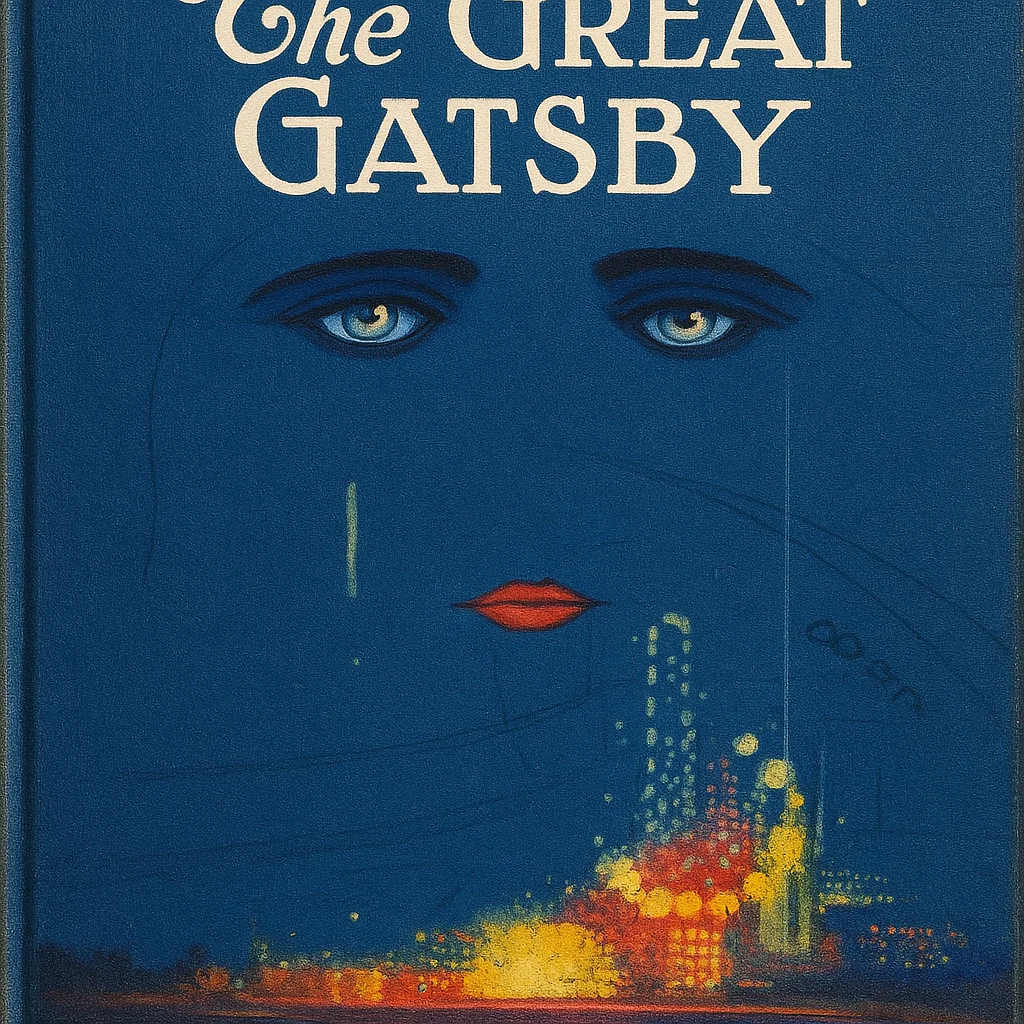
Did you know? The cover art of the first edition, designed by Francis Cugat, was so influential that Fitzgerald reportedly said he couldn’t write the book without seeing it. The disembodied eyes in the sky directly inspired the Eyes of Doctor T.J. Eckleburg.
For more on how historical events shaped this masterpiece, explore our Classic Literature category.
📖 The Great Gatsby: Introduction to the Jazz Age Classic
Imagine moving to a new city, living next door to a mysterious billionaire who throws parties every weekend, but you’ve never seen him there. That’s Nick Caraway’s life in 192.
Nick, our narrator, is a bond salesman from Minnesota. He’s non-judgmental (or so he claims) and moves to West Egg, the “new money” side of Long Island. Across the bay in East Egg lives his cousin, Daisy Buchanan, and her husband, Tom, a brute of old money.
But the real star is the neighbor: Jay Gatsby.
Gatsby is a riddle wrapped in a tuxedo. He throws lavish parties that draw hundreds of strangers, yet he remains an enigma. Rumors fly:
- He killed a man.
- He’s a German spy.
- He went to Oxford.
Why does he do it? Why does he stare at a green light across the water every night?
The Hook: We know Gatsby is obsessed with the past, but can you really repeat the past? Or is that just a fool’s errand? We’ll unravel this mystery in the chapter breakdown.
If you prefer visual storytelling, check out our Book-to-Film Adaptations section to see how the 2013 Baz Luhrmann film captures this vibe.
🗺️ The Great Gatsby: Plot Summary & Chapter-by-Chapter Breakdown
Let’s walk through the story, chapter by chapter. This isn’t just a summary; it’s a roadmap to the tragedy.
1. The Arrival of the Narrator: Nick Caraway’s Perspective
Nick arrives in New York, rents a small house in West Egg, and visits his cousin Daisy and her husband Tom in East Egg. Tom is arrogant, racist, and openly cheating on Daisy with a woman named Myrtle Wilson. Nick meets Jordan Baker, a cynical professional golfer and Daisy’s friend.
2. The Valley of Ashes & The Eyes of Doctor T.J. Eckleburg
Nick travels to the city with Tom and Myrtle. They stop in the Valey of Ashes, a desolate industrial wasteland between the Eggs and the city. Here, they see the giant, faded eyes of Dr. T.J. Eckleburg. This is a crucial symbol of moral decay and a god that watches but does nothing.
3. Gatsby’s Lavish Parties: A Glimpse into the Mystery
Nick finally attends one of Gatsby’s parties. It’s a spectacle of jazz, alcohol, and chaos. Nick meets Gatsby, who is surprisingly young and charming, calling everyone “old sport.” Gatsby reveals he knows Oxford and that he’s waiting for someone. He asks Nick to arrange a meeting with Daisy.
4. The Reunion: Gatsby and Daisy’s First Meeting
Nick invites Daisy to tea. Gatsby arrives, nervous and awkward. The reunion is magical but slightly forced. Gatsby shows Daisy his mansion and his collection of custom shirts, crying as he throws them into the air. He believes he can erase the five years since they last met.
5. The Plaza Hotel Confrontation: Secrets Unraveled
The tension boils over on a scorching hot day. The group goes to the Plaza Hotel. Tom exposes Gatsby’s criminal past and his bootleging ties. Daisy is shaken. Gatsby demands she say she never loved Tom. She can’t. She chooses Tom. The dream cracks.
6. The Tragic Climax: Death and Deception
Driving back to Long Island, Daisy (driving Gatsby’s car) accidentally hits and kills Myrtle Wilson, who had run out into the road thinking it was Tom. Gatsby takes the blame, waiting outside Daisy’s house to protect her. Tom tells Myrtle’s husband, George Wilson, that the car belonged to Gatsby.
7. The Funeral and the Aftermath: A Lonely End
George Wilson, grief-stricken and manipulated by Tom, shoots Gatsby dead in his pool and then kills himself. Nick tries to organize a funeral, but no one shows up. Not the hundreds of partygoers, not Daisy, not even Jordan. Gatsby’s father arrives, proud but heartbroken. Nick, disillusioned, returns to the Midwest.
🔍 The Great Gatsby: Detailed Summary & Analysis of Key Events
Why did Gatsby fail? It wasn’t just bad luck; it was the inevitability of class.
The Illusion of the Green Light
The green light at the end of Daisy’s dock represents Gatsby’s American Dream. It’s the future he wants to reach. But as Nick observes, “Gatsby believed in the green light, the orgastic future that year by year recedes before us.” The light is always just out of reach.
The Valley of Ashes vs. The Eggs
- East Egg: Old money. Inherited wealth. Arogant, careless, and unchangeable. (Tom & Daisy).
- West Egg: New money. Earned wealth (often illegally). Flashy, desperate, and trying too hard. (Gatsby).
- Valey of Ashes: The working class. The victims of the rich. (George & Myrtle).
Gatsby tries to cross from West Egg to East Egg, but the barrier is social, not geographical. No matter how many shirts he buys, he will never be “old money.”
Insight: The tragedy isn’t that Gatsby died; it’s that he died believing his dream was real.
🎭 The Great Gatsby: Characters, Motivations, and Relationships
Let’s meet the players in this tragic opera.
| Character | Role | Motivation | Key Trait |
|---|---|---|---|
| Jay Gatsby | Protagonist | To win back Daisy and recreate the past | Optimistic, delusional, self-made |
| Nick Caraway | Narrator | To understand the East and find truth | Observant, moral, conflicted |
| Daisy Buchanan | Love Interest | To maintain her status and comfort | Cynical, careless, “beautiful little fool” |
| Tom Buchanan | Antagonist | To protect his privilege and power | Arogant, racist, physically imposing |
| Jordan Baker | Love Interest (Nick) | To win and avoid consequences | Dishonest, independent, detached |
| Myrtle Wilson | Victim | To escape poverty and marry Tom | Vain, desperate, trapped |
| George Wilson | Victim | To find justice for Myrtle | Gullible, broken, vengeful |
| Meyer Wolfsheim | Mentor | Profit and power | Criminal, pragmatic, unemotional |
The Dynamic:
- Gatsby & Daisy: Gatsby loves an idealized version of Daisy, not the real woman. Daisy loves the idea of Gatsby’s devotion but ultimately chooses the safety of Tom.
- Tom & Daisy: They are “careless people.” They smash things and retreat into their money. They survive; Gatsby and Myrtle do not.
💡 The Great Gatsby: Major Themes & The American Dream
The Corruption of the American Dream
Originally, the American Dream was about hard work and moral integrity leading to success. In The Great Gatsby, it’s twisted into materialism and ilegality. Gatsby achieves wealth but loses his soul. He can buy a mansion, but he can’t buy acceptance.
The Past Cannot Be Repeated
Gatsby’s fatal flaw is his belief that he can erase time. “Can’t repeat the past? … Why of course you can!” he insists. But time moves forward, and people change. Daisy is not the girl she was five years ago.
Social Class and Inequality
The novel exposes the rigid class structure of America. “Old money” (East Egg) looks down on “new money” (West Egg) with disdain. Gatsby is always an outsider, no matter how much he spends.
Question for you: Is the American Dream dead, or has it just changed? Let’s discuss in the comments (if we had them).
🗣️ The Great Gatsby: Most Memorable Quotes & Their Meanings
Fitzgerald’s prose is poetry. Here are the lines that define the book:
- “So we beat on, boats against the current, borne back ceaselessly into the past.”
Meaning: We struggle to move forward, but our pasts constantly pull us back. It’s the ultimate summary of the human condition. - “I hope she’ll be a fool—that’s the best thing a girl can be in this world, a beautiful little fool.”
Meaning: Daisy’s cynicism. In a world dominated by men, ignorance is bliss for women. - “They were careless people, Tom and Daisy—they smashed up things and creatures and then retreated back into their money or their vast carelessness.”
Meaning: The moral bankruptcy of the wealthy. They destroy lives and face no consequences. - “Can’t repeat the past? … Why of course you can!”
Meaning: Gatsby’s delusion. He thinks love and time are malleable.
🎨 The Great Gatsby: Symbols, Colors, and Hidden Meanings
Fitzgerald uses color like a painter.
- 🟢 Green: The color of money, hope, and the green light. It represents the unattainable dream.
- ⚪ White: The color of Daisy’s dress and house. It symbolizes false purity and innocence. Daisy isn’t innocent; she’s hollow.
- 🟡 Yellow/Gold: The color of money and corruption. Gatsby’s car is yellow (new money), while Tom’s is gold (old money).
- 🔵 Blue: The color of Gatsby’s eyes and the sky. It represents illusion and the vast, unreachable future.
- 👁️ The Eyes of Doctor T.J. Eckleburg: A billboard in the Valley of Ashes. They represent a god that has abandoned the world, watching the moral decay but doing nothing.
🛠️ The Great Gatsby: Literary Devices & Narrative Techniques
How does Fitzgerald make this story so compelling?
- First-Person Narrator (Nick): We only see what Nick sees. He is a reliable narrator in some ways, but his bias toward Gatsby colors the story.
- Flashback: The story jumps back and forth in time to reveal Gatsby’s past (James Gatz) and his relationship with Daisy.
- Symbolism: As discussed above, every object has a deeper meaning.
- Irony: Gatsby throws the biggest parties, but no one knows him. He dies alone, surrounded by people who used him.
- Juxtaposition: The contrast between the rich Eggs and the poor Valley of Ashes highlights the economic disparity.
❓ The Great Gatsby: Common Questions & SparkNotes-Style Answers
Q: Why does Gatsby die?
A: He dies because of a chain of events set in motion by Daisy’s carelessness. He takes the blame for killing Myrtle, and George Wilson, manipulated by Tom, kills him.
Q: Is Gatsby a hero or a villain?
A: He’s an anti-hero. He’s a criminal, but his motivation (love) is pure. He’s tragic because his dream is impossible.
Q: What is the significance of the car?
A: The car is a symbol of power and destruction. It’s the tool Gatsby uses to show off, and the weapon that kills Myrtle.
Q: Why doesn’t Daisy go to Gatsby’s funeral?
A: She and Tom leave town immediately. They are careless and don’t want to face the consequences of their actions.
🧠 The Great Gatsby: Theme Wheel & Concept Map
(Imagine a visual wheel here connecting themes)
- Center: The American Dream
- Spoke 1: Wealth (New vs. Old)
- Spoke 2: Love (Idealized vs. Real)
- Spoke 3: Time (Past vs. Future)
- Spoke 4: Morality (Carelessness vs. Responsibility)
All these spokes lead to the tragic conclusion: The dream is unattainable.
✍️ Brief Biography of F. Scott Fitzgerald: The Man Behind the Myth
F. Scott Fitzgerald lived the life he wrote about, and it killed him.
- Early Life: Born in St. Paul, Minnesota. Attended Princeton but dropped out to join the Army during WWI.
- Zelda Sayre: He fell in love with Zelda, a Southern socialite. She refused to marry him until he was famous and rich.
- The Breakthrough: This Side of Paradise (1920) made him a star. He married Zelda a week later.
- The Jazz Age: They moved to New York and Paris, living a life of parties, drinking, and excess.
- The Decline: Zelda suffered from schizophrenia. Fitzgerald struggled with alcoholism and debt. He wrote short stories to pay the bills.
- Death: He died of a heart attack in 1940, believing he was a failure. His wife Zelda died in a fire eight years later.
Fun Fact: The term “Jazz Age” was coined by Fitzgerald. He was the voice of his generation, even if that generation didn’t listen until after he was gone.
🕰️ Historical Context of The Great Gatsby: Prohibition, Flappers, and Wealth
The 1920s were a time of radical change.
- Prohibition: The 18th Amendment banned alcohol. This led to the rise of speakeasies and organized crime. Gatsby’s parties are essentially illegal speakeasies on a mansion scale.
- The Flapper: Women gained the right to vote (19th Amendment) and began to challenge traditional gender roles. They smoked, drank, and danced the Charleston.
- The Stock Market: The economy was booming, leading to a speculative bubble. This optimism mirrors Gatsby’s belief that he can buy his way into the past.
📚 Other Books Related to The Great Gatsby: Similar Reads & Comparisons
If you loved The Great Gatsby, you might enjoy:
- Tender Is the Night by F. Scott Fitzgerald: His later novel, also about the decline of the American dream and the Lost Generation.
- The Sun Also Rises by Ernest Hemingway: Another masterpiece of the Lost Generation, focusing on expatriates in Europe.
- This Side of Paradise by F. Scott Fitzgerald: Fitzgerald’s debut novel, more autobiographical.
- Great Expectations by Charles Dickens: A similar story of a man reinventing himself for love, though in Victorian England.
🔑 Key Facts about The Great Gatsby: Trivia You Need to Know
- Initial Sales: Sold only 20,0 copies in the first year.
- Public Domain: The book entered the public domain in the US in 2021, making it free to read and adapt.
- Inspiration: Gatsby was based on Max Gerlach, a bootleger who lived near Fitzgerald on Long Island.
- Daisy’s Inspiration: Daisy was based on Ginevra King, a wealthy socialite Fitzgerald loved but couldn’t marry.
- The Cover: The original cover art was so haunting that Fitzgerald said it “haunted” him while writing.
🎓 Extra Credit for The Great Gatsby: Deep Dives & Fun Facts
- The “Old Sport” Catchphrase: Gatsby uses this to sound like an old-money aristocrat, but it’s actually a bit of affectation.
- The Yellow Car: In the 1920s, yellow cars were often associated with taxis or cheap vehicles, not luxury. This highlights Gatsby’s “new money” status.
- The Time Jump: The story takes place over just four months in the summer of 192.
- The Ending: The final line is one of the most famous in American literature.
🧩 The Great Gatsby: Interactive Quizzes & Study Guides
Want to test your knowledge?
- Who is the narrator? (Nick Caraway)
- What color is Gatsby’s car? (Yellow)
- Who kills Gatsby? (George Wilson)
- What is the name of the valley between the Eggs? (Valey of Ashes)
- What does the green light represent? (The American Dream / Daisy)
🏁 Conclusion: Why This Book Still Matters Today
We started by asking if you can repeat the past. The Great Gatsby answers with a resounding no.
Gatsby’s tragedy is not just his death; it’s his delusion. He believed that money could buy happiness, that he could erase time, and that he could win back a love that had already moved on. In a world obsessed with curated lives on social media, where we try to project a perfect image and chase the “green light” of the next like, the next purchase, or the next relationship, Gatsby’s story is more relevant than ever.
The carelessness of the rich, the hollowness of materialism, and the impossibility of recapturing the past are timeless themes. Fitzgerald didn’t just write a story about the 1920s; he wrote a story about the human condition.
Final Recommendation: Whether you’re a student craming for an exam or a lifelong reader rediscovering a classic, The Great Gatsby is a must-read. It’s short, beautiful, and devastating. Don’t just read it; feel it.
🔗 Recommended Links: Where to Read & Study More
Ready to dive in? Here are the best places to get your copy or study guide.
👉 Shop The Great Gatsby on:
- Amazon: The Great Gatsby by F. Scott Fitzgerald
- Barnes & Noble: The Great Gatsby
- Audible: The Great Gatsby Audiobook
Study Guides & Resources:
- SparkNotes: The Great Gatsby Study Guide
- LitCharts: The Great Gatsby Analysis
- CliffsNotes: The Great Gatsby Summary
Related Reads:
- Tender Is the Night: Buy on Amazon
- The Sun Also Rises: Buy on Amazon
❓ FAQ: Frequently Asked Questions About The Great Gatsby

What are the main themes in The Great Gatsby?
The primary themes are the coruption of the American Dream, the rigidity of social class, the impossibility of repeating the past, and the moral decay of the Jazz Age. Fitzgerald critiques the idea that wealth equals happiness.
Who is the narrator of The Great Gatsby?
The narrator is Nick Caraway, a 29-year-old Yale graduate and World War I veteran from the Midwest. He moves to West Egg to work in bonds and becomes Gatsby’s neighbor. His perspective is crucial because he is both an insider and an outsider.
Read more about “🌟 The Great Gatsby Summary: A Tragic Dream Explained (2026)”
What is the significance of the green light in The Great Gatsby?
The green light at the end of Daisy’s dock symbolizes Gatsby’s hope and the American Dream. It represents the future he strives for, which is always just out of reach. As the novel progresses, the light loses its magic, symbolizing the death of his dream.
Read more about “🕵️ ♂️ Who Is the Narrator of The Great Gatsby? (2026)”
How does The Great Gatsby end?
The novel ends in tragedy. Myrtle Wilson is killed by Gatsby’s car (driven by Daisy). George Wilson, believing Gatsby was the driver and Myrtle’s lover, shoots Gatsby dead in his pool and then kills himself. Gatsby’s funeral is sparsely attended, and Nick returns to the Midwest, disillusioned.
Read more about “🤫 What Happens in the Book Verity? (2026 Spoilers)”
What is the symbolism of the eyes of Doctor T.J. Eckleburg?
The eyes on the billboard in the Valley of Ashes symbolize a god that watches but does nothing. They represent the moral decay of society and the loss of spiritual values in the pursuit of wealth. They are a silent witness to the tragedy.
Why is The Great Gatsby considered a classic American novel?
It captures the essence of the American Dream and its corruption. It explores themes of wealth, class, and love that are universal and timeless. Fitzgerald’s prose is considered some of the best in American literature, and the novel’s critique of materialism remains relevant today.
Read more about “🌟 The Great Gatsby Book Review: Why This 1925 Masterpiece Still Haunts Us (2026)”
What are the major characters in The Great Gatsby and their roles?
- Jay Gatsby: The protagonist, a self-made millionaire obsessed with the past.
- Nick Caraway: The narrator and observer.
- Daisy Buchanan: Gatsby’s love interest, representing the unattainable dream.
- Tom Buchanan: Daisy’s husband, representing old money and arrogance.
- Myrtle Wilson: Tom’s mistress, representing the working class.
- George Wilson: Myrtle’s husband, the tragic victim.
- Jordan Baker: Nick’s love interest, a cynical golfer.
Read more about “📖 The Outsiders Book Summary: A Timeless Tale of Greasers & Socs (2026)”
📚 Reference Links: Sources & Further Reading
- Wikipedia: The Great Gatsby
- F. Scott Fitzgerald Estate: Official Website
- Penguin Classics: The Great Gatsby Edition
- Library of Congress: F. Scott Fitzgerald Collection
- Britannica: F. Scott Fitzgerald Biography