Support our educational content for free when you purchase through links on our site. Learn more
The Outsiders Summary Chapter 1: What Changes? 📚

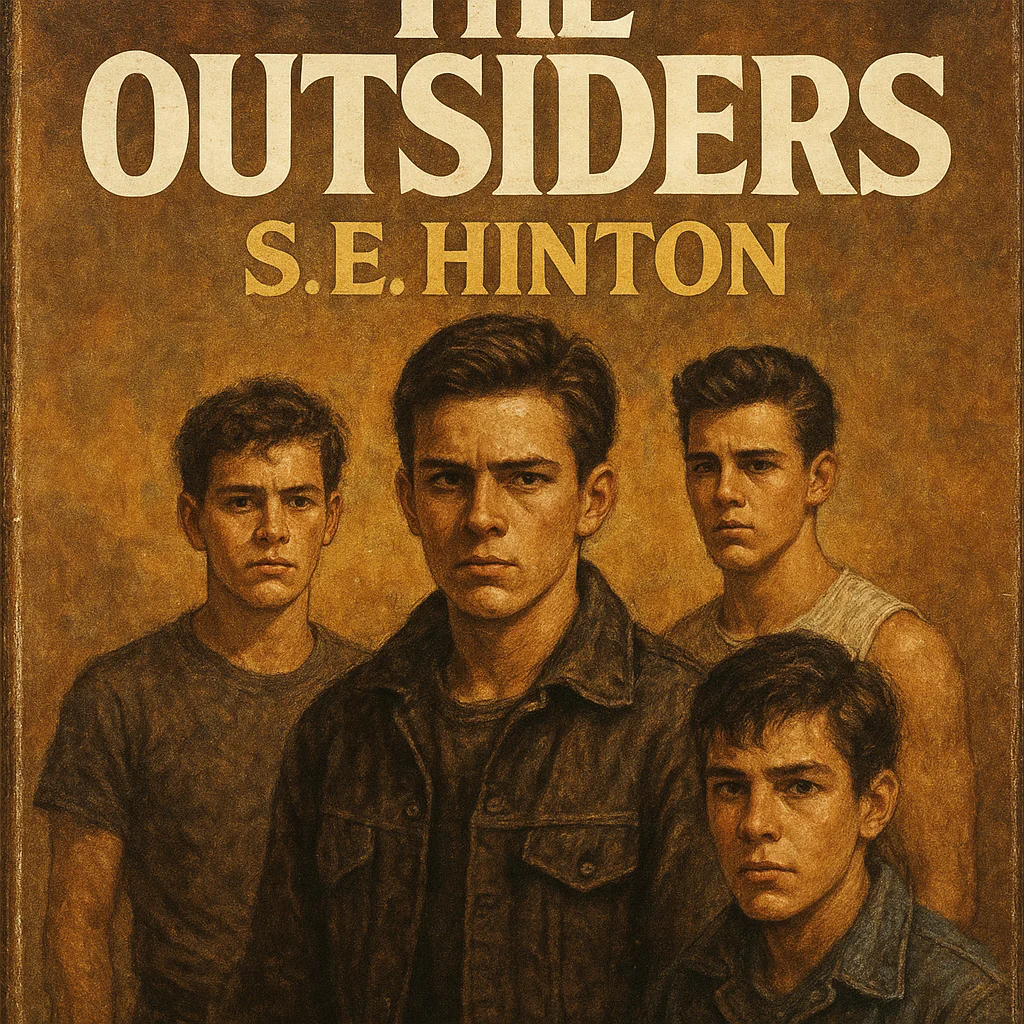
The Outsiders summary chapter 1 follows Ponyboy from a frightening Soc attack to a conversation that complicates his view of the rival gang. S. E. Hinton’s opening chapter introduces the Greasers, the Socs, and the Curtis brothers while hinting that people are more than the labels pinned on them.
Ponyboy starts out thinking he understands the divide: Greasers are poor, Socs are rich, and the two sides clash. Then he meets Cherry Valance at the drive-in. Her perspective doesn’t erase the inequality, but it makes the conflict—and Ponyboy’s assumptions—less simple.
Key Takeaways
- Ponyboy Curtis narrates Chapter 1, introducing himself as a thoughtful fourteen-year-old Greaser.
- Socs attack Ponyboy while he’s walking home alone; his brothers and friends come to his rescue.
- Darry and Sodapop reveal the Curtis family’s mix of responsibility, affection, and tension.
- Cherry challenges Ponyboy’s assumptions and helps introduce theme of seeing beyond stereotypes.
- Class, belonging, violence, family, and empathy are all established in the opening chapter.
Table of Contents
- ⚡️ Quick Tips and Facts: The Outsiders Chapter 1
- 📚 About The Outsiders and Its Opening Chapter
- The author, setting, and publication background
- Where Chapter 1 fits in the novel
- 📝 The Outsiders Chapter 1 Summary
- Ponyboy introduces himself and the greasers
- The Socs attack Ponyboy
- Ponyboy describes his brothers and friends
- The greasers meet Cherry and Marcia at the drive-in
- Cherry challenges Ponyboy’s view of the Socs
- The chapter’s closing conversation with Two-Bit
- 👥 Chapter 1 Characters: Who’s Who in the Greaser–Soc Conflict
- Ponyboy Curtis
- Darry and Sodapop Curtis
- Johnny Cade and Two-Bit Mathews
- Dallas Winston
- Cherry Valance and Marcia
- 🔍 Chapter 1 Analysis: Point of View, Conflict, and Foreshadowing
- Ponyboy’s first-person narration
- The greasers versus the Socs
- How Cherry complicates the class divide
- Foreshadowing and dramatic tension
- 💡 Major Themes Introduced in Chapter 1
- Social class and economic inequality
- Identity, reputation, and belonging
- Family, loyalty, and vulnerability
- Seeing people beyond stereotypes
- 🗣️ Key Quotes and What They Reveal
- 📖 Important Vocabulary and Greaser Slang
- 🎓 Chapter 1 Study Guide and Discussion Questions
- Comprehension questions
- Deper analysis questions
- Quick answers for class discussion
- ❌ Common Misreadings of Chapter 1
- 🔗 Recommended Links
- ❓ FAQ
- What happens in Chapter 1 of The Outsiders?
- Who narrates Chapter 1?
- Why do the Socs attack Ponyboy?
- Where does Ponyboy meet Cherry and Marcia?
- What does Chapter 1 reveal about the greasers and Socs?
- How does Chapter 1 foreshadow later events?
- ✅ Conclusion
- 🔎 Reference Links
⚡️ Quick Tips and Facts: The Outsiders Chapter 1
For the novel’s broader plot and character arcs, start with our The Outsiders book summary; this guide focuses on what Chapter 1 establishes—and why the opening is more than just a setup for a rumble.
| Quick fact | Chapter 1 detail |
|---|---|
| Author | S. E. Hinton |
| Narrator | Ponyboy Curtis, a thoughtful fourteen-year-old Greaser |
| Main setting | An unnamed Oklahoma city, divided between the poorer East Side and wealthier West Side |
| Opening incident | Ponyboy is jumped by a group of Socs while walking home from a movie |
| Important new perspective | Cherry Valance helps Ponyboy see that people on opposite sides of the class divide may share feelings |
| Central early question | Are Greasers and Socs really as different as their reputations suggest? |
Spoiler note: This section covers Chapter 1, with later sections discussing the chapter’s hints about the larger story. The novel was written by Hinton while she was a teenager; the Encyclopaedia Britannica biography provides context on the author and her breakthrough novel.
📚 About The Outsiders and Its Opening Chapter
The author, setting, and publication background
S. E. Hinton’s The Outsiders is a coming-of-age novel about adolescent identity, loyalty, class, and violence. Its young narrator gives the story an immediate, personal voice: Ponyboy doesn’t sound like a distant lecturer explaining teenage life. He sounds like a teenager trying to make sense of it while it happens.
The novel is commonly associated with Tulsa, Oklahoma, where Hinton grew up, though the story’s city is not named in the text. The unnamed setting gives the rivalry a local, everyday quality: this could be a neighborhood split by money and reputation in many American towns. For more titles with lasting cultural impact, browse our Classic Literature collection.
Where Chapter 1 fits in the novel
Chapter 1 introduces the Curtis brothers, the Greaser gang, and the conflict with the Socs. It also establishes the novel’s first major tension: Ponyboy belongs to a group outsiders judge as rough, but he is observant, sensitive, and drawn to books, movies, and beauty.
The first chapter’s basic sequence is straightforward:
- Ponyboy leaves the movie theater alone.
- Socs attack him on his walk home.
- His brothers and fellow Greasers come to his rescue.
- Ponyboy explains the social divide and introduces the gang.
- At the drive-in, he meets Cherry and Marcia, and Cherry pushes back against his assumptions.
One detail can trip up readers: the meeting with Cherry and Marcia takes place at the drive-in near the end of Chapter 1. Some chapter guides and study materials summarize events across chapter boundaries, so check the novel’s chapter breaks when comparing summaries. Our Book Summaries and Book Reviews offer more reading guides and literary discussion.
📝 The Outsiders Chapter 1 Summary
Ponyboy introduces himself and the greasers
Ponyboy Curtis opens with an ordinary pleasure: leaving a Paul Newman movie. He likes films, books, and thinking about the world around him. Those interests help distinguish him from the tough image attached to Greasers, though Ponyboy is still part of the gang and recognizes its rules.
He describes the Greasers as East Side boys who generally have less money than the West Side Socs. The group is recognizable by its long, greased hair and working-class style. But Ponyboy’s account is not a neat “good kids versus bad kids” chart. He admits that Greasers can steal and fight, while Socs can use their money and social standing to cause trouble with fewer consequences.
The Socs attack Ponyboy
Walking home alone, Ponyboy is followed by Socs in a car. They surround him, threaten him, and beat him. One of them holds a knife to him. Ponyboy shouts for help, and his brothers and the gang arrive in time to drive the attackers away.
The attack is frightening partly because it is not new to the gang. Ponyboy connects it to Johnny Cade’s earlier beating by Socs, which left Johnny deeply shaken. Chapter 1 therefore introduces violence not as an exciting badge of toughness, but as something that can make a person feel unsafe long after the fight ends.
Ponyboy describes his brothers and friends
After the attack, Ponyboy introduces the people who make up his closest circle:
| Character | Relationship to Ponyboy | What Chapter 1 shows |
|---|---|---|
| Darry Curtis | Oldest brother and legal guardian | Responsible, hardworking, stern, and often hard for Ponyboy to read |
| Sodapop Curtis | Middle brother | Warm, easygoing, and emotionally close to Ponyboy |
| Johnny Cade | Close friend in the gang | Quiet and vulnerable after being badly beaten |
| Dallas “Dally” Winston | Gang member | Tough, rebellious, and experienced with trouble |
| Two-Bit Mathews | Gang member | A joker with a sharp tongue and a mischievous streak |
| Steve Randle | Soda’s friend and coworker | Confident around cars and dismissive of Ponyboy’s youth |
Ponyboy’s parents have died, leaving Dary responsible for keeping the family together. This adds pressure to an already complicated relationship: Dary has to act like a parent, while Ponyboy still wants the freedom and understanding he expects from a brother.
The greasers meet Cherry and Marcia at the drive-in
Later, Ponyboy, Johnny, and Dally go to the Nightly Double drive-in, where they meet Cherry Valance and Marcia, two Soc girls. Dally acts provocatively toward them. Johnny, normally shy, tells Dally to stop, and Ponyboy finds himself talking with Cherry.
Their conversation gives Ponyboy a chance to see a Soc as a person rather than a uniform, car, or enemy. Cherry is frank, perceptive, and willing to challenge the way Ponyboy talks about both groups.
Cherry challenges Ponyboy’s view of the Socs
Cherry does not erase the differences between the groups. She acknowledges the tension and danger, but also complicates Ponyboy’s belief that Socs have easy lives simply because they are wealthy. Her perspective prepares the reader for a key idea in the novel: people can face different kinds of hardship without experiencing it in identical ways.
That does not make the class divide imaginary. Greasers still have fewer resources and less protection from social judgment. But Cherry’s conversation suggests that stereotypes are too small to explain an entire person. The question Chapter 1 leaves hanging is whether Ponyboy will keep seeing individuals—or retreat to the safety of group labels.
The chapter’s closing conversation with Two-Bit
After the drive-in encounter, Two-Bit joins the group. The chapter closes on the Curtis family’s strained but affectionate dynamics: Dary worries about Ponyboy, Ponyboy resents being treated like a child, and Soda tries to keep peace between them.
Ponyboy’s final reflection reveals how uncertain he is about Dary’s feelings. He can tell himself one explanation, then doubt it. That private uncertainty is a quiet counterpoint to the public violence of the opening: the threat outside the family is obvious; the emotional distance inside it is harder for Ponyboy to interpret.
👥 Chapter 1 Characters: Who’s Who in the Greaser–Soc Conflict
Ponyboy Curtis
Ponyboy is the narrator and the youngest Curtis brother. He is a Greaser, but his interests in reading, movies, and observation make him feel different from the tougher image people expect. His first-person narration gives the chapter its strengths and limits: we feel his fear and frustration directly, while also recognizing that his understanding of the Socs is still developing.
Dary and Sodapop Curtis
Darry is twenty and has taken on the practical responsibilities of raising Ponyboy and Soda after their parents’ deaths. His strictness can feel cold to Ponyboy, but the chapter also shows the burdens behind it: work, bills, and the fear that the brothers could be separated if things go badly.
Sodapop is the emotional bridge between Dary and Ponyboy. He understands Ponyboy’s feelings more readily and tries to soften the household’s rough edges. In Chapter 1, he is not merely the “nice brother”; he is the person helping the family stay connected.
Johnny Cade and Two-Bit Mathews
Johnny Cade is small, quiet, and badly affected by a previous attack. The gang treats him with particular tenderness, and his past helps explain why the opening assault feels like a genuine threat rather than a routine scrap.
Two-Bit Mathews brings humor and energy to the group. His jokes help define the gang’s social life, but the humor also sits beside the story’s harsher realities. The Greasers can be funny and loyal without being harmless.
Dallas Winston
Dallas, often called Dally, is presented as especially tough and experienced with trouble. He is bold enough to hassle Cherry and Marcia, which puts him in contrast with Johnny, who tells him to back off. Ponyboy respects Dally’s toughness but does not pretend to like everything about him.
That distinction matters: the novel’s narrator can admire someone’s survival skills while criticizing his behavior. Respect is not the same as approval.
Cherry Valance and Marcia
Cherry and Marcia are Socs, but the chapter gives Cherry the deeper role. She speaks with Ponyboy across the social divide and reveals that the labels “Greaser” and “Soc” cannot tell the whole story. Marcia is part of the encounter too, though Cherry drives much of the conversation that changes Ponyboy’s perspective.
🔍 Chapter 1 Analysis: Point of View, Conflict, and Foreshadowing
Ponyboy’s first-person narration
Because Ponyboy narrates in the first person, readers experience events through his perceptions. We learn what he notices—hair, cars, clothes, faces, and small changes in people’s tone—and how quickly he forms or revises judgments.
This perspective has two benefits:
- Emotional closeness: Ponyboy’s fear during the attack and confusion about Dary are immediate.
- A built-in blind spot: Ponyboy is fourteen, so he does not always understand the pressures affecting the adults or older teens around him.
A strong reading keeps both in view. Ponyboy is perceptive, but he is not an all-knowing narrator.
The greasers versus the Socs
The conflict is economic and social as well as personal. Greasers are identified with the East Side and limited money; Socs have greater wealth and status. The groups also carry opposing reputations, which can make violence seem expected before anyone has spoken.
| Feature | Greasers | Socs |
|---|---|---|
| Social position | Working-class and less financially secure | Wealthier and more socially privileged |
| Common image | Rough, rebellious, “hood” | Polished, popular, respectable |
| Ponyboy’s early view | His own group, with its flaws and loyalties | A hostile group with money and power |
| Chapter 1 complication | Some Greasers hurt others or break the law | Some Socs are more than their reputation suggests |
The novel does not claim that both groups have identical experiences. Rather, Chapter 1 begins asking whether group identity should be mistaken for individual character.
How Cherry complicates the class divide
Cherry’s conversation matters because she is not introduced as a distant symbol of wealth. She is a person speaking directly with Ponyboy. She can acknowledge tension without agreeing that every Soc is cruel or every Greaser is noble.
This shifts the story’s question from “Which side is right?” to something more useful: What happens when people actually listen to one another? The answer is not instant peace. It is a more complicated understanding.
Foreshadowing and dramatic tension
Chapter 1 plants several threads that matter later:
- The Socs’ attack foreshadows how quickly group rivalry can turn physical.
- Johnny’s fear points to the lasting emotional impact of violence.
- Dary and Ponyboy’s misunderstanding hints at future conflict inside the Curtis home.
- Cherry’s conversation introduces the possibility of empathy across class lines.
- The gang’s loyalty raises a question the novel will keep testing: When does protecting your people help them, and when does it pull them deeper into danger?
💡 Major Themes Introduced in Chapter 1
Social class and economic inequality
The East Side–West Side contrast makes economic inequality visible in the characters’ daily lives. Money affects status, opportunities, and how others interpret behavior. Ponyboy knows the Socs have advantages his family does not, but Cherry’s presence warns him not to confuse financial privilege with emotional simplicity.
Identity, reputation, and belonging
A Greaser’s hair and clothes can make him recognizable before he speaks. The gang offers belonging, but it also brings a label that outsiders use to judge its members. Ponyboy both values the group and feels unlike its toughest members.
Family, loyalty, and vulnerability
The gang functions as a community for boys who need support, especially Johnny. At the same time, Ponyboy’s home life shows that biological family can offer love in difficult, imperfect forms. The tension between Dary’s responsibility and Ponyboy’s need for reassurance makes family loyalty complicated, not sentimental.
Seeing people beyond stereotypes
Cherry’s conversation with Ponyboy introduces the novel’s most important challenge to easy categories. Seeing beyond a stereotype does not mean ignoring injustice or pretending the groups have equal power. It means judging people more carefully than their clothes, address, or friends allow.
🗣️ Key Quotes and What They Reveal
“When I stepped out into the bright sunlight from the darkness of the movie house, I had only two things on my mind: Paul Newman and a ride home.”
The opening establishes Ponyboy’s conversational voice and starts with an everyday thought before danger interrupts it. The shift from the movie theater to the street mirrors the chapter’s movement from private reflection to public violence.
“I lie to myself all the time. But I never believe me.”
Ponyboy’s closing thought captures his difficulty understanding his feelings about Dary. He tries to explain their relationship to himself, but the explanation does not fully convince him.
“Things are rough all over.”
Cherry’s point challenges the idea that hardship belongs to only one side. It does not mean a rich Soc and a poor Greaser face the same conditions; it means pain cannot be measured by appearance alone.
Edition note: Page numbers vary by publisher and format, so locate these passages by chapter rather than relying on a page reference. For context on the novel’s place in young adult literature, see the Britannica overview of S. E. Hinton.
📖 Important Vocabulary and Greaser Slang
| Term | Meaning in the novel’s context |
|---|---|
| Greaser | A working-class youth associated with the East Side gang and a distinctive style |
| Soc | Short for “Social,” a wealthier West Side teenager |
| Jumped | Attacked by a group |
| Hood | A dismissive label for a delinquent or rough young person |
| Tough / tuff | “Tough” can mean physically hard or rough; “tuff” is slang praise for something cool or impressive |
Slang helps create the story’s period voice, but it also shows how language sorts people. A label can describe a group—or flatten its members into a stereotype.
🎓 Chapter 1 Study Guide and Discussion Questions
Comprehension questions
- Where is Ponyboy coming from when the story opens?
- What happens to him on the way home?
- Who comes to help after he calls out?
- How does Ponyboy describe the difference between Greasers and Socs?
- Where do Ponyboy, Johnny, and Dally meet Cherry and Marcia?
- How does Cherry’s conversation affect Ponyboy’s view of the Socs?
Deper analysis questions
-
Why does Hinton begin with Ponyboy alone?
His isolation makes the attack feel immediate and introduces the danger of moving through a city divided by group identity. -
Is Ponyboy a reliable narrator?
He is honest about his feelings and his group’s flaws, but his age and personal experiences shape what he understands. -
What does Dary’s strictness mean to Ponyboy?
Ponyboy experiences it as rejection, while the chapter also suggests that Dary is carrying adult responsibilities under pressure. -
Does Cherry prove the Greasers and Socs are the same?
No. She challenges simple stereotypes, but the economic and social differences remain real.
Quick answers for class discussion
- Main conflict: Greasers and Socs are divided by class, reputation, and recurring violence.
- Narrator: Ponyboy Curtis.
- Key turning point: Ponyboy’s conversation with Cherry introduces a perspective beyond gang labels.
- Main family tension: Ponyboy doubts Dary’s affection even as Dary works to protect and support him.
❌ Common Misreadings of Chapter 1
-
Misreading: The chapter says Greasers are good and Socs are bad.
Better reading: Ponyboy has strong feelings about the Socs, but the chapter also acknowledges wrongdoing among Greasers and introduces Cherry as an individual rather than a stereotype. -
Misreading: Cherry’s comment means the two groups have equal lives.
Better reading: Emotional hardship can cross class lines, while financial privilege and social power still make a difference. -
Misreading: Dary is simply cruel to Ponyboy.
Better reading: Ponyboy experiences Dary’s strictness as hurtful; the chapter also shows Dary’s heavy responsibilities and concern for his brothers. -
Misreading: The drive-in meeting belongs to Chapter 2.
Better reading: In the novel’s standard chapter division, Ponyboy meets Cherry and Marcia at the drive-in in Chapter 1. Some online study resources summarize events in broader blocks, so use the book’s chapter headings to resolve discrepancies. -
Misreading: CliffsNotes’ inaccessible page provides a competing version of the chapter.
Better reading: A security block is not evidence of disagreement about the plot. Since the page content is unavailable, it cannot be responsibly quoted or used to verify chapter details. Compare accessible summaries with the novel itself instead.
🔗 Recommended Links
For the most reliable reading experience, use the novel as your primary source and treat summaries as study aids—not substitutes for Ponyboy’s voice.
- Explore more Book Summaries for chapter-by-chapter reading guides.
- Browse Classic Literature for more enduring novels.
- See our Book Reviews for reading recommendations and analysis.
- Find screen adaptations in Book-to-Film Adaptations.
- Compare this chapter’s events with the Scribd chapter-events document, keeping in mind that it covers Chapters 1–4 and is a secondary study aid.
❓ FAQ

What happens in Chapter 1 of The Outsiders?
Ponyboy leaves a movie theater alone, is attacked by Socs, and is rescued by his brothers and fellow Greasers. He explains the rivalry between the groups, introduces his friends and family, and later meets Cherry and Marcia at the drive-in. Cherry’s conversation complicates Ponyboy’s assumptions about the Socs.
Read more about “What Is the Story Behind *The Outsiders*? 📚”
Who are the Greasers and Socs in The Outsiders Chapter 1?
The Greasers are working-class East Side teenagers, including Ponyboy and his gang. The Socs, short for “Socials,” are wealthier West Side teens. The labels describe social groups and reputations, but Chapter 1 begins showing that neither group can be understood through stereotypes alone.
Read more about “*The Outsiders* Chapter 15 Summary: Johnny’s Goodbye 💔”
How does Ponyboy describe himself in Chapter 1?
Ponyboy presents himself as a fourteen-year-old Greaser who likes movies, books, and observing people. He is proud of his brothers and gang but also feels more reflective and sensitive than the tough image associated with his group.
Why is Ponyboy walking home alone in The Outsiders?
He has been to a movie theater by himself and is walking home when the Socs spot him. The attack demonstrates the risks of moving alone in a neighborhood marked by gang rivalry.
Read more about “🌅 The Outsiders Book Chapter 1: A Complete Breakdown (2026)”
Who attacks Ponyboy in Chapter 1 of The Outsiders?
A group of Socs in a car attacks him. They surround and beat him, and one threatens him with a knife. Ponyboy’s brothers and the gang arrive after he calls for help.
Who are Ponyboy’s brothers in The Outsiders?
Ponyboy’s brothers are Darry and Sodapop. Dary is the oldest and has taken responsibility for raising his younger brothers after their parents die. Soda is closer to Ponyboy emotionally and often tries to ease tension between him and Dary.
What themes are introduced in Chapter 1 of The Outsiders?
Chapter 1 introduces class division, identity, belonging, violence, family responsibility, and empathy. Cherry’s conversation with Ponyboy is especially important because it encourages readers to look beyond group labels without pretending social inequality does not exist.
Read more about “📖 Short Summary of The Outsiders Book: The Ultimate Guide (2026)”
What is the difference between a Greaser and a Soc?
The most obvious difference is social class: Greasers are poorer and associated with the East Side, while Socs are wealthier and associated with the West Side. The groups also have different reputations, styles, and access to social power, although the chapter challenges readers to see individual people beyond those categories.
Does Chapter 1 of The Outsiders end at the drive-in?
No. The drive-in scene occurs near the end of Chapter 1, but the chapter also includes the return home and the Curtis brothers’ tense family dynamic. Checking the printed chapter break helps distinguish the novel’s events from study guides that summarize multiple chapters together.