Support our educational content for free when you purchase through links on our site. Learn more
🌟 The Great Gatsby Summary: A Tragic Dream Explained (2026)

Ever wondered why a book that barely sold 20,0 copies in 1925 is now considered the “Great American Novel”? At Book Summary Review™, we’ve spent countless hours dissecting F. Scott Fitzgerald’s masterpiece, and the answer lies not just in the plot, but in the haunting question: Can you really repeat the past?
In this comprehensive guide, we unravel the glittering yet tragic story of Jay Gatsby, a man who reinvented himself to win back a love that was never truly his. From the lavish parties of West Egg to the desolate Valley of Ashes, we break down every twist, turn, and symbolic green light. But here’s a teaser: did you know the iconic cover art actually inspired one of the book’s most chilling symbols? We’ll reveal that secret and much more as we explore why this story of obsession, class warfare, and the corrupted American Dream still resonates a century later. Whether you’re a student craming for an exam or a literature lover seeking a fresh perspective, this summary has everything you need to understand the magic and the tragedy of The Great Gatsby.
Key Takeaways
- The Core Narrative: The story follows Jay Gatsby, a mysterious millionaire obsessed with rekindling a romance with his former love, Daisy Buchanan, only to face the harsh realities of social class and the futility of the past.
- The Corupted Dream: Fitzgerald uses Gatsby’s tragic downfall to illustrate how the American Dream has been tainted by materialism and the unbridgeable gap between “Old Money” and “New Money.”
- Symbolism Matters: Key symbols like the Green Light (hope and the unattainable) and the Eyes of Dr. T.J. Eckleburg (the loss of spiritual values) are essential to understanding the novel’s deeper meaning.
- A Timeless Warning: Despite being set in the 1920s, the novel’s themes of moral decay, careless wealth, and the illusion of social mobility remain strikingly relevant today.
Table of Contents
- ⚡️ Quick Tips and Facts
- 📜 Unearthing the History: The Great Gatsby’s Journey from Obscurity to Obsession
- 🎭 The Cast of Characters: Who Really Lived in West Egg?
- 📖 The Great Gatsby Plot Summary: A Step-by-Step Breakdown of the Roaring Twenties
- 1. The Arrival of Nick Caraway and the Green Light
- 2. The Mystery of Jay Gatsby and the Lavish Parties
- 3. The Reunion: Gatsby and Daisy’s Forbidden Romance
- 4. The Plaza Hotel Showdown: Truths Unveiled
- 5. The Fatal Drive and the Tragic Aftermath
- 6. The Empty Funeral and the Final Goodbye
- 💔 Disecting the Soul: Major Themes and Symbolism in The Great Gatsby
- 🎨 The Art of Storytelling: Fitzgerald’s Writing Style and Narrative Voice
- 🌍 The American Dream: How The Great Gatsby Defines a Nation’s Illusion
- 🎬 From Page to Screen: A History of The Great Gatsby Adaptations
- 🎭 Stage and Musical Productions
- 📺 Television and Radio Interpretations
- 🎮 Video Games and Modern Media
- 🗣️ Critical Reception: Why Critics Hated It at First (And Why They Love It Now)
- 🕵️ ♂️ Controversies and Context: Addressing Antisemitism and Social Class
- 📚 Further Reading: Essential Resources for The Great Gatsby Enthusiasts
- ✅ Conclusion: Is The Great Gatsby Still Relevant Today?
- 🔗 Recommended Links
- 📖 Reference Links
⚡️ Quick Tips and Facts
Before we dive into the glittering, tragic world of West Egg, let’s hit the rewind button on the essentials. If you’re here for a quick fix of The Great Gatsby summary, here is your cheat sheet to the Jazz Age’s most famous tragedy.
- 📅 Publication Date: April 10, 1925.
- ✍️ Author: F. Scott Fitzgerald (who, fun fact, was barely 29 when he wrote it!).
- 🏆 Status: Often cited as the “Great American Novel.”
- 🌍 Setting: Long Island (West Egg & East Egg) and New York City, Summer of 192.
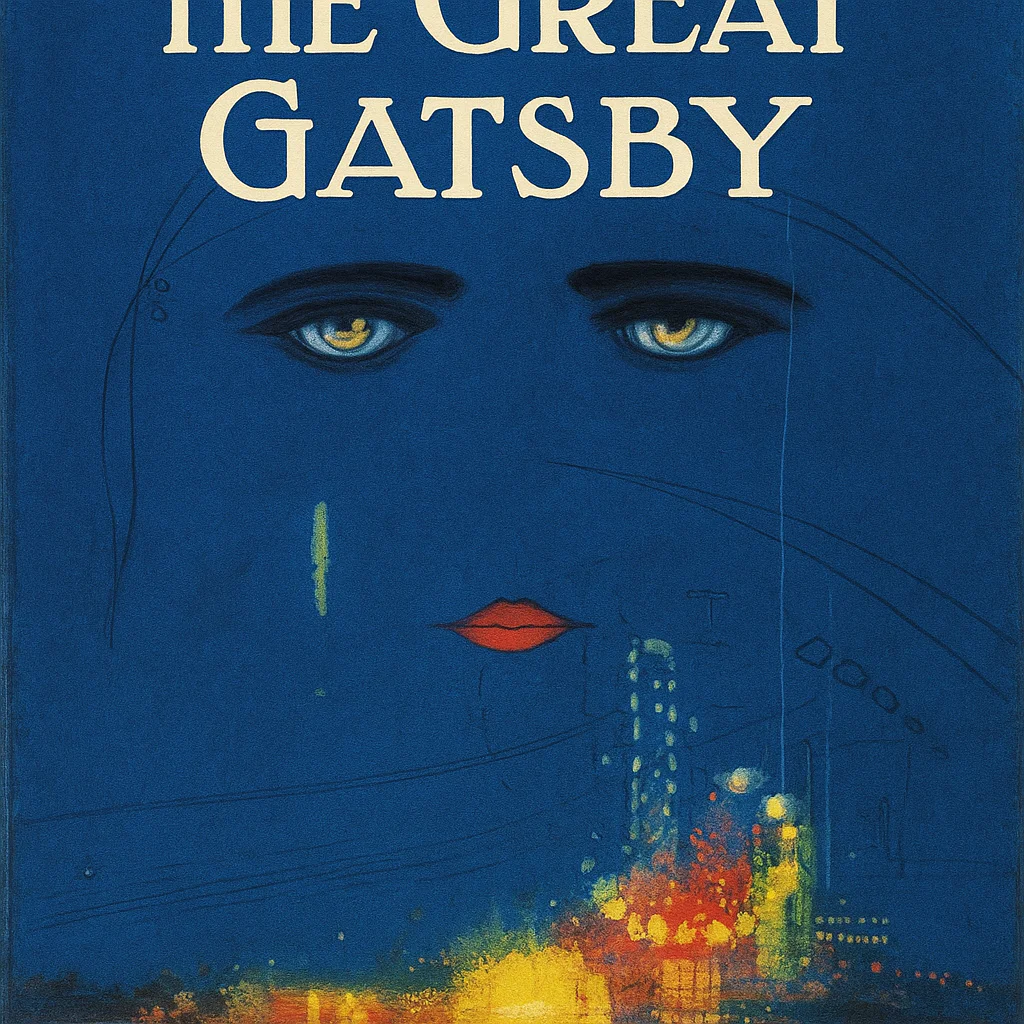
- 🎨 Iconic Cover: The original dust jacket by Francis Cugat features a floating, melancholy face with celestial eyes, which inspired the “eyes of Dr. T.J. Eckleburg” in the book.
- 💸 Initial Sales: A commercial flop! Only about 20,0 copies sold in the first year.
- 🔄 The Turnaround: It didn’t become a classic until the 1940s, thanks to the Council on Books in Wartime distributing free copies to soldiers.
Did you know? The phrase “Old Sport,” Gatsby’s signature catchphrase, appears 45 times in the novel. It’s his desperate attempt to sound like an established member of the upper class, a linguistic mask for his humble origins.
For those wondering about the voice behind this masterpiece, we’ve broken down the narrator’s reliability in our deep dive: 🕵️ ♂️ Who Is the Narrator of The Great Gatsby?.
📜 Unearthing the History: The Great Gatsby’s Journey from Obscurity to Obsession

Why does a book that barely sold a copy in its first year now dominate high school curriculums and spark endless debates? The history of The Great Gatsby is as dramatic as the plot itself.
Fitzgerald wrote the novel during the height of the Roaring Twenties, a time of economic boom, Prohibition, and cultural revolution. He wanted to capture the “Jazz Age,” a term he actually coined. However, the literary world of 1925 wasn’t ready for his cynical take on the American Dream. Critics like H.L. Mencken praised the prose but found the plot “highly improbable.”
The Rise from the Ashes:
- 1925: Published by Charles Scribner’s Sons. Fitzgerald earned a meager $2,0 in royalties.
- 1940s: During WWII, the book was distributed to troops, reigniting interest.
- 1950s-60s: It became a staple in schools, cementing its status as a classic.
- 2021: The book entered the public domain in the US, leading to a new wave of adaptations and retellings.
We often ask ourselves: Is it the story of a man, or the story of a nation? The answer lies in the tension between Fitzgerald’s personal life and the era’s excess. Fitzgerald and his wife, Zelda, lived a life of wild parties and debt, miroring the characters in the book. The tragedy of Gatsby is, in many ways, the tragedy of Fitzgerald’s own unfulfilled dreams.
🎭 The Cast of Characters: Who Really Lived in West Egg?
To understand the summary of The Great Gatsby, you must first understand the players. This isn’t just a cast list; it’s a map of social stratification.
The Protagonists and Antagonists
| Character | Role | Key Trait | Symbolism |
|---|---|---|---|
| Jay Gatsby | The Dreamer | Obsessive, hopeful, mysterious | The corrupted American Dream |
| Nick Caraway | The Narrator | Observant, moral, Midwestern | The reader’s lens; the conscience |
| Daisy Buchanan | The Object of Desire | Charming, shallow, careless | The unattainable goal; “Old Money” |
| Tom Buchanan | The Antagonist | Arogant, brutish, racist | The barrier of “Old Money” |
| Jordan Baker | The Catalyst | Cynical, dishonest, athletic | The new, amoral woman of the 20s |
| Myrtle Wilson | The Victim | Ambitious, desperate | The cost of class mobility |
| George Wilson | The Tragic Pawn | Spiritless, manipulated | The working class crushed by the rich |
| Meyer Wolfsheim | The Shadow | Criminal, pragmatic | The underworld funding the dream |
Nick Caraway is the glue holding this narrative together. As a Yale graduate and World War I veteran, he moves to New York to work in bonds. He claims to be “one of the few honest people” he has ever known, yet he is complicit in the events that unfold. His reliability is a topic of intense debate among scholars.
Daisy Buchanan is often misunderstood as purely villainous. She is a product of her time—a “beautiful little fool” as her father advised her to be. Her inability to choose Gatsby over Tom isn’t just about love; it’s about security and the crushing weight of social expectation.
Tom Buchanan represents the worst of the “Old Money” aristocracy. He is physically imposing, intellectually arrogant, and openly racist, referencing a fictional book called The Rise of the Colored Empires (a nod to real-world eugenics fears of the 1920s).
📖 The Great Gatsby Plot Summary: A Step-by-Step Breakdown of the Roaring Twenties
Ready to unravel the mystery? Let’s walk through the narrative arc, from the first sip of champagne to the final, lonely gunshot.
1. The Arrival of Nick Caraway and the Green Light
Nick Caraway rents a small bungalow in West Egg, the “new money” district of Long Island. His neighbor is the enigmatic Jay Gatsby, who throws massive, lavish parties every weekend. Across the bay in East Egg (the “old money” enclave), lives Nick’s cousin, Daisy Buchanan, and her husband, Tom.
One night, Nick sees Gatsby standing on his lawn, trembling, reaching out toward a single green light at the end of Daisy’s dock. This moment sets the stage for the entire novel: Gatsby is reaching for a dream that is just out of reach.
2. The Mystery of Jay Gatsby and the Lavish Parties
Nick attends one of Gatsby’s parties, where he meets Jordan Baker, a professional golfer and Daisy’s friend. The parties are a spectacle of excess: orchestras, endless food, and strangers drinking Gatsby’s bootleged liquor. Yet, no one knows who Gatsby really is. Rumors fly: he killed a man, he’s a German spy, he’s a bootleger.
Through Jordan, Nick learns the truth: Gatsby and Daisy were in love five years ago, before Gatsby went to war. Gatsby made his fortune (ilegally) to win her back. He bought his mansion specifically to be near her.
3. The Reunion: Gatsby and Daisy’s Forbidden Romance
Nick arranges a tea at his house for Gatsby and Daisy. The reunion is awkward and tense, but the spark is rekindled. Gatsby shows Daisy his mansion and his collection of expensive shirts, weping as she touches them. They begin an affair. Gatsby believes he can erase the past five years and that Daisy will leave Tom.
4. The Plaza Hotel Showdown: Truths Unveiled
The tension boils over on a sweltering summer day. The group drives into the city and checks into a suite at the Plaza Hotel. Gatsby demands that Daisy tell Tom she never loved him. Daisy hesitates, admitting she loved both men.
Tom, realizing the affair, attacks Gatsby’s credibility. He exposes Gatsby’s criminal past, revealing that his wealth comes from bootleging and shady dealings with Meyer Wolfsheim (who fixed the 1919 World Series). Daisy, terrified and unable to reject her social status, retreats to Tom’s side. Gatsby’s dream begins to crumble.
5. The Fatal Drive and the Tragic Aftermath
On the drive back to Long Island, the group is in two cars: Tom and Daisy in Gatsby’s yellow Rolls-Royce, and Tom, Myrtle, and George in the other. Myrtle, thinking the car contains Tom, runs out into the road. Daisy, driving the car, strikes and kills her.
Gatsby decides to take the blame to protect Daisy. He waits outside her house all night, guarding her. Meanwhile, Tom tells George Wilson (Myrtle’s husband) that the yellow car belonged to Gatsby and that Gatsby was Myrtle’s lover.
6. The Empty Funeral and the Final Goodbye
Consumed by grief and rage, George Wilson goes to Gatsby’s mansion. He finds Gatsby floating in his pool and shoots him dead, then kills himself.
The aftermath is chilling. The phone rings constantly at Gatsby’s house, but no one comes to the funeral. The “friends” from the parties vanish. Only Nick, Gatsby’s father, and a few others attend. The Buchans leave town without a forwarding address, leaving no trace of their carelessness.
Nick, disillusioned by the moral decay of the East, decides to return to the Midwest. He reflects on Gatsby’s belief in the green light, the “orgastic future” that recedes before us.
“So we beat on, boats against the current, borne back ceaselessly into the past.”
💔 Disecting the Soul: Major Themes and Symbolism in The Great Gatsby
What makes The Great Gatsby more than just a love story? It’s the layers of symbolism that turn a simple plot into a profound critique of society.
The American Dream: A Corupted Ideal
The central theme is the coruption of the American Dream. Gatsby represents the self-made man who believes that hard work and wealth can buy happiness and social acceptance. However, Fitzgerald shows that the dream is flawed. Gatsby’s wealth is tainted, and his goal (Daisy) is unworthy. The dream is not about achievement; it’s about an unattainable past.
Old Money vs. New Money
The geography of the novel mirrors the social divide:
- East Egg: Represents “Old Money.” Inherited wealth, established families, and a sense of entitlement. Tom and Daisy live here. They are “careless people” who smash up things and retreat back into their money.
- West Egg: Represents “New Money.” Self-made wealth, flashy displays, and a lack of social grace. Gatsby lives here. Despite his wealth, he is never accepted by the East Egg elite.
The Green Light
The green light at the end of Daisy’s dock is the novel’s most famous symbol. It represents:
- Hope and Desire: Gatsby’s longing for Daisy.
- The Future: The “orgastic future” that year by year recedes.
- The American Dream: The elusive goal that drives us forward but is ultimately unattainable.
The Valley of Ashes
Between West Egg and New York lies the Valey of Ashes, a desolate industrial wasteland. It represents the moral and social decay that results from the uninhibited pursuit of wealth. It is the home of the poor (George and Myrtle Wilson) who are crushed by the rich.
The Eyes of Doctor T.J. Eckleburg
A billboard featuring a pair of giant, bespectold eyes watches over the Valley of Ashes. George Wilson interprets them as the eyes of God, but they are merely a product of advertising. They symbolize the loss of spiritual values in a materialistic society.
🎨 The Art of Storytelling: Fitzgerald’s Writing Style and Narrative Voice
Fitzgerald’s prose is often described as “lyrical” and “poetic.” He uses a unique narrative voice to tell the story.
First-Person Limited:
The story is told by Nick Caraway. This allows for a subjective view of events. We see Gatsby through Nick’s eyes, which makes Gatsby seem more mysterious and heroic. However, Nick is also unreliable; he admits to being “within and without” the events, suggesting he is both a participant and an observer.
Imagery and Metaphor:
Fitzgerald uses rich imagery to evoke the atmosphere of the 1920s. The descriptions of the parties, the cars, and the weather are vivid and sensory. The use of color is particularly significant:
- Green: Hope, money, the future.
- Yellow/Gold: Wealth, corruption, decay.
- White: Purity (often ironic, as in Daisy’s white dress), emptiness.
- Blue: Illusion, sadness (Gatsby’s eyes, the sky).
Non-Linear Narrative:
The story jumps back and forth in time. Nick reveals Gatsby’s past gradually, building suspense. This structure mirrors the way memory works, piecing together the past to understand the present.
🌍 The American Dream: How The Great Gatsby Defines a Nation’s Illusion
Why does The Great Gatsby resonate so deeply with Americans? Because it exposes the dark underbely of the American Dream.
The American Dream promises that anyone can succeed through hard work and determination. Gatsby embodies this promise. He rises from poverty to wealth, reinventing himself from James Gatz to Jay Gatsby. But Fitzgerald argues that the dream is a lie.
The Barrier of Class:
No matter how much money Gatsby makes, he cannot buy his way into the “distinguished secret society” of the old money elite. Tom Buchanan’s rejection of Gatsby is not based on his wealth, but on his origins. This suggests that social mobility in America is an illusion.
The Corruption of Values:
Gatsby’s wealth is acquired through crime (bootleging). This implies that the pursuit of the American Dream often requires moral compromise. The dream is not about self-improvement; it’s about materialism and status.
The Unattainable Past:
Gatsby’s tragedy is that he is trying to repeat the past. He believes he can win Daisy back and erase the five years they were apart. Fitzgerald suggests that the past is immutable. We are “borne back ceaselessly into the past,” unable to move forward.
🎬 From Page to Screen: A History of The Great Gatsby Adaptations
The Great Gatsby has been adapted numerous times, each reflecting the cultural context of its era.
🎭 Stage and Musical Productions
- 1926 Play: An early Broadway adaptation by Owen Davis, which was a critical and commercial failure.
- 2023 Musical: A new Broadway musical starring Jeremy Jordan and Eva Noblezada, bringing a fresh, modern perspective to the story.
- 2024 Musical: Gatsby: An American Myth starring Isaac Cole Powell, exploring the myth-making aspect of Gatsby’s character.
📺 Television and Radio Interpretations
- 1949 Film: Starring Alan Ladd, this adaptation was the first major film version, capturing the noir atmosphere of the era.
- 1974 Film: Directed by Jack Clayton, starring Robert Redford and Mia Farrow. This version is known for its lavish production design and faithful adherence to the text.
- 2013 Film: Directed by Baz Luhrmann, starring Leonardo DiCaprio and Carey Mulligan. This adaptation is visually spectacular, using modern music and CGI to capture the excess of the Jazz Age. It was a massive commercial success, selling over 185,0 e-books in 2013 alone.
🎮 Video Games and Modern Media
- 8-bit NES Game: A surprisingly early video game adaptation that brought the story to a new generation.
- Retellings: Since entering the public domain in 2021, new works like Nick by Michael Farris Smith and The Chosen and the Beautiful by Nghi Vo have reimagined the story from different perspectives.
🗣️ Critical Reception: Why Critics Hated It at First (And Why They Love It Now)
When The Great Gatsby was published in 1925, the reviews were mixed. Some praised the prose, but many found the plot implausible and the characters unlikable.
Initial Criticism:
- H.L. Mencken: Called the plot “highly improbable.”
- General Consensus: The book was seen as a minor work compared to Fitzgerald’s earlier novels, This Side of Paradise and The Beautiful and Damned.
The Revival:
The book’s fortunes changed during World War II. The Council on Books in Wartime distributed 15,0 free copies to American soldiers. These soldiers, many of whom had experienced the disillusionment of war, connected with Gatsby’s tragedy. By the 1950s, the book was being taught in schools, and its reputation soared.
Modern Perspective:
Today, The Great Gatsby is considered a masterpiece. Critics praise its exploration of the American Dream, its social commentary, and its beautiful prose. It is often cited as the “Great American Novel.”
However, some modern critics have raised concerns about the book’s portrayal of race and antisemitism. The character of Meyer Wolfsheim, based on the Jewish gangster Arnold Rothstein, reinforces negative stereotypes. Tom Buchanan’s racist rants are also a point of contention. These elements are now discussed in classrooms as part of the historical context, rather than ignored.
🕵️ ♂️ Controversies and Context: Addressing Antisemitism and Social Class
It is impossible to discuss The Great Gatsby without addressing its problematic elements.
Antisemitism:
The character of Meyer Wolfsheim is a clear stereotype of a Jewish criminal. He is described with physical features that reinforce anti-Semitic tropes. While Fitzgerald may not have intended to be malicious, the portrayal reflects the prejudices of the 1920s. Modern readers are encouraged to view this as a reflection of the era’s biases rather than an endorsement.
Racial Anxieties:
Tom Buchanan’s references to The Rise of the Colored Empires (a parody of Lothrop Stoddard’s The Rising Tide of Color) highlight the racial anxieties of the time. The novel reflects the fear of immigration and the desire to preserve “white supremacy.”
Social Class:
The novel’s rigid class structure is both a critique and a reinforcement of social hierarchies. While Fitzgerald criticizes the carelessness of the rich, he also portrays the “new money” as vulgar and the “old money” as superior in some ways. This ambiguity is part of the novel’s complexity.
📚 Further Reading: Essential Resources for The Great Gatsby Enthusiasts
If you want to dive deeper into the world of Gatsby, here are some essential resources:
- Biographies: F. Scott Fitzgerald: A Life by Matthew J. Bruccoli.
- Critical Essays: The Cambridge Companion to F. Scott Fitzgerald.
- Retellings: The Chosen and the Beautiful by Nghi Vo (a queer, magical realism retelling).
- Historical Context: The Jazz Age by F. Scott Fitzgerald (a collection of short stories and essays).
👉 CHECK PRICE on:
- The Great Gatsby (F. Scott Fitzgerald): Amazon | Barnes & Noble | F. Scott Fitzgerald Official Website
- The Chosen and the Beautiful (Nghi Vo): Amazon | Barnes & Noble | Penguin Random House
✅ Conclusion: Is The Great Gatsby Still Relevant Today?
So, is The Great Gatsby just a relic of the 1920s, or does it still speak to us?
The Verdict: It is more relevant than ever.
In an era of social media, influencer culture, and extreme wealth inequality, Gatsby’s story resonates deeply. We are still chasing the “green light”—the next big thing, the perfect life, the unattainable dream. We are still divided by class, still obsessed with status, and still struggling to reconcile our past with our future.
Positives:
- Timeless Themes: The corruption of the American Dream, the power of love, and the tragedy of obsession.
- Beautiful Prose: Fitzgerald’s writing is a masterclass in style and imagery.
- Complex Characters: Gatsby, Daisy, and Nick are flawed, human, and unforgettable.
Negatives:
- Problematic Elements: The book contains racist and antisemitic stereotypes that reflect the prejudices of its time.
- Cynical Tone: The novel’s pessimism can be depressing for some readers.
Our Recommendation:
We highly recommend reading The Great Gatsby, but with a critical eye. It is a masterpiece that demands to be read, discussed, and debated. It challenges us to question our own dreams and the society we live in. Whether you are a student, a literature lover, or just curious about the Jazz Age, this book is a must-read.
Final Thought:
Gatsby’s dream was flawed, but his hope was noble. In the end, we are all “boats against the current,” trying to move forward while being pulled back by the past. But perhaps, as Nick suggests, there is beauty in the struggle itself.
🔗 Recommended Links
- The Great Gatsby (Paperback): Amazon | Barnes & Noble | Penguin Classics
- The Great Gatsby (Audiobook): Audible | Amazon
- The Great Gatsby (2013 Movie): Amazon Prime Video | Apple TV | Baz Luhrmann Official
- The Chosen and the Beautiful (Book): Amazon | Barnes & Noble | Penguin Random House
📖 Reference Links
- LitCharts: The Great Gatsby by F. Scott Fitzgerald Plot Summary
- Wikipedia: The Great Gatsby
- Britannica: The Great Gatsby
- F. Scott Fitzgerald Society: Official Website
- Penguin Random House: The Great Gatsby
FAQ

What is the main message of the book The Great Gatsby?
The main message is that the American Dream is corrupted and ultimately unattainable. Gatsby’s pursuit of wealth and Daisy leads to his destruction, illustrating that material success cannot buy happiness or social acceptance. The novel warns against the dangers of obsession and the illusion of the past.
Read more about “The Great Gatsby Book Summary: Unveiling Secrets & Symbols (2026) 📚”
What is the main point of The Great Gatsby?
The main point is to critique the moral decay and superficiality of the Jazz Age. Fitzgerald exposes the hollowness of the wealthy elite and the futility of trying to recreate the past. The story serves as a cautionary tale about the cost of chasing an idealized dream.
Read more about “🕵️ ♂️ Who Is the Narrator of The Great Gatsby? (2026)”
What is The Great Gatsby about short summary?
The Great Gatsby is a tragic story about a self-made millionaire, Jay Gatsby, who throws lavish parties in hopes of reuniting with his former love, Daisy Buchanan. Despite his wealth, Gatsby is rejected by the “old money” elite. The story ends in tragedy when Daisy accidentally kills a woman, and Gatsby takes the blame, leading to his murder.
Read more about “📚 The Ultimate Full Book Guide: 15 Secrets to Mastering the Complete Read (2026)”
What are the main themes in The Great Gatsby?
The main themes include:
- The American Dream: Its corruption and unattainability.
- Social Class: The divide between “old money” and “new money.”
- Love and Obsession: Gatsby’s desperate attempt to win back Daisy.
- Moral Decay: The carelessness and emptiness of the wealthy.
- The Past: The impossibility of repeating the past.
Read more about “🌟 The Great Gatsby Book Review: Why This 1925 Masterpiece Still Haunts Us (2026)”
Who are the key characters in The Great Gatsby?
- Jay Gatsby: The protagonist, a mysterious millionaire.
- Nick Caraway: The narrator, Gatsby’s neighbor.
- Daisy Buchanan: Gatsby’s love interest, married to Tom.
- Tom Buchanan: Daisy’s wealthy, arrogant husband.
- Jordan Baker: Daisy’s friend and Nick’s love interest.
- Myrtle Wilson: Tom’s mistress.
- George Wilson: Myrtle’s husband, who kills Gatsby.
- Meyer Wolfsheim: Gatsby’s criminal business partner.
Read more about “🌊 The Great Gatsby Setting: 7 Hidden Realities of the Jazz Age (2026)”
What is the moral of The Great Gatsby?
The moral is that chasing an idealized past is futile and destructive. Gatsby’s obsession with Daisy and his dream of the past leads to his downfall. The novel suggests that we must accept the present and move forward, rather than trying to recreate the past.
Read more about “The Great Gatsby Summary Essay: Unlocking 7 Key Insights (2026) 📚”
How does the ending of The Great Gatsby explain the American Dream?
The ending shows the failure of the American Dream. Gatsby, who achieved wealth and status, is still rejected by the elite and ultimately killed. His dream is unattainable, and his death symbolizes the death of the American Dream itself. The final line, “So we beat on, boats against the current,” suggests that we are all struggling against the past, unable to move forward.
Read more about “Why Is *The Great Gatsby* Book So Important? 7 Reasons Explained ✨ (2026)”
What is the significance of the green light in The Great Gatsby?
The green light symbolizes hope, desire, and the unattainable future. It represents Gatsby’s dream of winning Daisy and achieving the American Dream. However, the light is always out of reach, symbolizing the futility of his pursuit.
Read more about “The Great Gatsby Theme: 7 Powerful Insights You Can’t Miss (2026) 📖”
Is The Great Gatsby based on a true story?
No, The Great Gatsby is a work of fiction. However, it is inspired by real people and events. Gatsby is based on Max Gerlach, a bootleger and neighbor of Fitzgerald’s. The setting and the social dynamics of the 1920s are also based on historical reality.
Read more about “Animal Farm Book Summary: Unmasking Orwell’s Timeless Allegory 🐖 (2026)”
What is the historical context of The Great Gatsby?
The novel is set in the Jazz Age (Roaring Twenties), a time of economic boom, Prohibition, and cultural revolution. It reflects the social changes of the era, including the rise of consumerism, the role of women, and the anxieties about race and immigration. The novel also captures the disillusionment that followed World War I.
Read more about “The Great Gatsby Summary Chapter 1: Secrets, Symbols & Surprises 📖”