Support our educational content for free when you purchase through links on our site. Learn more
What Is the Theme Summary of *Wonder*? 💛

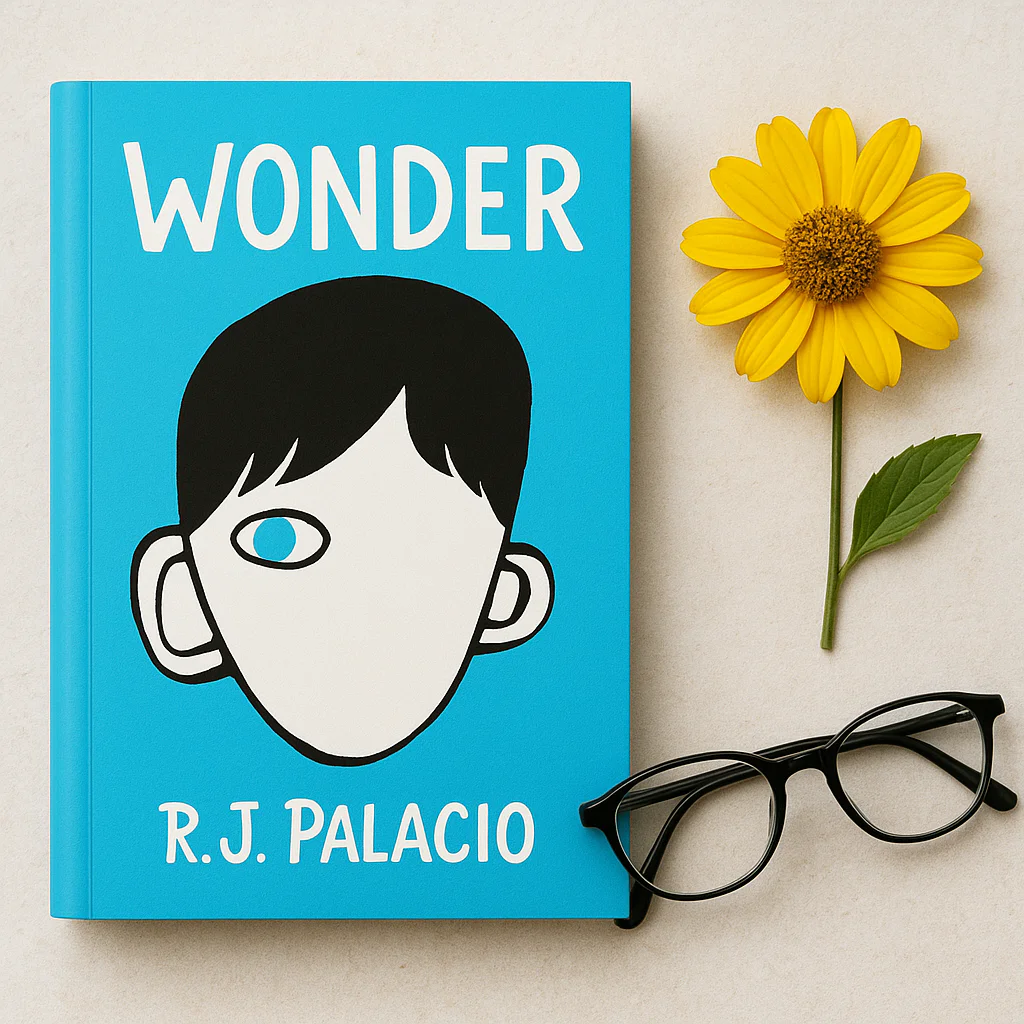
What is theme summary of Wonder? R. J. Palacio’s novel shows that kindness and empathy can challenge bullying and exclusion, and that people deserve to be seen as more than their appearance. Through Augie’s first year at school, Wonder explores belonging, courage, friendship, family, and the everyday choices that shape how we treat one another.
One of the book’s most revealing choices is its shifting narrators. We experience Augie’s struggles, but also see how his sister Via and classmates wrestle with their own feelings, mistakes, and decisions. That wider view makes the message richer: kindness matters, but so do honesty, accountability, and making room for everyone’s story.
Key Takeaways
- The central theme is choosing kindness and empathy rather than judging someone by appearance.
- Wonder also explores acceptance, belonging, bullying, courage, friendship, family, and identity.
- Augie’s classmates show how peer pressure can encourage exclusion—or be challenged by small acts of inclusion.
- The multiple narrators remind us that everyone has a perspective and struggles others may not see.
- The novel’s message is practical: include others, stand up against cruelty, and take responsibility when you cause harm.
Table of Contents
- ⚡️ Quick Tips and Facts About Wonder
- 📖 Background: R. J. Palacio’s Wonder and Its Story
- Who Is August “Auggie” Pullman?
- How the Novel’s Multiple Narrators Shape the Story
- 🧭 Wonder Theme Summary: The Big Ideas Behind the Novel
- 1. Kindness and Choosing to Be Kind
- 2. Empathy and Seeing Life From Someone Else’s Perspective
- 3. Acceptance, Inclusion, and Belonging
- 4. Appearance, Difference, and Looking Beyond First Impressions
- 5. Bulying, Peer Pressure, and Standing Up for Others
- 6. Courage, Resilience, and Facing Change
- 7. Friendship, Loyalty, and Forgiveness
- 8. Family Love, Sacrifice, and Sibling Relationships
- 9. Identity, Self-Confidence, and Growing Up
- 10. The Power of Words, Choices, and Small Acts
- 🔎 How the Main Characters Reflect Wonder’s Themes
- Auggie Pullman: Courage and Self-Aceptance
- Via: Family, Identity, and Being Seen
- Jack Will and Summer: Friendship and Moral Choice
- Julian: Bulying and the Consequences of Exclusion
- 🧩 How the Themes Connect to the Novel’s Plot
- Auggie’s First Year at Beecher Prep
- The Halloween Incident and Its Fallout
- The School Trip and Augie’s Changing Place in the Community
- 💬 Important Quotes and What They Reveal About the Themes
- “When Given the Choice Between Being Right or Being Kind, Choose Kind”
- The “Precepts” and Their Meaning
- How to Use Quotes in an Essay
- 🎒 The Meaning of the Title Wonder
- ✍️ Wonder Theme Analysis for Essays and Book Reports
- A Simple Theme Statement for Wonder
- Strong Essay Questions and Thesis Ideas
- How to Support a Theme With Textual Evidence
- 🎬 Wonder Book vs. Movie: Themes and Adaptation Differences
- 🌱 What Readers Can Learn From Wonder
- 📚 Books Like Wonder About Kindness, Difference, and Belonging
- Conclusion
- Recommended Links
- FAQ
- What is the main theme of Wonder?
- What are the major themes in Wonder?
- What is the message of Wonder?
- How does Wonder show the effects of bullying?
- Why is kindness important in Wonder?
- What does the title Wonder mean?
- What is a good theme statement for Wonder?
- Reference Links
⚡️ Quick Tips and Facts About Wonder
If you’re looking for a fuller plot overview alongside this theme guide, start with our Wonder book summary. Here, we focus on what R. J. Palacio’s novel says about kindness, difference, friendship, and growing up.
| Quick fact | What to know |
|---|---|
| Author | R. J. Palacio |
| Main character | August “Auggie” Pullman, a boy with a craniofacial difference |
| Setting | Beecher Prep and Augie’s home community |
| Core theme | Choose empathy and kindness instead of judging people by appearance |
| Storytelling style | Several characters narrate, giving readers different perspectives |
| Best known for | Its exploration of school, bullying, friendship, family, and belonging |
| Useful for | Book reports, classroom discussion, and readers interested in compassionate middle-grade fiction |
The short answer: Wonder argues that a person’s appearance is only one part of who they are, and that everyday choices—especially choices to include, defend, and understand others—can shape a community.
One helpful nuance: kindness is central, but it is not the only theme. The novel also explores the pressure to fit in, the gradual formation of identity, family relationships, independence, and the courage it takes to be seen.
📖 Background: R. J. Palacio’s Wonder and Its Story

R. J. Palacio’s Wonder follows August Pullman as he starts attending school after years of homeschooling. Augie has a facial difference related to a rare medical condition. He is bright, funny, loves science fiction, and would also quite like to go through a school day without people staring at him. Understandable!
At Beecher Prep, Augie meets classmates who respond to him in very different ways. Some are kind immediately; others avoid him or target him. As the story unfolds, Palacio shifts among the perspectives of Augie, his sister Via, and several school friends. Those changes matter: we see not only how Augie experiences the world, but also how his presence challenges other people to rethink their behavior.
Who Is August “Auggie” Pullman?
Auggie is not written as a lesson wearing a backpack. He is a whole child: witty, affectionate, observant, occasionally annoyed, and sometimes eager to be left alone. His facial difference affects how strangers react to him, but it does not define his interests, humor, or capacity for friendship.
The distinction is important. The novel asks readers to recognize the barriers Augie faces without reducing him to those barriers. His experiences with stares and bullying are real, but so are his love of family, his taste for jokes, and his wish to belong without becoming a classroom symbol.
How the Novel’s Multiple Narrators Shape the Story
The multiple narrators complicate the moral picture. Augie’s sections show the emotional cost of being singled out. Via’s sections reveal what it can feel like to love a sibling while also wanting attention for yourself. Jack’s perspective shows how social pressure can lead someone to hurt a person they care about. Summer’s offers a view of friendship chosen without waiting for approval.
This structure supports one of the book’s strongest ideas: people are more complicated than the role we assign them. A bully can regret a choice; a loyal sibling can feel overlooked; a bystander can decide to act differently.
| Storytelling feature | What it contributes |
|---|---|
| First-person narrators | Lets readers experience different motives and feelings directly |
| Shifting viewpoints | Complicates quick judgments about who is “good” or “bad” |
| School setting | Makes popularity, peer pressure, and exclusion visible |
| Family scenes | Show the support Augie relies on—and the needs of the people around him |
For more reading guides, browse our Book Summaries and Book Reviews.
🧭 Wonder Theme Summary: The Big Ideas Behind the Novel
Several study guides emphasize kindness, tolerance, courage, family, and friendship. GradeSaver’s Wonder study guide highlights these familiar classroom themes, while LitCharts’ theme guide adds attention to popularity, independence, identity, and the role of adults.
Those lists are compatible, not competing. Kindness is the novel’s clearest moral thread, while the other themes show why kindness can be difficult and what changes when people practice it.
1. Kindness and Choosing to Be Kind
In Wonder, kindness is more than being pleasant when it costs nothing. It often means making a visible choice when social pressure points the other way: sitting beside Augie, treating him like a classmate, or refusing to join a joke at his expense.
Mr. Tushman’s guidance to choose kindness gives the idea a memorable shape. But the novel also avoids pretending that a slogan instantly fixes bullying. Students make mistakes, relationships strain, and trust has to be earned. Kindness is a practice, not a one-time performance.
2. Empathy and Seeing Life From Someone Else’s Perspective
The rotating narrators invite readers to do what the characters must learn to do: look beyond their own point of view. Augie experiences school as a place where attention can feel threatening. Via, meanwhile, loves him but sometimes feels that the family’s focus on his needs leaves little room for her.
Empathy here does not mean deciding that everyone’s experience is identical. It means taking another person’s feelings seriously—even when they are different from your own.
3. Acceptance, Inclusion, and Belonging
Auggie does not simply want people tolerate his presence. He wants the ordinary things other children want: friends, jokes, school memories, and a place in the group. That difference matters. Inclusion means making room for someone as a participant, not merely being polite while keeping them at the edge.
As classmates get to know Augie, some begin to see him less as a frightening first impression and more as a funny, loyal friend. Their change does not erase the harm of exclusion, but it shows how shared experience can weaken prejudice.
4. Appearance, Difference, and Looking Beyond First Impressions
Auggie’s face draws attention before he speaks. Palacio uses that imbalance to examine how people turn a visible difference into a complete story about a stranger. The novel’s answer is not that appearance never matters—clearly, it shapes Augie’s social experiences—but that appearance is not a reliable measure of character.
The book also asks readers to notice how they look at people. Are they curious? Uncomfortable? Compassionate? The question is personal, and the answer may be less flattering than we expect.
5. Bulying, Peer Pressure, and Standing Up for Others
Bulying in Wonder is not only a matter of one student being cruel. It is also enabled bystanders, social hierarchies, and the fear of losing status. Jack’s choices make this especially clear: he wants to fit in, but he also values Augie’s friendship. For a while, those desires collide.
The novel’s lesson is practical: what we do when a friend is being mocked matters. Silence may feel safer in the moment, but it can leave the targeted person isolated and allow the group’s behavior to continue.
6. Courage, Resilience, and Facing Change
Auggie shows courage by entering a new school and continuing to show up through painful moments. His resilience is not the same as never feeling hurt. The novel gives him fear, sadness, frustration, and a desire to retreat. Courage means moving forward despite those feelings—not pretending they are absent.
Other characters also show forms of courage: Jack admits he was wrong, Summer acts without waiting for a popular group’s permission, and Via speaks up about feelings she has kept inside.
7. Friendship, Loyalty, and Forgiveness
Friendship offers Augie a route into ordinary school life, but the novel does not make friendship effortless. Summer’s early kindness is meaningful because she chooses to sit with him without turning it into a public virtue signal. Jack’s friendship takes a bumpier path: he hurts Augie, recognizes the damage, and has to apologize.
Forgiveness is not presented as a demand that Augie immediately feel fine. Rather, the story shows how honesty, remorse, and changed behavior can make repair possible.
8. Family Love, Sacrifice, and Sibling Relationships
The Pullman family gives Augie a secure base. His parents encourage him while worrying about what school will bring. Via loves her brother, yet her sections reveal that she sometimes feels overlooked as family life revolves around Augie’s needs.
This is one of the book’s more humane complications: a loving family can still have uneven attention and competing needs. Palacio lets Via’s feelings exist without framing them as disloyal. Her story reminds readers that supporting one person should not mean forgetting everyone else.
9. Identity, Self-Confidence, and Growing Up
Auggie is learning who he is outside the close protection of home. At school, he becomes a student, classmate, and friend—not only a child his family knows how to care for. LitCharts describes adolescence as a time when identity is still taking shape, and Augie’s school year illustrates that idea through small social decisions as much as through major events.
He does not transform into a different person. Instead, he gains more confidence in bringing his existing self into a wider world.
10. The Power of Words, Choices, and Small Acts
Words can humiliate, comfort, exclude, or open a conversation. The novel pays attention to everyday language because school culture is built from ordinary moments: a greeting, a joke, an invitation, a whisper, or a refusal to laugh along.
A single kind act will not end prejudice. But repeated choices can change what a group considers normal. That is why the book’s small moments often carry as much weight as its big ones.
🔎 How the Main Characters Reflect Wonder’s Themes
| Character | Theme connection | What their story helps readers notice |
|---|---|---|
| Augie Pullman | Courage, identity, belonging | A person is more than the first thing others notice |
| Via Pullman | Family, independence, being seen | Love and frustration can exist together |
| Jack Will | Friendship, peer pressure, accountability | A harmful choice can be acknowledged and repaired |
| Summer Dawson | Empathy, inclusion, friendship | Kindness can start with a simple decision |
| Julian Albans | Bulying, status, exclusion | Social power can make cruelty seem normal |
| Miranda Navas | Identity, popularity, loyalty | Seeking approval can obscure what matters most |
Auggie Pullman: Courage and Self-Aceptance
Auggie’s courage is quiet and sustained. He enters Beecher Prep knowing that classmates may stare, then tries to build a life there anyway. His humor helps him cope, but it does not make hurtful behavior harmless.
Some readers may see Augie as an inspiring example; others may be wary of stories that ask a child facing discrimination to carry the burden of teaching everyone else. Both readings are worth discussing. The novel celebrates his strength while showing that adults and peers also have responsibility for making school safer and more welcoming.
Via: Family, Identity, and Being Seen
Via’s perspective deepens the family theme. She understands Augie’s medical history and loves him, yet she wants space to be a teenager whose life is not always organized around her brother. That does not make her unkind. It makes her believable.
Her story broadens the meaning of inclusion: people can be overlooked even inside loving families, especially when one person’s needs are unusually visible.
Jack Will and Summer: Friendship and Moral Choice
Jack and Summer offer two different portraits of friendship. Summer’s decision to approach Augie is relatively direct. Jack’s path is more conflicted because he worries about how his classmates will judge him. His mistake shows how peer pressure works; his apology shows that accountability can interrupt it.
Together, they demonstrate that the novel values not perfection, but choices that move toward honesty and care.
Julian: Bulying and the Consequences of Exclusion
Julian’s behavior makes the costs of bullying visible. His actions are not simply a “misunderstanding” that Augie should shrug off; they create real distress and shape the school environment. The contrast between Julian and the students who change their behavior helps readers distinguish inclusion from mere politeness.
The story also prompts a useful question: how should adults respond when children harm one another? Support and guidance matter, but so do clear boundaries and protection for the child being targeted.
🧩 How the Themes Connect to the Novel’s Plot
The themes become easier to remember when connected to what happens. Here’s a simple way to trace them:
- Auggie enters a new setting. His first days at school put appearance, fear, and belonging at the center.
- Classmates make choices. Some approach him; others follow the group or distance themselves.
- Friendships develop under pressure. The characters’ loyalties reveal the tension between doing what feels right and fitting in.
- Harm has consequences. Bulying and betrayal damage trust; apologies and supportive actions begin to repair it.
- The community shifts. By the end, Augie is recognized more fully by his classmates, though the story does not suggest that prejudice disappears everywhere.
Auggie’s First Year at Beecher Prep
Auggie’s first year turns the abstract idea of acceptance into daily experience. The challenge is not one grand test but a series of small ones: entering a room, meeting classmates, eating lunch, and deciding whether to keep trying after an uncomfortable encounter.
That structure makes the book relatable to readers who have faced a new school or social group, even if their experiences are not the same as Augie’s.
The Halloween Incident and Its Fallout
The Halloween episode exposes the gap between friendship in private and loyalty in public. Augie overhears Jack speaking cruely about him, and the discovery damages their relationship. For Augie, the pain is not only the words themselves; it is learning that someone he trusted might act differently when trying to impress other people.
Jack’s later regret matters, but the story does not make the hurt vanish on command. Forgiveness needs space for the injured person’s feelings.
The School Trip and Augie’s Changing Place in the Community
The school trip tests the students’ relationships beyond the familiar routines of class. When Augie is threatened by older boys, classmates who once treated him as an outsider respond differently. The moment underscores how shared experiences can change group behavior—and how courage can appear in standing up for someone else.
The shift is meaningful because it comes through action. The classmates do not merely say they accept Augie; they help protect him.
💬 Important Quotes and What They Reveal About the Themes
“When Given the Choice Between Being Right or Being Kind, Choose Kind”
This well-known precept expresses the novel’s moral center, but it is best understood as a prompt for reflection rather than a rule to avoid hard conversations. Kindness does not require agreeing with everyone or ignoring harm. In Wonder, choosing kindness means treating people with dignity while still recognizing that cruel behavior needs to be addressed.
When using the line in a school assignment, explain who is being asked to choose, what choice they face, and what the choice changes. That turns a familiar quotation into analysis.
The “Precepts” and Their Meaning
Mr. Browne’s precepts—short principles for living—give the class recurring opportunities to consider how people should treat one another. They connect the school setting to the novel’s broader ethical questions: What makes a person good? What do we owe strangers? Can a small decision alter a community?
The precepts are memorable, but the novel tests them through events. A principle matters most when following it is uncomfortable.
How to Use Quotes in an Essay
Use quotations as evidence, not decoration:
- Make a claim: State theme you’re analyzing.
- Set up the moment: Identify who is speaking and what is happening.
- Quote accurately: Use a line from the edition you have.
- Explain the language: Point out what the words suggest.
- Connect to theme: Show how the moment supports your interpretation.
Page numbers vary by edition, so check your copy before citing. Avoid relying on quote pages alone when your assignment asks for textual evidence.
🎒 The Meaning of the Title Wonder
The title works in more than one direction. It can suggest the curiosity and joy that some characters keep alive, as SuperSummary’s theme guide notes. It also points toward the family’s sense that Augie is extraordinary—not because he must be endlessly brave, but because he is himself.
The title invites readers to reconsider what deserves attention. At first, classmates may see Augie’s face and stop there. The novel asks them—and us—to keep looking: at his humor, his friendships, his worries, and the person behind the first impression.
✍️ Wonder Theme Analysis for Essays and Book Reports
A strong theme analysis explains how the author develops an idea, rather than simply naming it. “Kindness is a theme” is a start. “Palacio shows that kindness can require resisting peer pressure, as characters decide whether to treat Augie as a friend in public” is a more useful argument.
A Simple Theme Statement for Wonder
In Wonder, R. J. Palacio shows that empathy and deliberate acts of kindness can challenge exclusion, while also revealing how difficult it is to stand up for others under social pressure.
This statement is specific enough to guide an essay and broad enough to support examples from several characters.
Strong Essay Questions and Thesis Ideas
- How does the novel’s use of multiple narrators change readers’ understanding of Augie and his classmates?
- What does Jack’s character reveal about peer pressure and accountability?
- How does Via’s perspective complicate the novel’s portrayal of family love?
- Does Wonder suggest that kindness can change a school community? How?
- How does the novel distinguish acceptance from true inclusion?
- In what ways does Augie become more independent over the course of the story?
How to Support a Theme With Textual Evidence
Build your explanation in three steps:
- Choose a scene that clearly connects to your theme.
- Describe the character’s decision and the pressure or obstacle around it.
- Explain the consequence, including how the event affects another person or changes a relationship.
For example, an essay about peer pressure might examine Jack’s conflict between popularity and friendship. The analysis should explain not only what he says, but why his social situation matters and what his later response reveals.
🎬 Wonder Book vs. Movie: Themes and Adaptation Differences
The film adaptation offers a visual introduction to Augie’s school experience and emphasizes differences, friendship, and kindness. The movie’s official studio information is a useful starting point for learning about the screen version. For a broader comparison of novels and screen adaptations, see our Book-to-Film Adaptations category.
A video perspective linked as the featured video also frames the story for younger viewers around friendship and kindness. Its questions—“Why is making friends so important?” and whether viewers have a good friend—make themes accessible, though they simplify some of the book’s more complicated material.
| Element | Novel | Film |
|---|---|---|
| Point of view | Multiple narrators provide extensive inner thoughts | Visual storytelling centers the characters’ on-screen experiences |
| Family and school life | Gives room to develop Via and other narrators | Must compress parts of the novel to fit a film |
| Theme emphasis | Kindness, belonging, identity, peer pressure, and family | Makes friendship, courage, and acceptance especially immediate |
| Best for | Detailed character and theme analysis | Seeing expressions, settings, and interactions brought to life |
Neither version replaces the other. The novel offers more room for interior perspectives; the film makes the social experience visible in a different way. If you are writing about adaptation, compare specific scenes rather than arguing that one version is simply “better.”
🌱 What Readers Can Learn From Wonder
The book’s lessons are most useful when translated into ordinary behavior:
- Don’t treat curiosity as permission to stare or interrogate. Respect a person’s boundaries.
- Include people in real ways. Invite them into the conversation or activity instead offering symbolic kindness.
- Challenge cruelty safely. Seek help from a trusted adult when someone is being bullied.
- Own mistakes. An apology is stronger when it names the harm and is followed by changed behavior.
- Remember that families contain more than one story. A person supporting someone else may also need care.
- Resist snap judgments. A first impression is a beginning, not a biography.
The novel does not ask readers to become flawless. It asks them to notice what their choices do to other people—and to choose better when they can.
📚 Books Like Wonder About Kindness, Difference, and Belonging
Readers who value Wonder’s humane treatment of school life may enjoy exploring related titles through our Classic Literature and Book Reviews sections. For similar middle-grade reading, consider:
- Fish in a Tree by Lynda Mullaly Hunt — a story about learning differences, confidence, and the importance of supportive teachers.
- [Out of My Mind by Sharon M. Draper](https://www.amazon.com/s?k=Out+of+My+Mind+Sharon+M+.