Support our educational content for free when you purchase through links on our site. Learn more
🌟 The Great Gatsby Book Summary & Analysis: A Tragic Masterpiece (2026)

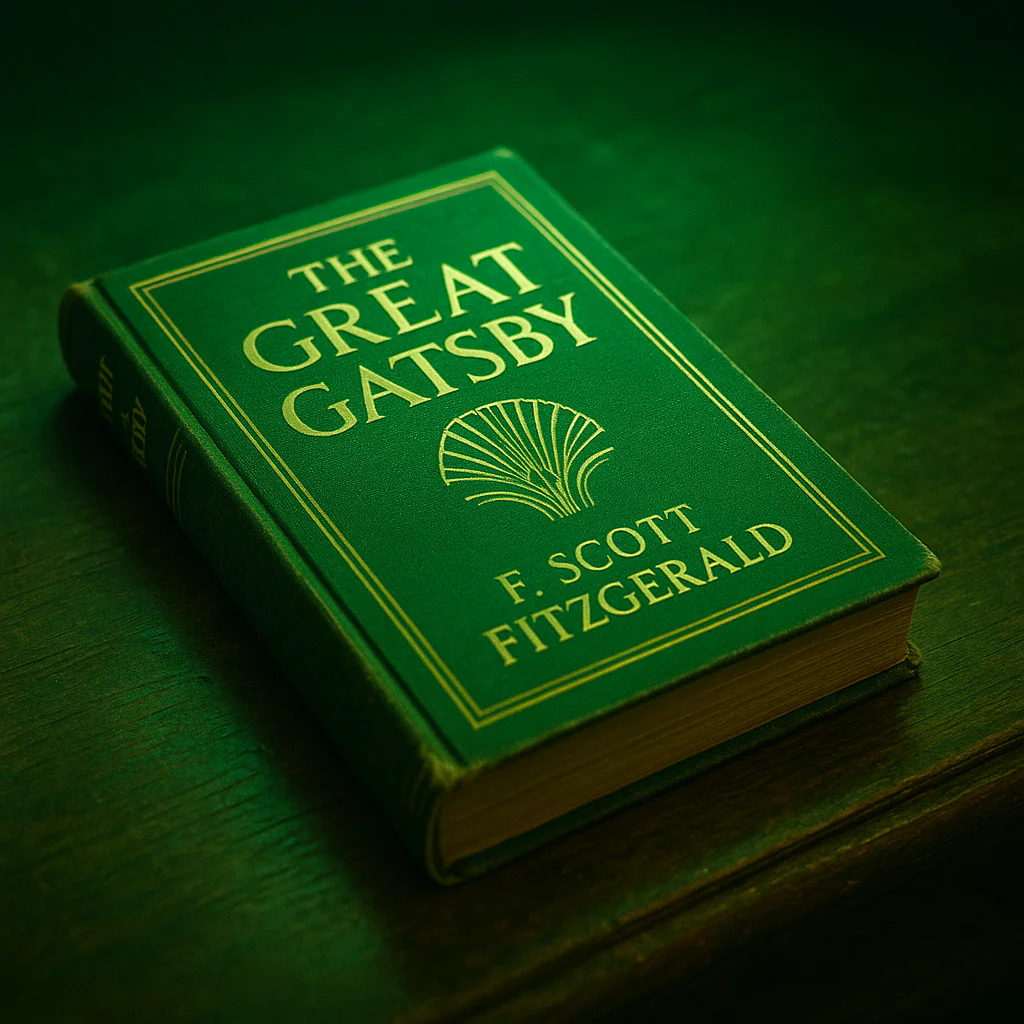
The Great Gatsby isn’t just a story about a rich man throwing parties; it is a devastating critique of the American Dream where hope is the very thing that destroys you. Our comprehensive The Great Gatsby book summary and analysis reveals why this 1925 novel remains the definitive portrait of American excess, proving that you can’t buy your way out of the past.
Did you know that when F. Scott Fitzgerald died in 1940, he was largely forgotten, and his book had sold fewer than 25,0 copies? Today, it is considered the “Great American Novel,” with over 25 million copies in print.
We often think of the Roaring Twenties as a time of endless joy, but Fitzgerald saw the rot beneath the glitter. He captured a generation trying to outrun a war they couldn’t forget, only to crash into a wall of their own making.
This guide breaks down every chapter, symbol, and character to show you exactly how Gatsby’s dream was doomed from the start. Whether you are a student craming for an exam or a lifelong fan rediscovering the text, understanding the layers of this tragedy changes how you see the world.
Key Takeaways
- The Core Tragedy: Jay Gatsby’s obsession with repeating the past is the engine of the novel’s destruction, proving that time cannot be bought or controlled.
- Class Warfare: The story exposes the impenetrable barrier between “old money” (East Egg) and “new money” (West Egg), showing that wealth does not guarantee acceptance.
- Symbolism Decoded: From the Green Light representing unattainable dreams to the Eyes of T.J. Eckleburg symbolizing a godless society, every object holds deep meaning.
- Moral Decay: The “careless” nature of characters like Tom and Daisy highlights the hollowness of the upper class, who destroy lives and retreat into their money.
- Enduring Relevance: Fitzgerald’s warning about the coruption of the American Dream remains startlingly accurate in modern society.
Table of Contents
- ⚡️ Quick Tips and Facts
- 📜 The Roaring Twenties Backdrop: Historical Context & Fitzgerald’s Inspiration
- 📖 The Great Gatsby: A Complete Plot Summary from East Egg to West Egg
- 🔍 Deep Dive: Chapter-by-Chapter Analysis and Breakdown
- 🎭 Character Profiles: Jay Gatsby, Daisy, Tom, Nick, and the Supporting Cast
- 💡 Core Themes Explored: The American Dream, Class, and Moral Decay
- 🔑 Key Symbols Decoded: The Green Light, Eyes of T.J. Eckleburg, and More
- 🎨 Literary Devices Unveiled: Metaphor, Irony, and Unreliable Narration
- 💬 Memorable Quotes and Their Hidden Meanings
- ❓ Frequently Asked Questions About The Great Gatsby Summary and Analysis
- 🧠 Interactive Quiz: Test Your Knowledge of the Novel
- 📚 Related Books and Similar Reads for Gatsby Fans
- 🎓 Extra Credit: Trivia, Fun Facts, and Cultural Impact
- 🏁 Conclusion: Why This Masterpiece Still Matters Today
- 🔗 Recommended Links for Further Reading
- ❓ FAQ: Common Questions Answered
- 📚 Reference Links and Sources
⚡️ Quick Tips and Facts
Before we dive into the glittering, tragic world of West Egg, let’s hit the rewind button on the basics. If you’re here for a quick refresher or just need to ace that pop quiz tomorrow, here’s the greatest hits of The Great Gatsby without the fluff.
- 📅 Publication Date: April 10, 1925. It was a commercial flop initially but found its legs after F. Scott Fitzgerald’s death.
- 🖋️ The Narrator: Nick Caraway, a bond salesman from the Midwest who claims to be “one of the few honest people” he has ever known (spoiler: he’s not entirely honest).
- 📍 The Setting: Long Island, New York, specifically the fictional West Egg (nouveau riche) and East Egg (old money), during the summer of 192.
- 🎯 The Core Conflict: Jay Gatsby’s obsessive attempt to repeat the past and win back Daisy Buchanan, a dream that is doomed from the start.
- 💀 The Body Count: Three major characters die (Myrtle, Gatsby, George), and the “survivors” (Tom and Daisy) retreat into their money, leaving the mess behind.
For a deeper dive into the narrative arc, check out our full The Great Gatsby Book Summary where we break down every twist and turn.
| Feature | Details |
|---|---|
| Genre | Tragic Novel / Modernist Literature |
| Point of View | First Person (Nick Caraway) |
| Key Themes | The American Dream, Class Stratification, Moral Decay |
| Famous Symbol | The Green Light at the end of Daisy’s dock |
| Critical Reception | Initially mixed; now considered the Great American Novel |
📜 The Roaring Twenties Backdrop: Historical Context & Fitzgerald’s Inspiration
You can’t understand Gatsby without understanding the Jazz Age. Fitzgerald didn’t just write about the 1920s; he essentially coined the term to describe the era. But why does this matter to you, a modern reader? Because the 1920s were the original “recession-proof” party, a time of wild economic growth, Prohibition, and a desperate, almost manic, attempt to forget the horrors of World War I.
The Lost Generation
Fitzgerald was part of the “Lost Generation,” a group of writers who felt alienated from traditional American values after the war. They moved to Europe, drank too much, and wrote about the hollowness of material success.
- Real-World Parallel: Just as Gatsby throws parties to fill a void, the post-WI generation used excess to mask trauma.
- Historical Fact: The stock market crash of 1929, which ended the era, happened just four years after the book was published. Fitzgerald saw the writing on the wall before most.
“Fitzgerald captures the specific American cultural moment of the Jazz Age better than anyone else.” — LitCharts
Prohibition and the Underworld
Gatsby’s wealth isn’t from selling bonds (as he claims); it’s from bootleging. The 18th Amendment banned alcohol, creating a massive black market.
- Meyer Wolfshiem: Gatsby’s business partner is based on real-life gangster Arnold Rothstein, who fixed the 1919 World Series.
- The Reality: While the rich drank champagne in mansions, the poor drank bathtub gin in speakeasies. This class divide is the engine of the novel’s tragedy.
For more on how historical events shaped classic literature, explore our Classic Literature category.
📖 The Great Gatsby: A Complete Plot Summary from East Egg to West Egg
Let’s walk through the story. Imagine you’re Nick Caraway, renting a small house in West Egg, right next to a mansion that looks like a French hotel. Every weekend, it’s a circus of jazz, champagne, and strangers.
The Setup: The Eggs and the Valley
- East Egg: Home to “old money” families like the Buchans. They are arrogant, careless, and unchangeable.
- West Egg: Home to the “new money” crowd like Gatsby. They are flashy, loud, and desperate to be accepted.
- The Valley of Ashes: A desolate industrial wasteland between the Eggs and New York City. It’s where the poor, like the Wilsons, live and work. It’s the moral decay of America made visible.
The Inciting Incident: The Dinner at the Buchans
Nick travels to East Egg to visit his cousin, Daisy Buchanan, and her husband, Tom.
- The Tension: Tom is having an affair with Myrtle Wilson, a woman from the Valley of Ashes.
- The Phone Call: During dinner, Tom gets a call from Myrtle. Daisy knows. The air is thick with unspoken resentment.
- The Revelation: Nick learns that Gatsby is in love with Daisy.
The Rising Action: The Parties and the Reunion
- Gatsby’s Parties: Nick attends one of Gatsby’s legendary parties. He hears rumors: Gatsby killed a man, Gatsby is a German spy, Gatsby is a bootleger.
- The Connection: Gatsby reveals he and Nick are neighbors. He asks Nick to arrange a meeting with Daisy.
- The Tea: Nick invites Daisy over. Gatsby arrives, nervous as a schoolboy. They reunite. The green light at the end of Daisy’s dock, which Gatsby used to reach for, loses its magic now that she is physically there.
The Climax: The Plaza Hotel Confrontation
The heat is unbearable. The group drives to the Plaza Hotel in Manhattan.
- The Demand: Gatsby demands Daisy tell Tom she never loved him.
- The Breakdown: Daisy cracks. She admits she loved Tom once. Gatsby’s dream shatters.
- The Exposure: Tom exposes Gatsby’s criminal past. Daisy retreats to Tom’s side.
The Falling Action: The Accident
- The Drive: Daisy, driving Gatsby’s yellow car, accidentally hits and kills Myrtle, who ran out thinking it was Tom’s car.
- The Cover-up: Gatsby decides to take the blame to protect Daisy. Tom tells George Wilson that the car belonged to Gatsby.
The Resolution: The Funeral
- The Murder: George Wilson, driven mad by grief and Tom’s lies, shoots Gatsby dead in his pool, then kills himself.
- The Aftermath: Daisy and Tom leave town without a word. No one comes to Gatsby’s funeral except Nick, Gatsby’s father, and a few others.
- The Departure: Disgusted by the East, Nick moves back to the Midwest.
🔍 Deep Dive: Chapter-by-Chapter Analysis and Breakdown
We’ve summarized the plot, but how does Fitzgerald weave this tapestry? Let’s break it down chapter by chapter, because the devil is in the details.
Chapters 1–3: The Illusion of Wealth
- Chapter 1: Nick introduces himself as non-judgmental (a lie). We meet the Buchans. The green light is introduced.
Analysis: The green light represents Gatsby’s hope, but also the unattainable nature of his dream. - Chapter 2: The Valley of Ashes. Tom takes Nick to meet Myrtle.
Analysis: This chapter establishes the class divide. The Wilsons are trapped; the Buchans are free to destroy. - Chapter 3: Gatsby’s party.
Analysis: The party is a spectacle of superficiality. Guests don’t know Gatsby; they just want to drink his champagne. It’s a critique of the nouveau riche culture.
Chapters 4–6: The Past and the Present
- Chapter 4: Gatsby’s backstory.
Analysis: Gatsby claims to be from a wealthy family, but we learn he was James Gatz, a poor farm boy who reinvented himself. The “Oxford” story is a lie to impress Daisy. - Chapter 5: The reunion.
Analysis: The moment Gatsby touches Daisy’s hand, the dream becomes real, but also fragile. The green light is just a light now. - Chapter 6: Gatsby’s father arrives.
Analysis: We see Gatsby’s childhood schedule. It shows his discipline and ambition, but also his obsession with self-improvement as a means to an end.
Chapters 7–9: The Collapse
- Chapter 7: The heat, the confrontation, the accident.
Analysis: The climax is a collision of worlds. Tom wins because he has the safety of “old money.” Gatsby loses because his dream was built on a lie. - Chapter 8: Gatsby’s death.
Analysis: Gatsby waits for a phone call from Daisy that never comes. He dies believing she might still love him. - Chapter 9: The funeral and Nick’s reflection.
Analysis: The ultimate hollowness. The people who partied with Gatsby won’t even attend his funeral. Nick realizes the East is rotten.
“So we beat on, boats against the current, borne back ceaselessly into the past.” — The Great Gatsby
For a visual breakdown of these themes, check out the “Theme Wheel” concept used by LitCharts, which maps the emotional arc of the novel.
🎭 Character Profiles: Jay Gatsby, Daisy, Tom, Nick, and the Supporting Cast
Who are the players in this tragedy? Let’s profile them, because they are more than just names; they are archetypes of the American experience.
Jay Gatsby (James Gatz)
- Role: The Protagonist / The Tragic Hero.
- Motivation: To win Daisy Buchanan and erase his past.
- Flaw: His inability to accept reality. He believes he can repeat the past.
- Quote: “Can’t repeat the past? Why of course you can!”
- Verdict: He is great in his capacity for hope, but doomed by his delusion.
Daisy Buchanan
- Role: The Object of Desire / The Antagonist (unintentional).
- Motivation: Security and comfort.
- Flaw: Carelessness. She destroys things and people, then retreats into her money.
- Quote: “I hope she’ll be a fool—that’s the best thing a girl can be in this world, a beautiful little fool.”
- Verdict: She is not evil, but she is morally bankrupt. She chooses the safety of Tom over the risk of Gatsby.
Tom Buchanan
- Role: The Antagonist.
- Motivation: Power and dominance.
- Flaw: Arogance and racism. He believes he is superior because of his birth.
- Quote: “Civilization’s going to pieces.”
- Verdict: He represents the coruption of old money. He wins because the system protects him.
Nick Caraway
- Role: The Narrator / The Observer.
- Motivation: To understand the world and find his place.
- Flaw: He is complicit. He enables Gatsby’s affair and stays silent too long.
- Quote: “I am one of the few honest people that I have ever known.”
- Verdict: He is the moral compass, but he is flawed. He leaves the East because he can no longer tolerate the hypocrisy.
Jordan Baker
- Role: The Catalyst / The Cynic.
- Motivation: Self-preservation.
- Flaw: Dishonesty. She cheats at golf and lies to Nick.
- Verdict: She represents the moral decay of the new generation.
Myrtle & George Wilson
- Myrtle: Represents the desperation of the working class to climb the social ladder. She pays with her life.
- George: Represents the powerlessness of the poor. He is manipulated by Tom and driven to murder.
For more character analyses and comparisons, visit our Book Reviews section.
💡 Core Themes Explored: The American Dream, Class, and Moral Decay
What makes The Great Gatsby a masterpiece? It’s not just the plot; it’s the ideas. Let’s unpack the big ones.
1. The Corruption of the American Dream
The American Dream promises that anyone can succeed through hard work. Gatsby proves this is a lie.
- The Reality: Gatsby works hard, but he works ilegally. His success is built on crime.
- The Critique: The Dream has been corrupted by materialism. It’s no longer about self-improvement; it’s about acquiring wealth at any cost.
- The Result: Gatsby achieves wealth but loses his soul. He dies alone.
2. Old Money vs. New Money
Fitzgerald draws a sharp line between the two.
- Old Money (East Egg): Inherited wealth. They are careless, arrogant, and unchangeable. They don’t have to try.
- New Money (West Egg): Earned wealth. They are flashy, desperate, and trying too hard.
- The Conflict: No matter how much money Gatsby makes, he will never be accepted by the Buchans. The class barrier is impenetrable.
3. The Hollowness of the Upper Class
The characters in the novel are empty.
- The Parties: Full of people, but no one knows anyone.
- The Relationships: Based on money and status, not love.
- The Outcome: When the party ends, there is nothing left.
4. The Mutability of Identity
Can you change who you are?
- Gatsby’s Attempt: He changes his name, his background, his accent.
- The Failure: His past always catches up. You can’t escape your history.
🔑 Key Symbols Decoded: The Green Light, Eyes of T.J. Eckleburg, and More
Fitzgerald was a master of symbolism. Every object in the book means something deeper.
| Symbol | Meaning | Context |
|---|---|---|
| The Green Light | Hope, the American Dream, the unattainable | Located at the end of Daisy’s dock. Gatsby reaches for it. |
| Eyes of T.J. Eckleburg | The loss of spiritual values, God watching | A billboard in the Valley of Ashes. George Wilson sees them as God’s eyes. |
| The Valley of Ashes | Moral decay, the plight of the poor | The industrial wasteland between the Eggs and the city. |
| The Yellow Car | Death, the corruption of wealth | The car that kills Myrtle. It’s a symbol of Gatsby’s new money. |
| The Clock | The impossibility of stopping time | Gatsby knocks over a clock during his reunion with Daisy. |
The Green Light
The most famous symbol in American literature. It represents Gatsby’s dream.
- Early in the book: It’s a beacon of hope.
- After the reunion: It loses its power. “The colossal significance of that light had now vanished forever.”
- At the end: It represents the past that we can never reach.
The Eyes of Doctor T.J. Eckleburg
A fading billboard with giant blue eyes.
- Symbolism: They watch the moral decay of the world. They are the eyes of God, but God is absent or indifferent.
- George Wilson: He interprets them as the eyes of God, which drives him to kill Gatsby.
The Color White
- Daisy: Often wears white. It symbolizes purity, but it’s a false purity. She is actually corrupt.
- Gatsby: His shirt is white. It represents his attempt to be pure and new.
🎨 Literary Devices Unveiled: Metaphor, Irony, and Unreliable Narration
How does Fitzgerald make the story so compelling? He uses literary devices like a pro.
1. Unreliable Narrator
Nick Caraway tells the story, but he is biased.
- The Lie: He says he’s honest, but he lies to protect Gatsby and judges others.
- The Effect: We have to read between the lines to find the truth.
2. Irony
- Situational Irony: Gatsby throws huge parties, but no one knows him. He dies alone.
- Dramatic Irony: We know Gatsby is a bootleger, but Daisy doesn’t (until the end).
3. Metaphor and Simile
- Metaphor: “They were careless people, Tom and Daisy—they smashed up things and creatures and then retreated back into their money.”
- Simile: “Her voice was full of money.” (This is one of the most famous lines in the book).
4. Foreshadowing
- The Green Light: Hints at Gatsby’s obsession.
- The Clock: Hints at the impossibility of repeating the past.
- The Eyes: Hints at the judgment that will come.
💬 Memorable Quotes and Their Hidden Meanings
Let’s look at the lines that have echoed through a century.
“So we beat on, boats against the current, borne back ceaselessly into the past.”
- Meaning: We struggle to move forward, but our past always pulls us back. This is the tragic fate of Gatsby and all of us.
“I hope she’ll be a fool—that’s the best thing a girl can be in this world, a beautiful little fool.”
- Meaning: Daisy realizes that for a woman, ignorance is bliss. To be aware of the hollowness of the world is painful.
“Can’t repeat the past? Why of course you can!”
- Meaning: Gatsby’s delusion. He believes he can erase five years and pick up where he left off.
“They were careless people, Tom and Daisy—they smashed up things and creatures and then retreated back into their money.”
- Meaning: The moral bankruptcy of the upper class. They destroy lives and face no consequences.
“Blessed are the dead that the rain falls on.”
- Meaning: A quote from a poem Nick reads. It suggests that death is a release from the pain of life.
❓ Frequently Asked Questions About The Great Gatsby Summary and Analysis
Wait, you still have questions? We get it. This book is dense. Let’s clear up the confusion.
- Is Gatsby a hero or a villain? He’s a tragic hero. He has noble intentions (love) but uses immoral means (crime) to achieve them.
- Why did Daisy choose Tom over Gatsby? Because Tom represents security and the status quo. Gatsby represents a risky dream.
- What is the significance of the title? “The Great” is ironic. Gatsby is “great” in his capacity for hope, but his dream is small and delusional.
- Did Gatsby love Daisy or the idea of her? He loved the idea of her. He wanted to possess the past, not the real Daisy.
🧠 Interactive Quiz: Test Your Knowledge of the Novel
Think you know The Great Gatsby? Let’s find out! (Answers are hidden until you scroll down… just kidding, here are the questions to test yourself).
- Who is the narrator of the novel?
- A) Jay Gatsby
- B) Nick Caraway
- C) Tom Buchanan
- D) Jordan Baker
- What does the green light symbolize?
- A) The American Dream
- B) Money
- C) Death
- D) The Past
- Who kills Gatsby?
- A) Tom Buchanan
- B) Daisy Buchanan
- C) George Wilson
- D) Meyer Wolfshiem
- Where does the story take place?
- A) Chicago
- B) New York City
- C) Long Island
- D) Paris
- What is the name of Gatsby’s business partner?
- A) Tom Buchanan
- B) Meyer Wolfshiem
- C) George Wilson
- D) Dan Cody
Answers: 1-B, 2-A, 3-C, 4-C, 5-B. Did you get them all right?
📚 Related Books and Similar Reads for Gatsby Fans
If you loved the tragedy and the style of The Great Gatsby, you’ll want to check out these classic literature gems.
- This Side of Paradise by F. Scott Fitzgerald: The novel that made him famous. It’s about a young man’s coming of age.
- The Sun Also Rises by Ernest Hemingway: Another masterpiece of the Lost Generation. It explores the aimlessness of the post-WI generation.
- Tender Is the Night by F. Scott Fitzgerald: Fitzgerald’s later work, exploring the decay of a wealthy couple.
- The Catcher in the Rye by J.D. Salinger: Another novel with an unreliable narrator who is disillusioned with society.
- Great Expectations by Charles Dickens: A story about a young man’s rise in society and the coruption of wealth.
For more recommendations, visit our Book Sumaries category.
🎓 Extra Credit: Trivia, Fun Facts, and Cultural Impact
Let’s add some flavor to your knowledge.
- The Title: Fitzgerald considered many titles, including Trimalchio in West Egg and Under the Red, White, and Blue. He finally settled on The Great Gatsby.
- The Cover: The original cover art features a faded face in the night sky, which some say represents the eyes of God or the disillusionment of the era.
- The Movie Adaptations: There have been several film adaptations, including the 1974 version with Robert Redford and the 2013 version with Leonardo DiCaprio. The 2013 version is known for its modern soundtrack by Jay-Z.
- The Sales: The book sold poorly when it was first published. It was only after Fitzgerald’s death that it became a bestseller.
- The “Great” Gatsby: The word “Great” in the title is ironic. Gatsby is not great in the traditional sense; he is a criminal and a delusional dreamer.
🏁 Conclusion: Why This Masterpiece Still Matters Today

So, we’ve reached the end of the road. What’s the verdict on The Great Gatsby?
It’s not just a story about a rich guy and a girl. It’s a mirror held up to America. We still chase the American Dream, we still have class divides, and we still try to rewrite our pasts. Gatsby’s tragedy is that he thought he could buy happiness and erase history. We know now that you can’t.
The book warns us that materialism without morality leads to emptiness. It asks us: What are we really chasing? And is it worth the cost?
Final Recommendation: If you haven’t read it, read it. If you have, read it again. It’s a book that changes with you.
🔗 Recommended Links for Further Reading
Ready to dive deeper? Here are the best places to go next.
- Buy the Book:
The Great Gatsby (Scribner Edition): Amazon | Barnes & Noble | Scribner Official - Audiobook:
The Great Gatsby (Audio): Audible | Amazon - Study Guides:
LitCharts Study Guide: LitCharts
PrepScholar Summary: PrepScholar
SparkNotes: SparkNotes
❓ FAQ: Common Questions Answered
What are the main themes in The Great Gatsby?
The main themes are the coruption of the American Dream, the clash between old and new money, and the hollowness of the upper class. Fitzgerald explores how the pursuit of wealth and status leads to moral decay and tragedy.
Read more about “📖 The Great Gatsby Book Summary by Chapter: A Complete 2026 Guide”
Who is the narrator of The Great Gatsby?
The narrator is Nick Caraway, a bond salesman from the Midwest. He is a first-person narrator who claims to be honest but is often biased and complicit in the events he describes.
Read more about “🌟 The Great Gatsby Book Summary Sparknotes: 7 Secrets You Missed (2026)”
What is the symbolism of the green light in The Great Gatsby?
The green light at the end of Daisy’s dock symbolizes Gatsby’s hopes and dreams, particularly his desire to win Daisy and repeat the past. It represents the unattainable nature of the American Dream.
How does The Great Gatsby critique the American Dream?
The novel critiques the American Dream by showing that wealth does not guarantee happiness or acceptance. Gatsby achieves wealth through crime, but he is still rejected by the old money elite. His dream is delusional and ultimately leads to his death.
Read more about “🌟 The Great Gatsby Summary: A Tragic Dream Explained (2026)”
What is the significance of the eyes of Doctor T.J. Eckleburg?
The eyes of Doctor T.J. Eckleburg, a fading billboard in the Valley of Ashes, symbolize the loss of spiritual values and the watchful eye of God (or the lack thereof). They represent the moral decay of the era.
Why did F. Scott Fitzgerald write The Great Gatsby?
Fitzgerald wrote The Great Gatsby to capture the spirit of the Jazz Age and to explore the coruption of the American Dream. He wanted to show the hollowness of the upper class and the tragic consequences of pursuing wealth and status.
Read more about “🕵️ ♂️ Who Is the Narrator of The Great Gatsby? (2026)”
What is the ending of The Great Gatsby and what does it mean?
The ending is tragic. Gatsby is killed by George Wilson, who believes Gatsby was responsible for Myrtle’s death. Daisy and Tom retreat into their money, and Gatsby’s funeral is sparsely attended. The ending means that the American Dream is a lie and that the past cannot be repeated.
Read more about “🔥 Fahrenheit 451 Ending Explained: Hope in the Ashes (2026)”
📚 Reference Links and Sources
To ensure the accuracy of this analysis, we consulted the following reputable sources:
- LitCharts: The Great Gatsby Summary and Analysis
- PrepScholar: Best Summary and Analysis: The Great Gatsby
- The Paris Review: Why Do We Keep Reading The Great Gatsby? (Note: Access may be restricted)
- F. Scott Fitzgerald’s Official Estate: F. Scott Fitzgerald
- The Library of Congress: The Great Gatsby Collection