Support our educational content for free when you purchase through links on our site. Learn more
🧭 What Is the Main Point of The Alchemist? (2026)

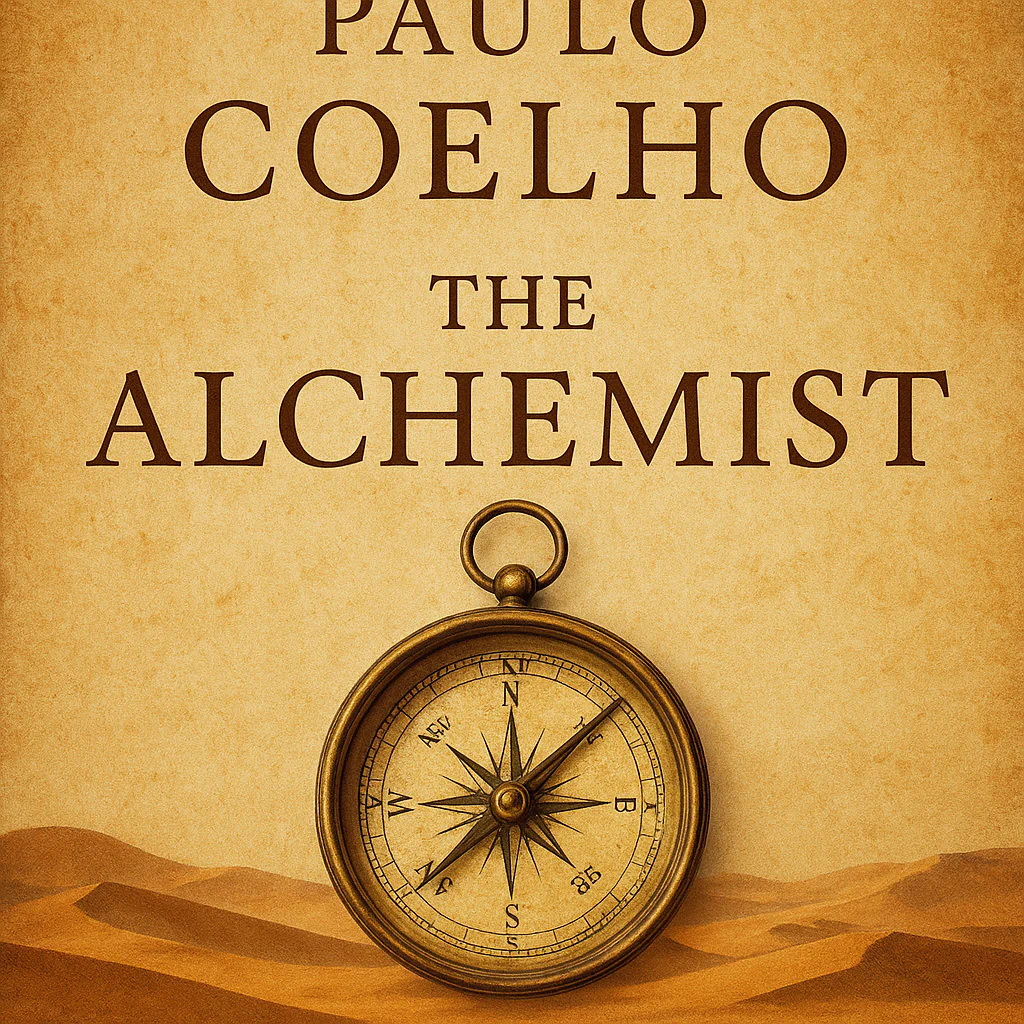
Have you ever felt a whisper in the back of your mind telling you that life is meant for more than just the daily grind? You’re not alone. Since its humble beginnings in 198, Paulo Coelho’s The Alchemist has sold over 65 million copies worldwide, becoming a global phenomenon that transcends language and culture. But amidst the hype and the endless quotes, many readers are left asking the million-dollar question: What is the main point of The Alchemist? Is it a treasure hunt? A spiritual guide? Or something far more personal?
At Book Summary Review™, we’ve dissected every page of this modern classic to bring you the truth. Spoiler alert: the gold Santiago finds at the Pyramids isn’t the real prize. The true treasure lies in the transformation of the soul and the courage to pursue your Personal Legend. In this deep dive, we’ll unravel the book’s core philosophy, decode the mysterious “Language of the World,” and reveal why the journey matters more than the destination. We’ll also tackle the common misconceptions that trip up new readers and share the top 10 quotes that will change how you see your own destiny.
Key Takeaways
- The Core Message: The main point of The Alchemist is that everyone has a Personal Legend (a unique destiny), and the universe conspires to help those who pursue it with courage.
- The Real Treasure: The physical gold Santiago seeks is a metaphor; the true reward is the wisdom, growth, and self-discovery gained during the journey.
- Overcoming Fear: The only thing that stops us from fulfilling our destiny is the fear of failure, which is often worse than the failure itself.
- Living in the Present: Success requires paying attention to omens and living fully in the present moment rather than dwelling on the past or worrying about the future.
- Universal Connection: The book teaches that all things in the universe are connected through the Soul of the World, and striving to better improves everything around you.
Table of Contents
- ⚡️ Quick Tips and Facts
- 📜 Unearthing the History: How The Alchemist Became a Global Phenomenon
- 🧭 The Core Message: What is the Main Point of The Alchemist?
- 🌟 Decoding the Personal Legend: Your Unique Destiny Explained
- 🔮 The Language of the World and the Soul of the Universe
- 🐫 Santiago’s Journey: A Breakdown of the Hero’s Arc
- 👥 Key Characters and Their Symbolic Roles in the Story
- 💎 Top 10 Most Inspiring The Alchemist Quotes to Live By
- 🧠 Common Misconceptions: What The Alchemist Is Actually Not About
- 📚 Why This Book Resonates with Modern Readers and Dreamers
- 🎬 The Alchemist Movie Adaptation: How It Compares to the Book
- 📖 Reading Guide: How to Get the Most Out of Paulo Coelho’s Masterpiece
- ✅ Quick Tips and Facts
- 🏁 Conclusion
- 🔗 Recommended Links
- ❓ FAQ
- 📚 Reference Links
⚡️ Quick Tips and Facts
Before we dive into the desert sands of Santiago’s journey, let’s hit the ground running with the absolute essentials you need to know about The Alchemist. Whether you’re a first-time reader or a seasoned Coelho fan looking to refresh your memory, these nugets will set the stage.
- The Core Premise: It’s a fable about a shepherd boy named Santiago who travels from Spain to Egypt in search of a treasure buried near the Pyramids.
- The “Main Point”: The treasure isn’t just gold; it’s the Personal Legend—your unique destiny—and the person you become while chasing it.
- Global Impact: Since its publication in 198, it has sold over 65 million copies worldwide, making it one of the best-selling books in history.
- The “Maktub” Concept: A recurring Arabic phrase meaning “it is written,” signifying that destiny is pre-ordained but requires human action to unfold.
- Not Just Fantasy: While it features talking animals and alchemists, the book is deeply rooted in Jungian psychology and real-world spiritual practices.
If you want a deeper dive into the plot summary before tackling themes, check out our comprehensive The Alchemist Book Summary right here at Book Summary Review™.
📜 Unearthing the History: How The Alchemist Became a Global Phenomenon

You might wonder, “How did a book written by a Brazilian author in Portuguese become the spiritual bible for millions of English speakers?” The story of The Alchemist‘s rise is almost as magical as the book itself.
From Rejection to Record-Breaker
When Paulo Coelho first published O Alquimista in 198, it was a commercial flop. The initial print run of 2,0 copies sat on shelves, gathering dust. Critics were lukewarm, and the publisher was ready to give up. But then, a miracle happened (or rather, a series of small, persistent actions).
Coelho’s wife, Cristina, refused to let the book die. She convinced the publisher to keep printing it. Slowly, word of mouth began to spread. By 190, it hit the bestseller lists in Brazil. But the real explosion happened when it was translated into English in 193.
Did you know? The book was famously rejected by 12 publishers before finding a home. It took years to gain traction, proving that persistence is often the first step toward a Personal Legend.
The Cultural Shift
Why did it resonate so deeply in the 90s and beyond? We believe it’s because the world was (and still is) hungry for meaning. In an era of increasing materialism, The Alchemist offered a counter-narrative: that the universe is not indifferent, but actively conspiring to help you if you dare to dream.
As noted in our analysis of Classic Literature, few modern fables have managed to bridge the gap between ancient wisdom and modern anxiety as effectively as this one.
🧭 The Core Message: What is the Main Point of The Alchemist?
Here is the million-dollar question, the one that has sparked endless debates in book clubs and coffee shops worldwide: What is the main point of The Alchemist?
Is it about finding gold? No. Is it about traveling to Egypt? Not exactly.
The main point is this: Everyone has a Personal Legend, a specific purpose they are meant to fulfill in life. However, the universe tests us constantly to see if we are worthy of that destiny. The journey itself transforms us, refining our souls just as fire refines gold.
The Paradox of the Destination
Many readers get hung up on the ending, thinking the treasure being at the starting point makes the journey pointless. This is a fundamental misunderstanding.
If Santiago had stayed in Spain, he would have found the chest of gold, but he would have remained a simple shepherd. He would never have learned the Language of the World, never have met the Alchemist, and never have understood the Soul of the Universe.
The Twist: The treasure was never just the gold. The treasure was Santiago’s transformation. As the first video perspective suggests, “The reward for our work is not what we get, but who we become.”
Why We Often Fail
According to our review of Book Sumaries, the book identifies four main reasons people abandon their Personal Legends:
- Age: Believing it’s “too late.”
- Love: Thinking relationships are a cage rather than a support.
- Fear of Failure: Preferring the safety of the known.
- Fear of Success: The guilt of outshining others or the fear of losing the dream once it’s realized.
🌟 Decoding the Personal Legend: Your Unique Destiny Explained
What exactly is a Personal Legend? It’s not just a career goal or a bucket list item. In the context of the book, it is your “true purpose,” the thing you have always wanted to accomplish.
The Definition
Coelho writes: “It’s what you have always wanted to accomplish. Everyone, when they are young, knows what their Personal Legend is. At that point in their lives, everything is clear and everything is possible. They are not afraid to dream, and yearn for everything they would like to see happen to them in their lives.”
The Obstacles
But as we age, a “mysterious force” convinces us that our dreams are impossible. This force isn’t evil; it’s a test. It’s the universe asking, “Are you serious? Are you willing to pay the price?”
Common Bariers to Your Legend
| Barrier | The Lie We Tell Ourselves | The Truth |
|---|---|---|
| Comfort | “I have a good life; why risk it?” | Comfort is the enemy of growth. |
| Skepticism | “That’s just a fairy tale.” | The universe speaks in omens, not logic. |
| Fear | “What if I fail?” | Failure is part of the learning process. |
| Guilt | “I don’t deserve this success.” | Success is your birthright if you pursue your Legend. |
How to Find Yours
- Listen to your heart: It knows everything. It tells you of the world’s history and your dreams.
- Follow the omens: The universe leaves signs. If you keep seeing a specific symbol or meeting a specific person, pay attention.
- Take the first step: “Beginer’s luck” is real. Once you commit, the universe shifts to help you.
🔮 The Language of the World and the Soul of the Universe
One of the most beautiful concepts in the book is the idea that everything is connected. This is the “Soul of the World.”
The Interconnectedness
Coelho suggests that when you strive to become better, everything around you becomes better too. This isn’t just a feel-good mantra; it’s a spiritual law. If you are pursuing your Personal Legend, you are in harmony with the universe.
“I have inside me the winds, the deserts, the oceans, the stars, and everything created in the universe… when we strive to become better than we are, everything around us becomes better, too.”
The Language of the World
This is a language that transcends words. It’s the language of intuition, omens, and silence. Santiago learns to speak this language by observing the desert, the wind, and the sun.
- Omens: These are not random events. They are messages. The flight of the hawks, the appearance of a crystal merchant, theft of his money—each is a lesson.
- The Present Moment: The book emphasizes that the secret to the future lies in the present. “If you pay attention to the present, you can improve upon it.”
🐫 Santiago’s Journey: A Breakdown of the Hero’s Arc
Santiago’s journey is a classic Hero’s Journey (or Monomyth), a structure identified by Joseph Campbell. Let’s break it down step-by-step.
1. The Call to Adventure
Santiago, a shepherd, has a recurring dream about treasure at the Pyramids. He consults a gypsy and meets Melchizedek, the King of Salem, who gives him two stones (Urim and Thummim) to help him read omens.
2. Crossing the Threshold
He sells his sheep and crosses the Strait of Gibraltar into Africa. This is the point of no return. He leaves his comfort zone (the sheep) for the unknown.
3. Trials and Allies
- The Crystal Merchant: Teaches him that dreams can sustain life but also that some people prefer to dream rather than act.
- The Englishman: Teaches him about books and the intellectual side of alchemy, but also that knowledge without experience is useless.
- The Alchemist: The ultimate mentor who teaches him to listen to his heart and understand the Soul of the World.
4. The Ordeal
Santiago is captured by a tribal war band. He must prove he can turn himself into the wind to save his life. This is the ultimate test of faith and connection to the universe.
5. The Reward
He reaches the Pyramids, digs for the treasure, and finds nothing but sand. He is beaten by refugees who mock his dream.
6. The Return
One of the refugees mentions a dream he had about treasure buried at a church in Spain—the very church where Santiago started. Santiago returns home and finds the treasure.
👥 Key Characters and Their Symbolic Roles in the Story
Every character in The Alchemist represents a facet of the human experience or a stage in the spiritual journey.
| Character | Symbolic Role | Key Lesson |
|---|---|---|
| Santiago | The Seeker / The Hero | We all have the potential to fulfill our Personal Legend. |
| Melchizedek | The Wise Old Man | Represents the divine spark that calls us to our destiny. |
| The Crystal Merchant | The Skeptic / The Stagnant | Shows the danger of letting fear paralyze you. |
| Fatima | The Love Interest | True love does not hold you back; it supports your Legend. |
| The Alchemist | The Mentor | Represents the mastery of the self and the universe. |
| The Englishman | The Intellectual | Knowledge is useful, but experience is essential. |
Fun Fact: The Alchemist is described as being over 20 years old, symbolizing the timeless nature of wisdom.
💎 Top 10 Most Inspiring The Alchemist Quotes to Live By
We’ve compiled the most powerful quotes from the book that you can use as daily affirmations. These aren’t just pretty words; they are instructions for living.
- “And, when you want something, all the universe conspires in helping you to achieve it.”
- “It’s the possibility of having a dream come true that makes life interesting.”
- “There is only one thing that makes a dream impossible to achieve: the fear of failure.”
- “When we love, we always strive to become better than we are.”
- “The secret is here in the present. If you pay attention to the present, you can improve upon it.”
- “People are capable, at any time in their lives, of doing what they dream of.”
- “Tell your heart that the fear of suffering is worse than the suffering itself.”
- “I don’t live in either my past or my future. I’m interested only in the present.”
- “One is loved because one is loved. No reason is needed for loving.”
- “The treasure for which you have traveled so far is not the gold, but the person you have become.”
🧠 Common Misconceptions: What The Alchemist Is Actually Not About
Despite its popularity, The Alchemist is often misunderstood. Let’s clear up some myths.
Myth 1: It’s a “Get Rich Quick” Scheme
Reality: The book is not about material wealth. The gold is a metaphor. The real wealth is spiritual growth. If you read it looking for a lottery ticket, you’ll miss the point entirely.
Myth 2: It’s Too Simple for Adults
Reality: While the prose is simple, themes are profound. It’s a “fable for children” in structure, but the psychological depth rivals complex philosophical texts. As our Book Reviews team often notes, simplicity is the ultimate sophistication.
Myth 3: It Promotes Fatalism
Reality: Some think “Maktub” means “do nothing.” Wrong! The book argues that while destiny is written, you must take action to fulfill it. The universe conspires with you, not for you.
Myth 4: It’s Only About Religion
Reality: It draws from Christianity, Islam, and alchemy, but it’s a spiritual, not religious, text. It focuses on universal truths rather than dogma.
📚 Why This Book Resonates with Modern Readers and Dreamers
Why does a book from 198 still top bestseller lists in 2024?
The Crisis of Meaning
In a world of AI, instant gratification, and digital noise, people are starving for authenticity. The Alchemist reminds us that life is a journey, not a destination. It validates the feeling that there is “more” to life than the 9-to-5 grind.
The Power of Intuition
Modern life often suppresses intuition in favor of data. This book champions the inner voice, encouraging readers to trust their gut feelings in a world that demands logic above all else.
A Universal Language
The themes of love, fear, and destiny are universal. Whether you are in New York, Tokyo, or Rio, the struggle to find your purpose is the same.
🎬 The Alchemist Movie Adaptation: How It Compares to the Book
You might be wondering, “Is there a movie?”
The Short Answer: There isn’t a major, widely released Hollywood adaptation of The Alchemist that captures the full essence of the book.
Why No Movie?
Coelho has been protective of the rights. He feels that the internal monologues and spiritual nuances of the book are difficult to translate to the screen without losing the magic. Some attempts have been made, but none have achieved the status of a classic adaptation.
The Book-to-Film Challenge
Adapting The Alchemist is tricky because the “action” is internal. The transformation happens in Santiago’s mind. As we discuss in our Book-to-Film Adaptations category, visual media often struggles with fables that rely heavily on internal spiritual growth.
Recommendation: Stick to the book! The imagination is the best special effect.
📖 Reading Guide: How to Get the Most Out of Paulo Coelho’s Masterpiece
Ready to read (or re-read) The Alchemist? Here is our expert guide to maximizing the experience.
1. Read Slowly
Don’t rush. This is a book to be savored. Pause after each chapter and reflect on the lesson.
2. Keep a Journal
Write down your own “omens.” What dreams are you ignoring? What fears are holding you back?
3. Discuss with Others
Join a book club or discuss with friends. Different perspectives can reveal new layers of meaning.
4. Apply the Lessons
Don’t just read; act. Identify one small step you can take toward your Personal Legend today.
5. Revisit the Quotes
Print out your favorite quotes and put them where you can see them daily.
Conclusion
So, what is the main point of The Alchemist? It’s a question that has led us through deserts, across oceans, and deep into the human soul. The answer is simple yet profound: Your Personal Legend is your destiny, and the journey to achieve it is what makes life worth living.
Santiago didn’t find the treasure at the Pyramids; he found it in himself. He learned that the universe is not a hostile place, but a partner in our growth. The gold was just a symbol of the transformation he underwent.
The Verdict:
- Positives: Timeless wisdom, accessible prose, powerful message of hope, universal appeal.
- Negatives: Can feel overly simplistic to some; the ending may feel anticlimactic if you miss the metaphorical point.
Our Recommendation: Absolutely read it. Whether you are 15 or 75, The Alchemist offers a mirror to your own soul. It reminds us that it is never too late to start, that fear is the only true enemy, and that the treasure we seek is often right where we started, but only after we have traveled far enough to see it with new eyes.
As Carl Jung said, “It is the privilege of a lifetime to become who you really are.” The Alchemist is the map to that journey.
🔗 Recommended Links
Ready to start your own journey? Here are the best places to get your copy of The Alchemist and related resources.
- The Alchemist (Paperback): Amazon | Barnes & Noble | Publisher’s Website
- The Alchemist (Audiobook): Audible | Amazon
- The Alchemist (Kindle): Amazon Kindle Store
❓ FAQ

What is the main theme of The Alchemist by Paulo Coelho?
The main theme is the pursuit of one’s Personal Legend (destiny). The book explores how the universe supports those who follow their dreams and how the journey itself transforms the individual.
Read more about “🏺 The Alchemist Summary: Uncover Your Personal Legend (2026)”
What is the moral of the story in The Alchemist?
The moral is that fear of failure is the only thing that prevents us from achieving our dreams. We must trust the process, listen to our hearts, and understand that the journey is more important than the destination.
Read more about “The Alchemist (Novel) Reviews: 9 Insights That Will Surprise You ✨”
What is the Personal Legend in The Alchemist?
A Personal Legend is your true purpose in life, the thing you have always wanted to accomplish. It is unique to each individual and is the path to true fulfillment.
Read more about “What Is the Main Message of The Alchemist? 14 Life Lessons Revealed ✨”
What does the Alchemist symbolize in the book?
The Alchemist symbolizes wisdom, mastery, and the mentor. He represents the stage of life where one has mastered the art of living and can guide others on their journey.
Read more about “The Alchemist Book Summary (2026): 12 Life Lessons You Can’t Miss ✨”
What is the ending of The Alchemist about?
The ending reveals that the treasure Santiago sought was buried at the church where he started his journey. This symbolizes that the true treasure was the wisdom and growth he gained during his travels, and that the answer was within him (or his starting point) all along.
Read more about “The Alchemist Full Story in English: Unlock the Magic & Meaning ✨”
How does Santiago change throughout The Alchemist?
Santiago evolves from a simple, content shepherd into a wise, self-actualized individual. He learns to listen to his heart, understand the Language of the World, and overcome his fears.
Read more about “The Alchemist Story: Unlocking Its Magic & Meaning ✨ (2026)”
What is the significance of the omens in The Alchemist?
Omens are the language of the universe. They are signs that guide us toward our Personal Legend. Learning to read and trust these omens is crucial for Santiago’s success.
Why does the book emphasize “Maktub”?
“Maktub” means “it is written.” It signifies that destiny is pre-ordained, but it also implies that human action is required to fulfill that destiny. It’s a balance between fate and free will.
Read more about “The Alchemist Summary and Analysis: Unlocking 7 Life Lessons (2026) ✨”
📚 Reference Links
- Paulo Coelho Official Website: paulocoelho.com
- HarperCollins (Publisher): The Alchemist Page
- Goodreads Reviews: The Alchemist on Goodreads
- Sustainable Bliss Co: The Alchemist Key Takeaways & Quotes
- Corey Wilks PsyD: 1 Lessons from The Alchemist
- Medium: 4 Powerful Life Lessons from The Alchemist (Note: Content may be restricted due to security verification).