Support our educational content for free when you purchase through links on our site. Learn more
🔥 How Would You Describe Fahrenheit 451? (2026)

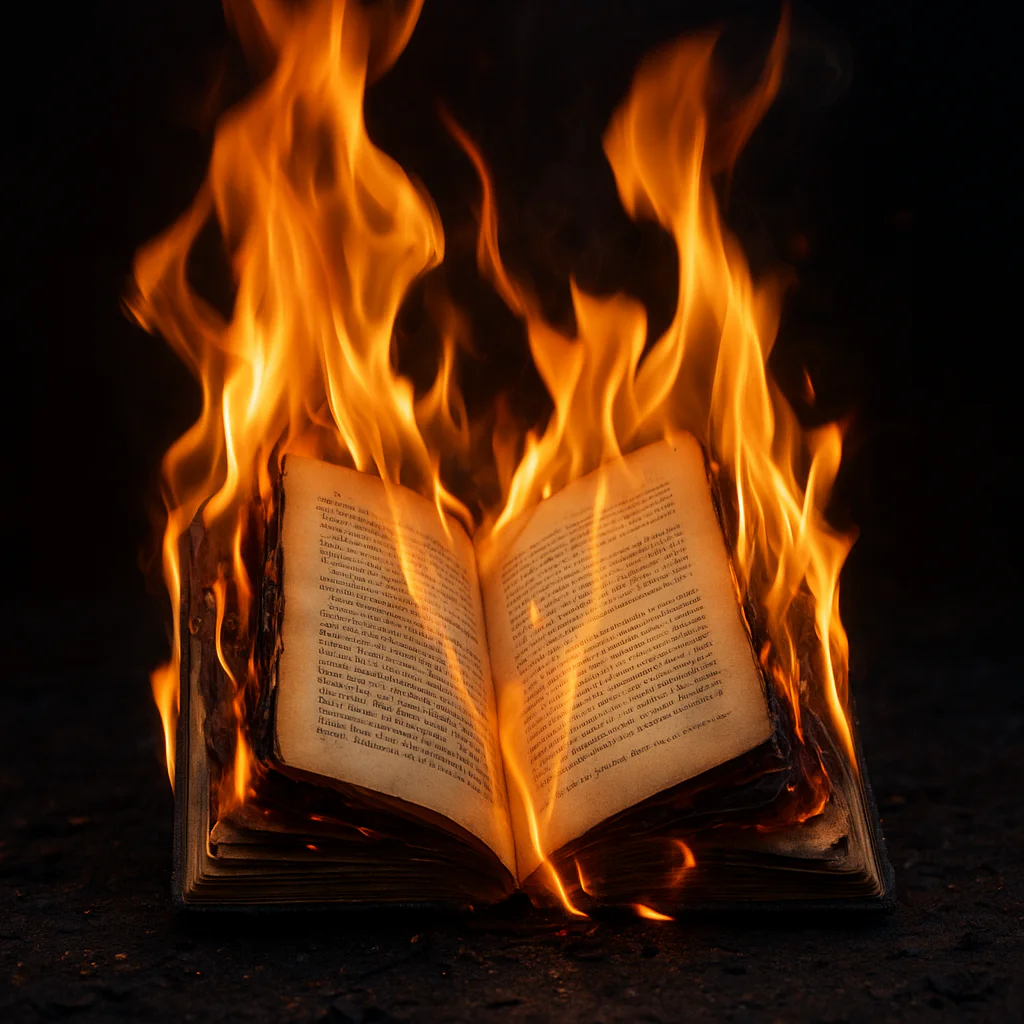

How would you describe the book Fahrenheit 451? Is it a sci-fi thriller, a political manifesto, or a mirror held up to our own distracted lives? When Ray Bradbury penned this masterpiece in just nine days, he wasn’t just writing a story; he was sounding an alarm that is somehow louder today than it was in 1953. We often think of dystopias as warnings against government overeach, but Bradbury insisted the real fire started with us—our desire for comfort, our addiction to screens, and our willingness to trade truth for a good time.
In this deep dive, we unravel the layers of this literary phoenix. You’ll discover why a book about burning books is one of the most banned in history, how the “parlor walls” predicted our social media obsession, and why the ending offers a glimmer of hope amidst the ashes. Whether you’re a student facing a reading assignment or a lifelong fan revisiting the flames, you’ll find fresh insights into why this story refuses to die. By the end, you won’t just know what happens in the book; you’ll understand why it matters more than ever.
Key Takeaways
- 🔥 A Mirror to Modernity: Fahrenheit 451 is less about government censorship and more about self-censorship and the dangers of a society that prioritizes entertainment over truth.
- 📺 Prophetic Tech: Bradbury accurately predicted the isolating effects of mass media, virtual reality, and the erosion of critical thinking decades before the internet existed.
- 🚫 The Irony of Banning: Despite its message against censorship, the novel remains one of the most challenged and banned books in the US, often for its language and themes.
- 📖 The Power of Memory: The story argues that books are essential not just for information, but for preserving the complexity of human emotion and memory.
- ✨ Hope in the Ashes: The novel concludes not with despair, but with the Phoenix rising, suggesting that humanity can rebuild if we choose to remember and learn.
Table of Contents
- ⚡️ Quick Tips and Facts
- 📜 The Burning History: How Fahrenheit 451 Came to Be
- 🔥 The Core Question: How Would You Describe Fahrenheit 451?
- 📖 A Journey Through the Flames: Plot Breakdown by Part
- 🏠 Part I: The Hearth and the Salamander – Igniting the Spark
- 🏜️ Part II: The Sieve and the Sand – The Struggle to Retain Knowledge
- 🌟 Part III: Burning Bright – The Phoenix Rising
- 👥 Who’s Who in the Fire: Key Characters and Their Roles
- 🧠 Decoding the Message: Major Themes and Symbolism
- 📺 From Page to Screen: Adaptations Across Media
- 🎬 Film and Television Versions
- 🎭 Theater, Radio, and Stage Productions
- 🎮 Video Games, Comics, and Interactive Media
- 🚫 The Controversy: Censorship, Banning, and Expurgation
- 🔮 Ray Bradbury’s Prophecy: Predictions for the Future vs. Reality
- 🌍 Cultural Impact: How Fahrenheit 451 Shaped Modern Society
- 💡 Why It Still Matters: The Book’s Relevance Today
- 📚 Conclusion: The Final Verdict on Fahrenheit 451
- 🔗 Recommended Links for Further Reading
- 📖 Reference Links and Sources
⚡️ Quick Tips and Facts
Before we dive into the flames of this literary masterpiece, let’s get the fire started with some essential facts that every book lover should know. If you’re looking for a quick summary of Fahrenheit 451 without reading the whole thing, here is your cheat sheet:
- 🔥 The Title: It refers to the temperature at which book paper catches fire and burns (451°F or 23°C), though scientists note this varies by paper type.
- 📅 The Debut: Published on October 19, 1953, by Ballantine Books.
- ✍️ The Author: The legendary Ray Bradbury, who famously wrote the first draft in just nine days on a rental typewriter in the basement of UCLA’s library.
- 📖 The Length: A compact but powerful 156 pages in the first edition.
- 🚫 The Irony: Despite being a book about censorship, it is one of the most banned and challenged books in American history. You can read the shocking details on our deep dive: 🔥 Why Was Fahrenheit 451 Banned? The Shocking Truth (2026).
- 📺 The Adaptations: From François Truffaut’s 196 film to the 2018 HBO movie starring Michael B. Jordan, this story has refused to stay on the page.
- 🏆 The Legacy: It has sold over 50,0 copies annually for decades and remains a staple in high school curriculums (and a frequent target of book burners).
| Feature | Detail |
|---|---|
| Genre | Dystopian Fiction / Social Science Fiction |
| Protagonist | Guy Montag |
| Setting | A future American city (post-atomic war context) |
| Key Symbol | The Salamander (Firemen’s insignia) & The Phoenix |
| Core Conflict | Individual thought vs. Mass conformity |
📜 The Burning History: How Fahrenheit 451 Came to Be

How do you write a book that predicts the future while living in the past? Ray Bradbury did exactly that. But the story behind Fahrenheit 451 is almost as fascinating as the novel itself.
We often think of dystopias as born from war, but Bradbury’s was born from fear. Written during the height of the McCarthy Era and the Second Red Scare, the atmosphere in America was thick with paranoia. People were afraid of their neighbors, afraid of “un-American” ideas, and yes, afraid of books.
“I wrote this book at a time when I was worried about the way things were going in this country four years ago. Too many people were afraid of their shadows; there was a threat of book burning.” — Ray Bradbury (1956)
However, here is the twist that often gets missed in the rush to label it a political allegory: Bradbury insisted this wasn’t primarily about government censorship. In a 207 interview, he clarified, “It is, in fact, a story about how television destroys interest in reading literature.”
He saw a society turning inward, glued to screens, losing the ability to think deeply. He wrote the first draft in the UCLA library basement because he couldn’t afford a typewriter of his own, pounding out the words on a machine that cost 10 cents for 30 minutes. He finished it in nine days, calling it a “poem” rather than a novel.
This rapid creation wasn’t a sign of haste, but of urgency. Bradbury felt the fire was already lit, and he had to warn us before the flames consumed everything.
🔥 The Core Question: How Would You Describe Fahrenheit 451?
So, how would you describe Fahrenheit 451? If you ask a librarian, they might say it’s a cautionary tale. If you ask a student, they might call it a dystopian classic. But if you ask us here at Book Summary Review™, we’d say it’s a mirror.
It is a story that asks you to look at your own life and ask: Am I happy, or am I just distracted?
Fahrenheit 451 is a dystopian novel that explores the dangers of censorship, conformity, and the erosion of critical thinking. It paints a picture of a future where “firemen” don’t put out fires; they start them to burn books and the houses that hide them. But the true fire isn’t the one burning the paper; it’s the apathy burning in the hearts of the citizens.
The Three Layers of the Story
- The Surface: A thrilling sci-fi chase where a fireman rebels against his oppressive job.
- The Middle: A psychological study of a man (Montag) waking up from a coma of ignorance.
- The Core: A philosophical argument for the necessity of pain, conflict, and complexity in human life.
Bradbury doesn’t just tell you that books are good; he shows you why they are essential. He argues that books are the only things that can hold the contradictions of life, allowing us to understand the full spectrum of human emotion. Without them, we are left with “parlor walls” and “seashell radios” that feed us shallow entertainment until we forget how to feel.
“There must be something in books, something we can’t imagine, to make a woman stay in a burning house.”
This question haunts the entire narrative. Why would someone choose death over losing their books? Because books represent identity, memory, and truth.
📖 A Journey Through the Flames: Plot Breakdown by Part
The novel is structured in three distinct parts, each named after a symbolic element of fire and destruction. Let’s walk through the flames together.
🏠 Part I: The Hearth and the Salamander – Igniting the Spark
The story opens with one of the most famous lines in literature: “It was a pleasure to burn.”
We meet Guy Montag, a fireman who takes pride in his job. His uniform bears the Salamander (a mythical creature said to survive fire), and his truck is called the “Salamander.” He burns books with a smile, believing he is serving society.
But then, he meets Clarisse McClellan, a 17-year-old neighbor who is “weird” because she asks questions. She asks Montag, “Are you happy?”
This simple question cracks Montag’s world. He realizes he isn’t happy; he’s just numb. Meanwhile, his wife, Mildred “Millie” Montag, is a shell of a human being, addicted to sleeping pills and obsessed with her “parlor walls” (massive TV screens that fill the living room). She overdoses on pills one night, and the paramedics treat it like a routine job, pumping her stomach with no emotional connection.
Montag begins to steal books. He hides them under his pillow, terrified but curious. The tension builds as he tries to reconcile his love for his wife with his growing hatred for the society that keeps her empty.
🏜️ Part II: The Sieve and the Sand – The Struggle to Retain Knowledge
Montag’s secret is discovered by his boss, Captain Beatty, a man who knows everything about books but hates them. Beatty explains the history of how society stopped reading: it wasn’t forced by the government initially, but by the public’s desire for comfort. Minorities, religious groups, and advertisers all demanded that nothing be offensive, so everything was diluted until nothing was left but “feel-good” nonsense.
Desperate, Montag seeks help from Faber, a retired English professor he once met in a park. Faber is terrified but agrees to help. He gives Montag a green bullet (a two-way earpiece) so they can communicate.
The title of this section, “The Sieve and the Sand,” comes from a childhood memory of Montag trying to fill a sieve with sand on the beach. No matter how fast he ran, the sand slipped through. He realizes that knowledge without understanding is useless. He tries to memorize the Bible, but the words slip away like sand.
The climax of this section arrives when Montag is called to burn his own house. Beatty forces him to do it, taunting him. Montag snaps. He turns the flamethrower on Beatty, killing him. He then destroys the Mechanical Hound, a robotic tracker sent to hunt him, and fles into the night.
🌟 Part III: Burning Bright – The Phoenix Rising
Montag escapes the city, pursued by the Hound and the police. He finds a group of exiled intellectuals living in the countryside. Led by a man named Granger, these people have memorized entire books to preserve them. They are the books now.
As they sit by the fire, discussing the nature of the Phoenix (a bird that burns itself and rises from the ashes), the city is destroyed by a nuclear war. The war was the inevitable result of a society that refused to think.
In the end, Montag and the exiles decide to return and rebuild. They will not just rebuild the city; they will rebuild the human spirit. The story ends on a hopeful note: “There was a secret in the book… and the book was the secret.”
👥 Who’s Who in the Fire: Key Characters and Their Roles
To truly understand Fahrenheit 451, you need to know the players. They aren’t just characters; they are archetypes of our own society.
| Character | Role | Symbolism | Key Trait |
|---|---|---|---|
| Guy Montag | Protagonist | The Awakened Conscience | Curiosity, guilt, transformation |
| Clarisse McClellan | Catalyst | Nature, Innocence, Truth | “Why” instead of “How” |
| Mildred Montag | Antagonist (Passive) | Apathy, Technology Addiction | Numbness, betrayal |
| Captain Beatty | Antagonist (Active) | Cynical Intelligence, Control | Knowledge used to suppress |
| Faber | Mentor | The Voice of Reason | Fear, wisdom, guidance |
| Granger | Leader | Hope, Resilience | Memory, community |
Guy Montag starts as a loyal soldier of the state. His journey is a hero’s journey of self-discovery. He represents the potential for change in any of us.
Clarisse is the spark. She is the only character who truly lives. She smells the rain, watches the sunrise, and talks to people. Her disappearance (implied to be a hit by the state) symbolizes the erasure of individuality.
Captain Beatty is the most complex villain. He isn’t stupid; he’s too smart. He knows the value of books, which is why he fears them. He represents the danger of knowledge without empathy. As he says, “A book is a loaded gun in the house next door.”
Mildred is the tragic figure. She isn’t evil; she’s empty. She represents the danger of a life lived entirely through screens, where human connection is replaced by “family” on a TV wall.
🧠 Decoding the Message: Major Themes and Symbolism
What is the main message of Fahrenheit 451? It’s not just “don’t burn books.” It’s about why we need them.
1. Censorship vs. Self-Censorship
Bradbury argues that the greatest threat to freedom isn’t always a dictator with a torch. It’s us. We censor ourselves to avoid discomfort. We demand that art be “safe,” “offensive-free,” and “entertaining.”
“It’s not books you need, it’s some of the things that once were in books.” — Faber
2. The Power of Technology
The parlor walls, seashell radios, and the Mechanical Hound are not just sci-fi gadgets; they are metaphors for our modern social media, smartphones, and algorithms. They isolate us, distract us, and make us passive.
- The Parlor Walls: Represent the endless stream of content that fills our time but leaves us hungry.
- The Mechanical Hound: Represents the surveillance state and the loss of privacy.
3. The Importance of Pain
One of the most profound themes is that pain is necessary for growth. Beatty argues that books make people unhappy because they show the dark side of life. But Montag learns that without pain, there is no joy. Without conflict, there is no resolution.
“We must all be alike. Not everyone born free and equal, as the Constitution says, but everyone made equal.” — Beatty
4. Nature vs. Artificiality
Clarisse represents nature (dew, moon, rain), while Mildred represents the artificial (TV, pills, synthetic food). The story suggests that reconnecting with nature is essential for reconnecting with our humanity.
📺 From Page to Screen: Adaptations Across Media
Fahrenheit 451 has refused to stay on the page. It has been adapted into films, plays, and even video games. But how do they compare?
🎬 Film and Television Versions
- 196 Film (François Truffaut): The first major adaptation. It stars Oskar Werner as Montag. It’s visually stunning but changes the ending significantly. In the book, the city is destroyed; in the film, it’s ambiguous.
- 2018 HBO Film (Ramin Bahrani): Starring Michael B. Jordan as Montag and Michael Shannon as Beatty. This version modernizes the setting, replacing the parlor walls with virtual reality headsets and social media. It’s a bold, gritty take that resonates with today’s digital age.
🎭 Theater, Radio, and Stage Productions
- 1979 Play: Bradbury adapted his own novel into a play. Interestingly, in this version, Clarisse survives and joins the exiles, offering a more hopeful ending than the book.
- Radio: In 1976, Bradbury narrated an audio version that earned a Gramy nomination. His voice brings a unique warmth to the cold world of the novel.
🎮 Video Games, Comics, and Interactive Media
- Text Adventure (1984): A game co-written by Bradbury himself, allowing players to experience the story interactively.
- Graphic Novel (209): Ray Bradbury’s Fahrenheit 451: The Authorized Adaptation by Tim Hamilton. This visual retelling captures the noir atmosphere perfectly.
- Easter Eggs: The code 0451 appears in many immersive sim games (like System Shock and BioShock) as a nod to the book.
🚫 The Controversy: Censorship, Banning, and Expurgation
Here is the irony that makes our heads spin: Fahrenheit 451 is one of the most banned books in the United States.
The “Bal-Hi” Edition
In 1967, Ballantine Books released a version for high schools that censored 75 passages. They removed words like “hell,” “damn,” and “abortion.” They even changed a “drunk man” to a “sick man” and “cleaning navel fluff” to “cleaning ears.”
When Bradbury found out, he was furious. He demanded the original version be reinstated. In 1980, the uncensored version was restored.
“There is more than one way to burn a book. And the world is full of people running about with lit matches. Every minority… feels it has the will, the right, the duty to douse the kerosene.” — Ray Bradbury
Why Was It Banned?
- Religious Objections: Some groups found the book anti-religious or blasphemous.
- Political Objections: Others felt it was too critical of the government or too “communist.”
- Language: The use of profanity and references to suicide.
For a deeper dive into the specific incidents, check out our article: 🔥 Why Was Fahrenheit 451 Banned? The Shocking Truth (2026).
🔮 Ray Bradbury’s Prophecy: Predictions for the Future vs. Reality
Did Bradbury predict the future? Or did he just describe the present?
| Prediction in Book | Reality Today |
|---|---|
| Parlor Walls | Smart TVs & Streaming: We have massive screens that dominate our living rooms. |
| Seashell Radios | Earbuds & Podcasts: We constantly listen to audio, isolating ourselves from the world. |
| Speeding Cars | High-Speed Traffic: The obsession with speed and the lack of connection to the road. |
| Censorship by Public | Cancel Culture & Self-Censorship: We often silence ourselves to avoid offending others. |
| War by Drones | Remote Warfare: The detachment of killing from a distance. |
Bradbury didn’t predict the internet, but he predicted the effect of the internet. He predicted a world where we are connected to everything but connected to no one.
🌍 Cultural Impact: How Fahrenheit 451 Shaped Modern Society
The impact of Fahrenheit 451 goes far beyond literature. It has influenced politics, technology, and culture.
- HTTP Status Code 451: In 2015, the IETF (Internet Engineering Task Force) created a new HTTP status code, 451, to indicate that a resource is unavailable for legal reasons (censorship). A direct nod to the book.
- Educational Staple: It is one of the most taught books in American high schools, sparking debates about censorship and free speech.
- Social Movements: The book has been used as a rallying cry for free speech advocates and librarians fighting against book bans.
💡 Why It Still Matters: The Book’s Relevance Today
Why should you read Fahrenheit 451 in 2026? Because the fire is still burning.
We live in an age of information overload but wisdom deficit. We scroll through thousands of posts a day but rarely stop to think. We have access to all the world’s knowledge, yet we struggle to understand each other.
Montag’s journey is our journey. It asks us to put down the phone, pick up a book, and ask the hard questions. It reminds us that comfort is the enemy of truth.
“Stuff your eyes with wonder,” he said, “live as if you’d drop dead in ten seconds.” — Ray Bradbury
This quote, featured in the first video of our series, captures the essence of the book. Life is short. Don’t waste it on shallow distractions.
Check out the video analysis here: 🎥 Featured Video: The Fire That Never Dies
📚 Conclusion: The Final Verdict on Fahrenheit 451

So, how would you describe Fahrenheit 451?
It is a masterpiece of dystopian fiction that transcends its genre. It is a warning, a call to action, and a love letter to the written word.
Positives:
- ✅ Timeless Themes: The issues of censorship, technology, and apathy are more relevant than ever.
- ✅ Compelling Characters: Montag’s transformation is one of the most satisfying arcs in literature.
- ✅ Prophetic Vision: Bradbury’s predictions about media and society are eerily accurate.
- ✅ Concise Power: It packs a massive punch in a short, readable format.
Negatives:
- ❌ Pacing: Some readers find the middle section slow as Montag struggles with his internal conflict.
- ❌ Dated Technology: While prophetic, some of the tech descriptions (like the “seashell radios”) feel a bit retro now.
- ❌ Complexity: The philosophical arguments can be dense for younger or casual readers.
Our Recommendation:
Read it. Whether you are a student, a teacher, or just a curious soul, Fahrenheit 451 is essential reading. It challenges you to think, to feel, and to remember. It reminds us that books are not just paper and ink; they are the soul of humanity.
If you haven’t read it, start today. If you have, read it again. The fire is waiting.
🔗 Recommended Links for Further Reading
Ready to dive deeper? Here are some resources to fuel your fire:
-
👉 Shop the Book:
Fahrenheit 451 (Paperback): Amazon | Barnes & Noble | Book Depository
Fahrenheit 451 (Audible): Audible
Fahrenheit 451 (Kindle): Amazon Kindle -
Related Articles:
❓ FAQ
What is the main idea of the book Fahrenheit 451?
The main idea is that censorship and conformity destroy the human spirit. Bradbury argues that books are essential for critical thinking, empathy, and understanding the complexity of life. Without them, society becomes shallow, apathetic, and ultimately self-destructive.
Read more about “🔥 Why Was Fahrenheit 451 Banned? The Shocking Truth (2026)”
How would you describe the setting of Fahrenheit 451?
The setting is a dystopian future in an unnamed American city. It is characterized by high-speed cars, massive wall-sized televisions, robotic trackers, and a society where books are illegal. The atmosphere is one of opressive conformity and technological isolation.
Read more about “🚨 Why Read 1984? 7 Life-Saving Truths (2026)”
How is Fahrenheit 451 described?
It is described as a dystopian novel, a social commentary, and a cautionary tale. It blends science fiction elements with philosophical inquiry. The tone is often dark, urgent, and poetic.
What is the main message of Fahrenheit 451?
The main message is that knowledge and critical thinking are vital for a free and happy society. We must resist the urge to censor ourselves and others, and we must embrace the pain and complexity that come with deep thought.
Read more about “Fahrenheit 451 Setting Uncovered: 7 Surprising Secrets You Didn’t Know 🔥”
Who is the protagonist in Fahrenheit 451?
The protagonist is Guy Montag, a fireman who begins to question his role in burning books and eventually rebels against the oppressive society.
Read more about “How Many Pages Are in Fahrenheit 451? 🔥 The Ultimate Guide (2026)”
What does the title Fahrenheit 451 symbolize?
The title symbolizes the temperature at which book paper catches fire and burns. It represents the destruction of knowledge and the danger of censorship.
Read more about “Animal Farm Book Summary: Unmasking Orwell’s Timeless Allegory 🐖 (2026)”
Why was Fahrenheit 451 banned?
It has been banned for various reasons, including religious objections, political concerns, and language (profanity). Ironically, the book itself is about the dangers of banning books.
Read more about “Why was Fahrenheit 451 banned?”
What are the major themes in Fahrenheit 451?
Major themes include censorship, technology vs. humanity, conformity, the power of knowledge, nature vs. artificiality, and the necessity of pain.
Read more about “What Really Happens at the End of Fahrenheit 451? 🔥 (2026)”
How does Fahrenheit 451 relate to modern society?
It relates to modern society through its depiction of media overload, social isolation, self-censorship, and the erosion of critical thinking. The “parlor walls” are a direct parallel to our smartphones and social media.
Read more about “🔥 Ultimate Book Summary: *Fahrenheit 451* Explained (2026)”
What is the ending of Fahrenheit 451?
Montag escapes the city, joins a group of exiled intellectuals who memorize books, and watches as the city is destroyed by nuclear war. The survivors plan to rebuild society with a focus on knowledge and humanity.
Read more about “Fahrenheit 451 Movie (2018) 🔥 A Bold Reimagining or Missed Opportunity?”
📖 Reference Links and Sources
- National Endowment for the Arts: Fahrenheit 451 – NEA Big Read
- Wikipedia: Fahrenheit 451
- Britannica: Censorship
- Ray Bradbury Official Website: Ray Bradbury
- Ballantine Books: Fahrenheit 451 Publisher Page
- HBO: Fahrenheit 451 (2018)
- IMDb: Fahrenheit 451 (196)