Support our educational content for free when you purchase through links on our site. Learn more
🚨 Why Read 1984? 7 Life-Saving Truths (2026)

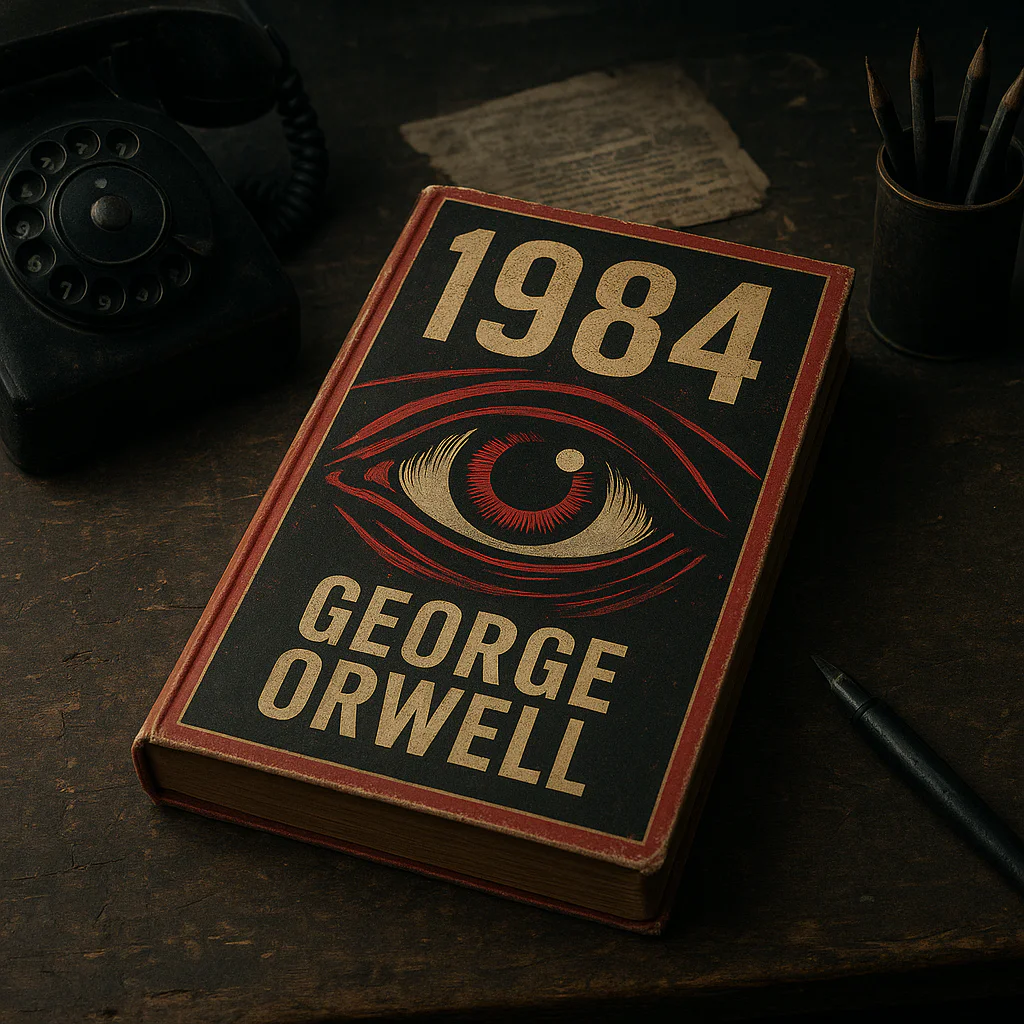
Ever walked into a room and felt like you were being watched, only to realize it was just your phone’s camera light blinking? We’ve all been there, but in George Orwell’s 1984, that feeling is a constant, suffocating reality. You might be scrolling through your feed wondering, “What is the point of reading 1984?” Is it just another dusty classic assigned in high school to make us miserable? Absolutely not. In fact, ignoring this book in 2026 is like trying to navigate a storm without a compass.
Sales of 1984 have skyrocketed by over 70% during times of political turmoil, proving that when the world feels like it’s spinning off the rails, we instinctively turn to Orwell for answers. This isn’t a story about a man named Winston Smith; it’s a mirror held up to our own digital age, reflecting the terrifying ease with which truth can be rewritten, language twisted, and privacy erased. From the chilling concept of “Newspeak” to the psychological horror of Room 101, we’re about to unpack seven critical lessons that could literally save your sanity in an era of “alternative facts.”
Ready to see if you can still say “2 + 2 = 4” when the world tells you otherwise? Let’s dive in.
Key Takeaways
- It’s a Warning, Not a Prophecy: 1984 isn’t predicting the future; it’s exposing the mechanics of totalitarianism that are already active in our modern surveillance state.
- Language is Power: The novel teaches us that Newspeak (shrinking vocabulary) is the first step to destroying independent thought and controlling reality.
- Truth is Fragile: In a world of “fake news,” the book reminds us that objective truth requires constant vigilance to survive against state-sponsored rewriting of history.
- Privacy is Human: The erosion of privacy isn’t just about data; it’s the death of intimacy and the individual self, making privacy a radical act of rebellion.
- 7 Critical Lessons: We break down exactly 7 ways Winston Smith’s struggle applies to your life today, from cognitive disonance to the power of memory.
Table of Contents
- ⚡️ Quick Tips and Facts
- 📜 The Historical Context: Why Orwell Wrote 1984 in 1948
- 🧠 The Core Purpose: What Is the Point of Reading 1984 Today?
- 🕵️ ♀️ 7 Critical Lessons We Learn from Winston Smith’s Struggle
- 1. The Danger of Language Manipulation and Newspeak
- 2. The Fragility of Objective Truth and Reality Control
- 3. The Psychology of Surveillance and the Panopticon Effect
- 4. The Erosion of Privacy and the Death of Intimacy
- 5. The Power of Memory as an Act of Rebellion
- 6. The Mechanisms of Doublethink and Cognitive Disonance
- 7. The Ultimate Betrayal: Love vs. Loyalty to the State
- 📺 1984 in the Modern World: Parallels with Social Media and Fake News
- 📚 Why 1984 Remains a Dystopian Masterpiece for New Generations
- 🤔 Common Misconceptions About the Novel’s Message
- 💡 How to Get the Most Out of Your First Read
- 🏁 Conclusion: Is Reading 1984 Still Worth Your Time?
- 🔗 Recommended Links
- ❓ FAQ: Your Burning Questions About 1984 Answered
- 📖 Reference Links
⚡️ Quick Tips and Facts
Before we dive into the rabbit hole of Oceania, let’s hit the rewind button on the basics. If you’re wondering what is the point of reading 1984, here is the lightning round of why this book isn’t just another dusty classic gathering cobwebs on your shelf.
- It’s Not a Prophecy, It’s a Warning: Contrary to popular belief, Orwell didn’t predict the future; he extrapolated the worst of his present. Written in 1948 (the numbers reversed to 1984), it was a cautionary tale about the trajectory of totalitarianism.
- Sales Spikes are Real: When the world feels like it’s spinning off the rails, sales of 1984 skyrocket. In 2017, following the “alternative facts” controversy, sales jumped sevenfold. It was the third most checked-out book at the New York Public Library in 2020.
- The “Big Brother” Effect: The term “Big Brother” has entered our lexicon, but do you know it refers to the Party’s leader who may or may not exist? The fear is the point, not the person.
- A Hybrid Nightmare: Modern society isn’t just 1984 or Brave New World; it’s a terrifying cocktail of both. We have the surveillance of Orwell and the distraction of Huxley.
- The Ultimate Test: The book asks a simple, terrifying question: Can you still say “2 + 2 = 4” when the state tells you it equals 5?
For a deeper dive into the plot and characters, check out our comprehensive 1984 Book Summary here at Book Summary Review™.
📜 The Historical Context: Why Orwell Wrote 1984 in 1948
To truly grasp the point of reading 1984, you have to understand the ghost that haunted George Orwell. He wasn’t writing from a vacuum; he was writing from the ashes of World War II and the rising shadow of the Soviet Union.
Orwell, whose real name was Eric Arthur Blair, had seen the Spanish Civil War firsthand. He witnessed how political factions twisted the truth to suit their narratives, a phenomenon that would later become the bedrock of the Party’s manipulation in the novel. He saw Stalin’s purges, the show trials, and the systematic erasure of history.
“All history is a palimpsest,” Orwell once noted, meaning that history is written over and over again until the original text is unreadable.
In 1984, the Ministry of Truth (Minitrue) doesn’t just tell lies; it rewrites the past to ensure the Party is always right. If the Party says they produced more chocolate this year, the records are altered to reflect that, and anyone who remembers the shortage is “vaporized.”
Why does this matter to you today?
Because the mechanism of gaslighting on a societal scale is no longer fiction. When we see news outlets rewriting narratives to fit a political agenda, or when “fake news” becomes a catch-all phrase to dismiss inconvenient truths, we are living in a micro-version of Airstrip One.
Orwell died just seven months after the book’s publication on June 8, 1949. He never saw the world he warned us about, but he saw enough to know the direction were heading. As we explore in our Author Profiles section, Orwell’s life was a testament to the power of truth-telling in the face of overwhelming pressure.
🧠 The Core Purpose: What Is the Point of Reading 1984 Today?
So, we’ve established the history. But what is the point of reading 1984 in an age of TikTok, AI, and 24-hour news cycles? Is it just to feel depressed? Absolutely not.
The core purpose is immunity.
Reading 1984 acts as a vaccine against totalitarian thinking. By exposing yourself to the extreme mechanics of a dystopian regime, you develop a “radar” for the early warning signs in your own society. You learn to recognize:
- The Erosion of Language: When words lose their meaning, thought loses its structure.
- The Manipulation of Reality: When facts are malleable, truth becomes whatever the powerful say it is.
- The Cult of Personality: When a leader is deified, critical thinking is the first casualty.
As O’Brien, the antagonist, chillingly explains to Winston Smith: “The object of persecution is persecution. The object of torture is torture. The object of power is power.”
This is the crux of the novel. The Party doesn’t want to control you for the sake of efficiency or happiness; they want control for the sake of control. Reading the book forces you to confront the terrifying possibility that power can be an end in itself.
But there’s another layer. It’s about human resilience. Even in a world where every door is watched and every thought is policed, Winston Smith tries to hold onto a scrap of his humanity. The tragedy of the book isn’t just that he loses; it’s that he tries. And that struggle is what makes the book a masterpiece of Classic Literature.
🕵️ ♀️ 7 Critical Lessons We Learn from Winston Smith’s Struggle
Winston Smith is not a superhero. He’s a middle-aged, varicose-veined, chain-smoking bureaucrat with a bad back. He is the “everyman” of the dystopian world. His journey through the novel offers seven critical lessons that are more relevant now than ever.
1. The Danger of Language Manipulation and Newspeak
The Party’s goal is to shrink the range of thought by shrinking the range of language. This is Newspeak.
- The Concept: By eliminating words like “fredom,” “rebellion,” or “justice,” the Party makes it impossible to conceive of these ideas. If you can’t say it, you can’t think it.
- The Lesson: Protect your vocabulary. When political discourse reduces complex issues to slogans, or when we stop using nuanced language, we are paving the way for thought control.
- Real World Parallel: Think about how “cancel culture” or political buzzwords can shut down debate. If we lose the words to articulate our grievances, we lose the ability to fight them.
2. The Fragility of Objective Truth and Reality Control
In Oceania, the past is whatever the Party says it is. Winston’s job at the Ministry of Truth is to alter old newspapers so they match the current narrative.
- The Concept: Doublethink is the ability to hold two contradictory beliefs simultaneously and accept both. “War is Peace,” “Freedom is Slavery,” “Ignorance is Strength.”
- The Lesson: Objective truth is fragile. It requires constant vigilance to maintain. When a society stops caring about facts and starts caring only about “narrative,” reality begins to dissolve.
- The “2 + 2 = 5” Test: O’Brien asks Winston to believe that 2 + 2 = 5. The ultimate victory of the Party is not just making Winston believe it, but making him feel it.
3. The Psychology of Surveillance and the Panopticon Effect
The telescreens are always on. The Thought Police are everywhere. But the most powerful aspect isn’t the surveillance itself; it’s the uncertainty.
- The Concept: You never know if you are being watched, so you must assume you are always being watched. This creates a self-policing society.
- The Lesson: In the digital age, we carry our own telescreens in our pockets. Every click, like, and search is recorded. The psychological impact of knowing we are being tracked changes our behavior, making us conform even without a boot on our neck.
4. The Erosion of Privacy and the Death of Intimacy
In 1984, the Party seeks to destroy the private sphere. There are no secrets, no private thoughts, no intimate moments.
- The Concept: The Party wants to sever the bond between individuals. Love is dangerous because it creates a loyalty stronger than loyalty to the Party.
- The Lesson: Privacy is not just about hiding secrets; it’s about having a space where you can be your authentic self. Without privacy, there is no individuality, and without individuality, there is no humanity.
5. The Power of Memory as an Act of Rebellion
Winston’s rebellion begins with a diary. He writes down what he remembers, even if it contradicts the official record.
- The Concept: Memory is the only link to objective truth. If you can remember the past, you can prove the present is a lie.
- The Lesson: In an era of “alternative facts,” remembering is a radical act. Preserving personal and collective history is a form of resistance against those who want to rewrite the narrative.
6. The Mechanisms of Doublethink and Cognitive Disonance
Doublethink is the ultimate psychological weapon. It allows the Party to change the past without anyone noticing.
- The Concept: It’s not just lying; it’s believing the lie so deeply that you forget you ever knew the truth.
- The Lesson: We must be vigilant against our own cognitive disonance. When we ignore facts that contradict our beliefs, we are practicing a mild form of doublethink.
7. The Ultimate Betrayal: Love vs. Loyalty to the State
The climax of the novel takes place in Room 101, where Winston is forced to confront his worst fear (rats).
- The Concept: The Party breaks Winston not by torturing his body, but by forcing him to betray Julia. “Do it to Julia!” he screams.
- The Lesson: The ultimate goal of totalitarianism is to destroy the human spirit’s capacity for love. When you can no longer love anyone but the state, you are completely conquered.
📺 1984 in the Modern World: Parallels with Social Media and Fake News
Is 1984 a prophecy? No. But is it a mirror? Absolutely.
Let’s look at the parallels between Orwell’s Oceania and our modern digital landscape.
| Feature | 1984 (Oceania) | Modern World (Digital Age) |
|---|---|---|
| Surveillance | Telescreens in every home | Smartphones, smart speakers, CCTV, data tracking |
| Information Control | Ministry of Truth rewrites history | Algorithms curate news, “fake news” accusations, deepfakes |
| Language | Newspeak reduces vocabulary | Political correctness, buzzwords, soundbites, memes |
| Social Control | Thought Police and Spies | Cancel culture, doxxing, social credit systems |
| War | Perpetual war to consume resources | Endless “war on terror,” military-industrial complex |
| Privacy | Non-existent | Eroded by data brokers, terms of service, surveillance capitalism |
The Hybrid Nightmare:
As noted in our analysis, modern society is a hybrid of 1984 and Brave New World. We have the surveillance of Orwell (cameras, data tracking) mixed with the distraction of Huxley (endless entertainment, dopamine loops, triviality).
We are not just being watched; we are being sold. Our attention is the product. The “telescopes” of the future aren’t just watching us; they are feeding us content designed to keep us angry, distracted, and compliant.
The “Fake News” Phenomenon:
In 1984, the Party changes the past to suit the present. Today, we see “alternative facts” and the rapid spread of misinformation. The danger isn’t just that people believe lies; it’s that they stop caring about the truth. When truth becomes subjective, power becomes absolute.
For a deeper look at how these themes translate to film, check out our Book-to-Film Adaptations section, where we analyze the 1984 movie and its impact.
📚 Why 1984 Remains a Dystopian Masterpiece for New Generations
Why does a book written in 1949 still dominate bestseller lists in the 2020s? Why do teenagers, who have never known a world without the internet, find it so terrifyingly relevant?
1. The Universal Fear of Loss of Control
At its heart, 1984 is about the loss of agency. In a world where algorithms decide what we see, where our data is harvested, and where our opinions are shaped by echo chambers, the fear of losing control is palpable. Winston Smith’s struggle to maintain his own identity resonates with anyone who feels overwhelmed by the system.
2. The Timelessness of Human Nature
Orwell didn’t just write about politics; he wrote about human nature. The capacity for cruelty, the desire for power, the fear of the unknown, and the need for connection are universal. These traits haven’t changed in 75 years.
3. The Power of the Warning
A warning is only useful if it is heard. 1984 is a warning that has been ignored, repeated, and then ignored again. Each time we face a new political crisis, the book resurfaces because the warning is still valid.
4. The Literary Craftsmanship
Beyond themes, the book is a masterpiece of prose. The atmosphere is suffocating, the characters are complex, and the plot is relentless. It’s a book that stays with you long after you finish the last page.
As we explore in our Book Reviews, 1984 is not just a story; it’s a mirror. And sometimes, the reflection is hard to look at.
🤔 Common Misconceptions About the Novel’s Message
Let’s clear up some of the confusion that often surrounds 1984.
Misconception 1: “1984 is a prediction of the future.”
- Reality: It’s a warning. Orwell was extrapolating from the totalitarian regimes of his time (Stalinism, Nazism, Fascism). He wasn’t predicting the specific events of 1984; he was showing what could happen if we didn’t stop the trends he saw.
Misconception 2: “The book is about the government spying on us.”
- Reality: While surveillance is a major theme, the book is more about psychological control. The telescreens are just tools. The real horror is the internalization of the Party’s ideology. It’s about making you want to be oppressed.
Misconception 3: “Winston Smith is a hero.”
- Reality: Winston is a tragic figure. He tries to rebel, but he fails. He betrays the person he loves. He ends up loving Big Brother. His failure is the point. It shows how difficult it is to resist a totalitarian system.
Misconception 4: “The book is too depressing to read.”
- Reality: It is depressing, but it’s also empowering. By seeing the worst-case scenario, we are better equipped to prevent it. It’s a call to action, not a resignation to fate.
💡 How to Get the Most Out of Your First Read
Ready to dive in? Here are some tips from the Book Summary Review™ team to maximize your experience.
- Read the Introduction: Many editions include an introduction by Orwell or a contemporary scholar. It provides crucial context.
- Keep a Journal: Note down the slogans, the concepts (Newspeak, Doublethink), and your reactions. The book is dense, and a journal helps you process the information.
- Don’t Rush: The pacing is slow and deliberate. Let the atmosphere sink in.
- Discuss with Others: 1984 is a book that sparks debate. Join a book club or discuss it with friends. Different perspectives can reveal new layers.
- Connect to Current Events: As you read, make connections to the news. You’ll be surprised how often you find yourself saying, “Wait, that’s happening right now.”
Recommended Editions:
- Paperback: The Penguin Classics edition is widely available and includes helpful notes.
- Audiobook: Narrated by Michael Y. Smith, this version captures the grim tone perfectly.
- Hardcover: For collectors, the Secker & Warburg first edition is a treasure, but any modern hardcover will do.
👉 Shop for your copy:
- Paperback: Amazon | Barnes & Noble | Orwell Foundation
- Audiobook: Audible | Amazon
🏁 Conclusion: Is Reading 1984 Still Worth Your Time?

We started this journey asking what is the point of reading 1984. We’ve traveled through the smogy streets of Airstrip One, witnessed the horrors of Room 101, and grappled with the terrifying concepts of Newspeak and Doublethink.
So, is it worth it? Without a doubt, yes.
Reading 1984 is not about predicting the future; it’s about protecting the present. It is a vaccine against the erosion of truth, a shield against the manipulation of language, and a reminder of the value of privacy and love.
In a world where “fake news” is a common phrase, where surveillance is normalized, and where the line between fact and fiction is increasingly blurred, 1984 is more relevant than ever. It challenges us to think critically, to question authority, and to hold onto our humanity.
As we close this chapter, remember Winston’s final words: “He loved Big Brother.” It’s a chilling ending, but it’s also a warning. Don’t let it happen to you. Read the book. Stay vigilant. And never forget that 2 + 2 = 4.
🔗 Recommended Links
If you’re ready to dive deeper into the world of dystopian literature or want to own a copy of this masterpiece, here are our top picks:
- 1984 by George Orwell (Paperback): Amazon | Barnes & Noble | Penguin Random House
- 1984 (Audiobook): Audible | Amazon
- Brave New World by Aldous Huxley: Amazon | Barnes & Noble
- Animal Farm by George Orwell: Amazon | Barnes & Noble
- The Orwell Foundation: Official Website
❓ FAQ: Your Burning Questions About 1984 Answered
How does 1984 compare to Brave New World?
While 1984 depicts control through pain and fear (surveillance, torture, book burning), Aldous Huxley’s Brave New World depicts control through pleasure and distraction (drugs, entertainment, apathy). Modern society is often seen as a hybrid of both, featuring the surveillance of 1984 and the distraction of Brave New World.
Read more about “Animal Farm Book Summary: Unmasking Orwell’s Timeless Allegory 🐖 (2026)”
Is 1984 a warning or a prediction?
It is a warning. Orwell was extrapolating from the totalitarian regimes of his time (Stalinism, Nazism, Fascism). He wasn’t predicting the specific events of 1984; he was showing what could happen if we didn’t stop the trends he saw.
Read more about “What Is the Main Lesson of 1984? 7 Powerful Truths Revealed 📖”
How does 1984 predict modern surveillance?
The book predicted the concept of ubiquitous surveillance (telescreens) and the psychological impact of being watched. In the modern world, this translates to smartphones, smart speakers, CCTV, and data tracking. The “Panopticon effect” where we self-police because we think we are being watched is a key theme.
Read more about “🧠 What is the Main Point of 1984? The Shocking Truth (2026)”
What are the main themes of George Orwell’s 1984?
The main themes include totalitarianism, surveillance, language manipulation (Newspeak), the fragility of truth, the power of memory, and the destruction of love and individuality.
Read more about “🚫 Why is 1984 Controversial? 8 Shocking Reasons It’s Banned”
What is the significance of Big Brother in 1984?
Big Brother represents the cult of personality and the omnipresent state. He may or may not exist, but the fear of him is what keeps the population in line. He is the symbol of the Party’s absolute power.
Read more about “1984 George Orwell Movie: Unveiling the Dark Classic 🎥”
Why is 1984 still relevant today?
Because the mechanisms of control described in the book—surveillance, language manipulation, erasure of truth, and psychological control—are increasingly present in our modern world. The book serves as a mirror to our society, reflecting our fears and vulnerabilities.
Read more about “What Really Happens at the End of Fahrenheit 451? 🔥 (2026)”
What lessons can we learn from 1984?
We learn the importance of objective truth, the power of language, the value of privacy, and the necessity of critical thinking. We also learn that love is a powerful act of rebellion.
Read more about “1984 Book Summary: Unmasking Orwell’s Dystopian Masterpiece 📚”
What is the main message of George Orwell’s 1984?
The main message is that power is an end in itself. Totalitarian regimes seek absolute control over the human mind, not just obedience. The book warns us that without truth, language, and love, humanity is reduced to “cogs in a machine.”
Read more about “When Was *1984* Banned? 7 Shocking Censorship Moments (2025) 📚”
Why is 1984 considered a classic dystopian novel?
It is considered a classic because it defined the genre, introduced enduring concepts like “Big Brother” and “Newspeak,” and remains highly relevant to contemporary issues. Its literary craftsmanship and psychological depth also contribute to its status.
Read more about “Unlocking 1984 Full Book: 15 Must-Know Facts & Insights 📖 (2025)”
How does 1984 relate to modern society?
It relates through the parallels in surveillance, information control, and the erosion of privacy. The concept of “fake news” and the manipulation of historical records are direct echoes of the Ministry of Truth.
Read more about “🔥 Ultimate Book Summary: *Fahrenheit 451* Explained (2026)”
What are the key themes in the book 1984?
Key themes include totalitarianism, surveillance, language manipulation, the fragility of truth, the power of memory, and the destruction of love and individuality.
Read more about “11 Unforgettable 1984 Themes That Still Haunt Us in 2025 👁️”
Is 1984 still relevant today?
Yes. The book’s themes of surveillance, information control, and the erosion of truth are more relevant than ever in the digital age. It serves as a warning against the dangers of totalitarianism and the importance of protecting individual freedom.
Read more about “Inside the 1984 Setting: 7 Chilling Details You Must Know 🕵️ ♂️ (2025)”
What is the significance of Big Brother in 1984?
Big Brother represents the cult of personality and the omnipresent state. He may or may not exist, but the fear of him is what keeps the population in line. He is the symbol of the Party’s absolute power.
Read more about “What Is the Main Plot of *1984*? Unraveling Orwell’s Dystopia 📖”
How does the ending of 1984 impact the reader?
The ending is devastating. Winston’s betrayal of Julia and his eventual love for Big Brother show the complete destruction of the human spirit. It leaves the reader with a sense of hopelessness but also a warning to resist such forces.
📖 Reference Links
- The Orwell Foundation: https://www.orwellfoundation.com/
- George Orwell’s 1984 (Penguin Classics): https://www.penguinrandomhouse.com/books/1984-by-george-orwell/
- Why ‘1984’ Is My Favourite Classic (Go Read It!) | by Sanvi Thapar | The Book Cafe | Medium: https://medium.com/the-book-cafe/why-1984-is-my-favourite-classic-go-read-it-e21eaa3c265c
- The New York Public Library on 1984: https://www.nypl.org/
- The Guardian on 1984 Sales Spikes: https://www.theguardian.com/books/2017/jan/24/george-orwell-1984-sales-surge-kellyanne-conway-alternative-facts