Support our educational content for free when you purchase through links on our site. Learn more
🧠 What is the Main Point of 1984? The Shocking Truth (2026)

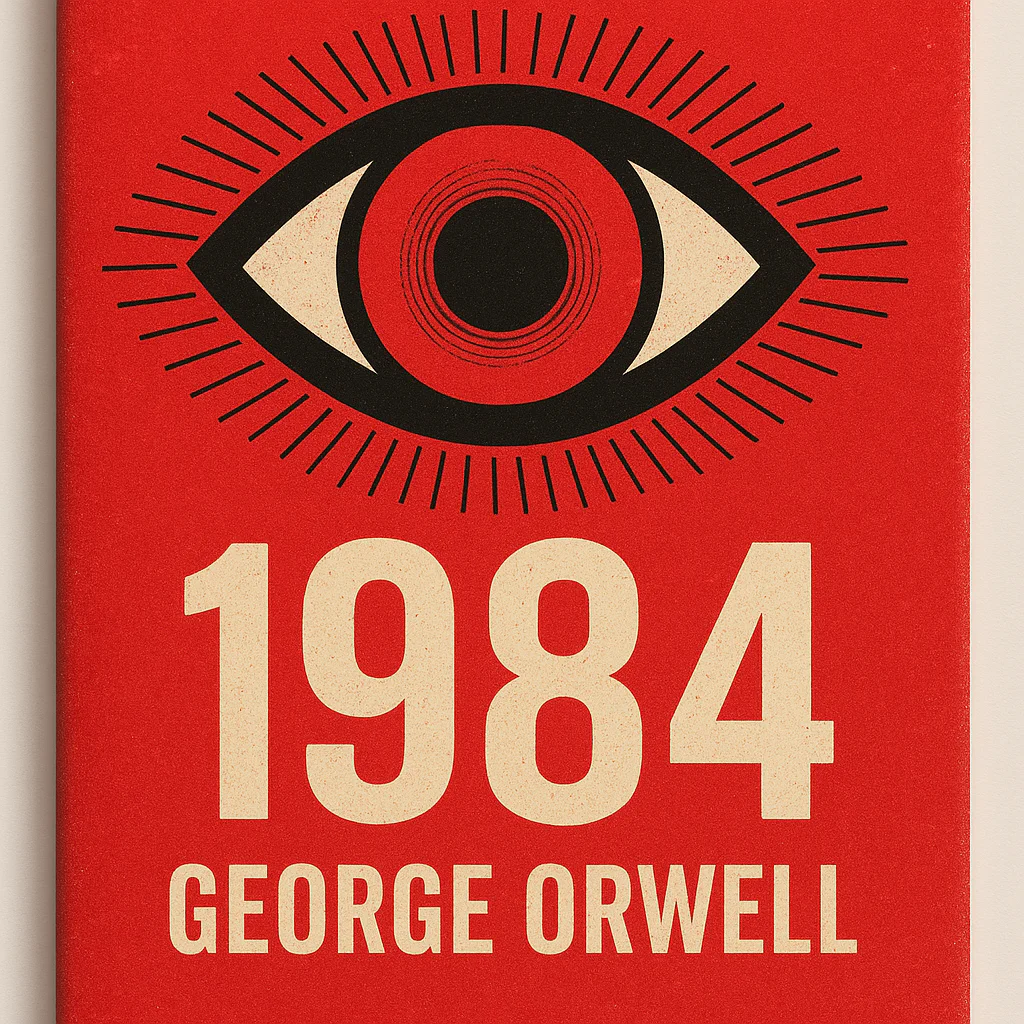
You’ve heard the slogans, seen the memes, and maybe even felt a chill when someone mentions “Big Brother.” But do you really know what is the main point of 1984? It’s not just a story about a scary future with cameras in every room; it’s a terrifyingly accurate blueprint for how totalitarian regimes strip away your soul, one lie at a time. George Orwell didn’t write this to predict the year 1984; he wrote it to warn us that truth is fragile and that the ultimate goal of power is not to make you happy, but to make you love your own oppression.
In this deep dive, we’ll dissect the mechanics of Newspeak, the psychology of Doublethink, and the heartbreaking betrayal in Room 101 that reveals the book’s darkest secret. We’ll also explore why sales of this 1949 classic spike every time the news feels a little too “alternative.” By the end, you’ll understand why Winston Smith’s final realization is the most important lesson of our modern age.
Key Takeaways
- The Core Thesis: The main point of 1984 is that power is an end in itself; the Party seeks total control over reality and the human mind, not just obedience.
- Reality is Malleable: Through Doublethink and historical revisionism, the Party proves that objective truth can be erased if you control the present and the past.
- Language Limits Thought: Newspeak is designed to make rebellion impossible by eliminating the words needed to conceive of freedom.
- Love is the Ultimate Rebellion: The destruction of personal love and the forced betrayal of loved ones in Room 101 are the final steps in breaking the human spirit.
- A Timeless Warning: While not a prophecy, the book serves as a critical cautionary tale about surveillance, “fake news,” and the erosion of privacy in the digital age.
Table of Contents
- ⚡️ Quick Tips and Facts
- 📜 The Historical Backdrop: How Orwell Crafted 1984
- 🧠 The Core Thesis: What is the Main Point of 1984?
- 👁️ The Panopticon of Power: Understanding Totalitarian Control
- 🗣️ The Weaponization of Language: Newspeak and Thought Control
- 📉 The Erosion of Truth: Doublethink and Reality Manipulation
- ❤️ The Death of Love: Why Winston and Julia’s Rebellion Fails
- 🔢 The 10 Most Disturbing Themes in 1984 Explained
- 🆚 1984 vs. Brave New World: Which Dystopia Are We Living In?
- 📱 Modern Parallels: Is 1984 a Prophecy or a Warning?
- 📚 Why You Must Read 1984 Today: A Reader’s Perspective
- 🏆 Conclusion: The Eternal Relevance of Big Brother
- 🔗 Recommended Links
- ❓ FAQ: Your Burning Questions About 1984 Answered
- 📖 Reference Links
⚡️ Quick Tips and Facts
Before we dive into the rabbit hole of Oceania, let’s get the basics straight so you don’t end up in a memory hole yourself. If you’re asking, “What is the main point of 1984?”, here is your cheat sheet:
- 📚 It’s Not Just a Dystopia: It’s a cautionary tale about the fragility of truth and the mechanics of totalitarian control.
- 📅 Publication Date: June 8, 1949.
- 👤 The Author: George Orwell (born Eric Arthur Blair), who died just seven months after its release.
- 🌍 Global Impact: Over 30 million copies sold worldwide; it remains a top seller whenever political tensions rise.
- 🗣️ Key Terms: Big Brother, Thought Police, Newspeak, Doublethink, and Room 101 are now part of our everyday vocabulary.
- 🎬 Pop Culture: Inspired the reality show Big Brother, Apple’s legendary 1984 Super Bowl ad, and countless songs by artists like David Bowie and Radiohead.
For a deep dive into the plot and character arcs, check out our detailed 1984 Book Summary right here at Book Summary Review™.
| Feature | Detail |
|---|---|
| Genre | Dystopian, Political Fiction, Social Science Fiction |
| Setting | Airstrip One (London), Oceania |
| Protagonist | Winston Smith |
| Antagonist | The Party / Big Brother / O’Brien |
| Core Conflict | Individuality vs. Totalitarian Control |
| Famous Slogan | “War is Peace. Freedom is Slavery. Ignorance is Strength.” |
📜 The Historical Backdrop: How Orwell Crafted 1984
You might think 1984 was written in a vacuum, a sci-fi fantasy born from a fever dream. Wrong. George Orwell was a man who had seen the gears of tyranny grind human souls into dust.
Orwell wrote 1984 while battling tuberculosis on the windswept Isle of Jura, a place so isolated it felt like the end of the world. But his mind was elsewhere: in the trenches of the Spanish Civil War, where he was shot through the throat by a fascist sniper, and in the Indian Imperial Police in Burma, where he witnessed the cruelty of colonial rule.
“The political chaos of the 1930s and 40s, combined with the rise of totalitarian regimes in the Soviet Union and Nazi Germany, provided the raw material for Orwell’s nightmare.” — Smithsonian Magazine
Orwell wasn’t predicting the future; he was extrapolating the present. He took the Stalinist purges, the Nazi propaganda machine, and the British surveillance state of WWII, cranked the volume to eleven, and asked: “What if this continues forever?”
The setting, Airstrip One, was a direct nod to the Senate House at the University of London, which served as the Ministry of Information during the war. The towering Ministry of Truth in the book? That’s Senate House, but taller, darker, and infinitely more terrifying.
Orwell’s son, Richard Blair, noted interviews that the book’s themes of historical revisionism and manipulation of truth are “very relevant to the world of today.” It wasn’t a prophecy; it was a warning label.
🧠 The Core Thesis: What is the Main Point of 1984?
So, we’ve arrived at the million-dollar question: What is the main point of 1984?
Is it about surveillance? Yes. Is it about the loss of privacy? Absolutely. But if you stop there, you’re missing the soul of the book.
The main point is that power is an end in itself.
In the world of 1984, the Party doesn’t want to make people rich, or healthy, or happy. They don’t want to build a utopia. As the villainous O’Brien chillingly explains to Winston:
“The object of persecution is persecution. The object of torture is torture. The object of power is power.”
The Party seeks absolute power over the human mind and spirit. They want to prove that they can make you believe that 2 + 2 = 5 if they say so. They want to erase the concept of objective truth.
The Destruction of Reality
The central thesis is that reality exists only in the mind, and if you control the mind, you control reality. The Party achieves this through:
- Controlling the Past: By rewriting history books daily, they ensure the Party is always right.
- Controlling the Present: Through constant surveillance and fear.
- Controlling the Future: By ensuring no one can imagine a world without the Party.
If you want to understand how this works in practice, you have to look at the mechanisms of control. It’s not just about cameras; it’s about language, psychology, and love.
👁️ The Panopticon of Power: Understanding Totalitarian Control
Imagine living in a world where you are watched 24/7, not just by the state, but by your neighbors, your children, and even your own spouse. This is the reality of Oceania.
The concept of the Panopticon, originally designed by philosopher Jeremy Bentham, is the architectural backbone of 1984. In a Panopticon, prisoners can be watched at any time, but they never know when they are being watched. The result? They police themselves.
In 1984, this is achieved through the Telescreen. Unlike our modern TVs, these devices are two-way. They broadcast propaganda, but they also watch and listen to you. You can’t turn them off. You can’t cover the lens.
The Thought Police
The Thought Police are the ultimate enforcers. They don’t just punish crimes; they punish thoughts. If you frown at the wrong time, or if your face shows a flicker of doubt, you are guilty of Thoughtcrime.
- The Paradox: You can’t be arrested for a thought you haven’t acted on, yet the Thought Police seem to know your thoughts before you do.
- The Fear: The fear of the Thought Police is so pervasive that Winston Smith, the protagonist, lives in a constant state of paranoia. He writes in his diary, “Freedom is the freedom to say that two plus two make four.”
Did you know? The term “Big Brother” has become so ubiquitous that it’s now used to describe any intrusive government surveillance. In 2017, sales of the book spiked sevenfold following the “alternative facts” controversy, proving that the fear of surveillance is timeless.
🗣️ The Weaponization of Language: Newspeak and Thought Control
Here is a terrifying thought: If you can’t say it, you can’t think it.
Orwell understood that language is the vessel of thought. If you remove the words for “fredom,” “rebellion,” or “justice,” how can anyone conceive of those ideas? This is the purpose of Newspeak.
Newspeak is a controlled language designed by the Party to diminish the range of thought. It systematically eliminates words that could express rebellion.
How Newspeak Works
- Vocabulary Reduction: Words are deleted or merged. “Good” becomes “ungood.” “Excellent” becomes “doubleplusgood.”
- Elimination of Nuance: Complex ideas are flattened. There is no room for irony, sarcasm, or ambiguity.
- The Goal: To make thoughtcrime literally impossible because there are no words to formulate the thought.
| Newspeak Concept | Oldspeak Equivalent | Purpose |
|---|---|---|
| Goodthink | Loyalty/Orthodoxy | Enforce conformity |
| Crimestop | Critical Thinking | Stop dangerous thoughts |
| Doubleplusgood | Excellent | Remove nuance |
| Unperson | Erased from history | Deny existence |
Orwell wrote in his essay Politics and the English Language: “Political language… is designed to make lies sound truthful and murder respectable, and to give an appearance of solidity to pure wind.”
In 1984, the Party is actively destroying the English language. By the time the novel ends, the goal is to make Newspeak the only language, effectively ending the human capacity for independent thought.
📉 The Erosion of Truth: Doublethink and Reality Manipulation
How do you keep a population in line when the facts keep changing? You teach them Doublethink.
Doublethink is the act of simultaneously accepting two mutually contradictory beliefs as correct. It’s the mental gymnastics required to believe that the Party is infallible, even when they admit to making mistakes.
The Slogans of Doublethink
The Party’s three slogans are the ultimate expression of this:
- War is Peace: Constant war consumes resources and keeps the population in a state of fear, preventing them from questioning the government.
- Freedom is Slavery: The individual is weak and doomed to fail; only by submitting to the collective (the Party) are you truly free.
- Ignorance is Strength: If you don’t know the truth, you can’t be corrupted by it.
The Memory Hole
To maintain this lie, the Party uses the Memory Hole. This is a chute where documents, photographs, and records that contradict the current Party line are thrown into a furnace and destroyed.
- Example: If the Party says they produced 10,0 boots last year, but the records show 5,0, the records are destroyed, and the new number is “fact.”
- The Result: History becomes a palimpsest, written and rewritten daily. As the slogan goes: “Who controls the past controls the future: who controls the present controls the past.”
Winston Smith’s job at the Ministry of Truth is to do exactly this. He rewrites old newspaper articles to make it look like the Party predicted events correctly. It’s a job that requires him to lie to himself every single day.
❤️ The Death of Love: Why Winston and Julia’s Rebellion Fails
You might be thinking, “Okay, the government is evil, but what about love? Can’t love save us?”
In 1984, love is the ultimate rebellion. But it is also the ultimate vulnerability.
Winston and Julia’s affair is not just a romance; it is a political act. By loving each other, they are asserting their humanity and their individuality against the Party. They are saying, “I belong to myself, not to Big Brother.”
The Betrayal
But the Party knows this. They know that to break a person, they must break their love. This leads to the most heartbreaking scene in the book: Room 101.
In Room 101, the Party confronts you with your worst fear. For Winston, it’s rats. When the cage of rats is placed on his face, his love for Julia evaporates. He screams, “Do it to Julia! Not me!”
The Main Point: The Party doesn’t just want your obedience; they want your soul. They want you to betray the person you love most. When Winston betrays Julia, he is truly broken. He no longer loves her; he only loves Big Brother.
This is the ultimate horror of 1984: The destruction of the human spirit. It’s not enough to kill you; they have to make you love your executioner.
🔢 The 10 Most Disturbing Themes in 1984 Explained
Let’s break down the top 10 themes that make 1984 so unsettling and relevant today.
- Totalitarianism: The concentration of all power in the hands of a single entity.
- Surveillance State: The loss of privacy and the constant feeling of being watched.
- Historical Revisionism: The manipulation of history to suit the present narrative.
- Language Control (Newspeak): Limiting thought by limiting language.
- Doublethink: Holding two contradictory beliefs simultaneously.
- Thoughtcrime: The criminalization of unorthodox thoughts.
- The Cult of Personality: The worship of Big Brother as an infallible leader.
- The Destruction of Love: Using personal relationships as leverage for control.
- The Erasure of Objective Truth: The idea that reality is whatever the Party says it is.
- The Power of Fear: Using terror to maintain order and suppress dissent.
These themes are not just fiction; they are warnings. As Jean Seaton, director of the Orwell Foundation, says, “It’s useful because you think, ‘How bad are we in comparison to this?'”
🆚 1984 vs. Brave New World: Which Dystopia Are We Living In?
When discussing dystopias, you can’t ignore Aldous Huxley’s Brave New World. Published in 1932, it presents a different kind of nightmare.
| Feature | 1984 (Orwell) | Brave New World (Huxley) |
|---|---|---|
| Control Method | Pain and Fear | Pleasure and Distraction |
| Oppression | Book burning, torture, surveillance | Drug use (Soma), entertainment, conditioning |
| Truth | Hidden and rewritten | Irelevant; people don’t care about truth |
| Rebellion | Impossible due to fear | Impossible due to apathy |
| Key Quote | “If you want a picture of the future, imagine a boot stamping on a human face.” | “But I don’t want comfort. I want God, I want poetry, I want real danger, I want freedom.” |
Which one are we living in?
Many scholars argue we are living in a hybrid. We have the surveillance of 1984 (cameras, data tracking, AI) but the distraction of Brave New World (social media, endless entertainment, consumerism).
As Neil Postman wrote in Amusing Ourselves to Death: “Orwell feared those who would ban books. Huxley feared that there would be no reason to ban a book, for there would be no one who wanted to read one.”
📱 Modern Parallels: Is 1984 a Prophecy or a Warning?
Is 1984 a prophecy? No. It’s a warning.
But the parallels are chilling.
- Surveillance: We carry smartphones that track our location, listen to our conversations, and monitor our habits. The telescreen is in our pockets.
- Fake News: The concept of “alternative facts” and the rapid spread of disinformation echo the Party’s manipulation of truth.
- Deepfakes: AI technology can now create realistic videos of people saying things they never said, making it harder to distinguish truth from fiction.
- Language: We see the erosion of nuance in political discourse, where complex issues are reduced to slogans and soundbites.
Real-World Impact: In 2017, 1984 topped Amazon’s best-seller list after a Trump administration adviser used the term “alternative facts.” In 2020, it was the third most checked-out book at the New York Public Library.
The book serves as a political barometer. When society feels threatened by authoritarianism, 1984 resurfaces. It reminds us that truth is fragile and that we must defend it.
📚 Why You Must Read 1984 Today: A Reader’s Perspective
Why should you read 1984 in 2024? Because it’s not just a story; it’s a mirror.
Reading 1984 is an emotional experience. It’s heavy, depressing, and at times, suffocating. But it’s also empowering. It forces you to question the world around you.
- It teaches you to spot manipulation: You’ll start noticing when language is being used to obscure the truth.
- It values objective reality: It reminds you that facts matter, and that 2 + 2 really does equal 4.
- It champions individuality: It shows the importance of holding onto your own thoughts and feelings, even when the world tries to crush them.
As a book lover at Book Summary Review™, I can tell you that 1984 is a masterpiece of literature. It’s not an easy read, but it’s a necessary one.
Pro Tip: Don’t just read it once. Read it, then read it again. The details change, and the warnings become clearer with every pass.
If you’re looking for more classic literature that challenges your mind, check out our Classic Literature category.
Where to Get Your Copy
Ready to dive into Oceania? Here are the best places to grab a copy:
- 👉 CHECK PRICE on:
Amazon: 1984 by George Orwell
Audible: 1984 Audiobook
Barnes & Noble: 1984 Paperback
Orwell Foundation: Official Resources
Stay tuned for the Conclusion, FAQ, and more in the next section!
🏆 Conclusion: The Eternal Relevance of Big Brother

We started this journey asking a simple question: What is the main point of 1984? By the time we reached the end of Winston Smith’s tragic arc, the answer should be crystal clear. It isn’t just about a scary future; it’s about the fragility of the human mind when faced with absolute power.
Orwell didn’t write 1984 to predict the year 1984. He wrote it to show us that totalitarianism is not a historical anomaly, but a constant threat that lurks in the shadows of any society that stops questioning authority. The “boot stamping on a human face” isn’t just a metaphor; it’s a warning that without objective truth, without language, and without love, we are nothing but cogs in a machine.
The Verdict: A Must-Read Masterpiece
If 1984 were a product, here is our final assessment:
| Aspect | Rating (1-10) | Analysis |
|---|---|---|
| Relevance | 10/10 | More relevant today than ever; a mirror to modern surveillance and “fake news.” |
| Emotional Impact | 10/10 | Devastating, haunting, and impossible to forget. |
| Clarity of Message | 9/10 | The themes are complex, but the core warning is unmistakable. |
| Readability | 7/10 | Dense and depressing, but the prose is sharp and the pacing relentless. |
| Overall Score | 9.5/10 | Essential Reading. |
✅ The Positives:
- Timeless Wisdom: The concepts of Newspeak, Doublethink, and Big Brother have entered our global lexicon for a reason.
- Psychological Depth: It offers a terrifyingly accurate look at how propaganda and fear manipulate the human psyche.
- Cultural Catalyst: It has inspired decades of art, film, and political discourse.
❌ The Negatives:
- Emotional Toll: It is a deeply depressing read with no happy ending. It leaves you feeling heavy and anxious.
- Dense Concepts: The political theory and linguistic mechanics can be challenging for casual readers.
🚀 Our Confident Recommendation:
Read it. Do not skip it. Do not wait for “the right time.” Read 1984 now, not because you think you live in a dystopia, but to ensure you never let one happen. It is the ultimate inoculation against the erosion of truth. As Winston Smith realized too late, “Freedom is the freedom to say that two plus two make four.” Guard that freedom fiercely.
For more deep dives into the classics that shape our world, explore our Book Reviews and Author Profiles sections.
🔗 Recommended Links
Ready to dive deeper or grab your own copy of this essential classic? Here are the best places to find 1984 and related materials:
- 1984 (Paperback/Hardcover):
- Amazon | Barnes & Noble | Book Depository
- 1984 (Audiobook – Narrated by Michael Y. Smith):
- Audible | Amazon
- 1984 (1984 Film Adaptation):
- Amazon Prime Video | Apple TV
- The Orwell Foundation:
- Orwell Foundation Official Site – For essays, archives, and educational resources.
- Related Reading:
- Brave New World by Aldous Huxley – The other half of the dystopian equation.
- Animal Farm by George Orwell – Orwell’s satirical novella on totalitarianism.
❓ FAQ: Your Burning Questions About 1984 Answered

What is the main message of George Orwell’s 1984?
The core message is that totalitarian power seeks to dominate not just actions, but thoughts and reality itself. The Party’s goal is power for power’s sake, achieved by destroying objective truth, manipulating language, and crushing individuality. It serves as a warning that without vigilance, truth can be erased and fredom can be lost forever.
Read more about “🚫 Why is 1984 Controversial? 8 Shocking Reasons It’s Banned”
What are the key themes in the book 1984?
Beyond the main thesis, the book explores several critical themes:
- Surveillance: The loss of privacy and the psychological impact of being constantly watched.
- Language as Control: How limiting vocabulary (Newspeak) limits thought.
- Historical Revisionism: The idea that the past is malleable and can be rewritten to suit the present.
- The Destruction of Love: How the state co-opts human emotion to ensure loyalty.
- Doublethink: The ability to hold two contradictory beliefs simultaneously to serve the state.
Read more about “1984 George Orwell Movie: Unveiling the Dark Classic 🎥”
What is the significance of Big Brother in 1984?
Big Brother is the face of the Party, a symbol of the cult of personality and omnipresent surveillance. He may or may not exist as a real person; his significance lies in his function as a focal point for fear and loyalty. The phrase “Big Brother is watching you” encapsulates the loss of privacy and the inescapable nature of the state’s control.
Read more about “1984 Book Summary: Unmasking Orwell’s Dystopian Masterpiece 📚”
How does the ending of 1984 reflect the main point?
The ending is the ultimate realization of the Party’s victory. Winston Smith, the last holdout of individuality, is not just killed; he is broken. He learns to love Big Brother. This confirms the main point: the Party can conquer the human spirit. The “boot stamping on a human face” is not a temporary act of violence, but a permanent state of existence. The tragedy is that Winston wins nothing; he loses his soul.
What is the purpose of Newspeak in 1984?
Newspeak is designed to make thoughtcrime impossible. By systematically removing words that express rebellion, freedom, or nuance, the Party narows the range of human thought. If you cannot say “fredom,” you cannot think “fredom.” It is a tool of cognitive control intended to render the human mind incapable of imagining a world without the Party.
Read more about “When Was *1984* Banned? 7 Shocking Censorship Moments (2025) 📚”
Why is 1984 considered a warning about totalitarianism?
Orwell wrote 1984 based on his observations of Stalinism and Nazism. He saw how these regimes used propaganda, terror, and historical revisionism to maintain power. The book warns that these tactics are not unique to the past; they can be replicated anywhere a society abandons critical thinking and objective truth. It reminds us that fredom is fragile and requires constant defense.
Read more about “What Does Animal Farm Symbolize? 🐖 Unpacking 7 Powerful Allegories”
What is the role of Winston Smith in conveying theme of 1984?
Winston Smith is the everyman and the tragic hero. He represents the last spark of human individuality and the desire for truth. Through his eyes, we experience the horror of the Party’s control. His journey from rebellion to betrayal illustrates the inescapable power of the totalitarian state. His failure is the book’s most powerful warning: even the strongest spirit can be broken if the system is ruthless enough.
How does the concept of “2 + 2 = 5” relate to the book’s themes?
The equation 2 + 2 = 5 is the ultimate symbol of the Party’s ability to force reality to conform to its will. It represents the denial of objective truth. If the Party says 2 + 2 = 5, then it is true, regardless of logic or evidence. It is the final test of Doublethink, proving that the Party controls not just the world, but the very laws of logic and mathematics in the minds of its citizens.
📖 Reference Links
For those who wish to verify facts, explore the history, or read the full text, here are our trusted sources:
- Wikipedia: Nineten Eighty-Four – Comprehensive overview of the novel, its history, and cultural impact.
- The Orwell Foundation: George Orwell – Official site dedicated to the author’s life and work.
- Smithsonian Magazine: What Does George Orwell’s 1984 Mean in 2024? – Analysis of the book’s modern relevance.
- Time Magazine: 10 Best English-Language Novels – Ranking of 1984 among the greatest novels of the 20th century.
- BBC: The Big Read: Top 10 Books – Public voting results placing 1984 in the top 10.
- Modern Library: 10 Best Novels – Editors’ and Readers’ lists featuring 1984.
- New York Public Library: Books of the Century – Information on 1984 as one of the most checked-out books of all time.
- George Orwell Estate: Official Author Page – Biographical details and copyright information.