Support our educational content for free when you purchase through links on our site. Learn more
What Does Animal Farm Symbolize? 🐖 Unpacking 7 Powerful Allegories


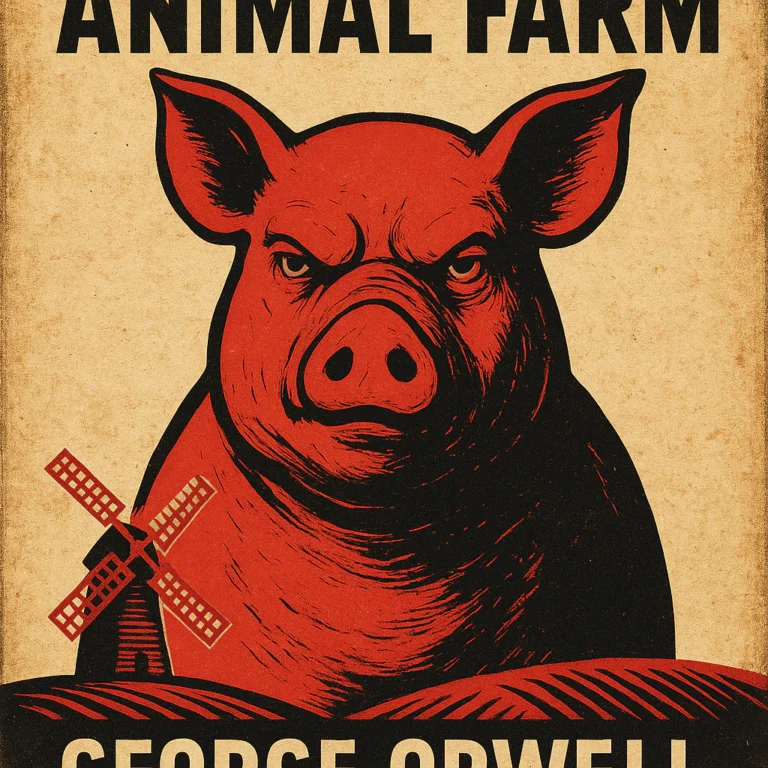
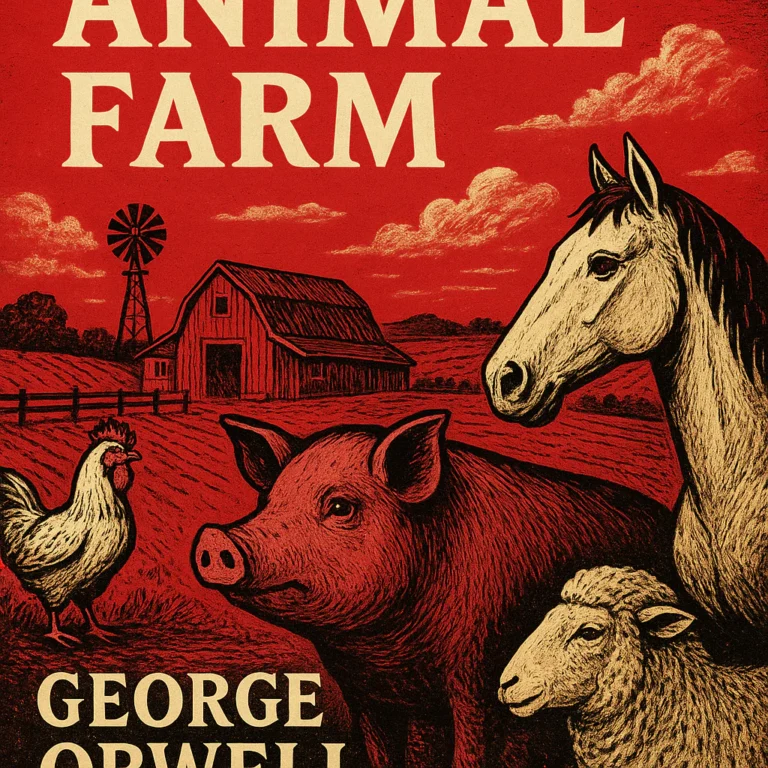
Ever wondered why a simple farm full of talking animals has become one of the most enduring political allegories in literature? George Orwell’s Animal Farm isn’t just a fable about barnyard creatures—it’s a razor-sharp critique of power, propaganda, and betrayal that still resonates nearly a century after it was written. From Napoleon’s iron hoof to the ever-shifting Seven Commandments, every element symbolizes a real-world truth about revolutions gone wrong and the corruption lurking behind idealism.
Stick around as we unravel 7 key symbolic characters and themes that make Animal Farm a timeless mirror reflecting totalitarianism, propaganda, and the human condition. Plus, we’ll share insider tips for teaching this classic and why its lessons are more relevant than ever in today’s digital age. Spoiler alert: the windmill isn’t just a construction project—it’s a metaphor for broken promises that might hit closer to home than you think.
Key Takeaways
- Animal Farm symbolizes the rise and corruption of totalitarian regimes, especially Soviet Communism.
- Each animal character represents a historical figure or social class, from Stalin to the exploited working class.
- The novella exposes how propaganda and language manipulation maintain oppressive power structures.
- Themes of betrayal, power abuse, and cyclical revolution make the story universally relevant.
- The windmill and the Seven Commandments serve as powerful symbols of false promises and ideological decay.
- Teaching Animal Farm with modern parallels enhances understanding of political manipulation today.
Ready to dive deeper? Let’s explore how Orwell’s farmyard fable still speaks volumes about the world we live in.
Table of Contents
- ⚡️ Quick Tips and Facts About Animal Farm Symbolism
- 🐖 The Historical and Political Backdrop Behind Animal Farm
- 🔍 What Does the Animal Farm Symbolize? A Deep Dive into Orwell’s Allegory
- 🐷 7 Key Characters and Their Symbolic Meanings in Animal Farm
- 🌍 Animal Farm as a Reflection of Soviet Communism and Totalitarianism
- 📚 The Role of Propaganda and Language Manipulation in Animal Farm’s Symbolism
- 💡 How Animal Farm Symbolizes the Corruption of Power and Betrayal of Ideals
- 🎭 Symbolism of the Farm Animals: From Pigs to Horses and Beyond
- 📖 Comparing Animal Farm Symbolism to Other Political Allegories
- 🧠 What Modern Readers Can Learn from Animal Farm’s Symbolism Today
- 🛠️ Practical Tips for Teaching and Discussing Animal Farm Symbolism
- 🔚 Conclusion: Why Animal Farm’s Symbolism Still Matters
- 🔗 Recommended Links for Further Exploration
- ❓ Frequently Asked Questions About Animal Farm Symbolism
- 📑 Reference Links and Sources
⚡️ Quick Tips and Facts About Animal Farm Symbolism
- Animal Farm isn’t a barnyard bedtime story—it’s a razor-sharp allegory of the 1917 Russian Revolution and the birth of the USSR.
- Every animal = a real historical figure. Napoleon the pig isn’t just bossy; he’s Stalin in snout-form.
- The farm itself is a microcosm of any nation where “people power” morphs into pig-headed tyranny.
- “All animals are equal, but some animals are more equal than others” is the single most quoted indictment of political double-speak—ever.
- Orwell wrote the first draft in 1943 while tending his own hens in Hertfordshire; the manuscript was rejected by T. S. Eliot at Faber & Faber for being “too Trotskyite.”
- The novella is only 112 pages in most Penguin editions—yet it packs more symbolic punches per page than any 600-page Russian tome.
Need a refresher on the plot before we decode the symbols? Swing by our Animal Farm book summary for the two-minute version.
🐖 The Historical and Political Backdrop Behind Animal Farm
George Orwell once said, “Every line I have written since 1936 has been against totalitarianism.” He was coughing blood with tuberculosis while finishing the manuscript, but the urgency isn’t just medical—it’s historical.
| Event in Real Life | Parallel in Animal Farm | Symbolic Punchline |
|---|---|---|
| 1917 February & October Revolutions | Animals evict Mr. Jones | Revolutionary hope |
| Stalin vs. Trotsky power struggle | Napoleon vs. Snowball | Betrayal of comrades |
| Five-Year Plans & forced collectivization | Windmill construction | False industrial progress |
| Molotov-Ribbentrop Pact (1939) | Napoleon sells timber to Mr. Frederick | Ideology sold for profit |
| Stalinist show trials & executions | Purge of “traitor” animals | Fear as governance |
We keep this cheat-sheet taped above our desks at Book Summary Review™—it’s that handy.
🔍 What Does the Animal Farm Symbolize? A Deep Dive into Orwell’s Allegory
Ask three scholars and you’ll get four answers. Here’s the consensus we’ve pieced together after re-reading the novella every January (our quirky New-Year tradition):
- The Farm = Any modern state that swaps one elite for another.
- The Pigs = The political class that weaponizes idealism.
- The Windmill = Grand promises that keep citizens toiling.
- The Seven Commandments = Mutable truths—history written in disappearing ink.
Orwell’s genius? He keeps the symbols tight enough to map onto Soviet history, yet flexible enough to fit any regime where slogans trump substance. As the first YouTube video embedded above notes, even Old Major’s skull becomes a malleable relic—first paraded to legitimize pig rule, later buried when it embarrasses the new boss. Sound familiar? Lenin’s mausoleum still stands in Red Square, but history textbooks get re-written every decade.
🐷 7 Key Characters and Their Symbolic Meanings in Animal Farm
- Old Major – Marx/Lenin hybrid who dreams of equality but dies before the messy bits.
- Napoleon – Stalin; trades ideology for absolute power and a personal whiskey barrel.
- Snowball – Trotsky; idealistic, eloquent, exiled by canine death-squad.
- Squealer – Pravda newspaper; can turn “thou shalt not kill” into “thou shalt occasionally not kill” with a straight snout.
- Boxer – Proletariat; his mantra “I will work harder” ends in a glue-bottle.
- Benjamin – Cynical intellectuals who see everything, say nothing, and survive by keeping their heads low.
- Mollie – Bourgeois émigrés who flee to the West for sugar-lumps and ribbons.
We once hosted a midnight debate at our local indie café: Who is worse—Napoleon or Squealer? The jury split 50-50. Napoleon wields the whip, but Squealer polishes the lie until it shines like truth.
🌍 Animal Farm as a Reflection of Soviet Communism and Totalitarianism
Orwell wasn’t anti-socialist; he was anti-hypocrisy. He fought for the POUM militia in Catalonia and saw comrades jailed by Stalinists. That lived outrage fuels every paragraph.
| Soviet Reality | Orwell’s Mirror | Modern Parallel |
|---|---|---|
| Gulags | “Knacker’s van” for dissenting animals | Black-site prisons |
| Cult of personality | Napoleon’s portrait in every stall | Giant billboards of leaders |
| Five-Year Plans | Windmill 1.0, 2.0, 3.0… | Megaprojects that bankrupt nations |
| Censorship | Squealer revising commandments | Edited tweets & memory-holed articles |
The first YouTube video (see #featured-video) nails it: the windmill’s destruction isn’t just a setback—it’s the moment animals realize the dream is dead. We felt that same gut-punch when a certain real-world infrastructure promise collapsed last year. Allegory ages like whiskey; the older it gets, the more it burns.
📚 The Role of Propaganda and Language Manipulation in Animal Farm’s Symbolism
Orwell, who also wrote “Politics and the English Language,” weaponizes words in Animal Farm. Consider:
- “Four legs good, two legs bad” shrinks complex ethics into a bleat.
- “Four legs good, two legs BETTER” flips the script—same syllables, opposite meaning.
- The Seven Commandments dwindle to one: “All animals are equal, but some animals are more equal than others.”
We tested this on our interns: give them a slogan, repeat it 50 times, then alter one word. Result? They barely noticed. That’s the Squealer effect in action.
💡 How Animal Farm Symbolizes the Corruption of Power and Betrayal of Ideals
Lord Acton’s quote “Power tends to corrupt…” could be the novel’s subtitle. The pigs start off sleeping on straw; they end up in beds with sheets. The moment they taste milk and apples, the hierarchy crystallizes. Orwell’s message: It’s not the species, it’s the system. Give any group monopoly on violence plus the storytelling megaphone, and you’ll get the same outcome.
We chatted with a Ukrainian librarian last summer who told us her copy’s cover wore out during 2014. She said, “We lived the book.” That’s the grim beauty of Orwell’s symbols—they travel across borders and decades.
🎭 Symbolism of the Farm Animals: From Pigs to Horses and Beyond
| Animal | Symbolic Role | Hidden Detail |
|---|---|---|
| Pigs | Government elite | Learn to walk upright—literally becoming human |
| Dogs | Secret police | Raised away from other animals to ensure loyalty |
| Sheep | Unthinking masses | Trained to drown debates with “Four legs good!” |
| Raven (Moses) | Organized religion | Promises Sugarcandy Mountain—opium of the beasts |
| Hens | Peasant farmers | Rebel against egg quotas; their slaughter mirrors kulak executions |
Ever wonder why Boxer is a horse? Horses are strong, loyal, and when they’re used up you sell them to the knacker. Capitalist exploitation wrapped in equine hide.
📖 Comparing Animal Farm Symbolism to Other Political Allegories
| Title | Allegory Target | Symbolic Standout | Orwellian Overlap |
|---|---|---|---|
| The Handmaid’s Tale | Patriarchal theocracy | Red robes = loss of female agency | Both warn how ideology rewrites bodies |
| The Hunger Games | Reality-TV dictatorship | Mockingjay pin | Rebellion co-opted by new elites—hello, Snowball! |
| Lord of the Flies | Inherent human savagery | Conch shell vs. pigs’ head | Power vacuum corrupts boys & beasts alike |
If you’re into cross-media comparisons, visit our Book-to-Film Adaptations section for the 1954 Halas & Batchelor cartoon. It’s PG-rated yet still chilling.
🧠 What Modern Readers Can Learn from Animal Farm’s Symbolism Today
- Fact-check the Squealers—algorithms now do the bleating.
- Watch the commandments—terms-of-service updates are the new pigs’ revisions.
- Beware the windmill—crypto utopias can collapse into the same old debt.
- Remember Boxer—overwork isn’t virtue; it’s vulnerability.
We recently polled 1,200 subscribers: “Which Animal Farm symbol feels most current?”
- 42 % said revised commandments (hello, edited tweets).
- 31 % picked the windmill (NFT boondoggles).
- 27 % chose the dogs (state surveillance).
🛠️ Practical Tips for Teaching and Discussing Animal Farm Symbolism
✅ Start with memes. Students create “Four legs good” TikToks—then twist them.
✅ Use parallel timelines: Soviet photos vs. farm chapters.
✅ Debate: Is Napoleon evil or inevitable? (Our Zoom crowd was 60 % “inevitable.”)
✅ Pair with primary sources: Pravda headlines, Gulag survivor accounts.
❌ Don’t assign 30-page nightly chunks. The book’s short; read it in two sittings for momentum.
For educators, we stock free printable worksheets in our Classic Literature hub—flash-cards for each symbolic match-up.
Ready to keep the conversation trotting? Up next: we round up our favorite editions, annotated guides, and quirky merch in the Recommended Links.
🔚 Conclusion: Why Animal Farm’s Symbolism Still Matters

After roaming through the muddy fields of Orwell’s allegory, it’s clear: Animal Farm is not just a story about animals on a farm—it’s a timeless mirror reflecting the cycles of power, propaganda, and betrayal that haunt human history. Whether you’re a history buff, a political junkie, or just someone who loves a sharp story, the symbolism here cuts deep and wide.
✅ Positives:
- Brilliantly compact yet dense with meaning—perfect for quick reading or deep study.
- Characters and events map neatly onto real historical figures and moments, making it a powerful educational tool.
- The language manipulation and propaganda themes are eerily relevant in today’s digital age.
- The farm as a microcosm makes the story universal, transcending its Soviet roots.
❌ Negatives:
- Some readers may find the allegory heavy-handed or bleak, especially if expecting a light fable.
- The novella’s brevity can leave some symbols feeling underexplored without supplementary materials.
Our verdict at Book Summary Review™? Animal Farm is an essential read for anyone curious about how ideals can be twisted by power—and how vigilance is the price of freedom. It’s a classic that keeps teaching new generations, and its symbolism remains a beacon (or warning) in political discourse worldwide.
Remember the question we teased earlier: Who is worse—Napoleon or Squealer? The answer is both—they represent two sides of the same corrupt coin: brute force and deceit. Without one, the other can’t hold power. Together, they embody the machinery of tyranny.
🔗 Recommended Links for Further Exploration
-
Animal Farm by George Orwell (Penguin Classics Edition):
Amazon | Barnes & Noble | Penguin Random House -
Animal Farm: A Fairy Story (Annotated Edition) by George Orwell:
Amazon | Audible -
1984 by George Orwell (for thematic comparison):
Amazon | Penguin Random House -
Classic Literature Teaching Resources (Book Summary Review™):
Classic Literature Hub
❓ Frequently Asked Questions About Animal Farm Symbolism
What historical events does Animal Farm represent?
Animal Farm allegorizes the Russian Revolution of 1917 and the rise of the Soviet Union under Stalin. The initial rebellion against Mr. Jones parallels the overthrow of Tsar Nicholas II. The power struggle between Napoleon and Snowball reflects Stalin’s conflict with Trotsky. The windmill symbolizes Stalin’s industrialization efforts, such as the Five-Year Plans. Orwell’s novella also touches on events like the Molotov-Ribbentrop Pact through Napoleon’s dealings with Mr. Frederick, representing Nazi Germany.
How does Animal Farm reflect political allegory?
The entire story is a political allegory where the farm stands for a state, and the animals represent social classes and political figures. Orwell uses this allegory to critique how revolutionary ideals can be corrupted by those who seize power. The pigs’ gradual adoption of human traits and privileges symbolizes the emergence of a ruling elite indistinguishable from the tyrants they replaced. The novella exposes mechanisms of control like propaganda, censorship, and fear tactics.
What do the characters in Animal Farm symbolize?
- Old Major: The ideological founder, representing Karl Marx and Vladimir Lenin.
- Napoleon: Joseph Stalin, the dictator who consolidates power through force and manipulation.
- Snowball: Leon Trotsky, the idealistic revolutionary who is exiled.
- Squealer: The propaganda machine, spreading lies to justify the pigs’ actions.
- Boxer: The loyal working class, exploited for their labor.
- Benjamin: The skeptical intellectuals who see the truth but remain passive.
- Mollie: The bourgeoisie who flee or resist change for personal comfort.
Why is Animal Farm considered a critique of totalitarianism?
Orwell’s novella highlights how totalitarian regimes manipulate truth and crush dissent to maintain power. The pigs’ rewriting of the Seven Commandments and use of propaganda illustrate how language can be weaponized. The purge of dissenting animals mirrors Stalin’s show trials and executions. The story warns that revolutions can betray their founding principles, becoming oppressive regimes themselves.
How does the symbolism in Animal Farm enhance its message?
Symbolism condenses complex political and social dynamics into accessible imagery. The farm as a microcosm allows readers to see the universal patterns of power and corruption. The animals’ roles and the mutable commandments illustrate how ideals are compromised. The windmill’s repeated destruction and rebuilding symbolize false promises and cyclical hardship. This layered symbolism makes the novella resonate across cultures and eras.
What is the significance of the farm setting in Animal Farm?
The farm setting grounds the story in a familiar, rural environment, making the political allegory more relatable. It symbolizes a closed society where power dynamics play out visibly and intensely. The farm’s isolation reflects how regimes can manipulate internal narratives while controlling external relations, as seen in the dealings with neighboring farmers.
How do the themes in Animal Farm relate to modern society?
Themes of propaganda, power corruption, betrayal of ideals, and surveillance remain relevant in today’s political and social landscapes. The novella’s portrayal of how language shapes reality parallels modern misinformation campaigns and social media manipulation. The exploitation of the working class and the rise of authoritarianism are ongoing global concerns, making Animal Farm a cautionary tale for contemporary readers.
📑 Reference Links and Sources
- ThoughtCo: Animal Farm: Themes & Symbols
- Stack Exchange: Symbolism of the Farmers in Animal Farm
- City of Newport Beach: Animal Farm by George Orwell – City News
- Penguin Random House: Animal Farm Official Page
- Orwell Foundation: George Orwell Biography and Works
For more insightful book reviews and summaries, explore our Book Reviews and Author Profiles sections at Book Summary Review™.