Support our educational content for free when you purchase through links on our site. Learn more
🏺 The Alchemist Summary: Uncover Your Personal Legend (2026)

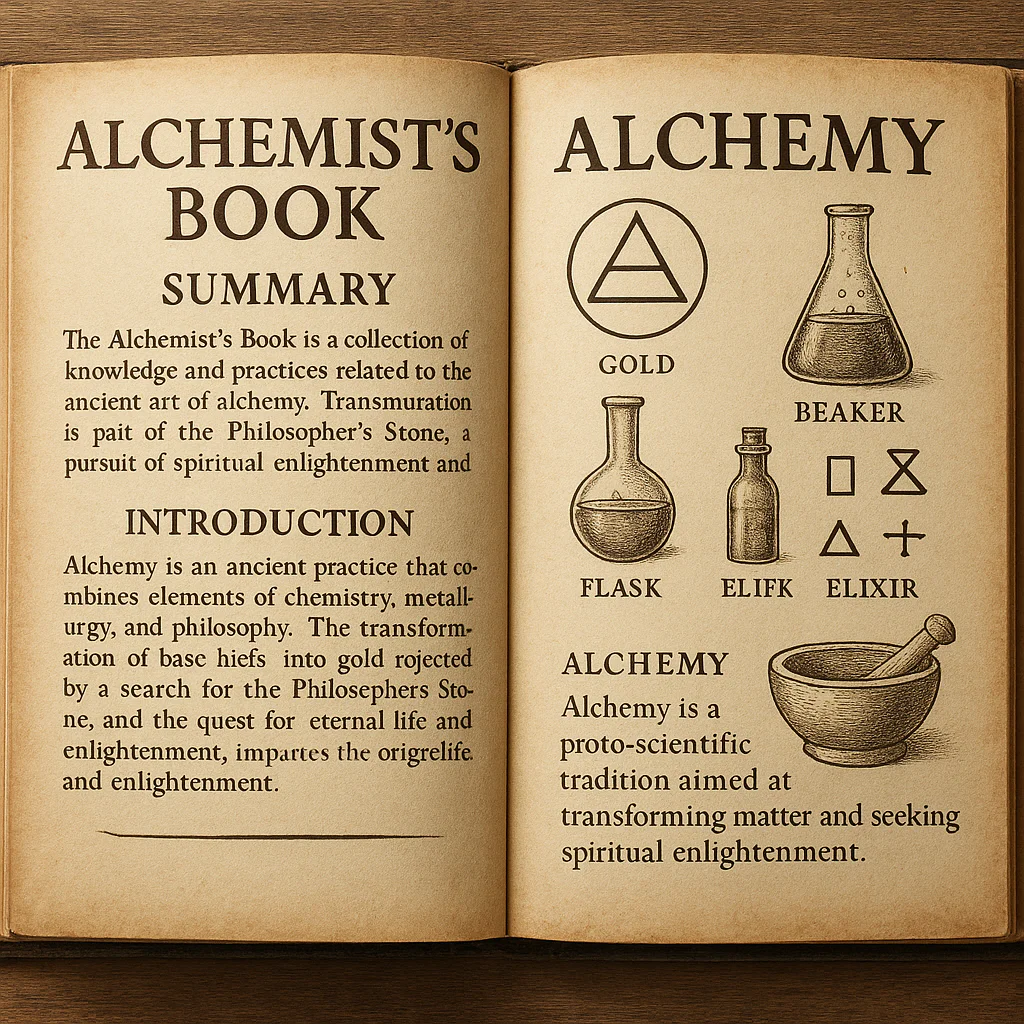
Have you ever felt a naging whisper in the back of your mind, urging you to chase a dream that seems impossible? That is exactly the feeling that has captivated over 150 million readers worldwide since Paulo Coelho first penned The Alchemist. While some critics dismiss it as a simple fable, we at Book Summary Review™ believe it is a masterclass in spiritual resilience disguised as a shepherd’s adventure. This isn’t just a summary; it’s a roadmap to your own destiny, revealing why a book written in just two weeks became a global phenomenon that outshines complex literary giants.
In this deep dive, we won’t just retell the story of Santiago’s journey from Andalusia to the Pyramids; we will decode the ominous signs, the Soul of the World, and the heartbreaking truth behind the “World’s Greatest Lie.” You’ll discover why the Crystal Merchant is the most tragic character in literature and how the ending flips the entire narrative on its head. Whether you are a skeptic looking for a quick read or a seeker searching for your Personal Legend, this guide will answer every question you have about Coelho’s masterpiece.
🗝️ Key Takeaways
- The Core Message: The book teaches that everyone has a Personal Legend (true purpose) and the universe conspires to help you achieve it if you overcome the fear of failure.
- The Twist: The treasure Santiago seeks is found at the very spot where his journey began, proving that the journey itself is the true treasure that grants the wisdom to find the gold.
- Universal Themes: From the Language of the World to the power of omens, the story bridges spiritual mysticism and practical self-help, making it a timeless guide for modern life.
- Why It Matters: Despite being labeled “simple,” its impact is profound, inspiring millions to leave their comfort zones and listen to their hearts.
Table of Contents
- ⚡️ Quick Tips and Facts
- 📜 The Enigmatic History: How Paulo Coelho’s Masterpiece Conquered the World
- 📖 The Alchemist Book Summary: Santiago’s Journey from Andalusia to the Pyramids
- 🔑 Decoding the Core Themes: Personal Legend, Omens, and the Soul of the World
- 🎭 Character Analysis: The Shepherd, The Alchemist, and the Mentor Figures
- 🌍 The Alchemist in Context: Spiritual Allegory vs. Self-Help Philosophy
- 🎬 From Page to Screen: The Alchemist Film Adaptation and Other Media
- 📚 Why It Resonates: The Alchemist’s Impact on Modern Literature and Pop Culture
- 💡 Critical Reception: Why Some Love It and Others Call It Overated
- 🏆 The Alchemist vs. Similar Books: How It Stacks Up Against Other Inspirational Reads
- 🧭 How to Apply the Lessons: Practical Steps to Find Your Personal Legend
- ✅ Conclusion: Is The Alchemist Worth Your Time?
- 🔗 Recommended Links: Where to Buy and Read The Alchemist
- ❓ Frequently Asked Questions About The Alchemist
- 📚 Reference Links and Further Reading
⚡️ Quick Tips and Facts
Before we dive into the desert sands of Santiago’s journey, let’s hit the ground running with the essentials you need to know about The Alchemist. Whether you’re a first-time reader or a seasoned Coelho fan, these nugets of wisdom will set the stage for your own Personal Legend.
- 📚 The Stats: Written by Paulo Coelho, this Brazilian masterpiece was originally published in Portuguese in 198. It has since sold over 150 million copies worldwide, making it one of the best-selling books in history.
- ⏱️ The Speed: Believe it or not, Coelho wrote the entire novel in just two weeks! He claimed the story was already “written in his soul,” waiting to be released.
- 🌍 The Reach: Translated into more than 65 languages, it holds a Guinness World Record for the most translated living author.
- 🎧 The Audio Experience: If you prefer listening, the Audible edition narrated by Jeremy Irons is widely considered a masterpiece of narration, bringing the shepherd’s innocence to life.
- 💡 The Core Concept: The book is a fable about Personal Legend—your destiny or true purpose in life.
- 🚫 The “Lie”: The biggest obstacle to your dreams isn’t the world; it’s the belief that you’ve lost control of your life (the “World’s Greatest Lie”).
Pro Tip: If you want a deeper dive into the plot mechanics before reading, check out our dedicated The Alchemist Book Summary for a chapter-by-chapter breakdown!
📜 The Enigmatic History: How Paulo Coelho’s Masterpiece Conquered the World

How does a book written in two weeks become a global phenomenon? The history of The Alchemist is as mystical as the story itself.
Paulo Coelho, a Brazilian author who once spent time in a mental institution for “anti-establishment” activities, turned his life experiences into this spiritual allegory. Originally published in Brazil in 198, the book initially sold poorly. It wasn’t until 193, when an American publisher picked it up, that the magic truly began.
The Rise to Fame
The book’s journey mirrors Santiago’s own. It faced rejection and obscurity before finding its tribe.
- The Turning Point: In the late 90s, it gained traction in the US, eventually hitting the New York Times Best Seller list.
- The Cult Following: It became a staple in self-help circles, book clubs, and even corporate training sessions.
- The Controversy: Not everyone was convinced. Some critics dismissed it as “self-help masquerading as literature,” while others hailed it as a modern classic.
Why the divide? We’ve found that readers who approach it as a philosophical fable tend to love it, while those looking for complex character arcs or gritty realism often find it simplistic. But isn’t that the beauty of a fable? It speaks directly to the soul, bypassing the intellect.
For more on the author’s life and the book’s publication history, you can explore our category on Classic Literature.
📖 The Alchemist Book Summary: Santiago’s Journey from Andalusia to the Pyramids
Let’s unravel the tapestry of Santiago’s adventure. This isn’t just a story about finding gold; it’s a story about finding yourself.
The Call to Adventure
Santiago is a young shepherd in Andalusia, Spain. He loves his sheep and his freedom, but he is haunted by a recurring dream: a child tells him of a hidden treasure at the Egyptian Pyramids.
Seeking answers, he visits a Gypsy fortune-teller who confirms the dream but offers no map. Desperate, he meets Melchizedek, the King of Salem. Melchizedek introduces the concept of the Personal Legend and gives Santiago two stones, Urim and Thummim, to help him read omens. He tells Santiago: “When you really want something to happen, the whole universe will conspire so that your wish comes true.”
The First Obstacle: Tangiers
Santiago sells his sheep and crosses the Strait of Gibraltar to Africa. But in Tangiers, he is robbed of his money and his stones. He feels defeated, but he remembers Melchizedek’s lesson: fear of failure is worse than failure itself.
He takes a job with a Crystal Merchant. For a year, he works there, learning that the merchant is afraid to realize his own dream (pilgrimage to Mecca) because he fears the disappointment if it doesn’t work out. Santiago helps the merchant’s business flourish, but he realizes he must keep moving.
The Desert and the Englishman
Santiago joins a caravan crossing the desert. He meets an Englishman obsessed with alchemy and the Philosopher’s Stone. The Englishman represents the intellectual approach to life, buried in books, while Santiago learns through experience.
The Oasis and Fatima
At the oasis of Al-Fayoum, Santiago falls in love with Fatima, a desert woman. She tells him that if he is meant to find his treasure, he will return to her. This teaches us that true love does not hold you back from your destiny; it supports it.
Here, Santiago also demonstrates his ability to read omens, predicting a tribal war. He is brought before the tribal chieftains and, in a moment of pure spiritual connection, he speaks to the wind, the sun, and the desert, turning himself into a dust storm to save the oasis. This act proves he has mastered the Soul of the World.
The Alchemist and the Final Lesson
The Alchemist (a mysterious, powerful figure) takes Santiago on the final leg of the journey. He teaches Santiago to listen to his heart and to understand that the treasure is in the journey, not just the destination.
The Twist and Resolution
Santiago reaches the Pyramids. He digs for the treasure but is beaten by thieves. When he explains his dream, the thief leader mocks him, saying he once had a recurring dream of treasure buried under a sycamore tree at a ruined church in Spain—the very church where Santiago started his journey.
Santiago realizes the truth: The treasure was at home all along. But he had to make the journey to learn how to find it. He returns to Spain, digs under the tree, and finds a chest of gold and jewels. He then plans to return to Fatima.
Wait, does this mean the journey was pointless? Absolutely not! Without the journey, Santiago would have remained a shepherd, never knowing the power of his own heart or the language of the world. The treasure was the wisdom he gained, with the gold as a bonus.
🔑 Decoding the Core Themes: Personal Legend, Omens, and the Soul of the World
What makes The Alchemist resonate with millions? It’s the universal themes that tap into our deepest desires.
1. Personal Legend
This is the book’s heartbeat. Your Personal Legend is your true purpose, the thing you were born to do.
- The Lie: The world tries to convince you that your dream is impossible.
- The Truth: “To realize one’s destiny is a person’s only obligation.”
- The Cost: Pursuing your legend often requires sacrifice, but the cost of not pursuing it is a life of regret.
2. The Language of the World (Omens)
The universe speaks to us through omens.
- Signs: A bird, a stone, a chance encounter.
- Interpretation: It requires faith and attention to read them.
- Maktub: An Arabic phrase meaning “it is written.” It suggests that while we have free will, there is a divine plan we are meant to follow.
3. The Soul of the World
Everything in the universe is connected. When you pursue your Personal Legend, you align yourself with the Soul of the World. This connection allows you to perform “miracles” (like turning into a storm) because you are no longer separate from nature.
4. Fear of Failure
Coelho argues that fear of suffering is worse than the suffering itself. The Crystal Merchant is the embodiment of this fear. He stays in his comfort zone, paralyzed by the possibility of disappointment.
Question for you: Have you ever ignored an oen because you were afraid to act? We all have. The trick is to learn to trust the process.
🎭 Character Analysis: The Shepherd, The Alchemist, and the Mentor Figures
Every character in The Alchemist represents a facet of the human experience. Let’s break them down.
| Character | Role | Symbolism | Key Lesson |
|---|---|---|---|
| Santiago | Protagonist | The Seeker / The Everyman | Courage to follow dreams despite fear. |
| Melchizedek | Mentor | Divine Guidance / Wisdom | The universe conspires to help you. |
| The Gypsy | Guide | Intuition / The Unconscious | Dreams are messages, not just fantasies. |
| Crystal Merchant | Antagonist (Internal) | Fear / Stagnation | Living in the past is a curse. |
| The Englishman | Foil | Intelect / Theory | Knowledge without experience is empty. |
| Fatima | Love Interest | True Love / Patience | Love supports, not hinders, destiny. |
| The Alchemist | Mentor | Mastery / Spirit | Listen to your heart; the journey is the treasure. |
| The Thief | Catalyst | Irony / Perspective | The treasure is often where you started. |
The Crystal Merchant: A Cautionary Tale
The merchant is perhaps the most tragic character. He has a dream (to go to Mecca), but he refuses to act because he fears the dream might not come true. He says, “I’m afraid that if my dream is realized, I’ll have no reason to go on living.” This is the ultimate trap: comfort is the enemy of growth.
The Englishman: The Trap of Intellectualism
The Englishman carries books on alchemy but cannot turn lead into gold. He represents those who study life but never live it. He misses the omens because he is too busy reading about them.
🌍 The Alchemist in Context: Spiritual Allegory vs. Self-Help Philosophy
Is The Alchemist a religious text? A self-help book? A novel? It’s all three, and that’s why it sparks debate.
The Spiritual Allegory
At its core, the book is a Christian and Sufi allegory.
- Melchizedek is a biblical figure (King of Salem).
- The journey mirrors the Hero’s Journey (Joseph Campbell).
- The concept of the “Soul of the World” echoes Sufi mysticism (the unity of all things).
The Self-Help Critique
Critics, including The New York Times, have labeled it “more self-help than literature.”
- Pros: It provides actionable advice on mindset, resilience, and goal-setting.
- Cons: Some argue it oversimplifies complex life issues with “magic thinking.”
The Verdict from Book Summary Review™
We believe it’s a hybrid. It uses the structure of a novel to deliver self-help principles. If you approach it as a fable (a story with a moral), it shines. If you demand gritty realism, it may fall flat.
Fun Fact: The book is based on a folktale type 1645 (“The Treasure at Home”) from the Aarne–Thompson–Uther Index, with roots in the works of Rumi and One Thousand and One Nights.
🎬 From Page to Screen: The Alchemist Film Adaptation and Other Media
You might be wondering, “Has this book been made into a movie?” The answer is a complex yes, but…
The Long Road to the Big Screen
- 208: The Weinstein Company bought the rights, but the project stalled.
- 2016: PalmStar Media acquired the rights.
- 2023: Legendary Entertainment and TriStar Pictures acquired the rights, with Jack Thorne attached as the writer.
As of now, a full-length feature film is in development, but no release date is set. The wait has been long, but the anticipation is building!
Other Adaptations
- Graphic Novels: There are several, including a 2010 version by Derek Ruiz and a 2024 Manga adaptation by Tamaki Nakamura.
- Theater: Stage productions have been performed in London and India, bringing the desert to life on stage.
- Music: Composers like Walter Taieb have created symphonies inspired by the book.
Check out our category on Book-to-Film Adaptations for more on how books transition to the screen!
📚 Why It Resonates: The Alchemist’s Impact on Modern Literature and Pop Culture
Why does a book about a shepherd still matter in the age of AI and social media?
The Universal Appeal
- Simplicity: In a complex world, the message is simple: Follow your heart.
- Hope: It offers hope that the universe is on your side.
- Accessibility: It’s short, easy to read, and perfect for a quick escape.
Pop Culture References
- Celebrities: Stars like Oprah Winfrey, Arnold Schwarzenegger, and Keanu Reeves have praised the book.
- Quotes: “When you want something, all the universe conspires in helping you to achieve it” is one of the most quoted lines in modern literature.
The “Coelho Effect”
The book has inspired a generation of writers and thinkers to explore spirituality and self-discovery. It bridged the gap between Eastern mysticism and Western self-help.
💡 Critical Reception: Why Some Love It and Others Call It Overated
Let’s be honest: The Alchemist is polarizing.
The Love (The 4/5 Star Crowd)
- Reviewers like Samantha Elizabeth (who gave it 4/5 stars) praise its brevity and beautiful ending.
- Strengths: Relatable characters, inspiring message, and the “perfect” twist.
- Quote: “Santiago’s journey teaches us about the essential wisdom of listening to our hearts.”
The Hate (The Skeptics)
- Critics argue it’s cliché, simplistic, and preachy.
- Weaknesses: Some find the dialogue stilted and the “magic” too convenient.
- Quote: “It’s more self-help than literature.”
The Middle Ground
We believe the book is what you make of it. If you read it with an open heart, it’s transformative. If you read it with a critical eye, it’s a simple fable.
Did you know? The first YouTube video summarizing the book highlights 12 key lessons, including “Embrace the NOW” and “Overcome Fear of Failure.” It’s a great visual supplement to the text!
🧭 How to Apply the Lessons: Practical Steps to Find Your Personal Legend
So, you’ve read the book. Now what? How do you apply these lessons to your life?
Step 1: Identify Your Personal Legend
Ask yourself: What did I want to do as a child? What makes me lose track of time?
- Action: Write down three things you loved doing before the world told you to “be realistic.”
Step 2: Listen to Your Heart
Your heart knows the way, even if your mind doesn’t.
- Action: Practice meditation or journaling to hear your inner voice.
- Tip: Don’t ignore the “small” signs. If you keep seeing a certain number or meeting a certain person, pay attention.
Step 3: Overcome the Fear of Failure
Remember the Crystal Merchant.
- Action: Take one small step toward your dream today. Even if it fails, you’ve learned something.
- Mantra: “The fear of suffering is worse than the suffering itself.”
Step 4: Embrace the Journey
The treasure is in the process.
- Action: Focus on living in the present. Don’t obsess over the end result.
- Quote: “It’s the possibility of having a dream come true that makes life interesting.”
Step 5: Share Your Story
When you live your Personal Legend, you inspire others.
- Action: Tell your story. Your journey might be the omen someone else needs.
Ready to start? Check out our Book Sumaries for more inspiration on other life-changing reads!
✅ Conclusion: Is The Alchemist Worth Your Time?

Yes, absolutely. But with a caveat.
The Alchemist is not a complex novel with deep psychological profiling. It is a modern fable designed to wake you up. If you are feeling stuck, lost, or afraid to pursue your dreams, this book is a must-read. It will remind you that the universe is on your side and that your Personal Legend is waiting for you.
The Verdict:
- For the Dreamer: 10/10.
- For the Skeptic: 6/10 (but still worth a try).
- For the Seeker: A spiritual compass.
Final Thought: The treasure was at the church, but Santiago had to go to the Pyramids to find it. Your journey is the treasure. Don’t skip the steps.
🔗 Recommended Links: Where to Buy and Read The Alchemist
Ready to start your own journey? Here are the best places to get your copy of The Alchemist.
👉 CHECK PRICE on:
- Amazon: The Alchemist by Paulo Coelho
- Audible: The Alchemist Audiobook
- Barnes & Noble: The Alchemist at B&N
- Paulo Coelho Official Website: The Alchemist
👉 Shop Similar Inspirational Reads:
- The Prophet by Kahlil Gibran: Amazon
- Siddhartha by Hermann Hesse: Amazon
- The Power of Now by Eckhart Tolle: Amazon
❓ Frequently Asked Questions About The Alchemist
What is the main message of The Alchemist by Paulo Coelho?
The main message is that everyone has a Personal Legend (a true purpose) they are meant to fulfill. The universe will conspire to help you achieve it, but you must overcome your fear of failure and trust in the journey. As Coelho writes, “When you really want something to happen, the whole universe will conspire so that your wish comes true.”
What are the key themes in The Alchemist book summary?
Key themes include:
- Personal Legend: Your destiny.
- The Soul of the World: The interconnectedness of all things.
- Omens: Signs from the universe.
- Fear of Failure: The biggest obstacle to dreams.
- Love vs. Destiny: True love supports your journey.
- Living in the Present: The importance of the “now.”
Who are the main characters in The Alchemist?
- Santiago: The shepherd boy.
- Melchizedek: The King of Salem.
- The Crystal Merchant: The man afraid of his dream.
- The Englishman: The intellectual seeker.
- Fatima: The desert love.
- The Alchemist: The wise mentor.
What is the significance of the Personal Legend in The Alchemist?
The Personal Legend is the central concept. It represents your true purpose in life. Coelho argues that realizing your Personal Legend is a person’s only obligation. Ignoring it leads to a life of regret, while pursuing it brings fulfillment and aligns you with the universe.
How does the ending of The Alchemist explain the journey?
The ending reveals that the treasure was at the ruined church where Santiago started. This teaches that the journey itself was necessary to gain the wisdom to find the treasure. Without the trials, the journey, and the lessons learned, Santiago would not have been able to recognize the treasure or know how to find it.
What are the most important quotes from The Alchemist?
- “When you want something, all the universe conspires in helping you to achieve it.”
- “It’s the possibility of having a dream come true that makes life interesting.”
- “To realize one’s destiny is a person’s only obligation.”
- “Tell your heart that the fear of suffering is worse than the suffering itself.”
- “There is only one thing that makes a dream impossible to achieve: the fear of failure.”
Is The Alchemist a good book for beginners to read?
Yes! It is an excellent book for beginners due to its short length (around 160-20 pages), simple language, and engaging fable-like structure. It’s perfect for anyone new to spiritual or self-help literature.
📚 Reference Links and Further Reading
For those who want to dig deeper, here are some reliable sources and related articles:
- Wikipedia: The Alchemist (novel)) – For detailed publication history and plot analysis.
- Paulo Coelho Official Site: The Alchemist – Official author insights.
- Book Review: The Alchemist by Paulo Coelho (4/5): Sam Anne Elizabeth’s Review – A balanced perspective on the book’s strengths and weaknesses.
- JFD Perfsolutions: Book Summary: The Alchemist – A detailed breakdown of the core lessons.
- HarperCollins: The Alchemist Publisher Page – Official publisher details.
Final Note: Whether you see it as a self-help guide or a spiritual fable, The Alchemist is a reminder that your journey matters. Keep your eyes open for the omens, and never stop believing in your Personal Legend.