Support our educational content for free when you purchase through links on our site. Learn more
Is Fahrenheit 451 Hard to Read? 7 Surprising Truths Revealed 🔥

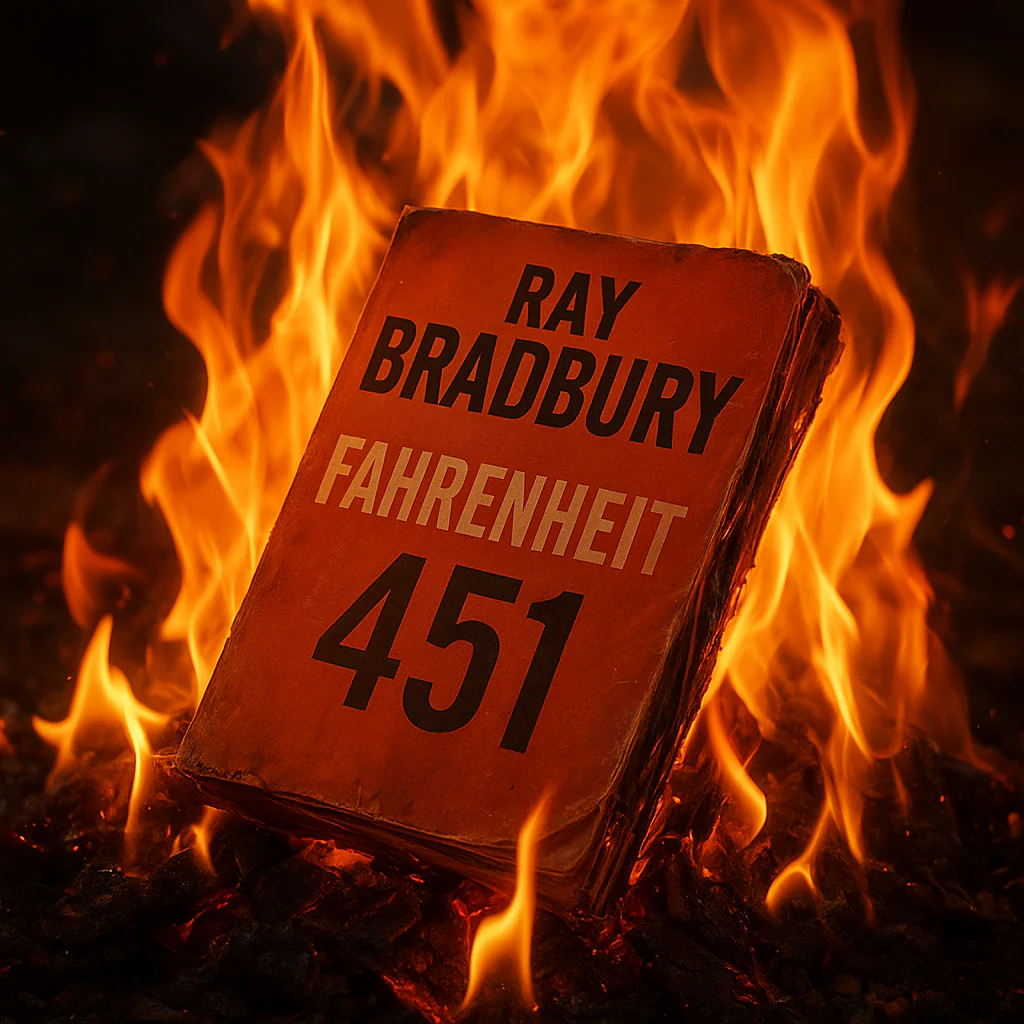
If you’ve ever picked up Fahrenheit 451 and wondered, “Is this book really hard to read?”—you’re in good company. This Ray Bradbury classic, hailed as a cornerstone of dystopian literature, often sparks mixed reactions. Some breeze through its pages, captivated by the fiery prose and gripping themes, while others find themselves tangled in its symbolism and mid-century cultural references.
At Book Summary Review™, we’ve dissected every angle of this literary gem to help you decide if it’s a smooth read or a challenging climb. Spoiler alert: it’s not as intimidating as you might think, but there are a few twists along the way. From understanding the historical backdrop of 1950s America to decoding Bradbury’s rich metaphors, we’ll guide you through the hurdles and reveal handy tips to make your reading experience both enjoyable and enlightening.
Stick around as we also compare the book to its movie adaptations, share real reader insights, and suggest alternatives if you want a gentler introduction to dystopian worlds. Ready to find out if Fahrenheit 451 will light your literary fire or leave you feeling burned? Let’s dive in!
Key Takeaways
- The language is mostly accessible, but Bradbury’s poetic style and symbolism can slow some readers down.
- Historical context matters: Understanding 1950s America enhances appreciation of the novel’s themes.
- Themes of censorship, technology, and conformity remain relevant, making the book a thought-provoking read.
- Many readers find the book challenging but rewarding when approached with patience and active reading strategies.
- Watching film adaptations can ease comprehension, but the book’s depth is unmatched.
- Helpful resources like annotated editions and audiobooks can make the reading experience smoother.
- If Fahrenheit 451 feels tough, related dystopian novels offer alternative entry points into the genre.
Table of Contents
- ⚡️ Quick Tips and Facts About Reading Fahrenheit 451
- 🔥 The Literary Landscape: Understanding Fahrenheit 451’s Historical and Cultural Context
- 📚 Is Fahrenheit 451 Hard to Read? Breaking Down the Language and Style
- 🧠 Themes and Symbols: Why They Might Make Fahrenheit 451 Challenging (or Not)
- 🕵️ ♂️ 7 Reasons Some Readers Struggle with Fahrenheit 451 (And How to Overcome Them)
- 📖 How to Approach Reading Fahrenheit 451: Tips for a Smooth Experience
- 🎬 Comparing the Book and Movie Adaptations: Does the Film Make It Easier?
- 👩 🏫 Why Fahrenheit 451 Is a Must-Read in Schools Despite Its Challenges
- 📊 Reader Reviews and Insights: What Real People Say About Reading Difficulty
- 🧩 Related Books and Alternatives If You Find Fahrenheit 451 Tough
- 🧰 Tools and Resources to Help You Tackle Fahrenheit 451
- 🔍 Deep Dive: The Philosophy and Social Critique Behind Fahrenheit 451
- 🎉 Conclusion: Is Fahrenheit 451 Really Hard to Read? Our Final Verdict
- 🔗 Recommended Links for Further Exploration
- ❓ FAQ: Your Burning Questions About Reading Fahrenheit 451 Answered
- 📚 Reference Links and Sources
⚡️ Quick Tips and Facts About Reading Fahrenheit 451
If you’re wondering, “Is Fahrenheit 451 hard to read?”, you’re not alone! At Book Summary Review™, we’ve chatted with countless readers who’ve tackled this Ray Bradbury classic. Here’s a quick cheat sheet to get you started:
| Aspect | Rating (1-10) | Notes |
|---|---|---|
| Language Complexity | 6 | Mostly straightforward, with occasional poetic and metaphorical language |
| Themes Depth | 8 | Heavy on symbolism and social critique, requires some reflection |
| Narrative Pacing | 7 | Fast-paced but sometimes dense with ideas |
| Accessibility for Teens | 7 | Suitable for high school readers with some guidance |
| Cultural/Historical Context | 5 | Written in the 1950s, some references may feel dated but still relevant |
Quick Facts
- Fahrenheit 451 was published in 1953 and is a cornerstone of dystopian literature.
- The novel’s length is relatively short — about 200 pages — but its ideas are dense.
- It’s often assigned in schools, so you might find plenty of study guides and summaries online.
- The language is not archaic, but some vocabulary and cultural references may require a quick Google search.
- The story is told through the eyes of Guy Montag, a fireman who burns books in a society that bans them.
Curious about how the language and style impact readability? Keep reading!
🔥 The Literary Landscape: Understanding Fahrenheit 451’s Historical and Cultural Context
To appreciate why some readers find Fahrenheit 451 challenging, you’ve got to step back into the 1950s America, a time thick with Cold War paranoia, McCarthyism, and fears of censorship. Bradbury’s novel is a reaction to the era’s anxieties about conformity, government control, and the loss of intellectual freedom.
Why Context Matters
- Cultural Distance: The way characters speak and think reflects mid-20th-century norms, which can feel distant or formal to modern readers.
- Technological Predictions: Bradbury’s vision of mass media and technology (like “parlor walls” and mechanical hounds) was futuristic then but now reads as a mix of prophetic and retro.
- Social Commentary: The book critiques instant gratification and anti-intellectualism, themes still relevant but expressed through a 1950s lens.
Understanding this backdrop helps you grasp why some phrases or ideas might feel dense or “old-fashioned,” even though the prose itself isn’t overly complex.
For a deeper dive into the story’s second part, check out our Fahrenheit 451 Part 2 Summary: The Sieve and the Sand.
📚 Is Fahrenheit 451 Hard to Read? Breaking Down the Language and Style
Let’s talk turkey: Is the language in Fahrenheit 451 a barrier?
The Good News ✅
- Bradbury’s prose is clear and vivid, often poetic but never impenetrable.
- Sentences are generally concise, with a rhythm that pulls you along.
- The book is short, so you’re not committing to a long slog.
The Challenges ❌
- The novel uses metaphors and symbolism heavily, which can slow down readers who prefer straightforward narratives.
- Some vocabulary and idioms reflect the 1950s, requiring occasional pauses to look things up.
- The dialogue style can feel formal or theatrical compared to modern casual speech.
What Our Team Says
One of our editors shared:
“I breezed through the first 20 pages but hit a wall when the symbolism piled up. It took me a few rereads to appreciate the layers, especially the ‘fire’ imagery.”
Language Style Table
| Feature | Description | Impact on Readability |
|---|---|---|
| Poetic Metaphors | Frequent use of imagery (fire, books, ashes) | Requires reflection, slows pace |
| Dialogue | Formal, sometimes theatrical | Can feel distant to modern readers |
| Vocabulary | Mix of common and mid-20th-century terms | Some words may need googling |
| Narrative Structure | Linear but interspersed with philosophical musings | Keeps plot moving but demands thought |
🧠 Themes and Symbols: Why They Might Make Fahrenheit 451 Challenging (or Not)
Themes and symbols are the heart and soul of Fahrenheit 451. But they can also be the reason some readers find it tough.
Major Themes
- Censorship and Freedom of Thought: The core conflict revolves around banning books to control ideas.
- Conformity vs. Individuality: Montag’s journey is about breaking free from societal norms.
- Technology’s Impact: Bradbury warns against mindless entertainment replacing critical thinking.
- Knowledge vs. Ignorance: Books symbolize knowledge, and their destruction represents societal decline.
Symbolism Breakdown
| Symbol | Meaning | Why It Matters to Readers |
|---|---|---|
| Fire | Destruction and cleansing, paradoxically both harmful and transformative | Readers must interpret dual meanings |
| The Phoenix | Rebirth and cyclical destruction | Adds a hopeful layer amid dystopia |
| Mechanical Hound | Oppressive technology and surveillance | Reflects fears of dehumanization |
| Books | Knowledge, freedom, and resistance | Central to understanding the novel’s message |
Why This Can Be Tricky
- The symbols aren’t always spelled out — you have to read between the lines.
- Some readers want a straightforward story, but Bradbury’s novel is more of a philosophical puzzle.
- If you’re not used to analyzing literature, these layers can feel overwhelming.
🕵️ ♂️ 7 Reasons Some Readers Struggle with Fahrenheit 451 (And How to Overcome Them)
Let’s get real. Why do some readers put down Fahrenheit 451 halfway through? Here are the top 7 hurdles — and how you can leap over them:
-
Cultural and Historical Distance
Solution: Read a brief summary of 1950s America or watch a documentary on the Cold War to get context. -
Abstract Themes and Symbolism
Solution: Take notes or use annotated editions. Discuss with friends or online forums. -
Unfamiliar Vocabulary
Solution: Keep a dictionary app handy or use Kindle’s built-in dictionary feature. -
Slow Character Connection
Solution: Be patient. The protagonist, Montag, takes a while to reveal his depth. -
Philosophical Passages
Solution: Don’t rush. Pause and reflect, or read a companion guide for explanations. -
Dystopian Setting Fels Distant
Solution: Relate themes to modern issues like social media addiction or censorship debates. -
Expectations of Fast-Paced Action
Solution: Appreciate the novel as a thought experiment rather than a thriller.
📖 How to Approach Reading Fahrenheit 451: Tips for a Smooth Experience
Ready to dive in? Here’s our step-by-step guide to make your reading journey enjoyable and insightful:
Step 1: Set the Mood
Find a quiet spot, maybe with a cup of tea or coffee. This book rewards focused attention.
Step 2: Use a Good Edition
We recommend editions with footnotes or annotations. The Simon & Schuster edition is a solid choice.
Step 3: Read Actively
- Highlight passages that confuse or intrigue you.
- Jot down questions or thoughts in the margins or a notebook.
Step 4: Supplement Your Reading
Watch videos or listen to podcasts about the book’s themes. For example, the first YouTube video embedded in this article offers a great overview of the dystopian world Bradbury created.
Step 5: Discuss and Reflect
Join online book clubs or forums like Reddit’s r/books or Goodreads groups. Sharing perspectives deepens understanding.
Step 6: Don’t Rush
It’s a short book, but give yourself time to absorb the ideas. Sometimes reading a chapter twice pays off.
🎬 Comparing the Book and Movie Adaptations: Does the Film Make It Easier?
Fahrenheit 451 has been adapted multiple times — notably the 196 François Truffaut film and the 2018 HBO version starring Michael B. Jordan.
How the Films Compare to the Book
| Aspect | 196 Film | 2018 Film | Book |
|---|---|---|---|
| Faithfulness to Text | Moderate; some plot changes | Modernized, with updated themes | Original, rich in symbolism |
| Visual Impact | Black-and-white, atmospheric | Colorful, high-tech visuals | Imaginative, requires mental visualization |
| Accessibility | Easier for visual learners | More relatable for modern audiences | Requires active reading and thought |
| Depth of Themes | Simplified | Updated social commentary | Deep and layered |
Does Watching Help?
✅ For many readers, watching the film first lowers the barrier to understanding the story and themes.
❌ However, films often simplify or omit key symbolic elements, so the book remains essential for full appreciation.
👩 🏫 Why Fahrenheit 451 Is a Must-Read in Schools Despite Its Challenges
You might wonder, if it’s tricky, why is Fahrenheit 451 a staple in classrooms?
Educational Value
- Critical Thinking: The novel challenges students to question authority and societal norms.
- Literary Merit: It’s a classic example of dystopian fiction and allegory.
- Relevance: Themes of censorship, media influence, and intellectual freedom resonate today.
- Discussion Starter: It sparks debates on ethics, technology, and government control.
Teacher Tips
- Use guided reading questions to help students unpack symbolism.
- Pair the book with contemporary articles on censorship or technology.
- Encourage creative projects like debates or multimedia presentations.
📊 Reader Reviews and Insights: What Real People Say About Reading Difficulty
We scoured Goodreads, Amazon reviews, and Reddit threads to get the pulse on real readers:
Common Praise
- “The story is gripping and thought-provoking.”
- “Bradbury’s writing is beautiful and poetic.”
- “Short but powerful — a quick read with lasting impact.”
Common Complaints
- “I struggled with the symbolism and some outdated references.”
- “The pacing felt uneven; some parts dragged.”
- “Characters took a while to feel relatable.”
Reader Tips
- Many recommend listening to the audiobook version narrated by Tim Robbins for a more immersive experience.
- Joining discussion groups helps clarify confusing parts.
🧩 Related Books and Alternatives If You Find Fahrenheit 451 Tough
If you find Fahrenheit 451 a bit dense or want to explore similar themes with different styles, consider these:
| Book Title | Author | Why It’s a Good Alternative |
|---|---|---|
| 1984 | George Orwell | Another dystopian classic, more straightforward prose |
| Brave New World | Aldous Huxley | Explores technology and control with rich imagery |
| The Giver | Lois Lowry | YA dystopian, simpler language but deep themes |
| Animal Farm | George Orwell | Allegorical and shorter, easier to digest |
| The Hunger Games | Suzanne Collins | Modern dystopian, fast-paced and accessible |
🧰 Tools and Resources to Help You Tackle Fahrenheit 451
Recommended Editions and Formats
- Simon & Schuster Edition — annotated and widely used in schools
- Audible Audiobook narrated by Tim Robbins — great for auditory learners
- Kindle Edition — with built-in dictionary and highlights
Online Study Guides
- SparkNotes Fahrenheit 451 Study Guide
- CliffsNotes Summary and Analysis
- Shmop Fahrenheit 451 Resources
Discussion Forums
🔍 Deep Dive: The Philosophy and Social Critique Behind Fahrenheit 451
Beyond the story lies a philosophical meditation on knowledge, society, and human nature.
Intellectual Challenge
Bradbury doesn’t just tell a story; he forces readers to confront uncomfortable questions:
- What happens when society values entertainment over truth?
- How does censorship shape identity and freedom?
- Can technology isolate us despite connecting us?
The Two Types of Difficulty
As discussed in In Defense of Difficult Books – Book Fifty, Fahrenheit 451 presents:
- Type 1 Difficulty: The “classic barrier” due to style and era.
- Type 2 Difficulty: The intellectual challenge of confronting unsettling ideas.
Bradbury’s Warning Still Rings True
In an age of social media, “fake news,” and digital distractions, Fahrenheit 451’s message about the dangers of shallow thinking and censorship is more relevant than ever.
For a vivid overview of the novel’s themes, setting, and impact, check out the first YouTube video embedded in this article. It highlights Bradbury’s dystopian vision, the Cold War context, and the novel’s call for intellectual freedom.