Support our educational content for free when you purchase through links on our site. Learn more
🐷 How Does Animal Farm End? The Shocking Truth Revealed (2026)

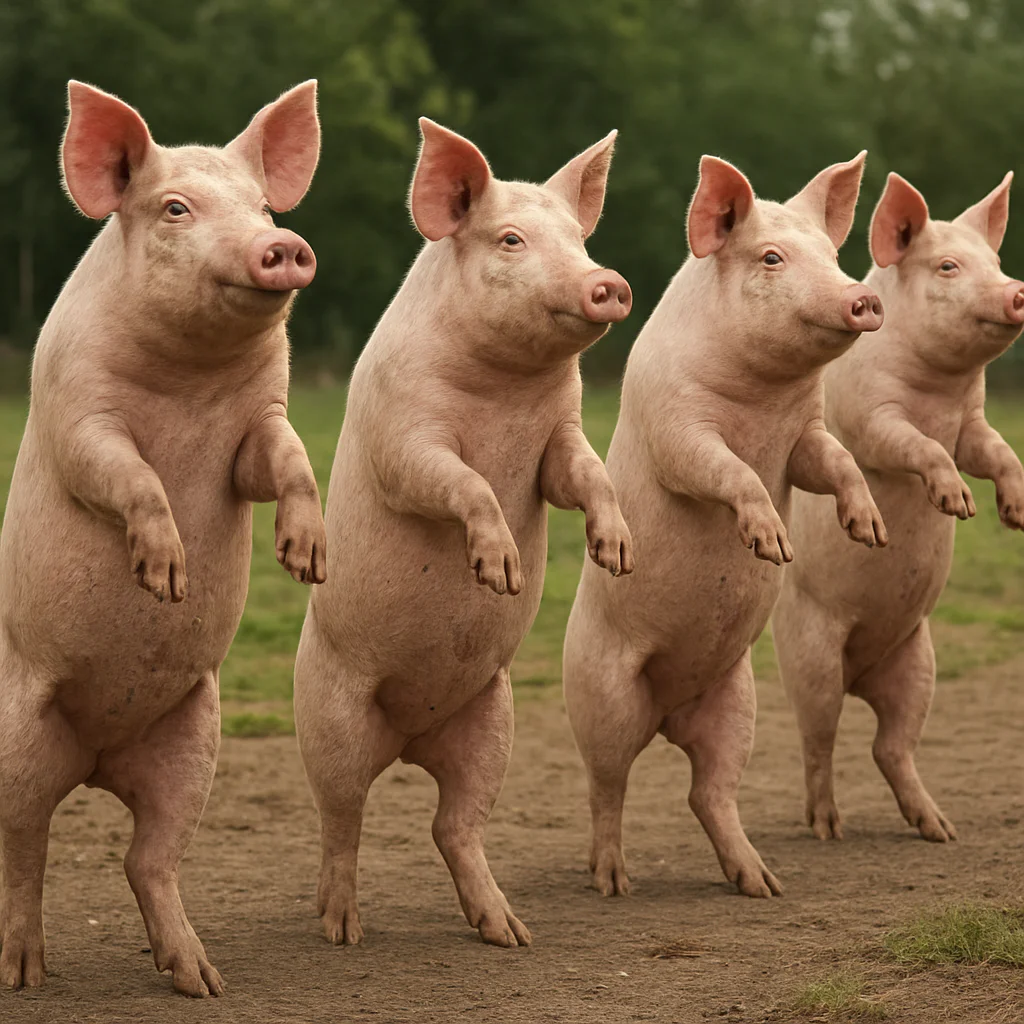

The revolution ends not with a bang, but with a chilling realization: the pigs have become indistinguishable from the humans they overthrew. If you are wondering how does Animal Farm end, the answer is a bleak cycle of tyranny where the farm reverts to “Manor Farm” and the commandments are reduced to a single, paradoxical lie.
George Orwell’s 1945 masterpiece delivers one of literature’s most devastating conclusions, proving that power corrupts absolutely. We once stayed up until 3 AM debating this ending with a group of friends, convinced there had to be a hidden hope in the final lines. Spoiler alert: there isn’t.
The story closes with a card game between the pigs and human farmers, leaving the other animals staring through the window, unable to tell the oppressor from the oppressed. It is a masterclass in irony that has haunted readers for decades.
Key Takeaways
- The Final Twist: The pigs adopt human behaviors (walking on two legs, wearing clothes) and change the farm’s name back to Manor Farm.
- The Ultimate Lie: The Seven Commandments are erased and replaced with the paradox: “All animals are equal, but some animals are more equal than others.”
- The Tragic Fate: The loyal horse Boxer is sold to a knacker for whisky money, while the other animals realize the revolution has failed.
- The Final Image: The creatures look from pig to man and back again, finding it impossible to say which is which.
Table of Contents
- ⚡️ Quick Tips and Facts
- 📜 The Historical Backdrop: From Russian Revolution to Orwell’s Pen
- 🐷 The Final Chapter: How Does Animal Farm End?
- 🔍 Decoding the Ending: The Pigs and Humans Become Indistinguishable
- 🎭 Character Arcs: Who Survives the Betrayal?
- 📖 Chapter-by-Chapter Breakdown: The Road to Tyranny
- 1. The Spark of Rebellion
- 2. The Seven Commandments Are Written
- 3. The Windmill Debacle Begins
- 4. The Battle of the Cowshed
- 5. Snowball’s Expulsion
- 6. The Windmill Crumbles
- 7. The Purge and the Fear
- 8. The Squealer Spin Cycle
- 9. Boxer’s Tragic Fate
- 10. The Final Banquet and the Card Game
- 🧠 Themes Unpacked: Power, Corruption, and Propaganda
- 🗣️ Key Quotes That Seal the Fate of the Farm
- 🎬 Adaptations: How Movies and Plays Portray the Ending
- 📚 Why This Ending Still Matters Today
- ❓ Frequently Asked Questions About the Conclusion
- 🏁 Conclusion
- 🔗 Recommended Links
- 📚 Reference Links
⚡️ Quick Tips and Facts
Before we dive into the grim (yet brilliantly crafted) finale of George Orwell’s masterpiece, let’s hit the high notes so you know exactly what you’re walking into. If you’re here because you forgot the ending or need to write a paper without actually reading the book (we’ve all been there, no judgment!), these nugets are your golden ticket.
- The Ultimate Twist: The pigs don’t just win; they become the humans. The revolution eats its children, and the farm reverts to its original name: Manor Farm. 🐷➡️👨 🌾
- The Famous Line: The book ends with the chilling realization: “It was impossible to say which was which.” This isn’t just a plot point; it’s thesis statement of the entire 20th century.
- Boxer’s Fate: The most loyal character, Boxer the horse, is sold to a knacker (glue factory) by Napoleon, despite promises of a hospital. Squealer lies to the animals, claiming Boxer died in a hospital surrounded by care. It’s a gut punch that defines the tragedy. 💔
- The Commandments: The original Seven Commandments are secretly altered throughout the book, culminating in a single, paradoxical rule: “All animals are equal, but some animals are more equal than others.”
- Real-World Impact: Published in 1945, Animal Farm was initially rejected by four publishers because it was too critical of the Soviet Union, a key WWII ally. Today, it’s a staple in schools worldwide, often challenged for its political content.
For a deeper dive into the critical analysis of this masterpiece, check out our breakdown: What Is the Critical Summary of Animal Farm? 🐷 Unveiled.
📜 The Historical Backdrop: From Russian Revolution to Orwell’s Pen
You can’t understand how Animal Farm ends without understanding why it ends that way. Orwell wasn’t just writing a story about farm animals; he was writing a satirical allegory for the Russian Revolution of 1917 and the subsequent rise of Stalinism.
Imagine the scene: 1917. The Tsar (Mr. Jones) is overthrown by idealistic revolutionaries (Old Major/Marx and Lenin). They promise a utopia where everyone is equal. Fast forward a few decades, and the new leaders (Stalin/Napoleon) have become just as tyrannical, if not more so, than the Tsar they replaced.
Orwell, a democratic socialist, watched with horror as the Soviet Union betrayed its own ideals. He saw how propaganda, fear, and the manipulation of language could twist a revolution into a dictatorship. The ending of Animal Farm is a direct commentary on the Great Purge and the Molotov-Ribentrop Pact, where the Soviet Union temporarily allied with Nazi Germany, blurring the lines between “enemy” and “ally.”
Did you know? The book was originally titled Animal Farm: A Fairy Story. Orwell wanted to emphasize that this wasn’t just a political treatise, but a timeless fable about human nature.
If you want to see how this history translates to the page, you can read the full text of the final chapter on George-Orwell.org.
🐷 The Final Chapter: How Does Animal Farm End?
So, you’ve made it to the end. The windmill is built (twice), the animals are starving, and the pigs are getting fat. What happens in the final chapter?
The story concludes with a dinner party. Napoleon, the pig dictator, invites the neighboring human farmers—Mr. Pilkington of Foxwood and Mr. Frederick of Pinchfield—to tour the farm. The animals, led by the old mare Clover and the cynical donkey Benjamin, gather outside the farmhouse window to watch.
Inside, the atmosphere is jovial. The pigs and humans are drinking beer, smoking pipes, and playing cards. The pigs have adopted every human vice: they walk on two legs, wear clothes, and carry whips. The farm’s name has been changed back to The Manor Farm.
The tension rises when Napoleon and Mr. Pilkington both play an Ace of Spades at the same time. A violent argument erupts. The animals outside watch in confusion. They look from the pig to the man, and from the man to the pig.
And then, the final blow:
“The creatures outside looked from pig to man, and from man to pig, and from pig to man again; but already it was impossible to say which was which.”
That’s it. That’s the end. No heroic last stand. No revolution. Just a cyclical return to tyranny. The pigs have become the very thing they swore to destroy.
🔍 Decoding the Ending: The Pigs and Humans Become Indistinguishable
Why does Orwell choose such a bleak, ambiguous ending? Why not have the animals rise up again?
The answer lies in the coruption of power. Throughout the book, the pigs slowly erode the principles of Animalism. They move into the farmhouse, sleep in beds, drink alcohol, and trade with humans. Each step is justified by Squealer, the pig propagandist, with twisted logic.
By the end, the distinction between the oppressor (human) and the oppressed (animal) has vanished. The pigs are no longer “animals” in the eyes of the other creatures; they are the new ruling class, indistinguishable from the humans they once fought.
The Transformation of the Pigs
| Feature | Early Book (Rebellion) | Final Chapter (Tyranny) |
|---|---|---|
| Posture | Walk on four legs | Walk on two legs |
| Attire | Naked (natural) | Wear clothes (black coats, breeches) |
| Tools | None | Carry whips |
| Residence | Barn | Farmhouse (human home) |
| Name | Animal Farm | The Manor Farm |
| Commandments | Seven clear rules | One paradoxical rule |
| Relationship with Humans | Hostile, “Four legs good, two legs bad” | Friendly, “Four legs good, two legs better” |
This transformation isn’t just physical; it’s philosophical. The pigs have adopted the capitalist and authoritarian methods of the humans. They have become the Manor Farm elite.
🎭 Character Arcs: Who Survives the Betrayal?
The ending of Animal Farm is a tragedy for almost everyone. Let’s look at the fates of our key characters:
- Napoleon: The ultimate survivor. He is now a respected (and feared) leader, dining with human farmers. He has successfully consolidated power, eliminating all opposition. He is the embodiment of Stalin.
- Squealer: The loyal mouthpiece. He is so fat he can barely see, a physical manifestation of his gluttony and the lies he has fed the animals. He remains the architect of the new reality.
- Boxer: The tragic hero. The loyal workhorse, whose motto was “I will work harder,” is sold to the knacker for whisky money. His death is the ultimate symbol of the betrayal of the working class.
- Snowball: The scapegoat. Erased from history, he is blamed for every failure on the farm. He represents Trotsky, exiled and demonized by Stalin.
- Benjamin: The cynic. The donkey, who knew the truth all along, remains silent. He represents the intelectuals who see the corruption but feel powerless to stop it.
- Clover: The confused believer. She remembers the original ideals but is too old and weak to fight back. She represents the older generation of revolutionaries who are left behind.
- The Sheep: The mindless masses. They change their chant from “Four legs good, two legs bad” to “Four legs good, two legs better!” showing their complete manipulability.
📖 Chapter-by-Chapter Breakdown: The Road to Tyranny
To truly appreciate the ending, we need to see the slow, deliberate slide into dictatorship. Here is how the story unfolds, chapter by chapter:
1. The Spark of Rebellion
Old Major, the wise old boar, dreams of a world without humans. He teaches the animals the song Beasts of England and inspires them to revolt against Mr. Jones.
2. The Seven Commandments Are Written
After the successful rebellion, the pigs establish Animalism. They paint the Seven Commandments on the barn wall, the most important being: “All animals are equal.”
3. The Windmill Debacle Begins
Snowball proposes a windmill to generate electricity and improve life. Napoleon opposes it, fearing it will distract from food production.
4. The Battle of the Cowshed
Mr. Jones tries to retake the farm but is defeated by the animals. Snowball is hailed as a hero.
5. Snowball’s Expulsion
Napoleon unleashes his secret police (the dogs) to chase Snowball off the farm. Napoleon declares himself the sole leader.
6. The Windmill Crumbles
The windmill is built, but a storm destroys it. Napoleon blames Snowball. The animals work harder to rebuild it.
7. The Purge and the Fear
Napoleon holds a trial where animals confess to crimes against him and are executed. The reign of terror begins.
8. The Squealer Spin Cycle
Squealer rewrites history, changing the commandments and the story of the windmill. The animals’ memories are fogy, and they accept the new narrative.
9. Boxer’s Tragic Fate
Boxer collapses from exhaustion. Instead of a hospital, he is taken to a knacker. Squealer lies, saying he died in a hospital. The animals are devastated but believe the lie.
10. The Final Banquet and the Card Game
The pigs host the humans. The commandments are erased. The farm is renamed. The final scene plays out, and the cycle is complete.
🧠 Themes Unpacked: Power, Corruption, and Propaganda
The ending of Animal Farm is a masterclass in political satire. It explores several key themes:
- The Corruption of Power: As Lord Acton famously said, “Power tends to corrupt, and absolute power corrupts absolutely.” The pigs start with good intentions but end up as tyrants.
- The Manipulation of Language: Squealer changes the meaning of words to suit the pigs’ needs. “Equality” becomes “some are more equal.” This is a warning about doublethink and propaganda.
- The Failure of Revolution: The book suggests that revolutions often fail because the new leaders become the same as the old ones. The cycle of oppression continues.
- The Role of the Working Class: Boxer represents the loyal, hardworking masses who are exploited by the ruling class. His fate is a tragic reminder of the vulnerability of the proletariat.
🗣️ Key Quotes That Seal the Fate of the Farm
The ending is defined by a few iconic lines that have echoed through history:
- “All animals are equal, but some animals are more equal than others.”
- This is the ultimate paradox. It exposes the hypocrisy of the pigs and the failure of the revolution.
- “Four legs good, two legs better!”
- The sheep’s new chant shows how easily the masses can be manipulated to support their own oppression.
- “It was impossible to say which was which.”
- The final line of the book. It signifies the complete collapse of the revolution’s ideals. The pigs and humans are now the same.
🎬 Adaptations: How Movies and Plays Portray the Ending
The ending of Animal Farm has been adapted in various ways, often with different outcomes.
- 1954 Animated Film: Funded by the CIA, this version has a happy ending where the animals overthrow Napoleon and restore the farm. This was a Cold War propaganda tool to show that communism could be defeated.
- 19 Live-Action TV Film: This version stays closer to the book, ending with the pigs and humans indistinguishable.
- 2025 Animated Film (Upcoming): Rumored to feature a female Snowball and a different take on the ending, focusing on business corruption.
For more on how books translate to screen, check out our category on Book-to-Film Adaptations.
📚 Why This Ending Still Matters Today
Why does a book about farm animals from 1945 still matter? Because themes are timeless.
- Political Polarization: We see the manipulation of language and the creation of “us vs. them” narratives in modern politics.
- Coruption: The idea that leaders can become indistinguishable from the systems they fought against is a constant warning.
- The Power of Propaganda: In the age of social media, “fake news” and the manipulation of facts are more relevant than ever.
The ending of Animal Farm is a mirror held up to society. It asks us: Are we watching the pigs and humans, or are we one of them?
❓ Frequently Asked Questions About the Conclusion

Why is the ending ironic in Animal Farm?
The ending is ironic because the animals fought to overthrow the humans to create a society where “all animals are equal.” Instead, they end up with a society where the pigs are more equal than the other animals, and the farm is run exactly like the human-run Manor Farm. The revolution achieved the exact opposite of its goals.
Why did they change the ending of Animal Farm?
In the 1954 animated film, the ending was changed to show the animals overthrowing Napoleon. This was done for Cold War propaganda purposes, funded by the CIA, to promote the idea that communism could be defeated. The original book’s ending is much darker and more realistic about the nature of power.
What happened to Napoleon at the end of Animal Farm?
Napoleon survives and thrives. He becomes the undisputed leader, dining with human farmers, walking on two legs, and wearing clothes. He is no longer animal in the eyes of the other creatures; he is the new tyrant.
Was Animal Farm a happy ending?
No. The ending is tragic and bleak. The animals are still hungry, overworked, and oppressed. The only difference is that their oppressors are now pigs instead of humans. There is no hope for a better future in the book.
What happens to the pigs at the end of Animal Farm?
The pigs fully adopt human behaviors. They walk on two legs, wear clothes, carry whips, drink alcohol, and play cards with humans. They change the farm’s name back to Manor Farm and alter the commandments to justify their rule.
How does the ending of Animal Farm reflect the Russian Revolution?
The ending reflects the betrayal of the Russian Revolution. Just as the Bolsheviks (led by Stalin) became as oppressive as the Tsar they overthrew, the pigs in Animal Farm become indistinguishable from the humans. It highlights the cyclical nature of tyranny.
What is the final message of Animal Farm?
The final message is that power corrupts, and without vigilance, revolutions can lead to new forms of oppression. It warns against the manipulation of language and the blind obedience of the masses.
Why do the animals not know the difference between pigs and humans at the end?
Because the pigs have become humans. They have adopted all human behaviors, customs, and vices. The visual and behavioral lines have blurred so completely that the other animals can no longer tell them apart.
What is the significance of the final scene in Animal Farm?
The final scene is the climax of the book. It visually represents the complete failure of the revolution. The animals watching from outside symbolize the helplessness of the masses, while the pigs and humans inside represent the collusion of the ruling class.
Does Napoleon die at the end of Animal Farm?
No. Napoleon does not die. He is alive and well, enjoying his power and the company of human farmers. His survival underscores the permanence of the new tyranny.
How does the ending of Animal Farm change the meaning of the Seven Commandments?
The Seven Commandments are reduced to a single, paradoxical statement: “All animals are equal, but some animals are more equal than others.” This changes the meaning from a call for equality to a justification for inequality and privilege.
🏁 Conclusion

So, how does Animal Farm end? It ends with a shattering realization. The animals look through the window and see that the revolution has come full circle. The pigs have become the humans. The farm is the Manor Farm again. The commandments are gone.
It’s a devastating ending, but it’s also a necessary one. Orwell didn’t want to give us a fairy tale; he wanted to give us a warning. The warning is that power, if left unchecked, will always corrupt. That language, if manipulated, can twist reality. And that the line between the oppressor and the oppressed is thinner than we think.
Our Verdict: Animal Farm is a masterpiece of political satire. Its ending is one of the most powerful and memorable in literature. It’s a book that demands to be read, re-read, and discussed. Whether you’re a student, a history buff, or just someone who loves a good story, this book is a must-read.
Recommendation: If you haven’t read it, read it now. If you have, re-read it. The ending will hit you differently every time.
🔗 Recommended Links
Ready to dive deeper? Here are some great resources and products to explore:
- The Original Book:
Amazon: Animal Farm by George Orwell
Audible: Animal Farm Audiobook - Related Books:
1984 by George Orwell: Amazon Link
The Road to Wigan Pier by George Orwell: Amazon Link - Adaptations:
1954 Animated Film: Available on various streaming platforms.
19 Live-Action Film: Available on DVD and streaming.
📚 Reference Links