Support our educational content for free when you purchase through links on our site. Learn more
🐷 Animal Farm Full Story: The 1945 Warning That Still Haunts Us (2026)

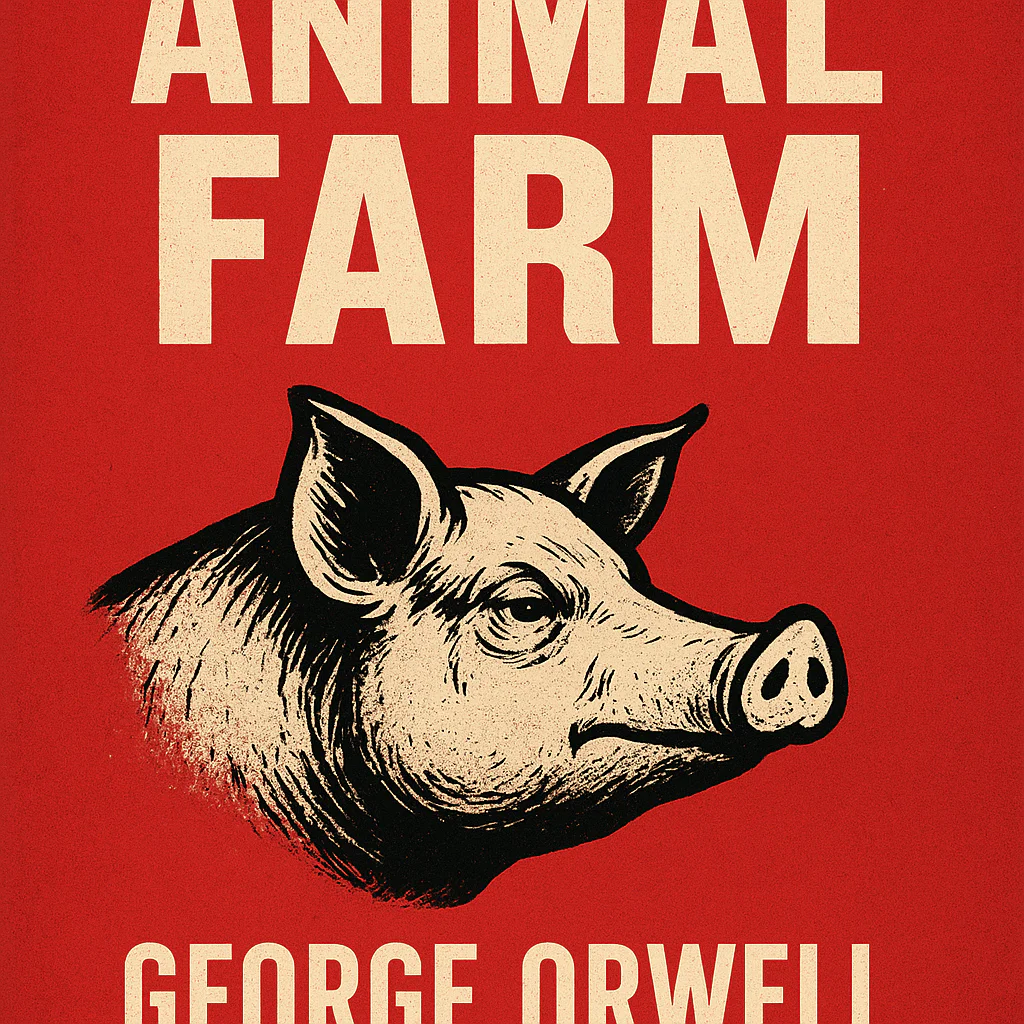
The Animal Farm full story is a chilling, bite-sized masterpiece that reveals how quickly idealism crumbles into tyranny, proving that power corrupts absolutely. You can read this entire novella in an afternoon, yet its lessons on propaganda and betrayal remain terrifyingly relevant in 2026.
George Orwell wrote this fable while the world was still reling from World War II, only to have it nearly destroyed by a V-1 flying bomb that leveled his London home. He literally sifted through the rubble to save the crumpled pages, knowing he had captured a truth too dangerous to ignore.
Today, with a fresh animated adaptation by Andy Serkis hitting screens, the story of the pigs taking over the barn feels less like history and more like a mirror. It asks the uncomfortable question: are we the loyal horses working ourselves to death, or the silent donkeys who see the truth but say nothing?
Key Takeaways
- The Core Warning: The story illustrates that revolutions often fail when leaders prioritize power over principles, eventually becoming indistinguishable from the oppressors they replaced.
- Language as a Weapon: The pigs systematically rewrite history and laws to control the narrative, proving that whoever controls the truth controls the population.
- The Danger of Blind Loyalty: Characters like Boxer show how unquestioning devotion to a leader can lead to exploitation and tragedy.
- Timeless Relevance: Despite being written in 1945, themes of propaganda, corruption, and apathy are more applicable to modern politics than ever before.
Table of Contents
- ⚡️ Quick Tips and Facts
- 📜 The Historical Backdrop: How Orwell Wrote Animal Farm
- 🐷 The Full Story Unfolded: A Chapter-by-Chapter Breakdown
- 1. 🌾 The Rebellion Begins: Old Major’s Dream and the Uprising
- 2. 🏗️ Building the New Order: Seven Commandments and Early Struggles
- 3. 🐎 The Windmill Wars: Snowball’s Exile and Napoleon’s Rise
- 4. 🐕 The Reign of Terror: Purges, Propaganda, and Fear
- 5. 🐖 The Betrayal of the Working Class: Boxer’s Fate and Squealer’s Lies
- 6. 🍷 The Final Transformation: Pigs Walking on Two Legs
- 🔍 Deep Dive: Key Themes, Symbols, and Allegories Explained
- 🎭 Character Analysis: Who Really Runs the Farm?
- 📚 Why Animal Farm Still Matters: Modern Parallels and Relevance
- 💡 Quick Tips and Facts for First-Time Readers
- 🏆 Conclusion: The Timeless Warning of Animal Farm
- 🔗 Recommended Links: Where to Read and Watch
- ❓ FAQ: Common Questions About Animal Farm Answered
- 📖 Reference Links and Further Reading
⚡️ Quick Tips and Facts
Before we dive into the muddy paddocks of Manor Farm, let’s get the lowdown on why this little book packs such a massive punch. At Book Summary Review™, we’ve read our fair share of dystopian classics, but Animal Farm remains the undisputed heavyweight champion of political satire.
Here is the cheat sheet you need to navigate this story without getting lost in the hay:
| Fact | Detail | Why It Matters |
|---|---|---|
| Original Title | Animal Farm: A Fairy Story | Orwell intended it to be accessible to children, yet it’s a brutal critique of adult politics. |
| Publication Date | August 17, 1945 | Published just as WWII ended and the Cold War began, making it incredibly controversial. |
| Word Count | ~30,0 words | It’s a novella, meaning you can devour the full story in a single afternoon. |
| Key Phrase | “All animals are equal, but some animals are more equal than others.” | The ultimate definition of hypocrisy in leadership. |
| Real-World Impact | Banned in the USSR, China, and parts of the US | It was so effective at exposing totalitarianism that regimes tried to erase it. |
| Adaptation Alert | 2025 Animated Film | Directed by Andy Serkis, featuring voices like Seth Rogen and Steve Buscemi. |
Did you know? The manuscript was nearly destroyed by a German V-1 flying bomb in 194. Orwell literally sifted through the rubble of his London home to recover the “slightly crumpled” pages. Talk about dedication! 📜💥
If you’re looking for a deeper dive into the essay structure for your next school assignment, check out our comprehensive guide: 🐷 Animal Farm Summary Essay: The Ultimate Guide to Nailing Your Analysis (2026).
📜 The Historical Backdrop: How Orwell Wrote Animal Farm
You can’t understand the Animal Farm full story without knowing the real-life drama that inspired it. George Orwell (born Eric Arthur Blair) wasn’t just writing a fable; he was writing a warning.
The Russian Revolution in Pig Form
Orwell wrote the book between 1943 and 194, a time when the Soviet Union was a key ally of the West against Nazi Germany. This made criticizing Stalin incredibly difficult. Publishers like Faber and Faber (where T.S. Eliot worked) rejected the manuscript, fearing it would offend the Soviets.
- Mr. Jones = Tsar Nicholas II: The negligent ruler who lost his grip on power.
- Old Major = Karl Marx & Lenin: The visionary who sparks the revolution but dies before seeing the results.
- Snowball = Leon Trotsky: The intellectual, idealistic leader who gets exiled.
- Napoleon = Joseph Stalin: The ruthless, power-hungry dictator who consolidates control.
- Squealer = Pravda: The state propaganda machine that twists the truth.
Orwell witnessed the betrayal of socialist ideals firsthand during the Spanish Civil War, where he saw communists turn on their own allies. This experience fueled his belief that revolutionary ideals are easily corrupted by power.
“One does not establish a dictatorship in order to safeguard a revolution; one makes the revolution in order to establish the dictatorship.” — George Orwell
For more on how this book fits into the broader Classic Literature landscape, visit our Classic Literature category.
🐷 The Full Story Unfolded: A Chapter-by-Chapter Breakdown
Ready to meet the cast? Buckle up, because this story moves faster than a pig running from a dog. We’re going to walk you through the full story of Animal Farm, chapter by chapter, so you don’t miss a single betrayal.
1. 🌾 The Rebellion Begins: Old Major’s Dream and the Uprising
The story opens on Manor Farm, where the animals are starving and neglected by their owner, Mr. Jones. One night, the prize boar Old Major calls a secret meeting. He shares a dream of a world without humans, where animals are free and equal.
He teaches them the song “Beasts of England” and outlines the principles of Animalism:
- Man is the enemy.
- All animals are comrades.
- No animal shall wear clothes, sleep in a bed, drink alcohol, or kill another animal.
The Twist: Old Major dies three days later, but his ideas take root. The animals, led by the pigs Napoleon, Snowball, and Squealer, organize a rebellion. When Mr. Jones forgets to feed them, the animals rise up, chase the humans off the farm, and rename it Animal Farm.
Key Insight: The initial joy is palpable. The animals destroy the whips, nose-bags, and chains. It’s the honeymoon phase of every revolution. But as we’ll see, the honeymoon doesn’t last long.
2. 🏗️ Building the New Order: Seven Commandments and Early Struggles
The pigs, being the smartest, take charge of the organization. They paint the Seven Commandments on the barn wall. The animals adopt the slogan “Four legs good, two legs bad” to simplify the complex philosophy.
- The Harvest: The first harvest is a massive success. The animals work harder than they ever did for Jones, but they are happy because the food is theirs.
- The Milk and Apples: A conflict arises when the milk and windfall apples disappear. Squealer explains that the pigs need these “brain food” items to manage the farm. “Do you know what would happen if we pigs failed in our duty? Jones would come back!“
The Red Flag: This is the first time the commandments are bent. The pigs claim a special privilege for themselves, justifying it with fear.
3. 🐎 The Windmill Wars: Snowball’s Exile and Napoleon’s Rise
Tensions rise between Snowball and Napoleon. Snowball wants to build a windmill to generate electricity and improve life. Napoleon opposes it, claiming it’s a waste of time.
- The Vote: Snowball wins the vote with his passionate speeches.
- The Coup: Just as Snowball is about to finalize the plan, Napoleon whistles. Nine massive attack dogs (whom he secretly raised as puppies) burst out and chase Snowball off the farm forever.
- The Takeover: Napoleon declares that the windmill will be built anyway, claiming the idea was his all along. He establishes a dictatorship, ending all debates.
Why It Matters: This mirrors the historical exile of Trotsky by Stalin. The democratic process is dead; only the will of the leader remains.
4. 🐕 The Reign of Terror: Purges, Propaganda, and Fear
With Snowball gone, Napoleon uses Squealer to rewrite history. Snowball is now a traitor and a spy for Jones.
- The Windmill Disaster: A storm destroys the half-built windmill. Napoleon blames Snowball.
- The Purges: Napoleon holds a “trial.” Four pigs, three hens, a goose, and two sheep confess to conspiring with Snowball. They are immediately executed.
- The Commandment Change: The Sixth Commandment is altered from “No animal shall kill any other animal” to “No animal shall kill any other animal WITHOUT CAUSE.”
The Atmosphere: Fear grips the farm. The animals are terrified to speak. The sheep are trained to interrupt any dissent with a deafening “Four legs good, two legs bad!”
5. 🐖 The Betrayal of the Working Class: Boxer’s Fate and Squealer’s Lies
Enter Boxer, the strongest, most loyal cart-horse. His mottos are “I will work harder” and “Napoleon is always right.” He represents the exploited working class who believe in the system even as it crushes them.
- The Collapse: Boxer works himself to the point of collapse while rebuilding the windmill.
- The Lie: Napoleon claims to send Boxer to a vet. A van arrives with the words “Alfred Simonds, Horse Slaughter and Glue Boiler.”
- The Cover-up: Squealer lies, saying the van was bought by the vet and the paint wasn’t dry. He claims Boxer died in a hospital, surrounded by care.
- The Reality: Boxer was sold for glue, and the money was used to buy a case of whisky for the pigs.
The Heartbreak: This is the emotional core of the book. The animals realize too late that their loyalty was exploited.
6. 🍷 The Final Transformation: Pigs Walking on Two Legs
Years pass. The farm is in ruins, the animals are starving, but the pigs are fat and well-dressed.
- The Changes: The pigs start walking on two legs, carrying whips, and wearing human clothes.
- The Sheep: Their chant changes to “Four legs good, two legs BETER!”
- The Final Commandment: All the commandments are erased, replaced by one: “ALL ANIMALS ARE EQUAL BUT SOME ANIMALS ARE MORE EQUAL THAN OTHERS.”
- The Ending: The pigs invite neighboring human farmers (Mr. Pilkington and Mr. Frederick) for a card game. The other animals look through the window and see the pigs and humans arguing. They try to tell the difference, but “it was impossible to say which was which.”
The farm is renamed back to Manor Farm. The cycle is complete.
🔍 Deep Dive: Key Themes, Symbols, and Allegories Explained
Now that we’ve covered the plot, let’s unpack the why. Why does this story still resonate nearly 80 years later?
The Corruption of Language
Orwell shows how language is a tool of control. By changing the commandments and the songs, the pigs control reality.
- Example: “No animal shall sleep in a bed” becomes “No animal shall sleep in a bed WITH SHETS.”
- Lesson: If you control the words, you control the truth.
The Role of Ignorance
The animals are largely illiterate or uneducated. Benjamin, the donkey, can read but says, “Donkeys live a long time. None of you has ever seen a dead donkey.” He knows what’s happening but feels powerless to stop it.
- Symbolism: This represents the apathetic intelligentsia who see the danger but do nothing.
The Cycle of Oppression
The most chilling theme is that nothing changes. The pigs become the humans they overthrew. The revolution didn’t liberate the animals; it just swapped one tyrant for another.
🎭 Character Analysis: Who Really Runs the Farm?
Let’s break down the cast of characters and what they represent in the real world.
| Character | Role in Story | Real-World Allegory | Key Trait |
|---|---|---|---|
| Napoleon | Dictator Pig | Joseph Stalin | Ruthless, manipulative, power-hungry |
| Snowball | Idealistic Pig | Leon Trotsky | Intelligent, visionary, exiled |
| Squealer | Propaganda Pig | Pravda (Soviet Media) | Charming, deceitful, master of spin |
| Boxer | Loyal Horse | The Working Class | Strong, naive, blindly loyal |
| Benjamin | Cynical Donkey | The Skeptics | Wise but passive, sees the truth |
| Mollie | Vain White Mare | The Bourgeoisie | Selfish, fles the revolution |
| The Sheep | Blind Followers | The Masses | Easily manipulated, chant slogans |
| Mr. Jones | Negligent Farmer | Tsar Nicholas II | Out of touch, careless |
Fun Fact: The 2025 animated adaptation directed by Andy Serkis introduces a female Snowball and shifts some business corruption themes, offering a fresh perspective on the original text. You can catch the trailer on Angel Studios.
📚 Why Animal Farm Still Matters: Modern Parallels and Relevance
Is Animal Farm just about Russia? Absolutely not.
- Political Polarization: The way Squealer twists facts mirrors modern fake news and propaganda in social media.
- Corporate Gred: The pigs’ gradual accumulation of wealth and power parallels corporate monopolies that start with “fairness” and end with exploitation.
- Revolutionary Fatigue: The story warns us that idealism without vigilance leads to tyranny.
Whether you’re reading it for a class or just for fun, the Animal Farm full story is a mirror held up to society. It asks the hard question: Are we the animals, or are we the pigs?
For more insights on how books adapt to film, check out our Book-to-Film Adaptations section.
💡 Quick Tips and Facts for First-Time Readers
If you’re picking this up for the first time, here are a few pro-tips from our team:
- Don’t Skip the Preface: Orwell’s original preface (often omitted in editions) explains why he wrote the book. It’s crucial for context.
- Track the Commandments: Keep a list of the Seven Commandments and how they change. It’s the best way to see the coruption in action.
- Watch the Animals: Pay attention to Boxer and Benjamin. Their reactions tell you more about the state of the farm than the pigs do.
- Read Aloud: The dialogue, especially Squealer’s speeches, is incredibly rhythmic. Reading it aloud helps you hear the manipulation.
Need a summary? We’ve got you covered. Check out our Book Sumaries for a quick recap.
🏆 Conclusion: The Timeless Warning of Animal Farm

We’ve journeyed from the hopeful dream of Old Major to the chilling realization that the pigs and humans are indistinguishable. The Animal Farm full story is not just a tale of talking animals; it is a masterclass in the psychology of power.
The Positives:
- ✅ Brilliant Satire: Orwell’s wit makes heavy political themes accessible and engaging.
- ✅ Timeless Relevance: The themes of propaganda, corruption, and the abuse of power are as relevant today as they were in 1945.
- ✅ Concise Storytelling: It’s a short read that packs an emotional punch.
The Negatives:
- ❌ Dark Tone: It can be depressing to watch the slow erosion of hope and justice.
- ❌ Cynical View: Some readers find the lack of a “happy ending” or a true hero to be frustrating.
Our Verdict:
Animal Farm is a must-read. It’s a warning that fredom requires constant vigilance. If you stop questioning authority, if you stop reading the fine print, and if you let fear dictate your actions, you might just find yourself looking through a window, unable to tell the difference between the oppressor and the oppressed.
Final Thought: The next time you hear a slogan that sounds too good to be true, or a leader who claims to have all the answers, remember the pigs. Remember that “All animals are equal, but some animals are more equal than others.”
Stay curious, stay critical, and keep reading! 📚✨
🔗 Recommended Links: Where to Read and Watch
Ready to dive in? Here are the best places to get your hands on Animal Farm or watch the new adaptation.
📖 Buy the Book:
- Paperback Edition: Amazon | Barnes & Noble | Book Depository
- Audiobook: Audible | Amazon
🎬 Watch the Adaptation:
- 2025 Animated Film (Andy Serkis): Angel Studios | YouTube Trailer
🎭 Stage & Other Media:
- National Theatre Production: National Theatre Live
- Video Game: Orwell’s Animal Farm
❓ FAQ: Common Questions About Animal Farm Answered

What are the 7 rules in Animal Farm?
The original Seven Commandments painted on the barn wall were:
- Whatever goes upon two legs is an enemy.
- Whatever goes upon four legs, or has wings, is a friend.
- No animal shall wear clothes.
- No animal shall sleep in a bed.
- No animal shall drink alcohol.
- No animal shall kill any other animal.
- All animals are equal.
Note: These rules are gradually altered by the pigs to suit their needs.
Read more about “🐷 Animal Farm Summary Essay: The Ultimate Guide to Nailing Your Analysis (2026)”
What happens in the end of Animal Farm?
In the ending, the pigs begin walking on two legs, wearing clothes, and carrying whips. They invite human farmers for a card game. The other animals look through the window and realize they can no longer distinguish between the pigs and the humans. The farm is renamed Manor Farm, and the final commandment reads: “All animals are equal, but some animals are more equal than others.”
Read more about “🐷 How Does Animal Farm End? The Shocking Truth Revealed (2026)”
What is the hidden message in Animal Farm?
The hidden message is a warning against totalitarianism and the corruption of revolutionary ideals. It illustrates how power can corrupt even the most well-intentioned leaders and how the masses can be manipulated through fear, propaganda, and the alteration of truth.
Read more about “🐷 Why Animal Farm Still Matters: 15 Reasons It’s Vital in 2026”
What is Animal Farm full short summary?
Animal Farm is a satirical allegory where farm animals overthrow their human owner to create an equal society. However, the pigs, led by Napoleon, gradually seize power, betray the other animals, and become indistinguishable from the humans they replaced.
Read more about “📚 The Ultimate Chapter Summary Guide: Master Any Book in 2026”
What is the main message of Animal Farm?
The main message is that power corrupts, and absolute power corrupts absolutely. It also highlights the dangers of blind loyalty, the manipulation of language, and the ease with which democratic ideals can be subverted by authoritarian leaders.
Read more about “🐖 What Was Animal Farm All About? The Shocking Truth (2026)”
Who are the main characters in Animal Farm?
The main characters include Napoleon (the dictator), Snowball (the idealist), Squealer (the propagandist), Boxer (the loyal worker), Benjamin (the cynical donkey), Old Major (the visionary), and Mr. Jones (the original farmer).
Read more about “Animal Farm Book Summary: Unmasking Orwell’s Timeless Allegory 🐖 (2026)”
What is the ending of Animal Farm?
The ending is bleak and cyclical. The pigs and humans become indistinguishable, symbolizing that the revolution has failed and the cycle of oppression has begun anew. The animals outside the window cannot tell the difference between pig and man.
Read more about “Unlocking the Secrets of Animal Farm Setting: A Deep Dive 🐖”
Is Animal Farm based on a true story?
Animal Farm is not a true story in the literal sense, but it is a historical allegory. It directly parallels the Russian Revolution of 1917 and the rise of the Soviet Union under Stalin, with characters representing real historical figures like Lenin, Trotsky, and Stalin.
Read more about “🌟 The Great Gatsby Summary: A Tragic Dream Explained (2026)”
What are the key themes in Animal Farm?
Key themes include the corruption of power, the manipulation of language, the betrayal of the working class, the role of ignorance, and the cyclical nature of history.
Read more about “What Does Animal Farm Symbolize? 🐖 Unpacking 7 Powerful Allegories”
How does Animal Farm relate to the Russian Revolution?
The book is a direct allegory: Mr. Jones represents Tsar Nicholas II, Old Major represents Karl Marx/Lenin, Snowball represents Trotsky, Napoleon represents Stalin, and the Seven Commandments represent the ideals of communism that were twisted by the Soviet regime.
What is the significance of the seven commandments in Animal Farm?
The Seven Commandments represent the ideals of the revolution. Their gradual alteration by the pigs symbolizes the coruption of those ideals and the manipulation of truth to maintain power. The final reduction to a single, contradictory commandment highlights the complete betrayal of the original principles.
Read more about “What Is the Critical Summary of Animal Farm? 🐷 Unveiled (2026)”
📖 Reference Links and Further Reading
For those who want to verify the facts and dive deeper into the history:
- Project Gutenberg: Animal Farm Full Text – The original text for free.
- Wikipedia: Animal Farm – Full Story Summary & Key Facts – Comprehensive historical context.
- Angel Studios: Animal Farm | Andy Serkis | Official Trailer – The 2025 animated adaptation.
- Time Magazine: 10 Best English-Language Novels – Where Animal Farm is ranked.
- BBC: The Big Read – Animal Farm – Public voting results.
- George Orwell Foundation: Official Website – Biographical info and works.