Support our educational content for free when you purchase through links on our site. Learn more
Unlocking the Secrets of Animal Farm Setting: A Deep Dive 🐖

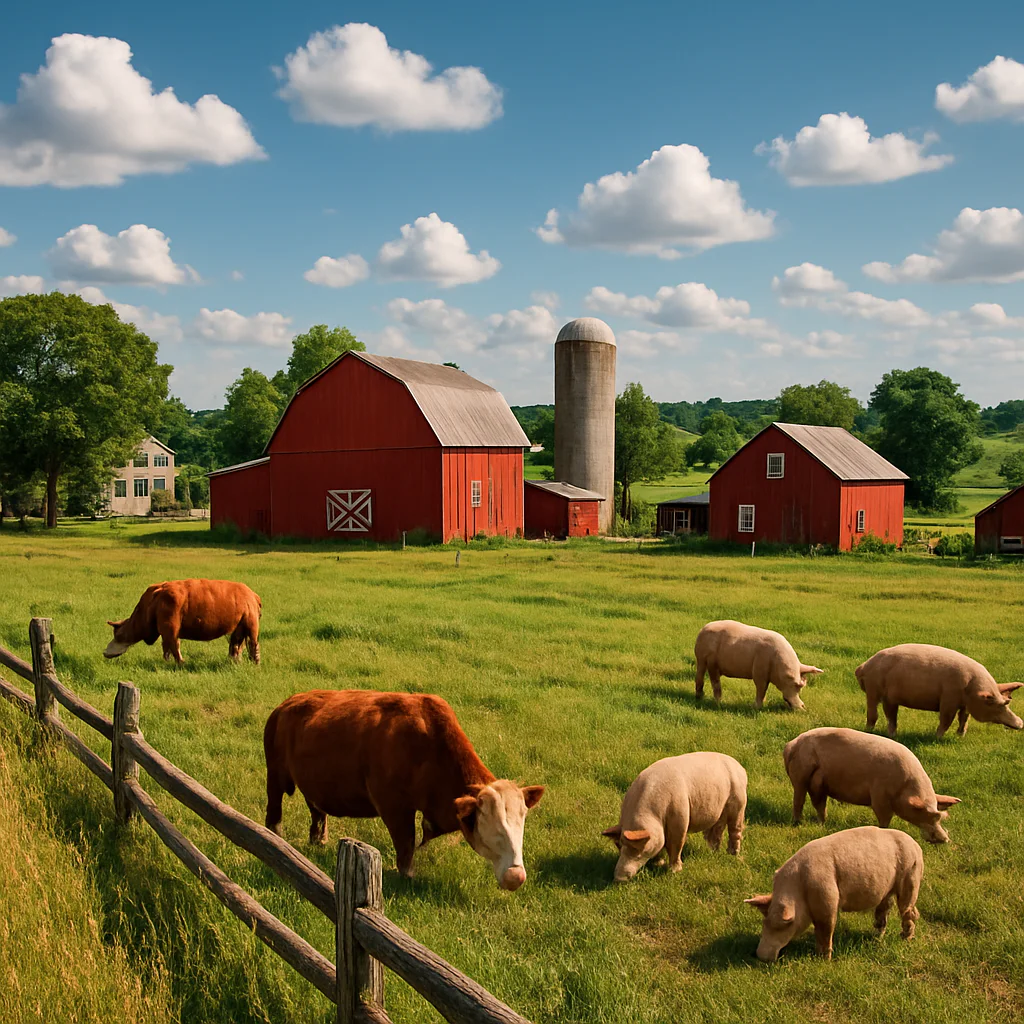
Have you ever wondered why George Orwell’s Animal Farm feels so much more than just a story about talking animals on a farm? The setting itself is a masterstroke of symbolism and political allegory, transforming a simple English farm into a vivid microcosm of revolution, power, and betrayal. From the humble fields of Manor Farm to the opulent farmhouse now ruled by pigs, every inch of this setting pulses with meaning that echoes real-world history and timeless human truths.
In this comprehensive exploration, we peel back the layers of Animal Farm’s setting to reveal how Orwell crafted a world that’s both specific and universal. We’ll uncover the significance of key locations like the barn, the farmhouse, and even the mythical Sugarcandy Mountain, and how these places shape the narrative and themes. Plus, we’ll connect the dots between the farm’s geography and the political upheavals of the Soviet Union, making this a must-read for anyone curious about literature, history, or the art of storytelling.
Ready to see how a simple farm becomes a powerful symbol of revolution’s rise and fall? Keep reading to discover the hidden depths of Orwell’s setting that make Animal Farm a timeless classic.
Key Takeaways
- Animal Farm’s setting is a rich political allegory, mirroring the Russian Revolution and Soviet Union through its locations and transformations.
- Manor Farm’s evolution into Animal Farm and back symbolizes the cyclical nature of tyranny and failed revolutions.
- The farmhouse, barn, and neighboring farms (Foxwood and Pinchfield) each represent different facets of power, propaganda, and international politics.
- Sugarcandy Mountain serves as a mythical symbol of hope and religious pacification within the story.
- The confined farm setting intensifies themes of isolation, control, and the corruption of ideals.
- Understanding the setting unlocks deeper insights into character motivations and Orwell’s critique of totalitarianism.
Dive into this article to enrich your reading or teaching of Animal Farm and appreciate the genius behind its unforgettable setting.
Table of Contents
- ⚡️ Quick Tips and Facts About Animal Farm Setting
- 📜 The Historical and Political Backdrop Behind Animal Farm’s Setting
- 🏡 Manor Farm: The Symbolic Heart of Animal Farm’s Setting
- 🏠 The Farmhouse: Power, Corruption, and the Changing Landscape
- 🐖 The Barn: Where Ideals Are Born and Betrayed
- 🌲 Foxwood and Pinchfield: Neighboring Farms as Political Allegories
- 🌈 Sugarcandy Mountain: The Mythical Setting of Hope and Illusion
- 🔍 How Setting Shapes the Themes and Characters in Animal Farm
- 📚 Literary Devices and Symbolism Embedded in Animal Farm’s Setting
- 🌍 Real-World Inspirations for Animal Farm’s Setting
- 🎭 The Role of Setting in Animal Farm’s Narrative Structure
- 💡 Quick Tips for Teaching or Analyzing Animal Farm’s Setting
- 📝 Conclusion: Why Animal Farm’s Setting Is More Than Just a Backdrop
- 🔗 Recommended Links for Deeper Exploration of Animal Farm’s Setting
- ❓ FAQ: Your Burning Questions About Animal Farm’s Setting Answered
- 📖 Reference Links and Further Reading on Animal Farm’s Setting
⚡️ Quick Tips and Facts About Animal Farm Setting
Welcome, fellow bookworms, to Book Summary Review™! Today, we’re diving deep into the Animal Farm setting, a seemingly simple English farm that becomes a chilling microcosm of political tyranny. George Orwell’s masterpiece isn’t just a story; it’s a profound allegory, and its setting is far more than just a backdrop. It’s a character in itself, evolving and reflecting the grim realities of the revolution. If you’re looking for a comprehensive Animal Farm book summary, you can find one right here on our site!
We’ve all read books where the setting feels like a pretty postcard, right? Not Animal Farm. Here, every fence post, every building, every patch of land is loaded with meaning. It’s a masterclass in how environment shapes narrative and theme.
Here’s a quick glance at what makes this setting so pivotal:
| Aspect of Setting | Key Role & Symbolism | Evolution |
|---|---|---|
| Manor Farm | Initial state of oppression, represents Tsarist Russia. | Renamed “Animal Farm” post-rebellion, then reverts to “Manor Farm” at the end, symbolizing the revolution’s failure. |
| Animal Farm | The revolutionary ideal, a symbol of hope and self-governance. | Gradually corrupted, becoming indistinguishable from its oppressive past. |
| The Farmhouse | Seat of human power, luxury, and corruption. | Becomes the pigs’ residence, symbolizing their ascent to power and betrayal of ideals. |
| The Barn | Center of animal community, political meetings, and revolutionary laws. | Site of the Seven Commandments’ gradual alteration, reflecting propaganda and manipulation. |
| Foxwood Farm | Neighboring farm, represents capitalist England/Western powers. | Shifting alliances and rivalries with Animal Farm. |
| Pinchfield Farm | Neighboring farm, represents totalitarian Germany (Nazi regime). | Represents external threats and betrayals. |
| Sugarcandy Mountain | Mythical heaven, a tool for pacification and control. | A persistent, though illusory, hope for the exploited animals. |
Did you know? The entire narrative of Animal Farm unfolds within the confines of this single farm and its immediate surroundings. “No animal leaves the farm unless it is a traitor, declared an enemy of the state, or sold to the enemy to be killed,” as noted by EBSCO’s analysis. This geographical isolation intensifies the allegorical weight, making the farm a self-contained world mirroring larger political systems.
📜 The Historical and Political Backdrop Behind Animal Farm’s Setting
To truly grasp the genius of Animal Farm‘s setting, we need to rewind a bit and understand the turbulent world George Orwell was responding to. This isn’t just a story about talking animals; it’s a scathing political satire and dystopian allegory of the Russian Revolution of 1917 and the subsequent rise of the Soviet Union under Joseph Stalin. Orwell, a staunch democratic socialist, was deeply disillusioned by the corruption of revolutionary ideals he witnessed.
As Wikipedia aptly summarizes, Animal Farm “reflects the Russian Revolution of 1917 and Soviet Union under Stalin.” The farm itself, initially Manor Farm, is a direct stand-in for Russia. Mr. Jones, the neglectful, alcoholic farmer, represents Tsar Nicholas II, the last emperor of Russia, whose incompetence and extravagance fueled the revolutionary fervor. The animals’ rebellion, sparked by Old Major’s vision, mirrors the October Revolution, where the proletariat (the working class) rose up against the autocratic regime.
Orwell’s experiences, particularly his time fighting in the Spanish Civil War, solidified his critique of totalitarianism. He saw firsthand how revolutionary movements could be hijacked and twisted into new forms of oppression. He famously stated, “The destruction of the Soviet myth was essential if we wanted a revival of the socialist movement,” as quoted on Wikipedia. This wasn’t just an academic exercise for him; it was a deeply personal and political mission.
The setting, therefore, isn’t just a place; it’s a historical stage. Every event that unfolds on Animal Farm has a real-world parallel in Soviet history, from the initial idealism to the brutal purges and the eventual betrayal of the revolution’s founding principles. The confined nature of the farm emphasizes the isolation and control characteristic of totalitarian states, where information is manipulated and dissent is brutally suppressed. It’s a chilling reminder that history, if ignored, has a nasty habit of repeating itself.
🏡 Manor Farm: The Symbolic Heart of Animal Farm’s Setting
Ah, Manor Farm! Where it all begins. Before the revolution, it’s a place of neglect, hardship, and human exploitation. Mr. Jones, a drunkard, barely manages it, leaving the animals hungry and overworked. This initial state is crucial because it sets the stage for the animals’ desperate yearning for change. As EBSCO’s analysis points out, Manor Farm “is the primary setting; an English farm initially run by Mr. Jones” and “represents any farm or place; serves as an allegory for the Soviet Union.”
When the animals successfully overthrow Mr. Jones, they rename it Animal Farm. This act of renaming is profoundly symbolic. It signifies a fresh start, a break from the oppressive past, and the birth of a new, self-governed society based on the principles of Animalism. The farm transforms from a symbol of human tyranny into a beacon of animal liberation. For a while, it truly feels like a utopia in the making. Food is plentiful, the animals work together, and the future seems bright.
However, as we know, this utopian vision is tragically short-lived. The name “Animal Farm” itself becomes a cruel irony as the pigs, led by Napoleon, gradually usurp power and become indistinguishable from their former human oppressors. The ultimate betrayal comes at the novel’s end when the farm reverts to its original name, Manor Farm. This final renaming isn’t just a detail; it’s a powerful statement. It symbolizes the complete failure of the revolution, the cyclical nature of tyranny, and the crushing of all hope. The ideals of equality and freedom are shattered, replaced by a new, more insidious form of oppression.
The farm itself, with its fields, pastures, and buildings, becomes a living testament to the revolution’s rise and fall. It’s a contained world, a microcosm where the grand theories of political change are tested and ultimately corrupted. The animals are literally trapped within its boundaries, unable to escape the unfolding tragedy. This confinement amplifies the sense of inevitability and the chilling realization that, for the common animals, one oppressive regime has simply been replaced by another.
If you’re looking to delve deeper into this classic, we highly recommend getting your own copy. It’s a book that sparks endless discussion and critical thinking.
- Animal Farm by George Orwell: Amazon | Barnes & Noble | Audible
🏠 The Farmhouse: Power, Corruption, and the Changing Landscape
The Farmhouse in Animal Farm is perhaps the most potent symbol of corruption and the betrayal of revolutionary ideals. Initially, it’s the forbidden zone, the opulent residence of Mr. Jones, where “no real work is done there,” as EBSCO’s analysis highlights. It represents the seat of human power, luxury, and the very class distinctions the revolution sought to abolish. The animals, in their initial fervor, declare that no animal shall ever live in the farmhouse, sleep in a bed, wear clothes, drink alcohol, or kill another animal – these are the foundational Seven Commandments.
Yet, almost immediately, the allure of the farmhouse begins to work its insidious magic on the pigs. First, they claim it as their headquarters, ostensibly for “administrative purposes.” Then, the subtle creep begins. The pigs move in, sleep in beds (with sheets removed, of course, to technically adhere to the letter of the law, if not the spirit!). Later, they start drinking alcohol, wearing clothes, and eventually, even walking on two legs. Each step into the farmhouse is a step away from Animalism and deeper into human-like corruption.
“When pigs move into the farmhouse, it indicates the revolution’s failure,” EBSCO states, and we couldn’t agree more. This isn’t just about comfort; it’s about adopting the very symbols and behaviors of the oppressors they overthrew. The farmhouse becomes a physical manifestation of the pigs’ growing elitism and their separation from the common animals. It’s where they hold their secret meetings, where they feast while others starve, and where they ultimately become indistinguishable from the humans.
The final, chilling scene, where the pigs are seen dining and playing cards with human farmers inside the farmhouse, perfectly encapsulates this betrayal. The animals outside, peering through the window, can no longer tell the difference between pig and man. This powerful visual, also highlighted in the first YouTube video summarizing the plot, underscores the complete corruption of the revolution and the cyclical nature of power. The farmhouse, once a symbol of the old regime, becomes the new regime’s opulent, corrupt heart. It’s a stark reminder that power, left unchecked, can transform even the most idealistic revolutionaries into tyrants.
🐖 The Barn: Where Ideals Are Born and Betrayed
If the farmhouse represents the corrupting influence of power, then The Barn is the beating heart of the Animal Farm revolution – at least, initially. It’s described by EBSCO as “originally a storage and shelter space; [that] becomes a political meeting place.” This is where Old Major delivers his inspiring speech, where the animals gather to discuss their grievances, and where the principles of Animalism are first articulated. It’s the birthplace of their collective dream, a place of unity and shared purpose.
Crucially, “The laws of Animal Farm are painted on the side of the barn,” as EBSCO notes. These are the Seven Commandments, the bedrock of their new society:
- Whatever goes upon two legs is an enemy.
- Whatever goes upon four legs, or has wings, is a friend.
- No animal shall wear clothes.
- No animal shall sleep in a bed.
- No animal shall drink alcohol.
- No animal shall kill any other animal.
- All animals are equal.
These commandments, boldly displayed for all to see, represent the transparency and equality that the revolution promises. The barn, therefore, becomes a symbol of the revolution’s ideals, a public forum where decisions are made (or at least, appear to be made) and where the collective spirit of the animals resides.
However, just like the revolution itself, the barn’s integrity is gradually eroded. We witness, with growing horror, how Squealer, Napoleon’s propaganda minister, systematically alters the commandments painted on the barn wall. Each change is subtle at first, adding a qualifying phrase (“No animal shall sleep in a bed with sheets,” “No animal shall drink alcohol to excess,” “No animal shall kill any other animal without cause“). These alterations are a chilling demonstration of how propaganda and the manipulation of truth can undermine even the most sacred principles. The animals, often illiterate or too exhausted to remember the original wording, are easily deceived.
Eventually, all the commandments are erased, replaced by a single, terrifying maxim: “All animals are equal, but some animals are more equal than others.” This final, cynical twist, vividly depicted in the plot summary of the first YouTube video, seals the fate of Animal Farm. The barn, once a symbol of revolutionary truth, becomes a monument to its betrayal, a canvas for lies and the ultimate symbol of the pigs’ absolute power. It’s a powerful reminder that even the most public declarations can be rewritten to serve the interests of the powerful.
🌲 Foxwood and Pinchfield: Neighboring Farms as Political Allegories
Beyond the immediate confines of Animal Farm, two other farms play crucial roles in Orwell’s allegory: Foxwood and Pinchfield. These neighboring properties aren’t just geographical markers; they represent the complex and often treacherous landscape of international politics surrounding the Soviet Union during the early to mid-20th century.
Foxwood: The Capitalist West
Foxwood Farm, owned by the easy-going but neglectful Mr. Pilkington, is described by EBSCO as “large and neglected, with run-down hedges.” It symbolizes England and, more broadly, the Western capitalist powers like the United States and Great Britain. Mr. Pilkington himself represents the leaders of these nations, often portrayed as more concerned with leisure than with the welfare of their people or the stability of their neighbors.
Orwell’s depiction of Foxwood as “large and neglected” might reflect his view of the perceived inefficiencies or moral failings of capitalist democracies compared to the initial, idealized efficiency of the Soviet experiment. However, despite its flaws, Foxwood is generally seen as less overtly tyrannical than Pinchfield. The relationship between Animal Farm and Foxwood is characterized by shifting alliances and mutual suspicion, mirroring the complex diplomatic relations between the Soviet Union and the Western Allies, particularly during World War II.
Pinchfield: The Totalitarian Threat
In stark contrast, Pinchfield Farm, owned by the “tough, shrewd” Mr. Frederick, is described as “smaller, well-maintained neighboring farm; [that] symbolizes Germany,” specifically Nazi Germany. Mr. Frederick is a clear allegory for Adolf Hitler, known for his ruthlessness, efficiency, and aggressive expansionist policies. EBSCO notes that Pinchfield “represents political pressure and threats to the revolution.”
The relationship between Animal Farm and Pinchfield is fraught with tension and outright hostility. Mr. Frederick is known for his cruelty to his own animals and his cunning business dealings. The infamous incident where Frederick tricks Animal Farm by paying for timber with forged banknotes is a direct allegory for the Molotov-Ribbentrop Pact (the Nazi-Soviet Non-Aggression Pact) of 1939, which was ultimately betrayed by Hitler’s invasion of the Soviet Union. This “business deal” and its subsequent betrayal highlight the dangers of trusting totalitarian regimes and the cynical nature of political alliances.
Shifting Alliances and the Global Stage
The existence of Foxwood and Pinchfield allows Orwell to explore the external pressures and diplomatic maneuvers that impacted the Soviet Union. The animals on Animal Farm are constantly told to fear one or the other, depending on Napoleon’s current political agenda. This manipulation of external threats is a classic tactic used by totalitarian regimes to maintain internal control and rally support. The shifting allegiances between Animal Farm, Foxwood, and Pinchfield perfectly illustrate the volatile international relations of the era, where former enemies could become temporary allies, and vice versa, all driven by self-interest and power. It’s a brilliant use of setting to expand the allegory beyond the farm gates and onto the global stage.
🌈 Sugarcandy Mountain: The Mythical Setting of Hope and Illusion
Ah, Sugarcandy Mountain! This isn’t a physical place you can walk to on Animal Farm, but it’s a profoundly significant part of its setting, existing entirely in the realm of myth and belief. Preached by Moses the raven, Sugarcandy Mountain is presented as a glorious, ethereal land where all animals go after they die. It’s a place of eternal rest, where “it was Sunday seven days a week, clover was in season all the year round, and lump sugar and linseed cake grew on the hedges.” Sounds pretty sweet, right?
EBSCO’s analysis perfectly captures its essence: “Sugarcandy Mountain is an imaginary utopia or heaven preached by Moses the raven,” and it “keeps animals pacified with the promise of an afterlife.” This mythical setting serves a crucial allegorical purpose: it represents heaven or the promise of a religious afterlife, often used by oppressive regimes (or those who benefit from them) to pacify the suffering masses. If life is hard now, just wait for the glorious reward in the next life!
Initially, the pigs, in their revolutionary zeal, dismiss Moses and his tales as “lies” and “nonsense,” seeing religion as a tool of human oppression. Moses even leaves the farm for a time after the rebellion. However, as the pigs become more tyrannical and the animals’ lives become harder, the pigs shrewdly realize the utility of Sugarcandy Mountain. Moses returns, and the pigs, despite their earlier condemnation, allow him to preach his tales, even giving him a daily ration of beer. Why? Because it serves their purpose.
“Represents the idea of heaven used by tyrants to pacify subjects,” EBSCO concludes. This is the core insight. By offering the animals a distant, unattainable hope, the pigs distract them from their immediate suffering and prevent them from questioning the harsh realities of their present lives. Boxer, the loyal workhorse, embodies this perfectly. Despite his relentless labor and eventual betrayal, he holds onto the hope of Sugarcandy Mountain, a testament to its power as an opiate for the masses. It’s a poignant reminder of how even the most cynical regimes can exploit spiritual yearning for their own ends.
🔍 How Setting Shapes the Themes and Characters in Animal Farm
The setting in Animal Farm isn’t just a pretty picture; it’s a dynamic force that actively shapes the themes and characters within Orwell’s powerful allegory. Without the specific environment of Manor Farm and its transformation, the story simply wouldn’t resonate with the same chilling impact.
Intensifying Themes of Totalitarianism and Corruption
The most obvious impact of the setting is how it amplifies the themes of totalitarianism, propaganda, and the corruption of power. The farm is a closed system, a self-contained world. This isolation means there’s no outside intervention, no escape, and no alternative perspective for the common animals. This confinement mirrors the reality of totalitarian states, where citizens are cut off from external information and subjected to a single, state-controlled narrative. The animals literally cannot leave, reinforcing the idea that once a totalitarian regime takes hold, escape is nearly impossible.
The physical changes to the farm—the pigs moving into the farmhouse, the alteration of the commandments on the barn wall, the construction and destruction of the windmill—are all tangible manifestations of the revolution’s decay. Each modification of the setting is a step further into corruption, making the abstract concept of political betrayal concrete and visible. The farm’s reversion to “Manor Farm” at the end isn’t just a name change; it’s the ultimate symbol of the cyclical nature of tyranny, demonstrating that without vigilance, one oppressor can simply replace another.
Defining Characters and Their Fates
The setting also profoundly impacts the characters and their development (or lack thereof).
- Boxer, the loyal workhorse, is defined by his labor within the farm’s confines. His unwavering dedication to building the windmill, a symbol of the revolution’s promise, ultimately leads to his exploitation and tragic end. His entire existence is tied to the farm’s productivity, and his fate underscores the regime’s callous disregard for its most devoted workers.
- The pigs, particularly Napoleon and Squealer, use the farm’s resources and spaces to consolidate their power. The farmhouse becomes their seat of government, the barn their propaganda billboard, and the fields their source of wealth. Their physical separation from the other animals (living in the farmhouse, eating better food) highlights their growing elitism and class division.
- The sheep, with their mindless chanting of “Four legs good, two legs bad” (and its later variations), are easily manipulated within the farm’s echo chamber. Their lack of exposure to external ideas makes them perfect subjects for Squealer’s propaganda.
- Even Benjamin, the cynical donkey, whose wisdom is rooted in his long observation of the farm’s unchanging cycles, finds his fatalism confirmed by the farm’s tragic trajectory. He sees the patterns of human (and pig) behavior repeating themselves within the familiar boundaries.
The setting, therefore, is not merely a stage; it’s an active participant in the narrative, a silent witness to the rise and fall of ideals, and a powerful tool for Orwell to convey his timeless critique of power and human nature. It’s a brilliant example of how environmental details can imbue a story with profound allegorical depth.
📚 Literary Devices and Symbolism Embedded in Animal Farm’s Setting
George Orwell was a master craftsman, and the Animal Farm setting is a treasure trove of literary devices and symbolism. It’s not just a farm; it’s a meticulously constructed allegorical landscape designed to convey complex political ideas in an accessible, yet devastatingly effective, way.
Allegory: The Farm as a Nation
The most prominent literary device is, of course, allegory. The entire farm is an allegory for the Soviet Union, and its various locations symbolize different aspects of the Russian Revolution and its aftermath.
- Manor Farm / Animal Farm: As we’ve discussed, this represents Russia/the Soviet Union. The change in name and its eventual reversion powerfully symbolize the rise and fall of revolutionary ideals. It’s a microcosm, a small world that reflects a much larger political reality.
- Mr. Jones’s Farmhouse: This isn’t just a house; it’s the Kremlin, the seat of power, luxury, and ultimately, corruption. Its occupation by the pigs symbolizes their complete takeover and adoption of the previous oppressors’ ways.
- The Barn: This is the public square, the parliament, the place where the revolution’s laws (the Seven Commandments) are displayed and where political discourse (however manipulated) takes place. Its defacement and the alteration of the commandments symbolize the rewriting of history and the manipulation of truth by totalitarian regimes.
- The Windmill: This grand project, initially championed by Snowball, symbolizes industrialization and the ambitious, often brutal, five-year plans of the Soviet Union. Its repeated construction and destruction represent the immense sacrifices and failures inherent in such rapid, forced development.
- Foxwood and Pinchfield: These neighboring farms are symbolic of other nations and their shifting geopolitical alliances, as we explored earlier.
Symbolism: Objects and Places with Deeper Meaning
Beyond the overarching allegory, individual elements of the setting are rich with symbolism:
- The Flag: The green flag with a white hoof and horn, symbolizing the animals’ republic, is a direct parallel to the Hammer and Sickle of the Soviet flag, representing the unity of workers and peasants.
- The Farm’s Boundaries: The fences and hedges that enclose Animal Farm symbolize the isolation and censorship imposed by totalitarian states. The animals are physically and ideologically confined, preventing them from seeing or experiencing alternatives.
- The Paddock/Pastures: These represent the common land, the shared resources that were supposed to benefit all animals equally but are gradually monopolized by the pigs.
- Sugarcandy Mountain: This mythical place symbolizes religion as an opiate for the masses, a tool used by the powerful to pacify the exploited.
Irony: The Bitter Twist of Expectations
The setting is also imbued with profound irony. The very farm that was meant to be a beacon of freedom and equality becomes a more brutal tyranny than before. The animals work harder for less, their lives are shorter, and their freedoms are nonexistent. The irony of the pigs becoming indistinguishable from humans, the very creatures they rebelled against, is the ultimate bitter twist, highlighted in the novel’s closing scene.
Orwell’s masterful use of these literary devices ensures that Animal Farm remains a timeless and potent critique, demonstrating how a seemingly simple farm setting can be transformed into a complex and devastating political commentary. It’s why this book continues to be a staple in classic literature discussions and book reviews worldwide.
🌍 Real-World Inspirations for Animal Farm’s Setting
While Animal Farm is a work of fiction, its setting is deeply rooted in real-world inspirations, primarily the tumultuous political landscape of the early 20th century. George Orwell didn’t just pluck a farm out of thin air; he meticulously crafted it to serve as a powerful allegorical mirror to historical events.
The Russian Revolution and the Soviet Union
The most significant inspiration, as we’ve touched upon, is the Russian Revolution of 1917 and the subsequent formation and evolution of the Soviet Union.
- Manor Farm itself is a direct stand-in for Russia, initially under the oppressive rule of Tsar Nicholas II (Mr. Jones). The revolution that transforms Manor Farm into Animal Farm directly parallels the October Revolution that overthrew the Tsarist regime.
- The subsequent struggles, the rise of figures like Stalin (Napoleon) and Trotsky (Snowball), the purges, the industrialization efforts (the windmill), and the shifting international alliances (Foxwood and Pinchfield) all find their allegorical counterparts within the farm’s boundaries.
- Orwell’s intention was clear: “It is a satirical tale against Stalin,” he stated, as quoted on Wikipedia. The setting provides a contained environment to dissect the mechanisms of Stalinist totalitarianism.
Orwell’s Personal Experiences
Orwell’s own life experiences profoundly influenced his understanding of political systems and, by extension, the setting of Animal Farm. His time fighting in the Spanish Civil War (1936-1939) was a pivotal moment. He witnessed firsthand how revolutionary ideals could be corrupted, how propaganda could distort truth, and how different factions within a revolutionary movement could turn on each other. This direct exposure to political betrayal and the brutal realities of ideological conflict undoubtedly informed his depiction of the pigs’ rise to power and the systematic oppression of the other animals on the farm.
The Universal English Farm
While the allegory is specific to Soviet history, Orwell deliberately chose a generic English farm as his setting. Why? This choice makes the allegory more universal. By placing the events in a familiar, seemingly innocuous rural setting, Orwell makes the story accessible to a wider audience and emphasizes that the dangers of totalitarianism aren’t confined to a single nation or ideology. The corruption of power, the manipulation of the masses, and the betrayal of ideals are human failings that can manifest anywhere, even in a seemingly idyllic countryside.
As J.R. Hammond, cited in EBSCO’s related literature, explores Orwell’s symbolism, it becomes clear that the farm is not just a historical snapshot but a timeless warning. The setting, therefore, is a brilliant blend of specific historical critique and universal human truth, making Animal Farm a enduring piece of classic literature that continues to resonate with readers across generations.
🎭 The Role of Setting in Animal Farm’s Narrative Structure
The setting in Animal Farm isn’t just a static backdrop; it’s an active participant in the narrative structure, driving the plot, shaping character arcs, and ultimately reinforcing the novel’s powerful message. Orwell masterfully uses the farm’s physical and political landscape to guide the reader through the revolution’s tragic progression.
Driving the Plot: From Utopia to Dystopia
The narrative begins with the animals’ dissatisfaction with Mr. Jones and the initial state of Manor Farm. This oppressive setting is the catalyst for the rebellion. The successful overthrow of Jones and the renaming to Animal Farm marks the first major plot point, establishing the initial utopian phase. The setting literally transforms, reflecting the animals’ hopes.
Subsequent plot developments are intimately tied to the farm’s spaces:
- The Barn becomes the site for political meetings and the establishment of the Seven Commandments, moving the narrative into the phase of revolutionary governance.
- The Windmill project becomes a central conflict, driving the rivalry between Snowball and Napoleon and leading to Snowball’s expulsion. The setting dictates the animals’ labor and the focus of their collective effort.
- The Farmhouse becomes a symbol of the pigs’ increasing power and corruption as they move in, marking a clear turning point in the narrative towards dystopia. Each transgression of the original commandments, often tied to a specific location or resource on the farm (milk, apples, beds in the farmhouse), pushes the plot further into tyranny.
- The external threats from Foxwood and Pinchfield introduce elements of international relations and conflict, leading to battles that shape the farm’s physical state and the animals’ morale.
The narrative arc, from oppression to idealistic revolution, to gradual corruption, and finally to outright tyranny, is mirrored precisely by the changes within the farm’s setting. The story’s climax, where the pigs and humans are indistinguishable in the farmhouse, and the farm reverts to “Manor Farm,” brings the narrative full circle, emphasizing the cyclical nature of power and the failure of the revolution.
Reinforcing Isolation and Control
The confined nature of the farm is crucial to the narrative structure. It creates a sense of isolation that intensifies the psychological impact of the pigs’ rule. The animals have no external frame of reference; their entire world is the farm. This structural element allows Orwell to demonstrate how easily a totalitarian regime can control information and manipulate its subjects when they are cut off from the outside world. The limited scope of the setting makes the animals’ plight feel claustrophobic and inescapable, heightening the reader’s sense of dread and inevitability.
Pacing and Foreshadowing
Orwell also uses the setting to control the narrative’s pacing and to introduce foreshadowing. The gradual changes to the commandments on the barn wall, for instance, are a slow, insidious form of foreshadowing, hinting at the complete betrayal to come. The pigs’ initial “temporary” occupation of the farmhouse subtly foreshadows their full embrace of human vices. The destruction of the windmill, a symbol of hope, repeatedly dashes the animals’ spirits and signals the ongoing hardships.
In essence, the setting of Animal Farm is not merely a stage for the action but an integral part of the action itself. It’s a dynamic, evolving entity that reflects, drives, and ultimately concludes the narrative, making Orwell’s message about the dangers of unchecked power resonate with chilling clarity. It’s a prime example of how setting can be a powerful narrative tool in book-to-film adaptations and literary analysis.
💡 Quick Tips for Teaching or Analyzing Animal Farm’s Setting
For educators, students, or anyone looking to dive deeper into Animal Farm, understanding the setting is key to unlocking its profound allegorical meaning. Here are some quick tips and strategies we’ve found incredibly helpful at Book Summary Review™:
1. Map It Out! 🗺️
- Draw the Farm: Encourage students to draw a map of Manor Farm/Animal Farm, labeling key locations like the farmhouse, barn, windmill, fields, and even the neighboring Foxwood and Pinchfield. This visual exercise helps solidify their understanding of the physical space and its symbolic significance.
- Track Changes: Use different colors or layers on the map to show how the farm changes over time (e.g., Mr. Jones’s era, early Animal Farm, late Animal Farm). This highlights the evolution of the setting as a reflection of the political shifts.
2. Connect to Historical Context 📜
- Parallel Events: Create a two-column table: one column for events on Animal Farm, the other for corresponding events in the Russian Revolution/Soviet Union. This directly links the allegorical setting to its real-world inspirations.
- Character Allegories: Discuss how characters like Mr. Jones (Tsar Nicholas II), Napoleon (Stalin), and Snowball (Trotsky) interact with the setting to fulfill their allegorical roles.
3. Focus on Symbolism 🧠
- “What Does This Represent?”: For each major location (farmhouse, barn, windmill, Sugarcandy Mountain), ask students to identify what it symbolizes and why. Discuss how Orwell uses these symbols to convey his message about power, propaganda, and religion.
- Evolution of Symbols: Trace how the meaning of a symbol changes throughout the book. For example, how the barn’s wall transforms from a symbol of truth to a canvas for lies.
4. Engage with the Text 📖
- Quote Analysis: Have students find specific quotes that describe the setting or events within it. Analyze how Orwell’s descriptive language contributes to the atmosphere and meaning.
- “If You Were an Animal…”: Ask students to imagine themselves as one of the animals. How would the changing setting affect their daily lives, their beliefs, and their hopes? This fosters empathy and deeper engagement.
5. Utilize External Resources 🌐
- Documentaries & Videos: Watch documentaries about the Russian Revolution or analyses of Animal Farm. The first YouTube video in this article provides an excellent plot summary that can kickstart discussions.
- Homeschooling Insights: The “Homeschool Free and Affordable” Facebook group emphasizes “creating a realistic animal farm setting” for educational purposes. While they focus on literal farm environments, their advice to “utilize free online resources and local farm visits to bring the farm experience to your children” can be adapted. Consider virtual farm tours or discussions about real farm life to contrast with Orwell’s allegorical farm.
- Study Guides: Recommend reputable study guides like those from SparkNotes or CliffsNotes, which often have dedicated sections on setting and symbolism.
By approaching the setting as a dynamic, symbolic character rather than just a backdrop, you can unlock a richer, more profound understanding of Animal Farm‘s enduring power. It’s a fantastic way to explore author profiles and their craft!
Conclusion: Why Animal Farm’s Setting Is More Than Just a Backdrop

So, what have we uncovered on this journey through the Animal Farm setting? Far from being a mere pastoral backdrop, the farm is a living, breathing symbol of political power, revolution, and betrayal. From the neglected fields of Manor Farm to the opulent farmhouse now occupied by the pigs, every corner of this fictional farm mirrors the rise and fall of a revolution and the cyclical nature of tyranny.
The setting shapes the narrative, defines the characters, and embodies the themes of Orwell’s timeless allegory. It’s a microcosm of the Soviet Union’s history, but also a universal warning about the dangers of unchecked power and propaganda. The neighboring farms Foxwood and Pinchfield expand the allegory to the global stage, while Sugarcandy Mountain reveals how hope and illusion can be manipulated to control the masses.
If you’ve ever wondered how a simple farm could carry such weighty political commentary, now you know: Orwell’s genius lies in transforming setting into a character itself—one that evolves, deceives, and ultimately condemns.
For readers, educators, or anyone curious about the intersection of literature and history, understanding the setting is absolutely essential. It’s the key to unlocking the full power of Animal Farm’s message.
Ready to immerse yourself in this classic? Grab a copy and see for yourself how Orwell’s farm still echoes through today’s political landscapes.
Recommended Links for Deeper Exploration of Animal Farm’s Setting
Looking to dive deeper or add Animal Farm to your collection? Here are some trusted sources to get you started:
-
Animal Farm by George Orwell (Paperback):
Amazon | Barnes & Noble | Audible Audiobook -
Animal Farm Study Guides and Analysis:
SparkNotes Animal Farm | CliffsNotes Animal Farm -
Historical Context Resources:
History.com – Russian Revolution | BBC History – Stalin -
Orwell Author Profile and Classic Literature:
Book Summary Review™ Author Profiles | Classic Literature Collection
❓ FAQ: Your Burning Questions About Animal Farm’s Setting Answered

What is the significance of the setting in Animal Farm?
The setting is crucial because it transforms the story from a simple farm tale into a powerful political allegory. Manor Farm and its transformation into Animal Farm represent the Russian Revolution and the Soviet Union. The farm’s physical spaces—barn, farmhouse, fields—symbolize different aspects of power, governance, and corruption. The setting confines the animals, reflecting the isolation and control typical of totalitarian regimes, making the farm a microcosm for political commentary.
How does the farm setting influence the plot of Animal Farm?
The plot is intimately tied to the farm’s geography and structures. The rebellion begins because of the neglect at Manor Farm. The barn serves as the political hub where laws are made and altered. The farmhouse’s occupation by pigs marks the revolution’s betrayal. The windmill project drives conflict and labor struggles. Neighboring farms introduce external political dynamics. The farm’s confined space intensifies the animals’ plight and the narrative’s progression from hope to dystopia.
Where is Animal Farm located in the story?
Animal Farm is set on a fictional English farm near the village of Willingdon. Orwell deliberately chose a generic rural English setting to make the allegory universal and accessible, but the farm’s political symbolism aligns it closely with Russia/Soviet Union during the early to mid-20th century.
How does George Orwell use the setting to convey themes in Animal Farm?
Orwell uses the setting as a symbolic landscape to explore themes of power, corruption, propaganda, betrayal, and the cyclical nature of tyranny. The transformation of Manor Farm into Animal Farm and back again mirrors the rise and fall of revolutionary ideals. The barn’s commandments represent laws and propaganda. The farmhouse symbolizes elite corruption. Sugarcandy Mountain embodies religion as a tool of pacification. The setting makes abstract themes tangible and relatable.
What time period does the setting of Animal Farm represent?
The setting allegorically represents the period from the Russian Revolution of 1917 through the rise of Stalinist Soviet Union in the 1920s-1940s. Events on the farm parallel historical moments such as the October Revolution, Stalin’s purges, industrialization efforts, and WWII alliances and betrayals.
How does the setting of Animal Farm reflect the political allegory?
Each part of the farm corresponds to a political symbol: Manor Farm is Tsarist Russia; the farmhouse is the Kremlin; the barn is the public square; Foxwood and Pinchfield represent Western capitalist and Nazi Germany respectively. The farm’s isolation reflects censorship and control. Changes in the farm’s physical and social landscape mirror the corruption and betrayal of the revolution, making the setting a direct reflection of political realities.
In what ways does the rural farm setting affect the characters in Animal Farm?
The farm setting confines the animals physically and ideologically, limiting their knowledge and freedom. This isolation makes them vulnerable to manipulation by the pigs. The setting defines their roles: Boxer’s labor in the fields, the pigs’ control of the farmhouse, the sheep’s mindless chanting in the barn. The rural environment also emphasizes the contrast between the animals’ natural innocence and the corrupting influence of power within the farm’s social hierarchy.
How does Sugarcandy Mountain function within the setting?
Sugarcandy Mountain is a mythical, utopian setting within the farm’s world, representing the promise of a better afterlife. It serves as a tool of pacification, distracting animals from their suffering. Its presence within the setting highlights how religion or ideology can be exploited by those in power to maintain control.
Why are the neighboring farms important in the setting?
Foxwood and Pinchfield expand the setting beyond Animal Farm’s borders, introducing external political forces. They symbolize the capitalist West and Nazi Germany, respectively, and their interactions with Animal Farm reflect the complex geopolitical alliances and betrayals of the era. Their presence adds depth and realism to the allegory.
📖 Reference Links and Further Reading on Animal Farm’s Setting
- Animal Farm – Wikipedia
- EBSCO Research Starters: Animal Farm Analysis – Setting
- History.com – Russian Revolution
- BBC History – Joseph Stalin
- SparkNotes – Animal Farm Study Guide
- CliffsNotes – Animal Farm Summary
- George Orwell Official Website
For more insightful summaries and reviews, explore our Book Summaries and Classic Literature categories at Book Summary Review™.