Support our educational content for free when you purchase through links on our site. Learn more
Where the Crawdads Sing Ending Explained: The Final Twist 🌾

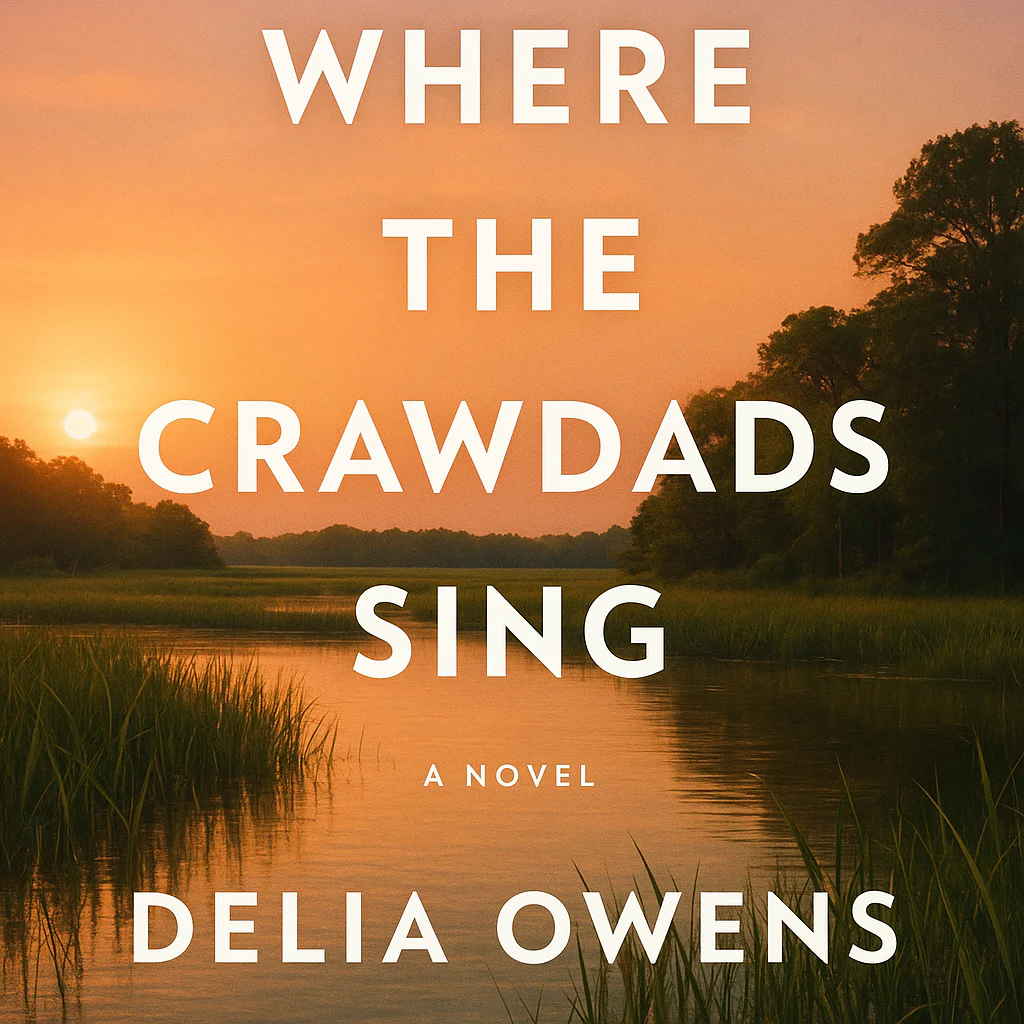
The Where the Crawdads Sing ending reveals that Kya killed Chase Andrews—but only after she dies, when Tate discovers the hidden shell necklace and poem that expose her secret. The jury acquits her because the prosecution can’t prove she was at the fire tower, leaving readers to reckon with the difference between legal innocence and the truth.
That late reveal can make earlier scenes feel newly charged. The necklace that first seems like a romantic keepsake becomes evidence, and Kya’s nature poems take on a darker meaning. Did Tate suspect the truth before he found the clues—and why does he choose to hide them?
Key Takeaways
- Kya killed Chase, though the novel reveals it through clues rather than a confession or a detailed murder scene.
- The jury acquits Kya because the evidence doesn’t prove her guilt beyond a reasonable doubt.
- Tate discovers the shell necklace and Kya’s poem after her death, then returns the necklace to the marsh.
- The ending leaves a moral question open: Does Kya’s history of abandonment and fear explain her actions, or excuse them?
- The film keeps the novel’s central twist, while the book gives more space to Kya’s inner life and poetry.
Table of Contents
- ⚡️ Quick Tips and Facts
- 📚 Background: The Novel, the Movie, and the Murder Trial
- A spoiler warning before we visit the marsh
- Who is Kya Clark, and who is Chase Andrews?
- 🔍 Where the Crawdads Sing Ending Explained
- What happens in the final chapters?
- What does the shell necklace reveal?
- Why does Tate discover Kya’s hidden poems?
- ⚖️ Did Kya Kill Chase in Where the Crawdads Sing?
- The evidence against Kya
- How Kya could have killed Chase without being seen
- Why the jury acquits Kya
- 🕵️ The Real Killer: What the Book’s Final Twist Confirms
- 🌾 What the Ending Says About Kya’s Survival
- Nature, isolation, and the marsh as a refuge
- Love, trust, and Kya’s relationship with Tate
- 🎬 Does the Where the Crawdads Sing Movie Ending Change the Book?
- Key differences between the film and the novel
- How the movie handles the final reveal
- 💭 Where the Crawdads Sing Ending: Themes and Symbolism
- The meaning of “the marsh”
- The shell necklace as a clue and symbol
- Justice, prejudice, and the limits of proof
- 📖 What to Read Next: Books Like Where the Crawdads Sing
- ❓ Frequently Asked Questions About the Ending
- Does Kya confess to killing Chase?
- Does Tate know Kya killed Chase?
- How does Kya die in the novel?
- Is Where the Crawdads Sing based on a true story?
- What does the title mean?
- ✅ Conclusion
- 🔗 Recommended Links
- ❓ FAQ
- 📚 Reference Links
⚡️ Quick Tips and Facts
Spoilers ahead for Delia Owens’s novel Where the Crawdads Sing and its film adaptation. If you need the full plot refresher first, read our Where the Crawdads Sing book summary and ending explained.
| Question | Short answer |
|---|---|
| Who killed Chase Andrews? | Kya Clark did. The novel confirms it after her death through the hidden shell necklace and the poem “The Firefly.” |
| Is Kya convicted? | No. The jury finds her not guilty because the prosecution cannot prove she was at the fire tower. |
| Does Tate learn the truth? | Yes. After Kya dies, he finds the necklace and understands what her poem implies. |
| Does Kya die at the end? | Yes. She dies peacefully in the marsh, aged 64, after a life with Tate. |
| Does the movie change the ending? | No major change. The film preserves the novel’s final reveal, though the book offers more detail about Kya’s poems and inner life. |
| Is the ending morally simple? | Not at all. It resolves the murder mystery while leaving readers to weigh self-preservation, justice, and violence. |
One detail changes how we read the whole ending: the book doesn’t show Kya confessing or narrate the killing directly. Instead, it lets a few carefully planted clues speak for her—and asks us to decide what those clues mean.
📚 Background: The Novel, the Movie, and the Murder Trial

A spoiler warning before we visit the marsh
We’ll discuss the novel’s final twist, Kya’s trial, Tate’s discovery, and the film’s ending. If you’re partway through the book, stop here unless you’re happy to know who killed Chase.
For broader reading context, explore our book summaries, book reviews, and book-to-film adaptations.
Who is Kya Clark, and who is Chase Andrews?
Kya Clark grows up largely alone in the North Carolina marsh after her family abandons her. Town residents call her the “Marsh Girl,” treating her as an outsider long before Chase Andrews’s death makes her a public suspect.
Chase is a popular local man who begins a relationship with Kya, then becomes engaged to another woman. Their relationship grows frightening when he continues pursuing Kya despite her rejection. That history matters: the ending frames Kya’s act not as a random murder, but as a decision shaped by years of isolation, fear, and survival.
The novel moves between Kya’s coming-of-age story and the investigation into Chase’s death. This dual timeline keeps one question simmering beneath the love story: Was Kya merely near the murder—or did the marsh girl know exactly what she was doing?
🔍 Where the Crawdads Sing Ending Explained
What happens in the final chapters?
The ending unfolds in stages:
- Kya is arrested. Chase’s body is found near the marsh, and his past relationship with her makes her an obvious target for suspicion.
- The prosecution builds a circumstantial case. Kya knew the marsh, had a connection to Chase, and had access to the kind of place where he died.
- Her lawyer, Tom Milton, challenges the evidence. The prosecution cannot establish that Kya traveled to the fire tower on the night Chase died.
- The jury acquits her. Kya returns home, and she and Tate eventually build a life together.
- Years later, Tate finds the hidden clue. After Kya dies, he discovers her concealed shell necklace and a poem that points to the truth.
- The novel ends with Tate keeping the secret. He returns the necklace to the marsh, choosing not to expose Kya after her death.
That sequence gives the reader two endings at once: the public ending, where Kya is acquitted, and the private ending, where Tate—and the reader—learn that she killed Chase.
What does the shell necklace reveal?
Kya had given Chase a shell necklace, which he wore. After Chase’s death, the necklace disappears. The prosecution notices its absence, but the missing necklace alone cannot prove who killed him.
The final discovery turns that detail into a confession by implication. Tate finds the necklace hidden among Kya’s belongings. Its presence strongly suggests that Kya recovered it from Chase’s body and kept it, rather than losing it before his death.
The clue is effective because it’s both personal and physical: the shell is tied to Kya’s knowledge of the marsh, her relationship with Chase, and the evidence that could connect her to him. The murder trial can’t establish that connection. Tate’s discovery does.
Why does Tate discover Kya’s hidden poems?
After Kya dies, Tate goes through her belongings and finds poems credited to Amanda Hamilton, the local poet whose work appears in the novel. Amanda Hamilton is Kya’s pen name.
The poems reveal a side of Kya she rarely showed the town: observant, poetic, and capable of expressing dangerous thoughts through the language of nature. The poem “The Firefly” describes a female firefly luring a male to his death. Its imagery echoes the way Kya is believed to have lured Chase to the abandoned fire tower.
The result is not a signed confession. It’s subtler—and, for some readers, more chilling. Kya has hidden the truth in plain sight, disguised as art and natural history.
⚖️ Did Kya Kill Chase in Where the Crawdads Sing?
Yes. The novel’s final clues strongly confirm that Kya killed Chase. The murder is not solved through a courtroom confession or an eyewitness. Instead, Tate pieces together the necklace, the poems, and the circumstances surrounding Chase’s death.
Some reviews describe this as a reveal rather than a certainty because Owens never gives readers a direct scene of Kya committing the murder. That distinction matters: the book makes the answer clear while leaving the precise act and motive partly inferred.
The evidence against Kya
During the trial, the case against Kya rests largely on circumstantial evidence:
- Chase had been involved with Kya.
- Chase’s shell necklace is missing.
- Kya knows the marsh and surrounding waterways intimately.
- The prosecution believes she could have reached the scene without being noticed.
- Her apparent out-of-town trip gives her a possible alibi, but the details are difficult to verify.
The missing necklace raises suspicion, but suspicion is not proof. The trial’s central weakness is that the prosecution cannot reliably place Kya at the fire tower when Chase died.
The distinction between suspicion and proof is central to the book’s courtroom drama. In the United States, criminal convictions generally require proof beyond a reasonable doubt; the Legal Information Institute at Cornell Law School explains the standard and why it is demanding.
How Kya could have killed Chase without being seen
The novel suggests that Kya used her knowledge of local travel and the marsh to create an alibi and reach the fire tower. The exact logistics are not presented like a crime-scene reconstruction, so readers should be cautious about treating every imagined detail as established fact.
The important pieces are:
- Kya plans around the town’s assumptions. People underestimate her and assume she isolated from the social world.
- She creates the appearance of being away. Her trip provides a plausible reason for people to believe she could not have reached the tower.
- She draws Chase to a familiar location. The abandoned tower is accessible to him and sits within the landscape Kya knows.
- She uses the darkness and the setting to her advantage. The novel implies that Chase falls from the tower, with the circumstances made to resemble an accident.
- She removes the necklace from the scene. Its later hiding place supplies Tate with the clue that the trial never had.
The book leaves room for readers to debate the exact mechanics. That restraint keeps the ending focused less on a technical murder blueprint and more on Kya’s decision to protect herself at any cost.
Why the jury acquits Kya
The jury acquits Kya because the prosecution cannot close the gaps in its case. There is no decisive witness, no conclusive physical proof placing her at the tower, and no solid demonstration that she could not have been elsewhere.
That verdict does not mean the jury has discovered the truth. It means the state has not proved its accusation to the jury’s satisfaction. This is the tension the ending exploits: Kya is legally innocent in the courtroom, but the reader later learns she is privately responsible.
The novel also shows how prejudice shapes suspicion. Because the town sees Kya as strange and socially disposable, she becomes an easy person to blame. Yet the community’s bias does not automatically make her innocent. The book asks us to hold both thoughts at once.
🕵️ The Real Killer: What the Book’s Final Twist Confirms
Tate’s discovery after Kya’s death confirms the novel’s answer: Kya killed Chase and concealed the evidence.
The proof is cumulative:
- The necklace: Kya’s shell necklace, which Chase had worn, is hidden among her private papers.
- The poem: “The Firefly” describes a female firefly drawing a male toward death.
- The timing: Tate finds the clues only after Kya is gone, when she can no longer be prosecuted or questioned.
- The returned secret: Tate understands what the clues mean and throws the necklace into the marsh.
The ending’s power comes partly from the fact that Tate does not announce what he has learned. He simply acts. Readers understand that he has chosen to protect Kya’s reputation and keep her crime secret.
There is room to debate whether Tate already suspected the truth before finding the necklace. The novel’s final scene does not establish that he knew. What it does show is that, once he understands, he chooses silence.
🌾 What the Ending Says About Kya’s Survival
Nature, isolation, and the marsh as a refuge
The marsh is more than a backdrop. It feeds Kya, shelters her, teaches her how to observe, and gives her a world that does not judge her as harshly as the town does. Over time, her knowledge of nature becomes both a livelihood and a form of belonging.
But the ending complicates the comforting idea that nature is simply peaceful. The novel’s natural world includes predation, competition, and death. Kya understands those patterns deeply, and the “Firefly” imagery suggests she interprets her own actions through that same language.
That does not make the killing morally neutral. Nature can explain Kya’s worldview without automatically excusing her choices. This tension is one reason the ending stays with readers after the mystery is solved.
Love, trust, and Kya’s relationship with Tate
Kya and Tate’s relationship provides the ending’s warmth. After the trial, they share a life in the marsh, and Tate continues to respect Kya’s independence and her scientific work.
The final discovery tests that love from the other side. Tate learns that Kya hid a terrible truth from him. Rather than turning her in after her death, he protects the secret. Is that loyalty, complicity, or both? The book doesn’t give us a tidy label.
A video summary of the ending, linked at #featured-video, offers another interpretation: it emphasizes Kya’s private journals, her devotion to Tate, and the way her writing connects her actions to the natural world. The video’s focus on the journals is useful, though the novel’s key reveal rests specifically on the hidden necklace and poem, not simply on journals functioning as a direct confession.
🎬 Does the Where the Crawdads Sing Movie Ending Change the Book?
The 202 film adaptation, directed by Olivia Newman and starring Daisy Edgar-Jones as Kya, keeps the novel’s central ending: Kya is acquitted, lives with Tate, and is revealed after death to have killed Chase. The film is listed by Sony Pictures, the studio behind the adaptation.
Key differences between the film and the novel
| Element | Novel | Film |
|---|---|---|
| Kya’s inner life | Extensive access to Kya’s memories, observations, and writing | Relies more on performance, voice-over, and visual storytelling |
| Amanda Hamilton | The identity is connected to Kya’s poems and literary life | Retains the essential reveal, but with less room for the poem’s context |
| The murder reveal | Tate finds the necklace and poem after Kya’s death | Preserves the late reveal and its emotional ambiguity |
| Marsh setting | Built through detailed descriptions of ecology and daily life | Uses visual landscapes to establish mood and atmosphere |
| Tone | A mix of coming-of-age novel, romance, courtroom drama, and mystery | A more compressed blend of romance and murder mystery |
A film cannot reproduce every page of Kya’s natural-history observations, so readers who want more context for her choices will find the book richer. Viewers who want the central mystery resolved will find that the film preserves the key twist.
How the movie handles the final reveal
The film avoids turning the final reveal into a full flashback that spells out every moment. That choice preserves some uncertainty about Kya’s exact actions and motives.
Director Olivia Newman has emphasized the importance of the ending interviews discussed by Digital Spy’s ending analysis. The article quotes Newman saying, “For me, the ending is the story,” and notes that the filmmakers wanted to preserve mystery rather than provide a fully explicit account.
That approach works well for viewers who enjoy an ending that leaves interpretation alive. If you prefer every plot detail demonstrated on-screen, the final reveal may feel deliberately restrained. If you like a story that trusts its audience to connect the clues, the restraint is part of the point.
💭 Where the Crawdads Sing Ending: Themes and Symbolism
The meaning of “the marsh”
The marsh represents home, knowledge, solitude, and survival. Kya is rejected by much of the town, but the marsh remains available to her. It is where she develops her expertise and where she can live on her own terms.
By the end, Kya’s death in the marsh brings her life full circle. The place that sheltered her also becomes the place where Tate finds her. This is not simply a sentimental nature image: the marsh represents the world Kya understands better than any human community.
The shell necklace as a clue and symbol
The necklace changes meaning several times:
- At first: It is an intimate gift from Kya to Chase.
- During the investigation: Its disappearance becomes a suspicious but incomplete clue.
- After Kya’s death: Its hiding place connects her to Chase’s murder.
- In Tate’s hands: It becomes a choice about whether to expose or protect her.
The necklace is both evidence and memory. Tate’s decision to return it to the marsh closes the circle while also destroying the possibility of a public reckoning.
Justice, prejudice, and the limits of proof
The trial exposes the gap between what can be proved and what may have happened. The jury’s acquittal is consistent with the weakness of the prosecution’s evidence, but the reader later receives information the jury never had.
The ending also asks whether social prejudice helps distort the legal process. Kya is judged through the town’s label for her, yet the final reveal prevents us from turning her into a flawless victim. She is both a person harmed by abandonment and a person who commits a killing.
The book’s most uncomfortable question may be this: Can an act of self-preservation still be a crime—and can love justify keeping that crime secret? Owens leaves the moral debate open even as she resolves the mystery.
📖 What to Read Next: Books Like Where the Crawdads Sing
If the mix of nature writing, secrets, romance, and small-town judgment worked for you, these are good next stops:
- For another atmospheric mystery: Explore our book reviews for character-driven suspense and literary thrillers.
- For fiction centered on the natural world: Browse classic literature and look for stories where landscape shapes character and plot.
- For a screen adaptation comparison: Visit our book-to-film adaptations category.
- For a quick refresher on another popular novel: Browse our book summaries.
❓ Frequently Asked Questions About the Ending
Does Kya confess to killing Chase?
No. Kya does not confess during the trial or in a direct conversation with Tate. The novel reveals her responsibility through the hidden necklace and the poem “The Firefly,” which Tate finds after she dies.
Does Tate know Kya killed Chase?
Yes. Tate finds the necklace and poem and understands their significance. The novel does not say whether he suspected the truth earlier, but his final act of returning the necklace to the marsh shows that he chooses to keep the secret once he knows.
How does Kya die in the novel?
Kya dies peacefully at 64, in the marsh. Tate finds her in her boat. Her death is presented as a quiet closing to a life shaped by the landscape she called home.
Is Where the Crawdads Sing based on a true story?
No. Where the Crawdads Sing is a work of fiction by Delia Owens. Its setting and natural-history details draw on the author’s interest in wildlife, but Kya and the murder plot are fictional. For publishing and author information, see Penguin Random House’s book page.
What does the title mean?
The title evokes a remote, wild place beyond the reach of ordinary society. In the novel, it reflects the marsh as Kya’s home and the freedom she finds outside the town’s rules. It also captures the story’s central contrast: the human world judges Kya, while the natural world is where she feels most understood.