Support our educational content for free when you purchase through links on our site. Learn more
Does *Where the Crawdads Sing* Explain How She Killed Him? 🔍

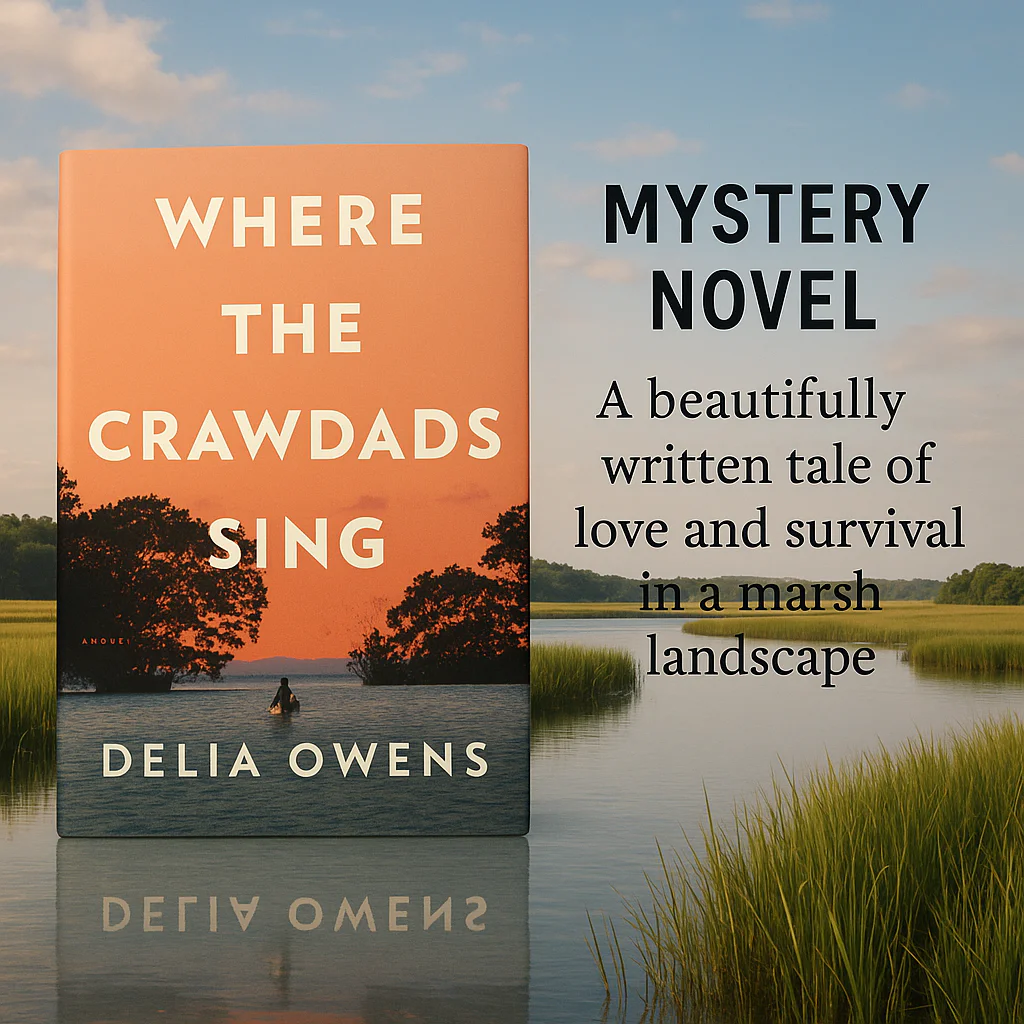
Yes—Where the Crawdads Sing strongly implies that Kya killed Chase, but it never shows the murder or spells out every step. The ending reveals clues that make her guilt hard to miss, while leaving the exact mechanics open to interpretation.
That balance is the book’s clever little trap: the jury acquits Kya, but readers get one last piece of evidence after her death. A shell necklace, tucked away where Tate finds it, changes how we understand the trial—and raises a sharper question: if the book points to Kya, why keep the killing offstage?
Key Takeaways
- The novel implies Kya killed Chase through the hidden shell necklace and the final “Firefly” poem.
- It never directly shows the murder or gives Kya a confession.
- The likely method involves the fire tower’s loose grate, but the precise sequence is inferred, not confirmed.
- Kya is acquitted at trial because the prosecution fails to prove its case.
- Tate discovers the decisive clue after Kya dies and keeps the secret.
Table of Contents
- ⚡️ Quick Tips and Facts
- 📚 Background: Where the Crawdads Sing and the Chase Andrews Case
- What the Novel Is About
- Book, Movie, and Spoiler Alert
- 🔍 Does the Book Explain How Kya Killed Chase?
- The Short Answer: What the Novel Reveals
- How Kya Gets Chase to the Fire Tower
- The Red Wool Cap and Other Clues
- How Kya Avoids Leaving Evidence
- ⚠️ Who Killed Chase Andrews? The Ending Explained
- What the Courtroom Trial Makes You Believe
- The Secret Tate Finds After Kya’s Death
- Why the Necklace Confirms Kya’s Guilt
- Why the Novel Never Shows the Murder Directly
- 🧭 Why Kya Killed Chase: Motive, Survival, and Fear
- Chase’s Abuse and Kya’s Decision to Protect Herself
- Kya Didn’t Want to Live in Fear
- The Difference Between Legal Guilt and Moral Judgment
- 🌾 What the Marsh, Crawdads, and Feathers Mean
- The Significance of the Crawdads and the Natural World
- Why Kya Loves Feathers and What They Symbolize
- The Title’s Meaning and Kya’s Mother
- 👨 👩 👧 Kya’s Family, Tate, and Her Life in the Marsh
- Why Kya’s Father Leaves the Family
- How Tate Shapes Kya’s Life and Choices
- Kya’s Isolation and the Town’s Prejudice
- 🎬 Where the Crawdads Sing Movie Ending vs. Book Ending
- What the Film Changes or Leaves Unspoken
- How Director Olivia Newman Explained the Ending
- Why the Movie’s Final Reveal Divided Viewers
- 💬 Common Questions About Kya and Chase
- Does Kya Confess to Killing Chase?
- Does Tate Know Kya Killed Chase?
- Was Kya Found Guilty at Trial?
- Is the Ending Different in the Movie?
- Is Where the Crawdads Sing Based on a True Story?
- ✅ Final Verdict: Does the Book Explain How She Killed Him?
- Conclusion
- Recommended Links
- Reference Links
⚡️ Quick Tips and Facts
The shortest answer to “Does Where the Crawdads Sing explain how she killed him?” is: yes, the book strongly implies that Kya killed Chase Andrews, but it never gives readers a direct, step-by-step murder scene or a confession. We get clues, a courtroom theory, and a final revelation that turns the ending’s key into a shell necklace.
For a fuller plot walkthrough, see our Where the Crawdads Sing book summary and ending explained 🌾. It’s a useful companion if you want the whole mystery laid out in sequence.
| Quick fact | What the book tells us |
|---|---|
| Did Kya kill Chase? | The ending strongly indicates that she did. |
| Does the book show the murder? | No. The killing itself remains offstage. |
| How does the book suggest it happened? | Kya may have lured Chase to the fire tower and pushed him through its loose grate, but the precise mechanics are never confirmed. |
| Why might she have killed him? | Chase had become violent and threatening; the story frames Kya’s decision through fear, isolation, and survival. |
| Was Kya convicted? | No. The jury acquits her because the prosecution does not prove its case. |
| What does Tate find afterward? | Chase’s missing shell necklace, hidden among Kya’s belongings, alongside a poem that deepens the firefly symbolism. |
Spoiler warning: This section and the rest of the article reveal the novel’s ending and its central murder mystery. If you’re still reading, the marsh has one more secret to keep.
📚 Background: Where the Crawdads Sing and the Chase Andrews Case
Delia Owens’s Where the Crawdads Sing is part coming-of-age story, part marshland natural history, and part murder trial. The novel moves between Kya Clark’s lonely childhood in the North Carolina marsh and the investigation into the death of local golden boy Chase Andrews.
That split structure matters. The book gives us a murder mystery without a conventional murder scene. We see the investigation, hear arguments in court, and learn what Kya is capable of—but the decisive event stays out of view until readers assemble the evidence themselves.
For readers who enjoy novels where the landscape feels like a character, our book summaries and book reviews cover more stories with layered plots and endings worth discussing.
What the Novel Is About
Kya grows up in the marsh after her mother and siblings leave an abusive home, followed eventually by her father. Alone and shunned by the nearby town, she learns to survive through observation, collecting specimens, and building a deep knowledge of the natural world.
Years later, Kya is an accomplished writer and naturalist. She becomes involved with Chase, but their relationship turns dangerous. When Chase is found dead below a fire tower, suspicion falls on Kya. The novel then asks two questions at once:
- What can the evidence prove in court?
- What does the reader believe happened?
Those questions do not receive identical answers. The trial ends in acquittal; the final pages point toward Kya’s guilt.
Book, Movie, and Spoiler Alert
Olivia Newman’s 202 film adaptation preserves the broad shape of the story and its ambiguous final reveal. For more discussion of novels adapted for the screen, see our book-to-film adaptations section.
This article focuses on the book’s explanation, which is more suggestive than forensic. The film also leaves room for interpretation, but readers often have more time with Kya’s inner life and the novel’s animal imagery, making the clues easier to weigh.
🔍 Does the Book Explain How Kya Killed Chase?
The book explains the likely broad outline, not the exact mechanics. It never gives us an eyewitness account of Kya killing Chase. Instead, it lets the reader infer that she planned the trip, used the fire tower, and returned without being recognized.
That distinction resolves a common source of confusion. Some explainers say the book “explains how” she did it; others say it leaves the method unknown. Both are partly right: the novel gives a plausible reconstruction, but does not certify every step as fact.
The Short Answer: What the Novel Reveals
The evidence points toward Kya arranging an alibi, getting back to the marsh, and using the fire tower’s loose grate to make Chase’s death look like an accidental fall. After her death, Tate finds the necklace Chase wore—the clue that shifts the ending from suspicion to strong implication.
The key is to keep three levels separate:
| Level | What we can say |
|---|---|
| Confirmed in the story | Kya was acquitted; Tate later finds the necklace hidden among her things. |
| Strongly implied | Kya killed Chase and concealed the necklace. |
| Plausible reconstruction | She traveled back secretly and pushed Chase through the tower grate. |
This is why a summary may give a confident answer while a close reading still leaves a few mechanical details unresolved.
How Kya Gets Chase to the Fire Tower
The courtroom account presents a theory of how Kya could have returned from her supposed trip and reached the tower. The prosecution says the timeline and travel evidence make her presence possible; the defense challenges whether the evidence proves that she was there.
The likely reconstruction runs like this:
- Kya creates distance from the scene. She is believed to be away when Chase dies, helping establish an alibi.
- A disguised passenger may be Kya. Evidence about a traveler on the bus suggests someone could have returned without being recognized.
- She reaches the fire tower at night. The tower is familiar territory, and its damaged grate offers a way to stage a fall.
- Chase falls to his death. The novel implies that he was pushed through the loose grate, but it does not show the act.
- Kya leaves and resumes her cover story. The book suggests planning, but never gives a full escape-by-escape account.
A reconstruction is not the same as a scene the narrator confirms. That difference matters: we are reading clues, not a confession.
The Red Wool Cap and Other Clues
The investigation includes details about clothing, travel, timing, and the fire tower. The red wool cap is one part of the case’s circumstantial puzzle, but no single object proves Kya’s guilt. The novel asks us to notice how small details can look persuasive in a courtroom while still leaving room for reasonable doubt.
For a reliable check on the legal standard behind the trial, the U.S. Courts’ explanation of the presumption of innocence describes why the prosecution bears the burden in a criminal case. The book’s trial is fictional, but its tension between suspicion and proof is familiar: a convincing theory is not automatically proof beyond a reasonable doubt.
How Kya Avoids Leaving Evidence
The novel suggests Kya understands the marsh, the tower, and the limits of what the town can observe. It does not provide a technical forensic playbook, and readers should not mistake the trial’s gaps for a complete account of her methods.
What seems to help her most is not a miraculous absence of evidence, but the fact that the evidence is circumstantial and contestable:
- The trip and timing are difficult to reconstruct with certainty.
- A witness cannot definitively identify the disguised traveler as Kya.
- The scene supports more than one interpretation.
- The defense offers the jury reasons to doubt the prosecution’s timeline.
- Kya’s private guilt is not publicly established during her lifetime.
The final necklace clue changes the reader’s understanding, but it arrives too late to affect the verdict.
⚠️ Who Killed Chase Andrews? The Ending Explained
The ending strongly signals that Kya killed Chase. The jury’s verdict says the prosecution failed to prove its case; the final pages tell readers that the truth is likely more complicated.
After Kya dies, Tate discovers the shell necklace that Chase had worn. It is hidden in her possessions, and the poem associated with the name Amanda Hamilton echoes the novel’s firefly imagery. Tate understands what the clues mean—and destroys the necklace rather than exposing Kya.
What the Courtroom Trial Makes You Believe
The trial is built around competing stories. The prosecution presents Kya as a person with opportunity and motive; the defense points to uncertainty and prejudice. The town’s long-standing treatment of Kya as an outsider colors how people interpret her, while her isolation makes her difficult to defend through ordinary witnesses.
The jury acquits her. That verdict is not proof that she did not kill Chase; it means the state did not persuade the jury to convict. The U.S. Courts overview of criminal cases is useful context for separating legal outcome from what readers infer privately.
The Secret Tate Finds After Kya’s Death
After Kya dies, Tate searches through her belongings and finds Chase’s shell necklace hidden in a book. The necklace had gone missing after Chase’s death. Its presence in Kya’s private collection makes it a powerful clue: she had access to it, kept it, and concealed it.
Tate also discovers that Amanda Hamilton, the name credited on Kya’s poems, was Kya’s pseudonym. The poem “The Firefly” sharpens the connection between the natural world and the murder. These discoveries do not show the killing itself, but together they make the intended implication hard to miss.
Why the Necklace Confirms Kya’s Guilt
The necklace is not a courtroom confession, and by itself it does not establish every detail. But it is the book’s clearest final piece of evidence because it connects Kya directly to an object associated with Chase and missing after his death.
We can think of the clues as a three-part lock:
| Clue | What it suggests |
|---|---|
| The missing shell necklace | Kya possessed an item Chase wore. |
| Its concealment in her belongings | She likely knew it could reveal a connection to the murder. |
| The firefly poem | The imagery echoes a lure that ends in death. |
Together, the clues point strongly toward Kya’s guilt. Tate’s decision to destroy the necklace makes the ending morally thorny: he protects the person he loved, but also erases evidence.
Why the Novel Never Shows the Murder Directly
The missing scene is a deliberate storytelling choice. If the novel showed Kya pushing Chase, the mystery would become a simple reveal. By withholding it, Owens keeps the reader weighing two kinds of evidence: the public case and the private clues.
ScreenRant’s ending explainer similarly treats the exact mechanics as uncertain, describing the final account as something readers can only speculate about. That caution is fair. The most dependable reading is Kya probably killed Chase; the precise sequence remains inferred rather than witnessed.
🧭 Why Kya Killed Chase: Motive, Survival, and Fear
The novel frames Kya’s motive through more than anger or revenge. Chase had pursued her, deceived her, and become violent after she rejected him. Kya’s childhood taught her that people who should protect you may abandon you; the town’s prejudice gives her little reason to trust that justice would protect her from Chase.
That does not make the killing morally simple. It makes the choice understandable within the story’s psychological logic—and troubling precisely because the book gives us access to Kya’s fear while withholding a direct account of what she did.
Chase’s Abuse and Kya’s Decision to Protect Herself
Kya’s relationship with Chase begins as romance but turns coercive. He lies about commitment, tries to control her, and becomes physically threatening. The contrast with Tate is sharp: Tate leaves, but later returns with affection and respect; Chase treats Kya as someone he can possess.
The story’s argument is not simply “Chase was bad, therefore Kya was right.” Rather, it shows how isolation, past abuse, and fear of renewed violence shape the choices Kya believes are available. Readers may understand her reasoning without agreeing that murder was justified.
Kya Didn’t Want to Live in Fear
Kya’s childhood is marked by abandonment and abuse. When Chase threatens the safety she has built, she may see him not as a problem the town will solve, but as a predator who will keep returning. The novel’s nature imagery encourages readers to understand her response through survival, though human ethics are more complicated than animal instinct.
A careful reading leaves room for two reactions at once:
- Compassion: Kya is vulnerable, isolated, and afraid.
- Moral unease: planning a killing and hiding evidence remain serious actions.
- Criticism of the town: her distrust of the authorities has roots in how the community treats her.
- Skepticism about the “survival” framing: fear explains a choice, but does not erase its consequences.
That tension is part of why the ending stays with readers. We can sympathize with Kya without pretending the decision is uncomplicated.
The Difference Between Legal Guilt and Moral Judgment
The book separates two judgments:
- The jury’s legal judgment: not guilty, because the prosecution fails to prove the case to the required standard.
- The reader’s moral and narrative judgment: Kya likely killed Chase, as the ending’s clues suggest.
These can coexist. A person can be acquitted while readers believe they committed the act; a character’s motive can be sympathetic without making the act ethically harmless. The novel’s best discussions usually begin when we hold both truths in view instead of forcing the ending into a simple verdict.
🌾 What the Marsh, Crawdads, and Feathers Mean
Nature is not decorative scenery in Where the Crawdads Sing. It is Kya’s teacher, refuge, vocabulary, and sometimes her model for understanding human behavior. That makes the ending’s firefly imagery more than a poetic flourish: it connects the murder mystery to the survival lessons Kya has spent her life learning.
The Significance of the Crawdads and the Natural World
The marsh gives Kya a place to belong when the town rejects her. She studies animals carefully and learns to read their patterns—how they hide, hunt, reproduce, and defend themselves. The novel repeatedly uses nature to raise questions about vulnerability and predation.
For a broader look at nature writing and literary landscapes, browse our classic literature collection. Here, the marsh’s role is especially personal: Kya’s expertise is both a source of independence and a framework for interpreting danger.
Why Kya Loves Feathers and What They Symbolize
Feathers connect to Kya’s attention to beauty, pattern, and survival. They are delicate, but they are also evidence of animal’s presence. In that sense, they suit a character who learns to understand the world by collecting what others overlook.
The feather motif also echoes Kya’s larger relationship with nature:
- She notices small details others dismiss.
- She turns observation into knowledge and, eventually, into published work.
- Natural objects become emotional keepsakes.
- The marsh offers signs of life without demanding that she explain herself.
Feathers are not a direct clue to Chase’s death, but they reinforce the novel’s interest in how the natural world can mirror human longing and fear.
The Title’s Meaning and Kya’s Mother
The title comes from advice Kya remembers from her mother: go “way out yonder where the crawdads sing.” The phrase means a distant, wild place where nature carries on beyond the reach of town judgment. It becomes a promise of safety and belonging, even as Kya’s life there remains difficult.
The title also gains a darker edge by the end. The marsh is home, but it is also a place where animals survive by hiding, signaling, and defending themselves. The phrase’s tenderness and the novel’s violence exist side by side—rather like Kya herself.
👨 👩 👧 Kya’s Family, Tate, and Her Life in the Marsh
The murder mystery is only one strand of the novel. Kya’s understanding of trust is shaped by family abandonment, social rejection, and her early bond with Tate. Those experiences help explain why she might not expect the outside world to protect her when Chase becomes dangerous.
Why Kya’s Father Leaves the Family
Kya’s father is abusive and unreliable. He drives the family away one by one, and eventually he leaves too. His departure is not a justification for Kya’s later actions, but it is central to her history: she grows up with little reason to believe that love or authority will keep her safe.
The book’s point is not that every later choice follows mechanically from childhood trauma. It is that Kya’s past shapes what she fears, what she trusts, and how alone she feels when Chase threatens her.
How Tate Shapes Kya’s Life and Choices
Tate introduces Kya to reading, helps her develop her knowledge, and becomes one of the few people who sees her as more than the “Marsh Girl.” His absence hurts her deeply, but his later return offers a relationship built on affection rather than control.
Tate’s role in the ending is complicated. He finds the evidence after Kya’s death and chooses to destroy it. Readers may see this as love, loyalty, or an ethically questionable decision that protects Kya from consequences. The novel leaves that judgment to us.
Kya’s Isolation and the Town’s Prejudice
The town’s treatment of Kya limits her options. People gossip about her, judge her appearance and background, and see her as an outsider long before they have evidence connecting her to Chase’s death. That prejudice makes the trial more than a question of physical evidence: it also asks whether a jury can look past the community’s story about who Kya is.
The book’s critique is clear, even if readers differ on the murder: social exclusion can make a person less likely to seek help and easier to accuse.
🎬 Where the Crawdads Sing Movie Ending vs. Book Ending
The movie and novel share the broad ending: Kya is acquitted, Tate later discovers evidence connecting her to Chase’s death, and he keeps the secret. The main difference is emphasis. The book has more room for Kya’s inner life and the natural imagery that shapes how readers interpret the final clues.
| Element | Novel | 202 film |
|---|---|---|
| The murder itself | Never shown directly | Also not presented as a fully explicit killing scene |
| Kya’s motive | Built through extended interior context and relationships | Conveyed more through dialogue, performance, and selected scenes |
| The final clue | Necklace and “The Firefly” poem deepen the implication | Retains the key final reveal, with less time for the novel’s layered context |
| Overall effect | Readers assemble the meaning across the book | Viewers receive a more compressed version of the same mystery |
For more comparisons like this, see our book-to-film adaptations section.
What the Film Changes or Leaves Unspoken
The film condenses a long novel into a feature-length story, some relationships and details receive less development. It retains the basic mystery and ending but gives viewers fewer opportunities to sit with Kya’s thoughts or connect every natural-history reference to her choices.
That’s why some viewers find the movie’s ending more abrupt, while readers may feel the clues have been seeded for much longer. Neither reaction is wrong: the same ending can feel more or less convincing depending on how much time you’ve spent inside Kya’s perspective.
How Director Olivia Newman Explained the Ending
Director Olivia Newman has discussed the ending as central to the story rather than a twist to be replaced. In ScreenRant’s ending analysis, Newman is quoted saying, “We never considered changing the ending. For me, the ending is the story.”
That perspective fits the adaptation’s choice to preserve ambiguity. The point is not to give the audience a police-procedural reconstruction; it is to leave viewers considering what Kya did, why she may have done it, and what Tate’s silence means.
Why the Movie’s Final Reveal Divided Viewers
Some viewers wanted the film to confirm the killing more plainly. Others liked that it trusted the audience to interpret the necklace and poem. The disagreement comes down to what people expect from a mystery:
- A procedural answer: exactly how, when, and with what evidence.
- A literary answer: a set of clues that makes the truth emotionally and symbolically clear.
- A moral answer: whether Kya’s actions can be understood as survival.
The film leans toward the second and third. For another accessible explanation, the embedded first YouTube video, Where The Crawdads Sing: Ending Explained by This Is Barry, covers whether Kya did it, how she may have done it, what her lawyer knew, and why she might have acted. It is a helpful companion, though the book itself remains the best source for the exact wording and sequence of clues.
💬 Common Questions About Kya and Chase
Does Kya Confess to Killing Chase?
No. Kya does not make a direct confession in the book. The final confirmation comes indirectly, through the necklace hidden among her belongings and the firefly poem. Readers infer her guilt from those clues rather than hearing her admit what happened.
Does Tate Know Kya Killed Chase?
After Kya’s death, Tate appears to understand the truth. He finds the necklace and the poem, recognizes their implications, and destroys the necklace. His action suggests that he chooses to protect Kya’s secret, although readers can debate whether he is certain or simply unwilling to risk exposing her.
Was Kya Found Guilty at Trial?
No. The jury acquits her. The trial fails to establish the prosecution’s theory beyond a reasonable doubt. The later discovery of the necklace changes the reader’s view of what probably happened, but it does not change the verdict within the story.
Is the Ending Different in the Movie?
The movie keeps the essential ending: Kya is acquitted, and Tate later discovers a clue that points to her guilt. The novel provides more space for the relationships, nature imagery, and inner reasoning that shape the reveal. The broad answer is the same; the level of detail and emotional buildup differ.
Is Where the Crawdads Sing Based on a True Story?
Where the Crawdads Sing is a novel, not a retelling of a documented Chase Andrews murder case. Delia Owens draws on her background as a wildlife scientist and nature writer, but Kya and the story’s murder plot are fictional. For information about the author and her work, consult the publisher’s author page.
Does the Book Explain How Kya Killed Chase?
It explains the likely method, but not with a definitive scene. The book strongly implies that Kya arranged to return secretly, got Chase to the fire tower, and pushed him through its loose grate. The necklace and poem make her guilt the intended reading, while the precise logistics remain inference.
Who Was the Real Killer in Where the Crawdads Sing?
Within the story, the ending points to Kya Clark as Chase’s killer. The novel does not show the murder or give a confession, so the strongest accurate wording is that Kya is clearly implied to have killed him.
How Did Kya Lure Chase to the Tower?
The book does not spell out a complete conversation or exact plan. It suggests that Kya used the circumstances of their relationship to get Chase to meet her, then exploited the tower’s loose grate. Any more detailed account of the lure is reconstruction rather than directly narrated fact.
What Clues Point to Kya as the Killer?
The strongest clues are the missing shell necklace found among Kya’s belongings, the final “Firefly” poem under her pseudonym, and the travel and timing evidence discussed during the trial. No single clue is a full confession; together, they make the intended implication powerful.
What Does the Ending Reveal About the Murder?
The ending reveals that Kya likely killed Chase and kept his necklace as a private token or secret. It also shows Tate choosing silence over disclosure. The book closes the mystery emotionally and symbolically, but leaves the physical details of the killing partly unresolved.
How Does Kya Avoid Conviction?
Kya is acquitted because the prosecution’s evidence is circumstantial and the defense gives the jury reasons to doubt the timeline and identification evidence. The trial’s verdict reflects what could be proven in court, not what Tate later discovers or what readers infer.
How Does the Book’s Ending Differ from the Movie Adaptation?
The core reveal is substantially the same, but the book has more room to develop Kya’s interior life and the recurring animal imagery. The film compresses those elements, so the final clue can feel more sudden. Both versions leave the exact mechanics of Chase’s death largely unstated.