Support our educational content for free when you purchase through links on our site. Learn more
Where the Crawdads Sing Book Summary by Chapter: All 57 📚

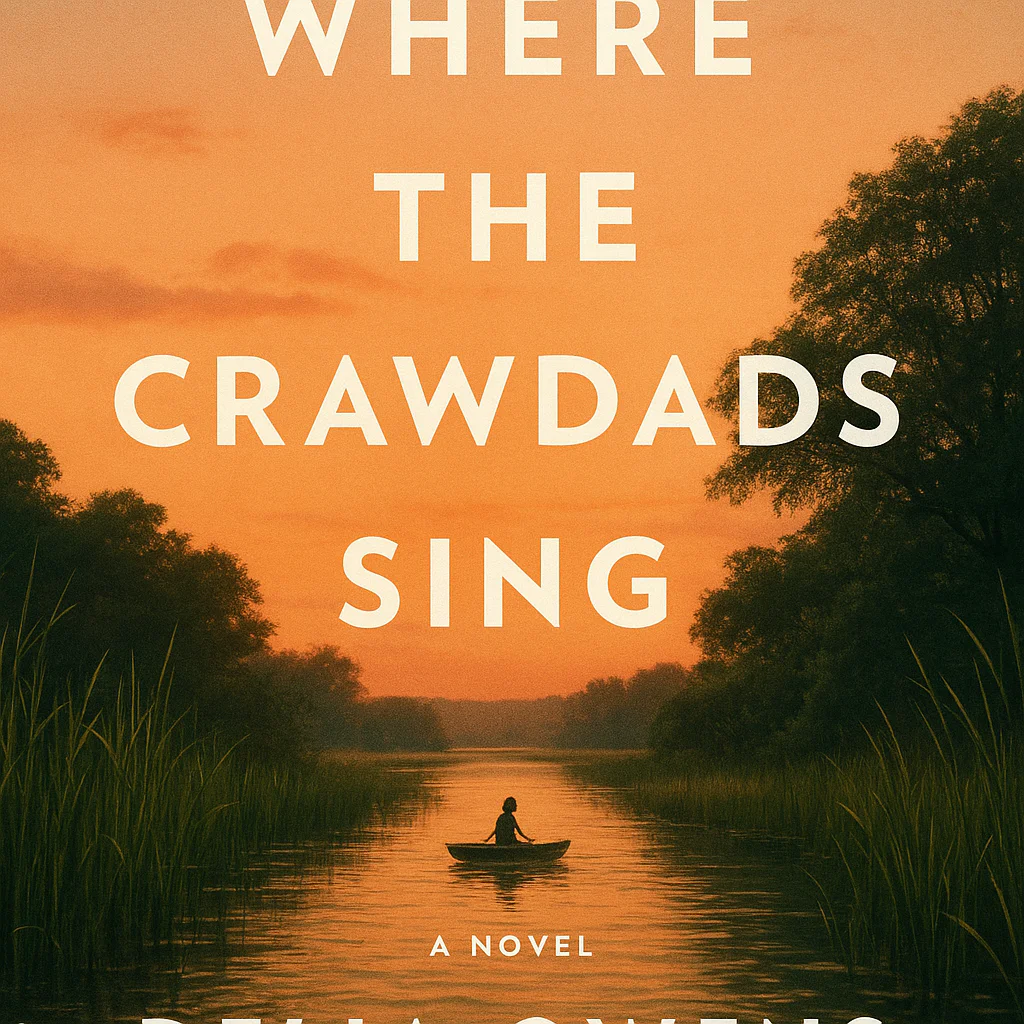
Our Where the Crawdads Sing book summary by chapter covers all 57 chapters, the shifting timelines, the murder investigation, and the ending that changes how you see Kya’s story. Spoilers ahead: we also explain the final reveal and what Tate discovers after Kya’s death.
Delia Owens’s novel moves between Kya’s lonely childhood in the marsh and the investigation into Chase Andrews’s death. Like Kya, readers have to study the clues carefully: a detail that seems small at first may look very different once the timelines meet.
Key Takeaways
- The novel follows two intertwined stories: Kya’s life from childhood onward and the investigation into Chase Andrews’s death.
- Kya’s relationships shape her choices: abandonment, Tate’s friendship, and her relationship with Chase all affect how she understands trust and survival.
- The trial and the truth aren’t quite the same thing: the jury acquits Kya, while the final discovery leaves readers with a private answer.
- Major themes include isolation, nature, prejudice, resilience, love, and justice.
- The chapter-by-chapter guide includes spoilers for the trial verdict and final reveal.
Table of Contents
- ⚡️ Quick Tips and Facts
- 🌾 Background: The Setting and Story Behind Where the Crawdads Sing
- 📖 Where the Crawdads Sing Summary: Spoiler-Free Overview
- 🗺️ Chapter-by-Chapter Summary of Where the Crawdads Sing
- Chapter 1 Summary
- Chapter 2 Summary
- Chapter 3 Summary
- Chapter 4 Summary
- Chapter 5 Summary
- Chapter 6 Summary
- Chapter 7 Summary
- Chapter 8 Summary
- Chapter 9 Summary
- Chapter 10 Summary
- Chapter 11 Summary
- Chapter 12 Summary
- Chapter 13 Summary
- Chapter 14 Summary
- Chapter 15 Summary
- Chapter 16 Summary
- Chapter 17 Summary
- Chapter 18 Summary
- Chapter 19 Summary
- Chapter 20 Summary
- Chapter 21 Summary
- Chapter 22 Summary
- Chapter 23 Summary
- Chapter 24 Summary
- Chapter 25 Summary
- Chapter 26 Summary
- Chapter 27 Summary
- Chapter 28 Summary
- Chapter 29 Summary
- Chapter 30 Summary
- Chapter 31 Summary
- Chapter 32 Summary
- Chapter 33 Summary
- Chapter 34 Summary
- Chapter 35 Summary
- Chapter 36 Summary
- Chapter 37 Summary
- Chapter 38 Summary
- Chapter 39 Summary
- Chapter 40 Summary
- Chapter 41 Summary
- Chapter 42 Summary
- Chapter 43 Summary
- Chapter 44 Summary
- Chapter 45 Summary
- Chapter 46 Summary
- Chapter 47 Summary
- Chapter 48 Summary
- Chapter 49 Summary
- Chapter 50 Summary
- Chapter 51 Summary
- Chapter 52 Summary
- Chapter 53 Summary
- Chapter 54 Summary
- Chapter 55 Summary
- Chapter 56 Summary
- Chapter 57 Summary
- 🧑 🤝 🧑 Main Characters and Their Relationships
- 🌿 Major Themes: Loneliness, Nature, Love, and Survival
- ⚖️ The Murder Mystery and Chase Andrews Investigation
- 🔍 Ending Explained: What the Final Reveal Means
- 📚 Symbols, Motifs, and the Marsh Setting
- 💬 Memorable Quotes and Their Meaning
- 🎓 Book Club and Study Guide Questions
- 📺 Book-to-Movie Adaptation: Key Differences
- ✅ Who Should Read Where the Crawdads Sing?
- 🏁 Conclusion
- 🔗 Recommended Links
- ❓ FAQ
- 📑 Reference Links
⚡️ Quick Tips and Facts
If you want the short version before getting lost in a tide of feathers, shells, and courtroom testimony, start with our Where the Crawdads Sing book summary. This guide expands it into a spoiler-filled, chapter-by-chapter summary of Delia Owens’s novel.
Spoiler alert: The summary below reveals the murder investigation, trial verdict, and final twist.
| Quick fact | Details |
|---|---|
| Author | Delia Owens |
| Genre | Literary fiction, coming-of-age story, and murder mystery |
| Main character | Kya Clark, nicknamed the “Marsh Girl” |
| Setting | The marshes and coastal community near Barkley Cove, North Carolina |
| Structure | Alternating timelines follow Kya’s life and the investigation into Chase Andrews’s death |
| Central mystery | Who killed Chase, and will Kya be convicted? |
| Content considerations | Includes domestic abuse, abandonment, sexual violence, prejudice, and imprisonment |
A quick reading map
- Part One follows Kya’s childhood, family abandonment, and growing bond with Tate.
- Part Two follows Kya’s relationship with Chase, her writing career, and the murder investigation.
- The trial brings the timelines together, testing whether a community can distinguish evidence from prejudice.
- The ending resolves the public case but leaves a private truth for readers to interpret.
The plot is often described as both a survival story and a mystery. That combination is the novel’s engine: Kya learns to read the natural world long before she feels safe reading people. For more popular-fiction recaps, browse our book summaries and book reviews.
🌾 Background: The Setting and Story Behind Where the Crawdads Sing

Delia Owens’s novel begins with a marshland landscape that functions as more than scenery. The tides, birds, insects, and changing seasons shape Kya’s practical education and emotional life. She is rejected by much of the nearby town, but the marsh offers food, shelter, patterns to study, and a place where she can exist without being stared at.
Two timelines, one central question
The novel moves between two strands:
| Story strand | Approximate period | What it follows |
|---|---|---|
| Kya’s life | 1952 onward | Her childhood, survival, relationships, and emergence as a naturalist and author |
| The murder investigation | 1969–1970 | The discovery of Chase Andrews’s body, the investigation, and Kya’s trial |
The timeline jumps are deliberate. Early chapters let readers see how Kya becomes isolated, while the investigation asks whether that isolation—and the town’s assumptions about it—makes her guilty in the public eye.
What the marsh represents
The marsh gives Kya a classroom, refuge, and livelihood. That doesn’t mean her life is easy or that nature magically replaces human care. She faces hunger, fear, prejudice, and the consequences of being left alone as a child. But observation becomes one of her strengths: she studies animal behavior and applies those lessons to human relationships.
The novel’s presentation of the marsh as a living ecosystem connects with real ecological descriptions of coastal wetlands from the National Park Service. The story’s setting is fictionalized, so readers should treat its geography and local details as elements of the novel rather than a field guide.
A note on alternate summaries
Chapter numbering and plot labels can differ between study guides, editions, and online summaries. We follow the 57-chapter sequence used in the supplied chapter outline, beginning with Chapter 1. Some guides discuss the prologue separately, and a few summaries contain apparent date or name typos. When details conflict, trust the novel’s sequence and character names: Chase Andrews, Kya Clark, and Barkley Cove.
The book was adapted into a feature film starring Daisy Edgar-Jones. For more literary adaptations, see our book-to-film adaptations section.
📖 Where the Crawdads Sing Summary: Spoiler-Free Overview
Kya Clark grows up in a shack in the marsh, where her family gradually disappears and the nearby town treats her as an outsider. She learns to feed and protect herself, develops a close friendship with Tate Walker, and finds a way to turn her detailed knowledge of the marsh into published books.
Years later, when local celebrity Chase Andrews is found dead, suspicion falls on Kya. Her isolation makes her an easy target, but the case depends on evidence, testimony, and a jury’s judgment—not simply on local gossip.
The novel’s two timelines gradually converge. The key question is not only what happened to Chase, but also how much the community’s long-standing prejudice influences the case against Kya. One video summary of the book emphasizes the marsh as Kya’s teacher and refuge, while also highlighting loneliness, self-reliance, and the tension between courtroom justice and private truth. You can compare that interpretation with the novel’s final chapters at the featured video.
🗺️ Chapter-by-Chapter Summary of Where the Crawdads Sing
Chapter 1 Summary
In August 1952, six-year-old Kya lives with her parents and siblings in a remote shack. Her family is poor, and the household is shaped by her father’s drinking and violence. The marsh is already familiar to Kya, but the safety of home is less certain.
Chapter 2 Summary
Kya’s older siblings leave one by one, followed by her mother, who escapes her abusive husband. Kya is left behind with Pa. Her family’s departures begin the pattern that will define her childhood: people disappear, and she must learn not to depend too fully on anyone.
Chapter 3 Summary
The story jumps forward to October 1969. Two boys discover Chase Andrews’s body near the fire tower in the marsh. His death becomes a local sensation, and the narrative opens its murder mystery: the investigation will soon turn toward Kya, the woman many townspeople already regard with suspicion.
Chapter 4 Summary
Back in 1952, a woman comes near Kya’s shack, making the child wary. Kya has little experience with people outside her family and doesn’t yet understand what help might look like. Her caution is understandable: the people closest to her have already begun leaving.
Chapter 5 Summary
The 1969 investigation begins in earnest. Officials are notified, and the body is examined for signs of what happened. The case initially depends on physical details and the scene itself—not on a clear suspect or a witnessed crime.
Chapter 6 Summary
Pa dresses carefully and tells Kya that he is going to meet with the army. The episode offers a glimpse of his unpredictable moods and of Kya’s hope that her father might become dependable. That hope doesn’t last long.
Chapter 7 Summary
Kya and Pa share a period of improved relations. He gives her attention and takes her out, offering a temporary version of family life. For Kya, even a small stretch of kindness matters because it seems to suggest that Pa might stay.
Chapter 8 Summary
Chase’s parents and widow view his body. The investigation continues, and early laboratory findings arrive several days later. The town’s grief and curiosity begin to shape the public story of Chase’s death before all the evidence is known.
Chapter 9 Summary
In 1953, Pa takes Kya to a restaurant while they are out refueling the boat. It is her first experience of restaurant food, a small outing that gives her a taste of life beyond the shack. The moment also shows how a child can cling to ordinary pleasures when stability is scarce.
Chapter 10 Summary
Sheriff Ed and Deputy Joe search for tracks that might connect a vehicle to Chase’s death. They find no useful tire evidence. The lack of a straightforward physical trail leaves the investigators relying more heavily on timelines, witness accounts, and assumptions about who could have reached the tower.
Chapter 11 Summary
Kya fears Pa may have left her too. The possibility that she will be alone becomes more than a worry: she begins to face the practical question of how she will survive if no adult returns.
Chapter 12 Summary
Kya tries to adjust to life without dependable help and searches for Tate while out in her boat. She is still a child, but the marsh’s resources and her growing independence become essential. Her loneliness deepens, even as she learns how to manage alone.
Chapter 13 Summary
In 1960, Kya wears her mother’s dress. The clothing becomes a reminder of the family life she has lost and of the changes time has brought to her. Kya is no longer the small child who watched her family leave; she is growing into adolescence, but her emotional isolation remains.
Chapter 14 Summary
The investigation initially concludes that Chase died from a severe fall from the tower. This finding offers a possible explanation for the death, but it does not settle every question about how he got there or whether the fall was accidental.
Chapter 15 Summary
Kya remembers her mother and sisters and the household that once existed. Her memories make clear that loneliness isn’t only about being physically alone; it is also the ongoing grief of missing people who once belonged to her life.
Chapter 16 Summary
Tate begins teaching Kya to read. When he fails to get the lessons started as planned, Kya goes into Coloured Town, where the people there help her with reading. The chapter marks an important change: words give Kya access to knowledge and later help her turn her observations into books.
Chapter 17 Summary
Jumpin’ warns Kya that social services are asking about her living conditions and whether she will attend school. His concern reflects the danger of outside officials deciding that Kya cannot care for herself, even when the marsh has become the only home she knows.
Chapter 18 Summary
Kya’s reading improves, and her relationship with Tate grows closer. They celebrate her birthday with cake, giving Kya a rare experience of warmth and companionship. Tate’s friendship is meaningful precisely because it is built through attention, patience, and shared curiosity.
Chapter 19 Summary
Eight days after Chase’s body is found, Ed and Joe discuss what they have learned from interviews. The investigation is still developing, and the officers begin comparing people’s accounts with the limited physical evidence.
Chapter 20 Summary
In 1961, Kya waits for Tate by the lagoon on the Fourth of July. He does not return from college as she hoped. His absence brings back the old wound of abandonment and threatens the trust they have built.
Chapter 21 Summary
Kya struggles with Tate’s failure to come back and reflects on the many people who have left her. Her pain is not simply disappointment in one young man; it echoes years of family loss. The chapter shows why Tate’s departure feels so devastating to her.
Chapter 22 Summary
Part Two begins in 1965. Nineten-year-old Kya is increasingly connected to Chase and his circle. The chapter shifts her life into a new phase, but the town’s social divide remains: Kya is still treated as an outsider even as she draws the attention of a popular local man.
Chapter 23 Summary
Kya begins cooking again and anticipates a picnic with Chase. He picks her up, and their developing relationship gives her hope that she might be wanted rather than merely tolerated. The question is whether Chase understands her as a person—or likes the mystery surrounding her.
Chapter 24 Summary
Still affected by her encounter with Chase at the beach, Kya returns to the place where they picnicked. The setting holds both excitement and unease. Her growing attraction is complicated by her limited experience with romance and her fear of being abandoned again.
Chapter 25 Summary
The investigation resumes as Chase’s mother gives information about his life. Her memories help build a picture of Chase beyond his public image as a popular young man. The case increasingly relies on reconstructing his relationships and movements.
Chapter 26 Summary
Kya and Chase’s relationship deepens, but they view the marsh differently. Kya identifies with its living systems; Chase sees it more as a place to use and enjoy. That contrast foreshadows a central mismatch between them: attraction doesn’t guarantee shared values.
Chapter 27 Summary
In 196, Kya uses money saved from selling mussels to prepare anniversary meal, though she and Chase don’t acknowledge the date. The dinner reflects how much emotional investment she has placed in the relationship—and how little certainty she has about what it means to him.
Chapter 28 Summary
Ed and Joe’s investigation moves forward, with the timeline jumping ahead. The detectives continue to compare testimony and clues, while the novel keeps shifting between the case and Kya’s earlier experiences.
Chapter 29 Summary
In 1967, Kya gathers ingredients for a caramel cake as Chase’s birthday approaches. The preparation shows her affectionate side and her hope that a thoughtful gesture can strengthen their relationship. But Kya’s care does not guarantee that Chase will treat her with the same consideration.
Chapter 30 Summary
Upset by what she has read, Kya takes her boat out to sea for relief. The episode shows how strongly she depends on the water and the marsh when human relationships become painful. The natural world offers space to think, but it cannot prevent betrayal.
Chapter 31 Summary
Kya contacts a publisher and sends in more of her work. She signs a contract for her first book and receives an initial payment. Her careful drawings and observations become a path toward financial independence, and her expertise earns recognition beyond Barkley Cove.
Chapter 32 Summary
With Kya a leading suspect, Ed and Joe investigate further and speak with Tate and Jumpin’. Their interviews bring together different perspectives on Kya: the local authorities are looking for a suspect, while people who know her personally can describe her character and history.
Chapter 33 Summary
In 1968, a young man in military uniform unexpectedly visits Kya. The visit reopens old connections and suggests that the past, which Kya has tried to manage through distance, is not entirely finished with her.
Chapter 34 Summary
Ed and Joe legally search Kya’s shack for evidence. The search brings the investigation into the most private place in her life. It also sharpens the contrast between the officers’ search for proof and the community’s long-standing habit of treating Kya as suspicious.
Chapter 35 Summary
The two timelines begin to converge as the narrative returns to events before Chase’s death. Earlier moments in Kya’s life now take on added significance because readers know the investigation is approaching her.
Chapter 36 Summary
Fibers from Kya’s hat match fibers found at the crime scene, giving Ed and Joe a possible link between Kya and the tower. The clue makes the case feel more substantial, but a match alone still needs context: it does not automatically establish when or how the fibers got there.
Chapter 37 Summary
Police visits become frequent enough that Kya feels watched in her own home. The investigation is no longer an abstract town story; it has become an intrusion into the life she built away from other people.
Chapter 38 Summary
In 1970, Kya is charged with first-degree murder and put on trial. Lawyer Tom Milton volunteers to represent her. The accusation places Kya at the center of a public spectacle, and the trial will determine whether the prosecution can turn suspicion into proof.
Chapter 39 Summary
The story returns to events a few months before the arrest. Rodney Horn’s observations help explain why Ed and Joe began to suspect Kya. His account contributes to the prosecution’s theory, but a witness’s interpretation is not the same thing as direct proof of murder.
Chapter 40 Summary
At trial, Rodney Horn testifies about what he observed. His testimony gives the jury a version of Kya’s movements and behavior, while the defense has to challenge whether those observations establish guilt.
Chapter 41 Summary
From Kya’s perspective, the story examines the physical and emotional aftermath of an attempted rape. The episode adds important context to her relationship with Chase and her sense of danger. It also forces readers to reconsider how much of the case is rooted in public appearances rather than what Kya experienced privately.
Chapter 42 Summary
Fishermen testify, and the narrative returns to Kya in jail, where she has been held without bail for two months. Her confinement cuts her off from the landscape that has always helped her feel grounded. The trial is not only a question of evidence; it is also an ordeal that makes Kya’s solitude more severe.
Chapter 43 Summary
In early September 1969, Kya receives an invitation to meet her editor in Greenville. This professional opportunity will later become significant to her account of the night Chase died.
Chapter 44 Summary
Kya’s life in the county jail is explored in detail. The conditions are miserable, and Tom visits to check on her. His support gives Kya a human connection during a period when the outside world seems convinced of her guilt.
Chapter 45 Summary
The trial continues, including the prosecution’s questioning of the coroner. The medical evidence matters, but the novel also shows how evidence can be interpreted differently depending on what each side is trying to establish.
Chapter 46 Summary
Before Chase’s death, Kya considers traveling to Greenville to meet her editor, Robert Foster. The possibility of the trip becomes a key part of the timeline surrounding the murder.
Chapter 47 Summary
Prosecutor Eric Chastain questions the sheriff about finding Chase’s body. The testimony is described as weak, reinforcing the defense’s argument that the investigation has gaps. A compelling suspicion can still fall apart if the details do not support it.
Chapter 48 Summary
On October 28, 1969, Kya packs a suitcase, takes a bus to Greenville, and returns two days later. Her trip becomes central to the defense’s account of where she was. The question for the jury is whether the testimony about that journey provides a reasonable doubt.
Chapter 49 Summary
The court hears testimony from bus driver Mr. Price and another witness. Their accounts help establish details of the trip, giving the defense an outside timeline to compare with the prosecution’s theory.
Chapter 50 Summary
Testimony focuses on a journal Kya gave Chase as a gift. The journal’s contents and significance become part of the case, showing how intimate objects can be turned into evidence and how different people may read the same gesture in different ways.
Chapter 51 Summary
Mr. Miller testifies that he saw Kya’s boat heading toward the fire tower. His account appears to connect Kya to the location, but the timing and reliability of a sighting remain important questions for the jury.
Chapter 52 Summary
The defense begins presenting and questioning its witnesses. Tom Milton’s work emphasizes the weakness of the prosecution’s evidence and the possibility that the case has been shaped by assumptions about the “Marsh Girl.”
Chapter 53 Summary
The trial reaches closing arguments after the final defense witness. Both sides present their interpretations of the evidence, and the story builds toward the verdict. The courtroom must decide what is proven—not merely what the town believes.
Chapter 54 Summary
With arguments over, Kya and everyone else wait for the verdict. She is taken back to her cell while the jury considers the case. The suspense is now concentrated on a single question: will the jurors convict her?
Chapter 55 Summary
After the trial, Jodie brings Kya home and prepares food. Kya reconnects with her family and the marsh. The return home offers emotional relief and a reminder that, despite years of separation, some bonds have survived.
Chapter 56 Summary
Tate learns why he was called: his father has died. He feels deep regret over the time he spent away from Kya and the life he might have shared with her sooner. His grief makes him reconsider how much time people can lose by letting fear or pride dictate their choices.
Chapter 57 Summary
The final chapter resolves the remaining storylines. Kya and Tate live together and arrange for a laboratory to be built, reflecting her scientific knowledge and the life they have made on the marsh. After Kya’s death, Tate discovers poems signed “A.H.” that suggest she was responsible for Chase’s death. He burns them, leaving the truth hidden from the public and placing the novel’s final moral question in the reader’s hands.
🧑 🤝 🧑 Main Characters and Their Relationships
| Character | Relationship to Kya | Role in the story |
|---|---|---|
| Kya Clark | Protagonist | A self-taught naturalist and writer whose isolation shapes her life |
| Tate Walker | Friend and partner | Shares Kya’s interest in nature, teaches her to read, and later returns to her life |
| Chase Andrews | Romantic partner and murder victim | A popular local man whose death drives the investigation |
| Jumpin’ | Trusted adult and friend | Offers practical help and kindness when Kya needs it |
| Mabel | Jumpin’s wife and Kya’s supporter | Provides care and a sense of dependable community |
| Jodie Clark | Kya’s brother | A family connection who eventually returns to her life |
| Pa | Kya’s father | An abusive and unstable parent whose disappearance leaves Kya on her own |
| Ma | Kya’s mother | Leaves to escape abuse, becoming a lasting presence in Kya’s memories |
| Tom Milton | Kya’s lawyer | Defends Kya during her murder trial |
| Sheriff Ed and Deputy Joe | Investigators | Pursue evidence and question people connected to Chase and Kya |
Why Kya’s relationships matter
Kya’s relationships are shaped by a tension between longing for closeness and expecting people to leave. Tate offers the most genuine intellectual and emotional connection, while Chase initially appears to offer romance and social acceptance. Jumpin’ and Mabel provide something quieter but crucial: dependable kindness without demanding that Kya become someone else.
🌿 Major Themes: Loneliness, Nature, Love, and Survival
Abandonment and the need for connection
Kya’s childhood teaches her to expect loss. That history helps explain why she protects herself, but it does not erase her desire for love and friendship. The novel presents loneliness as both a condition imposed on her and something she later struggles to overcome.
Nature as home, teacher, and evidence
Kya studies the marsh closely, learning its rhythms and creatures. Nature provides practical knowledge and a sense of belonging, but the story does not pretend that it can replace a family or undo the damage caused by neglect.
Prejudice and social exclusion
The townspeople’s treatment of Kya reflects class prejudice and fear of difference. Because they already see her as strange and dangerous, she becomes a convenient suspect. The trial asks whether a jury can separate evidence from reputation.
Survival and self-reliance
Kya’s ability to live independently is a strength, but it is also the result of adults failing to care for her. The novel’s portrait of self-reliance is therefore double-edged: readers can admire her resourcefulness while recognizing the injustice of a child being forced to manage alone.
Love, vulnerability, and betrayal
Kya wants intimacy but fears being hurt. Her relationships with Tate and Chase reveal different forms of connection: one rooted in shared curiosity and patience, another complicated by unequal expectations and betrayal.
Justice versus truth
The courtroom can decide whether the prosecution has proved its case. It cannot necessarily reveal everything that happened. The final discovery after Kya’s death separates legal justice, private knowledge, and moral judgment.
⚖️ The Murder Mystery and Chase Andrews Investigation
What the investigators know
Chase’s body is found near the fire tower, and the investigation considers whether he fell to his death. Ed and Joe look for physical evidence, interview people, and investigate Kya’s possible connection to the scene. Evidence discussed in court includes fibers, witness accounts, and the timing of Kya’s trip to Greenville.
How the case develops
- The body is discovered. The death is initially treated as a fall, but questions remain.
- Investigators reconstruct Chase’s life. Interviews reveal his relationships and movements.
- Kya becomes a suspect. Her relationship with Chase and the town’s view of her focus attention on her.
- Evidence is tested in court. Witnesses and physical clues are challenged by the defense.
- The jury weighs reasonable doubt. The verdict resolves the legal case, but not every question about what truly happened.
A caution about interpreting evidence
A fiber match or witness sighting can be relevant without being conclusive. Readers should distinguish evidence that connects someone to a place from evidence that proves how and when a crime occurred. The trial’s tension comes partly from that difference—and from the risk that Kya’s reputation may influence how ambiguous details are understood.
🔍 Ending Explained: What the Final Reveal Means
Major ending spoilers: Kya is acquitted, returns to the marsh, and builds a life with Tate. After her death, Tate discovers poems signed “A.H.” that point toward Kya as Chase’s killer. He destroys them rather than expose her secret.
The ending creates a deliberate split:
- The court’s answer: Kya is not guilty under the legal standard applied at trial.
- The reader’s discovery: The poems strongly suggest that Kya killed Chase.
- Tate’s choice: He protects Kya’s memory and keeps her secret from the world.
- The moral question: Does knowing the truth change how readers understand her actions, given the abuse and danger she faced?
The reveal doesn’t turn the novel into a simple courtroom puzzle with a tidy answer. Instead, it asks whether survival, self-defense, and justice can fit neatly inside legal categories—and whether Tate’s silence is loyalty, love, or a refusal to reopen a painful past.
📚 Symbols, Motifs, and the Marsh Setting
| Motif | What it can represent |
|---|---|
| The marsh | Shelter, belonging, survival, and Kya’s way of understanding life |
| Feathers and shells | Attention, memory, affection, and the natural-world details Kya collects |
| Birds and animal behavior | Lessons Kya uses to think about instinct, territory, and relationships |
| The fire tower | The site of Chase’s death and the point where the mystery’s timelines converge |
| Kya’s books and drawings | A record of her knowledge and a path to independence |
| The poems signed “A.H.” | Hidden identity, private truth, and the novel’s final moral ambiguity |
The marsh is neither a perfect paradise nor a decorative backdrop. It is a living place Kya knows intimately, and the novel uses that intimacy to contrast her careful observation of nature with the town’s quick judgments about her.
💬 Memorable Quotes and Their Meaning
We’re keeping this section focused on interpretation rather than reproducing long passages. For exact wording and page references, consult your edition of the novel.
- The title phrase: The idea of going where the crawdads sing evokes a wild, remote place beyond the ordinary rules of town life. It captures the distance between Kya and Barkley Cove.
- Descriptions of the marsh: These passages show how Kya understands the natural world through close observation rather than formal schooling.
- Images of abandonment: The family departures give emotional force to Kya’s later reluctance to trust.
- The poems at the end: Their initials and imagery turn private writing into a clue, changing how readers interpret the earlier mystery.
🎓 Book Club and Study Guide Questions
- How does the alternating timeline affect what readers suspect about Chase’s death?
- Does the novel present Kya’s self-reliance as empowering, tragic, or both?
- How do Jumpin’ and Mabel challenge the town’s treatment of Kya?
- Does Tate’s return repair the harm caused by his earlier absence?
- How do class prejudice and Kya’s reputation shape the murder investigation?
- What does the marsh provide that human relationships do not—and what can it never replace?
- How does the final discovery change your interpretation of Kya?
- Is Tate right to destroy the poems? Would preserving them have served justice, or only exposed Kya?
- Does the novel’s courtroom verdict feel fair based on the evidence presented?
- Which relationship most shapes Kya’s understanding of love: her family, Tate, Chase, or Jumpin’ and Mabel?
📺 Book-to-Movie Adaptation: Key Differences
The film adaptation, released in 202, stars Daisy Edgar-Jones as Kya and was produced by Hello Sunshine. A film has to compress a long novel’s inner life, multiple timelines, and detailed natural observations into a shorter visual story. As a result, readers may notice differences in pacing, characterization, and how much time the film gives to Kya’s scientific work and solitary life.
| Element | Novel | Film adaptation |
|---|---|---|
| Kya’s inner life | Developed through narration, memory, and observation | Communicated through performance, dialogue, and visuals |
| Marsh ecology | Detailed through repeated descriptions and naturalist work | Presented through cinematography and selected scenes |
| Timeline | Moves between Kya’s life and the investigation | Condenses events to fit the film’s runtime |
| Mystery | Includes extended legal and personal context | Streamlines portions of the investigation and trial |
The film can make the marsh immediately vivid; the book has more room to show how Kya learns to read it. For more adaptations, explore our book-to-film guide. The official film information is available through Sony Pictures.
✅ Who Should Read Where the Crawdads Sing?
You may enjoy the novel if you like:
- Character-driven coming-of-age stories
- Atmospheric settings with a strong sense of place
- Nature writing woven into fiction
- Slow-building romantic relationships
- Murder mysteries that leave room for moral debate
- Stories about exclusion, resilience, and survival
Consider the content first if you’re sensitive to domestic abuse, childhood neglect, sexual violence, or imprisonment. Those subjects are significant to the story rather than incidental background.
Readers who want a fast, evidence-heavy police procedural may find that the book spends more time on Kya’s life and the marsh than on investigative mechanics. But if you like a mystery that doubles as a portrait of a complicated, isolated life, the combination is part of its appeal. For more recommendations, browse our classic literature and book review collections.