Support our educational content for free when you purchase through links on our site. Learn more
What Is the Summary of *The Outsiders*? 📚

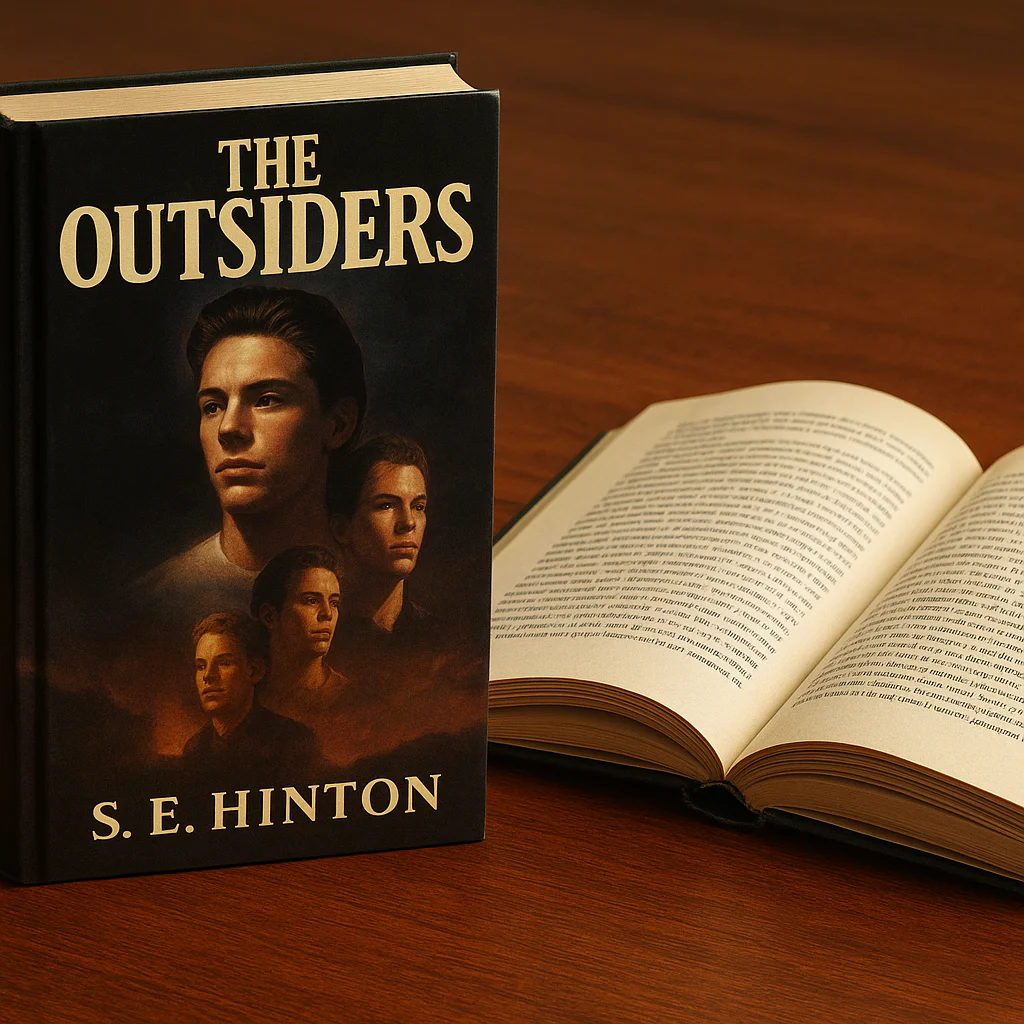
What is the summary of the book The Outsiders? S. E. Hinton’s novel follows Ponyboy Curtis, a Greaser teen caught in a bitter class rivalry, as violence, friendship, and devastating loss change how he sees his family and the Socs. At its heart, it’s a coming-of-age story about empathy: people are more than the group they belong to.
Hinton began writing the book as a teenager, drawing inspiration from the social divisions she saw in Tulsa. That lived-in perspective helps make Ponyboy’s world feel immediate—even when a sunset or a shared conversation briefly quiets the gang rivalry.
Key Takeaways
- Ponyboy’s story is about growing up amid class conflict, violence, and grief.
- The Greasers and Socs are divided by money and reputation, but the novel challenges readers to look beyond labels.
- Johnny’s “stay gold” message encourages Ponyboy to hold on to kindness and wonder.
- The ending reveals that Ponyboy is writing the story we’ve just read, turning painful memories into a way to reach others.
Table of Contents
- ⚡️ Quick Tips and Facts
- 📚 Background: S. E. Hinton and The Outsiders
- When the novel was written and published
- Setting, genre, and point of view
- 📝 The Outsiders Summary: The Story at a Glance
- 📖 The Outsiders Plot Summary, Chapter by Chapter
- Chapters 1–3: Ponyboy, the Greasers, and the Socs
- Chapters 4–6: The park, the church, and a daring rescue
- Chapters 7–9: The rumble and its aftermath
- Chapters 10–12: Loss, a trial, and Ponyboy’s story
- 👥 Main Characters and Their Roles
- Ponyboy Curtis
- Johnny Cade
- Dallas “Dally” Winston
- Darry and Sodapop Curtis
- The Greasers and the Socs
- 🎭 Major Themes in The Outsiders
- Social class, prejudice, and belonging
- Family, loyalty, and friendship
- Inocence, empathy, and “staying gold”
- Violence, grief, and choices
- 🔍 Symbols and Motifs: Hair, Sunsets, and More
- 💡 What Does the Title The Outsiders Mean?
- 💬 Important Quotes and What They Mean
- ✍️ Writing Style, Narration, and Literary Devices
- ⚖️ Is The Outsiders Based on a True Story?
- 📺 The Outsiders Book vs. Movie Adaptations
- 🎓 Why The Outsiders Is Taught in Schools
- 🚩 Content Warnings and Age Suitability
- ✅ What Readers May Like—and What May Not Work for Them
- Conclusion
- 🔗 Recommended Links
- ❓ FAQ
- What is the main message of The Outsiders?
- Who is the hero of The Outsiders?
- What happens to Johnny in The Outsiders?
- Why does Ponyboy write his story?
- What does “Stay gold” mean?
- How does The Outsiders end?
- How long is The Outsiders?
- 📑 Reference Links
⚡️ Quick Tips and Facts
For a one-sentence refresher, see The Outsiders in One Sentence: Summary & Meaning. The short version: fourteen-year-old Ponyboy Curtis and his friends navigate class conflict, violence, loyalty, and loss while trying to hold on to their humanity.
| Fact | Details |
|---|---|
| Author | S. E. Hinton |
| First published | 1967 |
| Setting | Tulsa, Oklahoma, in the 1960s |
| Narrator | Ponyboy Curtis, a fourteen-year-old Greaser |
| Main conflict | Rivalry between working-class Greasers and wealthier Socs |
| Genre | Young adult coming-of-age novel |
| Core themes | Class, family, friendship, violence, grief, and empathy |
| Structure | Twelve chapters, told in first person |
| Notable adaptation | Francis Ford Coppola’s 1983 film |
Hinton began writing the novel as a teenager, drawing on the social divisions she observed around her in Tulsa. The Encyclopedia of Oklahoma History and Culture provides background on Hinton and the book’s Oklahoma roots.
Spoiler alert: This summary covers the whole novel, including Johnny’s and Dally’s deaths and Ponyboy’s final school assignment. If you’re reading the book for class, the Book Summaries and Book Reviews sections offer more reading guides.
📚 Background: S. E. Hinton and The Outsiders

When the novel was written and published
S. E. Hinton was a teenager when she began writing The Outsiders. The story’s social landscape came partly from the divisions she saw among young people in Tulsa: one group had money and status; another faced tighter finances and fewer advantages. Hinton’s official author biography offers context on her life and work.
Published in 1967, The Outsiders helped establish young adult fiction as a place for stories about teenagers’ real concerns, rather than tidy lessons delivered from a safe distance. Its characters face family hardship, violence, and grief; the book does not pretend those problems vanish after one heartfelt conversation.
Setting, genre, and point of view
The novel takes place in 1960s Tulsa, and Ponyboy tells the story in the first person. That choice matters: we experience events through a thoughtful teenager who sometimes misreads people, changes his mind, and understands what happened only afterward.
| Story element | What it contributes |
|---|---|
| Tulsa setting | Grounds the novel in a specific place and period |
| First-person narration | Gives readers Ponyboy’s immediate feelings and later reflections |
| Coming-of-age plot | Tracks Ponyboy’s growing understanding of himself and others |
| Gang rivalry | Makes class division visible through everyday choices and confrontations |
The Greasers and Socs are not just two rival gangs. They represent different economic circumstances, but Hinton complicates that division by giving characters on both sides fear, loyalty, and vulnerability. For more novels with a lasting place in classrooms, visit Classic Literature.
📝 The Outsiders Summary: The Story at a Glance
Ponyboy Curtis is a bright, sensitive teenager growing up with his brothers, Dary and Sodapop, after their parents die. He belongs to the Greasers, a working-class group whose rivals, the Socs, have more money and social power. After Ponyboy is attacked by Socs, a night out with his friend Johnny Cade sets off a chain of events neither boy can control.
At a park, Johnny kills Bob Sheldon while saving Ponyboy from being drowned. The boys run away and hide in an abandoned church. When it catches fire with children trapped inside, they rescue the children, but Johnny is badly hurt. The gang rivalry continues toward a rumble, and Ponyboy’s growing understanding of class, family, and grief changes how he sees the people around him.
The ending brings the story back to its beginning: Ponyboy turns his experiences into an English assignment, starting with the same line that opens the novel. The book’s final twist is not a surprise villain or a secret inheritance; it is Ponyboy deciding that telling the story may help someone else feel less alone.
📖 The Outsiders Plot Summary, Chapter by Chapter
Chapters 1–3: Ponyboy, the Greasers, and the Socs
Ponyboy introduces his brothers, his friends, and the divide between the Greasers and Socs. Walking home alone from a movie theater, he is jumped by Socs. Dary, Sodapop, and the other Greasers arrive in time to drive them off.
Later, Ponyboy and Johnny meet Cherry Valance and Marcia, two Soc girls, at a drive-in. They talk with the girls and discover that conversation can cross a class line more easily than either side’s reputation suggests. Cherry explains that Socs have problems too, though money may protect them from some consequences.
After Ponyboy comes home late, Dary loses his temper and slaps him. Ponyboy feels rejected and runs away with Johnny. That argument sends the boys toward the park—and the moment that changes everything.
Chapters 4–6: The park, the church, and a daring rescue
At the park, a group of Socs confronts Ponyboy and Johnny. They hold Ponyboy underwater in a fountain. Johnny, terrified and trying to save his friend, stabs Bob Sheldon. Bob dies, and Johnny and Ponyboy flee.
The boys seek help from Dallas “Dally” Winston, who gives them money, a gun, and directions to an abandoned church in Windrixville. There, Ponyboy and Johnny cut and bleach their hair to disguise themselves. To pass the time, Ponyboy reads Gone with the Wind aloud, and the two talk about Robert Frost’s poem “Nothing Gold Can Stay.”
When Dally visits, he tells them that the conflict between the gangs has intensified and that Cherry has been helping the Greasers. The boys return to find the church on fire. Children are trapped inside, so Ponyboy and Johnny rush in to rescue them. They succeed, but Johnny is crushed by a falling beam and badly injured. Dally is hurt too while trying to help.
At the hospital, Ponyboy sees Dary crying. For the first time, he understands that Dary’s strictness can come from fear and love, not dislike.
Chapters 7–9: The rumble and its aftermath
After the rescue, the newspaper calls Ponyboy, Johnny, and Dally heroes. The praise does not erase the danger: Johnny may face a serious charge for Bob’s death, and Ponyboy’s future with his brothers may be decided in court.
Randy Adderson, Bob’s friend, visits Ponyboy and says he will not take part in the rumble. He is grieving and doubts a fight will solve anything. His decision gives Ponyboy a glimpse of a Soc reconsidering the rules his group lives by.
The Greasers win the rumble, but victory feels hollow. Ponyboy and Dally rush to the hospital to tell Johnny. Johnny dies after telling Ponyboy to “stay gold,” an appeal to keep his compassion and sense of wonder. Dally, devastated by Johnny’s death, robs a grocery store and runs from the police. He points an unloaded gun at officers, who shoot him.
The rumble produces a winner. It does not give anyone what they actually need.
Chapters 10–12: Loss, a trial, and Ponyboy’s story
Ponyboy struggles with shock and grief after Johnny’s and Dally’s deaths. He becomes sick and confused, and his memories of the night Bob died grow unreliable. At the hearing, the judge clears him of responsibility for Bob’s death and allows him to remain with Dary and Sodapop.
The brothers’ family life is still strained. Sodapop finally breaks down over their constant arguments and begs Dary and Ponyboy to stop putting him in the middle. His distress brings the brothers back together, at least for now.
Ponyboy finds a letter Johnny wrote before he died. Johnny’s words encourage him to hold on to what is good in the world, even when life turns cruel. Ponyboy then begins writing about the Greasers and the Socs for an English assignment. He starts with the opening sentence of the novel, making the book itself Ponyboy’s attempt to tell their story.
The first video’s overview also emphasizes class conflict, loyalty, heroism, and the story’s tragic ending. That broad summary is useful, but the novel adds an important nuance: understanding one another does not undo violence, but it can change what a person chooses to do next.
👥 Main Characters and Their Roles
Ponyboy Curtis
Ponyboy is the narrator and youngest Curtis brother. He likes books, movies, and sunsets, and he is more reflective than his tough surroundings might suggest. His central journey is learning that labels such as “Greaser” and “Soc” explain only part of who a person is.
Johnny Cade
Quiet and badly mistreated at home, Johnny feels safer with the Greasers than with his family. He kills Bob while defending Ponyboy, then risks his life to rescue children from the burning church. His courage is real, but the book does not romanticize the cost: Johnny’s injuries eventually kill him.
Dallas “Dally” Winston
Dally is the group’s hardest and most rebellious member. He appears to care about little, but his attachment to Johnny reveals a fierce tenderness beneath his rough exterior. When Johnny dies, Dally cannot cope with his grief and provokes police into shooting him.
Darry and Sodapop Curtis
Darry, the eldest brother, has given up opportunities to keep the family together. His strictness frustrates Ponyboy, who initially mistakes it for dislike. Sodapop, the middle brother, is warm and easygoing, but he is caught between the two and suffers when they argue.
| Character | Group or role | What Ponyboy learns from them |
|---|---|---|
| Dary | Greaser; oldest Curtis brother | Love can look stern when someone is carrying adult responsibilities |
| Sodapop | Greaser; middle Curtis brother | The peacemaker also needs care and support |
| Johnny | Greaser; Ponyboy’s close friend | Fear does not prevent someone from acting bravely |
| Dally | Greaser; hardened delinquent | Toughness can conceal deep attachment and pain |
| Cherry | Soc; a bridge between groups | People can question the assumptions of their own group |
| Randy | Soc; Bob’s friend | Walking away from a cycle of violence can be an act of courage |
| Bob | Soc; Cherry’s boyfriend | Privilege does not prevent personal pain or destructive choices |
| Two-Bit | Greaser; comic relief and loyal friend | Humor can keep a close-knit group going under pressure |
The Greasers and the Socs
The Greasers are working-class teenagers known for their long, greased hair and close gang bonds. The Socs—short for “Socials”—are wealthier teens, often better protected by money and status.
| Group | Social position | How the novel complicates the label |
|---|---|---|
| Greasers | Working-class; more exposed to social and legal consequences | They are not all alike: Ponyboy is academic, Dary is responsible, and Dally is reckless |
| Socs | Wealthier; enjoy greater social protection | Cherry and Randy show that some Socs can question the rivalry and empathize with Greasers |
🎭 Major Themes in The Outsiders
Social class, prejudice, and belonging
The Greaser–Soc divide shapes how people are treated, what choices seem available, and who is assumed to be dangerous. The story acknowledges the material gap—money brings security and influence—but refuses to reduce every character to their class.
Ponyboy starts out seeing the Socs as a single hostile group. His conversations with Cherry and Randy make that view harder to maintain. The novel asks readers to notice inequality without assuming that a label tells the whole story.
Family, loyalty, and friendship
The Greasers form a kind of chosen family. They show up for one another after fights, share what they have, and stay close when home life is unsafe. At the same time, the Curtis brothers’ relationships show that love can coexist with frustration and misunderstanding.
Darry’s sacrifices are easy for Ponyboy to misread because Dary does not express care in the gentle way Ponyboy wants. Their relationship improves when Ponyboy sees what his brother has been carrying.
Inocence, empathy, and “staying gold”
The phrase “stay gold” refers to preserving a capacity for wonder and kindness. It connects to “Nothing Gold Can Stay,” Robert Frost’s poem about the fleeting nature of beauty and innocence. The Poetry Foundation’s text and notes on the poem provide the literary context.
Johnny’s message is not a command to remain naïve. Ponyboy has seen violence and loss; “staying gold” means not letting those experiences erase his ability to care.
Violence, grief, and choices
Violence in the novel rarely solves the problem that caused it. Johnny acts in self-defense, but Bob’s death brings fear, flight, and the possibility of prosecution. The rumble settles nothing. Dally’s grief ends in his death.
The book also distinguishes between a character’s circumstances and choices. Poverty and mistreatment shape the boys’ lives, but Hinton still shows them making decisions—some brave, some harmful, and some tragically irreversible.
🔍 Symbols and Motifs: Hair, Sunsets, and More
| Symbol or motif | Meaning in the novel |
|---|---|
| Greasers’ hair | Group identity, pride, and a visible social label |
| Sunset | A shared experience that can cross class boundaries |
| “Nothing Gold Can Stay” | The temporary nature of innocence and beauty |
| The burning church | A crisis that reveals courage and self-sacrifice |
| Ponyboy’s English assignment | A way to make meaning from painful experience and give others a voice |
Hair marks the Greasers as outsiders, so Ponyboy and Johnny cutting it is more than a disguise: they are briefly forced to give up a visible part of their identity. The sunset conversation between Ponyboy and Cherry points the other way. They may live on different sides of town, but they can look at the same sky.
The church fire functions as a test of character. The boys could escape and protect themselves; instead, they go back for the children. Their choice does not erase their earlier mistakes, but it reveals a different side of them.
💡 What Does the Title The Outsiders Mean?
The title refers most directly to the Greasers, who are judged and excluded because of their class, appearance, and reputation. But the novel gradually broadens the idea. Ponyboy feels misunderstood even within his own group; Johnny feels unsafe at home; and Randy questions the expectations his friends place on him.
Being an outsider is not limited to having less money. It can mean being unseen, misunderstood, or trapped in a role other people have assigned to you. The title also invites readers to ask who gets to decide which group counts as “normal.”
💬 Important Quotes and What They Mean
| Quote | Speaker or source | Why it matters |
|---|---|---|
| “Stay gold.” | Johnny, drawing on Frost’s poem | A plea for Ponyboy to protect his empathy and openness |
| “Nothing Gold Can Stay.” | Robert Frost poem discussed in the novel | Connects beauty and innocence with change and loss |
| “Things are rough all over.” | Cherry Valance | Challenges Ponyboy’s assumption that Socs have no problems |
| “When I stepped out into the bright sunlight…” | Ponyboy, opening and ending frame | Links his school assignment to the story readers have just finished |
The quotes work because they grow out of the characters’ experiences. Johnny’s “stay gold” is not a motivational slogan pasted onto the ending; it means something because Ponyboy has watched violence threaten the sensitivity Johnny recognizes in him.
For accurate wording and context, consult a copy of the novel rather than relying on quote collections, which sometimes omit surrounding dialogue or vary by edition.
✍️ Writing Style, Narration, and Literary Devices
Hinton uses direct, conversational prose that suits Ponyboy’s age and voice. The narration combines action with reflection: a fight can be followed by a memory, a movie reference, or Ponyboy’s thoughts about the sunset. This keeps the novel close to its narrator’s emotional experience.
Why the first-person point of view matters
Because Ponyboy narrates the story, readers learn about other characters as he does. His early view of Dary is incomplete; later, he revises it. His opinions about Socs also change after meeting Cherry and Randy.
That makes him an unreliable narrator in a limited, human sense: not a liar, but a teenager whose perspective is still developing. Readers can notice the gap between what Ponyboy believes at first and what events gradually teach him.
The circular ending and the opening line
The novel ends with Ponyboy beginning an English assignment using the same line that opens the book. The circular structure reveals that the story we have read is the story he is writing. It also turns storytelling into an act of connection: Ponyboy hopes that someone else might recognize the Greasers as people, not just a gang.
⚖️ Is The Outsiders Based on a True Story?
The Outsiders is fiction, not a direct account of one real group or event. However, Hinton has described drawing inspiration from the social divisions and teenage experiences around her in Tulsa. The result feels grounded because it takes everyday pressures—money, reputation, family conflict, and group loyalty—seriously.
The distinction matters: the characters and plot should not be treated as documentary history, but the setting and social tensions reflect the world Hinton knew. Her official biography provides background on the author.
📺 The Outsiders Book vs. Movie Adaptations
Francis Ford Coppola’s 1983 film adapts the novel’s central characters, rivalry, and major tragedies. Its ensemble includes C. Thomas Howell as Ponyboy, Ralph Machio as Johnny, and Patrick Swayze as Dary. The film makes the story’s visual contrasts—clothing, hair, neighborhoods, and group identity—especially vivid.
| Feature | Novel | 1983 film |
|---|---|---|
| Story access | Ponyboy’s first-person thoughts | Visual storytelling and performance |
| Character development | More room for Ponyboy’s reflections and relationships | Condensed to fit a film-length narrative |
| Main events | Full literary structure, including Ponyboy’s writing frame | Retells the principal events in cinematic form |
| Best for | Understanding the narration, themes, and inner life | Seeing the characters and setting interpreted onscreen |
A film adaptation can sharpen a story’s atmosphere, but it cannot reproduce every thought in Ponyboy’s narration. For more comparisons, visit Book-to-Film Adaptations.
🎓 Why The Outsiders Is Taught in Schools
Teachers often use the novel to discuss point of view, characterization, symbolism, social class, and coming-of-age fiction. Its accessible narration makes it approachable, while its ethical questions leave room for serious discussion.
Useful classroom questions include:
- How does Ponyboy’s understanding of Dary change?
- Does winning the rumble change the Greasers’ circumstances?
- What does Johnny mean by “stay gold”?
- How do Cherry and Randy challenge group stereotypes?
- Why does the novel end with Ponyboy’s assignment?
The book has also been challenged for violence, language, smoking, drinking, and family conflict. Those concerns are part of a wider debate about what young readers should encounter in school. The American Library Association’s resources on book challenges offer context for that discussion.
🚩 Content Warnings and Age Suitability
Readers and families may want to know that the novel includes:
- Physical fights and gang violence
- A death during a confrontation
- A serious fire and injuries
- Deaths of major characters
- Family bereavement and mistreatment
- Smoking, drinking, and strong language
The book can prompt valuable conversations about class, grief, peer pressure, and family responsibility. It may also be upsetting for readers sensitive to violence or loss. A good choice for one classroom is not automatically the right choice for every reader, so consider the individual reader’s age, experience, and comfort level.
✅ What Readers May Like—and What May Not Work for Them
| Readers may appreciate | Some readers may find |
|---|---|
| A clear, emotionally direct first-person voice | The prose more straightforward than stylistically elaborate |
| Memorable characters and strong group dynamics | The action and tragedy emotionally intense |
| A nuanced look at social class and stereotypes | Some characters’ situations compressed by the short format |
| A meaningful connection between the opening and ending | The gang rivalry familiar if they have read similar coming-of-age stories |
| Themes that invite discussion about empathy and loyalty | Certain period-specific language dated or uncomfortable |
Our reading-group experience with books like this is that readers often disagree most sharply about Dally. Some see him as a tragic figure shaped by his environment; others focus on the harm caused by his choices. Both readings can be true at once, which is one reason the character stays with readers after the final page.