Support our educational content for free when you purchase through links on our site. Learn more
📖 The Outsiders Book Pages: How Many Are in Your Edition?

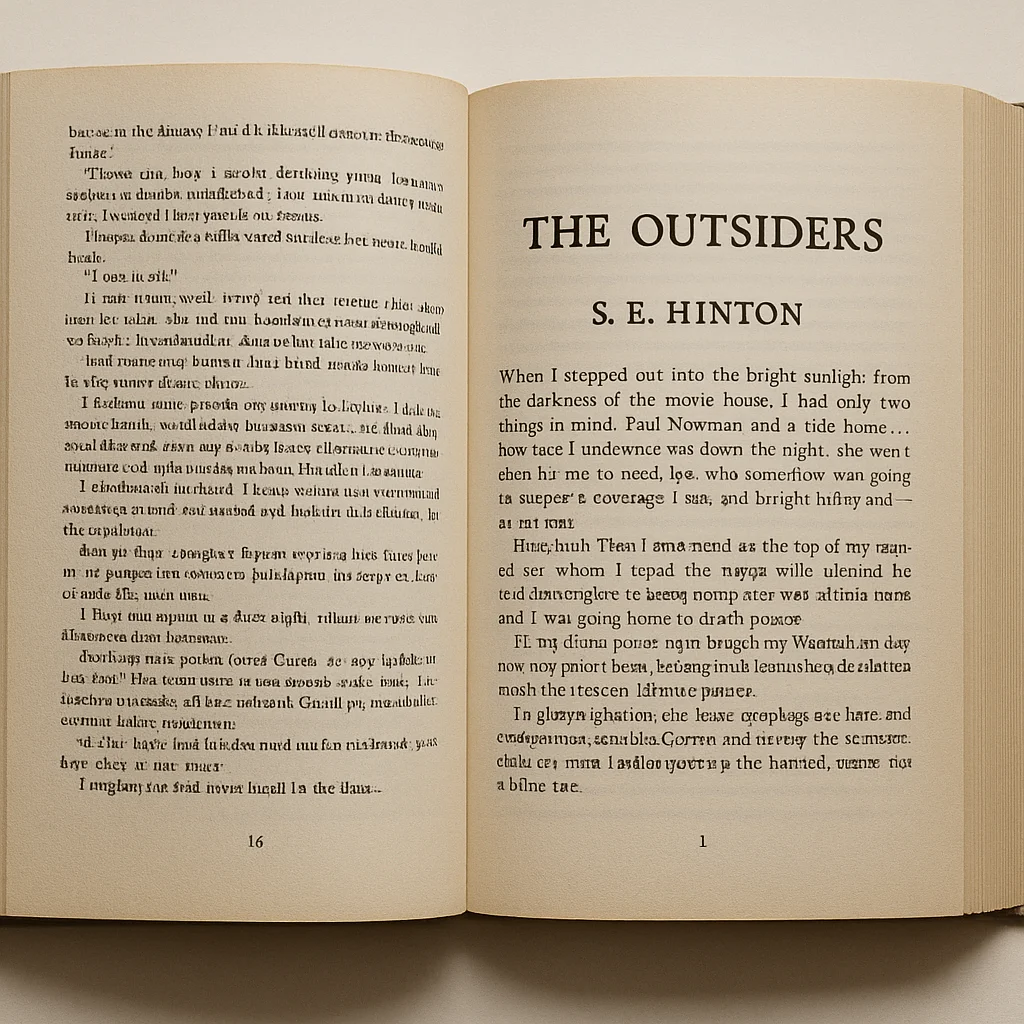
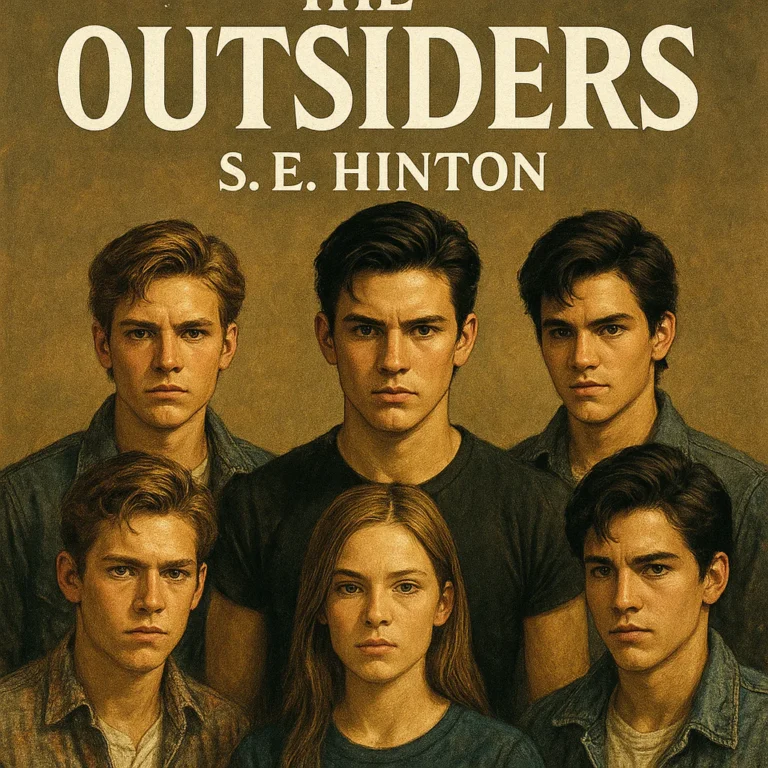
The Outsiders book pages total 224 in a commonly assigned paperback edition, but the exact count depends on the format and printing. If you need a page number for homework, check your copy’s ISBN first—otherwise, you may end up hunting for a scene on the wrong page.
S. E. Hinton’s novel has 12 chapters, so it’s easy to plan your reading by chapter even when page numbers don’t match. And there’s more tucked into those pages than a quick page count suggests: Ponyboy’s story explores friendship, class, loyalty, and the cost of being judged by a label.
Key Takeaways
- A common paperback edition has 224 pages; other editions may differ.
- The novel has 12 chapters, making chapter-based reading plans more reliable than page targets.
- Check the ISBN and format to match page references with your copy.
- Ebooks may not have fixed page numbers, and audiobooks have no printed pages.
- The opening pages introduce Ponyboy’s voice and the tension between how others see him and who he is.
Table of Contents
- ⚡️ Quick Tips and Facts About The Outsiders Book Pages
- 📚 The Outsiders Page Count at a Glance
- Why Page Counts Differ Between Editions
- Paperback, Hardcover, Ebook, and Audiobook Formats
- 🕰️ Background: S. E. Hinton’s Novel and Its Editions
- Original Publication and Publication History
- The 50th Anniversary Edition and Special Editions
- 🔎 How to Find a Page Number in Your Copy
- Check the ISBN and Edition Details
- Why Page Numbers May Not Match Online References
- 📖 Chapter Guide and Reading Progress
- How Many Chapters Are in The Outsiders?
- Reading Schedule Ideas
- ✍️ What’s on the Pages? Plot, Themes, and Characters
- A Spoiler-Light Plot Overview
- Major Themes: Belonging, Class, and Identity
- Ponyboy, the Greasers, and the Socs
- 🎓 The Outsiders for Students and Teachers
- Reading Level and Age Suitability
- Classroom Discussion and Study Questions
- Content Considerations for Families
- 🎬 Book Pages vs. the Movie Adaptation
- 🛒 Where to Find The Outsiders Book
- Libraries, Bookstores, and Digital Reading Options
- Choosing the Right Edition for You
- ✅ Conclusion
- 🔗 Recommended Links
- ❓ FAQ
- How many pages is The Outsiders?
- How many pages are in each chapter?
- Is The Outsiders a quick read?
- Why does my copy have a different page count?
- Where can I read a sample of the book?
- 📚 Reference Links
Table of Contents
- ⚡️ Quick Tips and Facts About The Outsiders Book Pages
- 📚 The Outsiders Page Count at a Glance
- Why Page Counts Differ Between Editions
- Paperback, Hardcover, Ebook, and Audiobook Formats
- 🕰️ Background: S. E. Hinton’s Novel and Its Editions
- Original Publication and Publication History
- The 50th Anniversary Edition and Special Editions
- 🔎 How to Find a Page Number in Your Copy
- Check the ISBN and Edition Details
- Why Page Numbers May Not Match Online References
- 📖 Chapter Guide and Reading Progress
- How Many Chapters Are in The Outsiders?
- Reading Schedule Ideas
- ✍️ What’s on the Pages? Plot, Themes, and Characters
- A Spoiler-Light Plot Overview
- Major Themes: Belonging, Class, and Identity
- Ponyboy, the Greasers, and the Socs
- 🎓 The Outsiders for Students and Teachers
- Reading Level and Age Suitability
- Classroom Discussion and Study Questions
- Content Considerations for Families
- 🎬 Book Pages vs. the Movie Adaptation
- 🛒 Where to Find The Outsiders Book
- Libraries, Bookstores, and Digital Reading Options
- Choosing the Right Edition for You
- ✅ Conclusion
- 🔗 Recommended Links
- ❓ FAQ
- How many pages are in The Outsiders by S. E. Hinton?
- How long does it take to read The Outsiders?
- Does the page count of The Outsiders vary by edition?
- What happens in each chapter of The Outsiders?
- Which pages contain the most important events in The Outsiders?
- Is The Outsiders an easy book to read?
- What is a spoiler-free summary of The Outsiders?
- 📚 Reference Links
⚡️ Quick Tips and Facts About The Outsiders Book Pages
Looking up “The Outsiders book pages” usually means one of two things: you want the novel’s total page count, or you need a particular page in your own copy. The quick answer: the commonly assigned paperback edition has 224 pages, but page counts vary by edition and format.
For a handy overview of the story before you choose a copy, read our The Outsiders book summary. If you’re searching for the opening pages, LoveReading4Kids offers a free extract. 📖
| Quick fact | What to know |
|---|---|
| Author | S. E. Hinton |
| First published | 1967 |
| Common classroom paperback | 224 pages for ISBN 9780142407332 |
| Main narrator | Ponyboy Curtis, a 14-year-old greaser |
| Chapter count | 12 chapters |
| Best way to verify page references | Match the ISBN and edition, not just the title |
| Main reason page totals differ | Different formats, layouts, front matter, and bonus material |
The 224-page figure applies to a specific paperback, not every edition ever printed. Scholastic’s listing identifies ISBN 9780142407332 as a 224-page paperback; other editions can have different pagination. See the publisher’s book listing and Penguin Random House’s edition information.
Page-number tip: If a teacher, study guide, or classmate gives you a page number, check the edition or ISBN before you go hunting. The same scene may land on different pages in different copies.
The novel is often described as a quick, accessible young-adult read, but its compact length doesn’t mean its ideas are small. As Classic Literature fans know, Hinton packs questions about class, loyalty, violence, and identity into a lean coming-of-age story.
📚 The Outsiders Page Count at a Glance
The page count most often quoted for classroom use is 224 pages. That number is useful as a reference point, especially for the widely listed paperback with ISBN 9780142407332. It is not a universal count for every print or digital version.
| Edition or format | Page-count guidance | What may affect the count |
|---|---|---|
| Scholastic-listed paperback, ISBN 9780142407332 | 224 pages | Specific publisher edition and layout |
| Other paperback editions | Varies | Trim size, type size, publisher design |
| Hardcover | Varies | Different page dimensions and added material |
| Ebook | May not have fixed pages | Font size, screen size, reading settings |
| Audiobook | No printed page count | Runtime and narration format |
When a listing says “224 pages,” treat it like a book’s address: it points to one edition, not every edition carrying the same title. Retailer records, library catalogs, and publisher listings may also describe different formats, so compare the ISBN whenever exact page references matter.
Why Page Counts Differ Between Editions
A book’s page total depends partly on the story and partly on how the physical book is made. Publishers can use different page sizes, typefaces, margins, line spacing, and front matter. A larger font or more generous spacing can stretch the same text across more pages without adding a single new scene.
Page totals can also differ because an edition includes extras such as:
- An introduction or author’s note
- Discussion questions or classroom material
- A reading-group guide
- A special anniversary section
- Different copyright and publisher pages
This is why the Scholastic listing and another book listing may not show identical numbers. The dependable comparison is edition-to-edition, using ISBNs—not title-to-title.
Paperback, Hardcover, Ebook, and Audiobook Formats
Each format suits a different kind of reader. A paperback is practical for marking passages; an ebook lets you search words and adjust text; an audiobook works well for listening during a commute or while doing chores. The audiobook, naturally, won’t give you a stable printed page number.
| Format | Page numbers stable? | Advantages | Possible drawback |
|---|---|---|---|
| Paperback | Yes, for that edition | Portable; easy to annotate | Pagination differs from other copies |
| Hardcover | Yes, for that edition | Durable; often comfortable to read | May not match a classroom paperback |
| Ebook | Often no; depends on app and settings | Searchable text; adjustable font | “Page” display may change with settings |
| Audiobook | No | Convenient, narrated experience | Not suited to page-based assignments |
If you need to cite a passage for school, use the format your teacher or class expects. For page-number assignments, a print copy is usually simplest. For casual reading, choose the format you’ll actually finish—no book gets points for looking handsome on a nightstand.
🕰️ Background: S. E. Hinton’s Novel and Its Editions

S. E. Hinton began writing The Outsiders as a teenager and published the novel in 1967. Its young narrator and direct voice helped make it a landmark of young-adult fiction. Scholastic describes the book as a classic of realistic fiction, and its listing notes that Hinton was close in age to the characters she wrote about. Read more about the edition and its publication details at Scholastic.
Original Publication and Publication History
The novel’s first publication came in 1967, when Hinton was still a teenager. That history helps explain the book’s closeness to teenage perspective: Ponyboy’s observations feel immediate, personal, and sometimes uncertain in exactly the way a teenager’s thoughts can be.
Hinton has said that she used her initials rather than her full first name because publishers feared readers might assume a girl could not convincingly write about boys. The choice shaped the book’s early reception, but the story has outlasted those assumptions by centering on emotional experience rather than a single stereotype of masculinity.
The original paperback and later editions share the same core story, but their page designs and supplementary content can differ. For background on the author and her work, see Britannica’s S. E. Hinton biography.
The 50th Anniversary Edition and Special Editions
Anniversary editions and other special printings can include added context or distinctive design features. These extras may change the page total even when the novel itself remains unchanged. Before buying a special edition for a class, check whether it has the same pagination as the assigned copy.
A simple edition check:
- Find the copyright page, usually near the front.
- Locate the ISBN, a unique identifier for that format and edition.
- Compare the ISBN with your teacher’s or publisher’s listing.
- Check for extras such as an introduction, reading guide, or bonus material.
- Use your own copy’s page numbers for assignments unless instructed otherwise.
Special editions can be lovely keepsakes. But if you’re trying to match a classmate’s page 87, a matching cover may not be enough—the ISBN is the real clue.
🔎 How to Find a Page Number in Your Copy
If you need to find a particular scene, the quickest route is usually to search by chapter and event, then confirm the page in your own edition. Online references can help you locate a passage, but their page numbers may belong to a different printing.
Check the ISBN and Edition Details
The ISBN is usually printed on the copyright page and the back cover near the barcode. For the commonly listed 224-page paperback, the ISBN is 9780142407332, as shown by Scholastic’s listing.
Use this checklist when you’re comparing copies:
- Match the full ISBN, not just the title.
- Confirm the format—paperback, hardcover, or ebook.
- Check the publisher and publication details.
- Look for added introductions or study resources.
- Confirm whether your copy uses a fixed page layout.
Two paperbacks can look nearly identical and still have different page numbers. Book covers are charmingly unreliable detectives.
Why Page Numbers May Not Match Online References
Page numbers change when the layout changes, and digital books can reflow text based on screen size and font settings. Even a quotation quoted accurately online may be assigned a different page in your edition.
If the reference you found gives a page number, verify it this way:
- Identify the scene or quotation, not just the page.
- Check the chapter where it appears.
- Search the text if you’re using an ebook with a search function.
- Turn to the passage in your print copy and record that page.
- For an assignment, cite the edition you actually read.
A free extract can help you preview the opening, but it doesn’t establish a universal page number. LoveReading4Kids’ extract, for example, presents opening text without specifying a page number or edition.
📖 Chapter Guide and Reading Progress
The Outsiders is organized into 12 chapters. The chapters give readers natural stopping points, which is useful if you’re reading for class or trying to pace the novel over several evenings.
How Many Chapters Are in The Outsiders?
The novel has 12 chapters. Chapter breaks are more dependable than online page numbers when different readers own different editions. A class might be told to read “through the end of Chapter 3,” while page 40 in one edition could correspond to a different spot in another.
For a spoiler-light reading plan, use the chapter count rather than assuming every edition has the same number of pages. If your copy is the 224-page edition, 12 chapters suggest an average of roughly 18–19 pages per chapter—but chapters aren’t equal in length, so that’s only a rough planning estimate.
Reading Schedule Ideas
Here are three flexible ways to spread the novel out. These are chapter-based suggestions, not claims that every chapter takes the same amount of time.
| Schedule | Suggested pace | Best for |
|---|---|---|
| 3-session plan | 4 chapters per session | Readers with a deadline |
| 4-session plan | 3 chapters per session | A steady school-week pace |
| 6-session plan | 2 chapters per session | More time to reflect or discuss |
To make the reading stick:
- Write down one character choice that stands out after each session.
- Note a line that reveals how Ponyboy sees himself or someone else.
- Track where your sympathy shifts between characters.
- Pause after major turning points rather than racing past them.
A useful spoiler-free question to carry through the chapters: When does a label stop describing a person and start hiding who they are? Keep that in mind; the answer becomes clearer as Ponyboy’s view of the people around him changes.
✍️ What’s on the Pages? Plot, Themes, and Characters
The pages follow Ponyboy Curtis, a teenage greaser navigating family life, friendship, and conflict with a rival group known as the Socs. The book is often assigned as a coming-of-age novel, but it also asks readers to look beyond social labels. Our book summaries and book reviews explore more stories that balance character and theme.
A Spoiler-Light Plot Overview
Ponyboy is a thoughtful 14-year-old who loves movies and books. He belongs to the greasers, a working-class group whose rivalry with the wealthier Socs shapes everyday life. After a violent encounter changes the stakes, Ponyboy and the people close to him face difficult choices about safety, loyalty, and what justice means.
The free LoveReading4Kids opening extract introduces Ponyboy’s voice and interests. He describes leaving a movie house, thinking about Paul Newman, and wishing he looked tougher. The scene quickly complicates the “tough greaser” image: Ponyboy is also observant, imaginative, and drawn to stories.
Want more plot detail? Our full book summary covers the story’s major events.
Major Themes: Belonging, Class, and Identity
The novel’s central tension begins with the division between greasers and Socs, but Hinton is interested in more than group rivalry. The story asks how class shapes opportunity, how loyalty can protect or trap people, and whether empathy can cross a social boundary.
| Theme | How it appears in the story | A question to consider |
|---|---|---|
| Class and inequality | Greasers and Socs have different resources and social status | How does money influence who gets believed or protected? |
| Identity | Ponyboy’s group label doesn’t capture his full personality | What parts of a person are hidden by a label? |
| Loyalty and family | Friends and brothers become sources of care and conflict | When does loyalty help, and when can it become pressure? |
| Innocence and change | Events challenge Ponyboy’s assumptions about the world | What does growing up cost him? |
| Empathy | The story suggests rivals may share more than they expect | Can understanding someone change a conflict? |
A speaker in the featured video praises the novel’s treatment of social division, innocence, self-sacrifice, and identity, calling it a five-star read for middle-school and young-adult readers. That response aligns with the book’s lasting classroom appeal: the story invites debate without reducing its characters to tidy examples.
Ponyboy, the Greasers, and the Socs
Ponyboy is the narrator, so the reader experiences the story through his perceptions. He notices how people look and act, but his first impressions aren’t always complete. That gap between what Ponyboy believes and what he gradually understands gives the novel much of its emotional pull.
The greasers are working-class teens who share a community and face prejudice. The Socs—short for “Socials”—are presented as wealthier rivals. Neither label fully explains any individual character, which is precisely the point: group identity influences people, but it doesn’t erase their individuality.
The opening extract shows Ponyboy’s softer, more reflective side early. He enjoys movies, books, and drawing, while his brothers respond to him in different ways. That detail gives readers a glimpse of family affection and friction before the larger conflict takes over.
🎓 The Outsiders for Students and Teachers
The novel is widely taught as young-adult realistic fiction. Scholastic lists the 224-page paperback for ages 14 and up and grades 9–12; individual schools may choose a different age or grade placement depending on curriculum and local guidance. See Scholastic’s listing.
Reading Level and Age Suitability
The story’s direct prose and relatively short length make it approachable for many teen readers. Its subject matter, however, includes violence, grief, family hardship, and social conflict. “Easy to read” doesn’t mean emotionally light.
For teachers and families, suitability is best judged by considering both the reader’s fluency and the content they’re ready to discuss. The book can work especially well for readers who enjoy character-driven stories and want a novel that raises questions about fairness and belonging.
Classroom Discussion and Study Questions
Try these questions after reading. They focus on the text without requiring a particular interpretation:
- How does Ponyboy’s love of books and movies complicate the greaser stereotype?
- What do the greasers and Socs assume about each other?
- How do Ponyboy’s relationships with his brothers differ?
- Which character surprises you most, and why?
- Does the novel suggest that empathy can reduce conflict—or only help people understand it?
- How does the ending change the meaning of Ponyboy’s story?
For a page-specific discussion, have students cite chapter and edition alongside page numbers. That small habit prevents a familiar classroom mystery: three readers, three copies, and three different “page 63s.”
Content Considerations for Families
The novel includes physical violence, threats, death, grief, and references to smoking and alcohol. These subjects are part of the story’s depiction of vulnerable teenagers and social conflict; they may also prompt questions from younger readers.
Families and educators can support discussion by:
- Previewing the book’s themes before reading.
- Inviting questions without demanding a single “correct” reaction.
- Talking about how fiction depicts violence and its consequences.
- Connecting the story’s social divisions to empathy and stereotyping.
- Checking school or library guidance when choosing a reading age.
Scholastic’s age recommendation is one useful reference, not a substitute for knowing the reader. The right conversation can matter as much as the reading level.
🎬 Book Pages vs. the Movie Adaptation
Francis Ford Coppola’s 1983 film adaptation brings the greasers and Socs to the screen, but a movie and a novel tell stories differently. The novel gives readers direct access to Ponyboy’s thoughts; film relies on performance, images, dialogue, and editing.
| Feature | Novel | Film adaptation |
|---|---|---|
| Ponyboy’s perspective | Told through his narration and reflections | Communicated through acting and visual storytelling |
| Pacing | Reader controls the pace | Set by the film’s runtime and editing |
| Inner thoughts | Available directly on the page | Must be conveyed through other techniques |
| Page references | Depend on edition | Not applicable |
| Best for | Detail, reflection, and close reading | Visual interpretation and performance |
If you’re comparing the two for class, note what changes in emphasis, not just what gets cut. A scene’s meaning can shift when you hear Ponyboy’s thoughts on the page, then see actors communicate the same moment without his narration. Our book-to-film adaptations section has more book-versus-screen comparisons.
🛒 Where to Find The Outsiders Book
You can look for The Outsiders through public libraries, school libraries, independent bookstores, major retailers, and ebook or audiobook services. Since editions differ, check the ISBN and format before ordering if you need to match a class copy.
Libraries, Bookstores, and Digital Reading Options
A library is a good first stop if you want to read the book before choosing an edition. Bookstores and online retailers can help you compare formats, while ebooks and audiobooks offer accessibility and convenience.
- Library: Search your local library catalog for print, ebook, or audio copies.
- Independent bookstore: Ask staff to verify the ISBN for a particular edition.
- Penguin Random House: Check the publisher’s book page.
- Amazon: Search by ISBN to find the edition you want.
- Scholastic: Review the 224-page paperback listing.
For a preview, LoveReading4Kids has a free opening extract. It can help you hear Ponyboy’s voice before committing to the full novel, though it does not provide a universal page count.
Choosing the Right Edition for You
Choose based on how you’ll use the book:
- For school: Match the assigned ISBN or choose the same edition as your class.
- For annotation: A print paperback is easy to mark and carry.
- For adjustable text: Consider an ebook, keeping in mind that page displays may reflow.
- For listening: An audiobook offers a narrated experience but no stable page numbers.
- For collecting: A special edition may offer attractive design or bonus material.
The key decision isn’t just “Which edition has the fewest pages?” It’s whether you need matching pagination, reading flexibility, or a keepsake copy. For assignments, matching the edition wins. For personal reading, the format you enjoy is the one most likely to get finished.