Support our educational content for free when you purchase through links on our site. Learn more
📝 The Outsiders in One Sentence: Summary & Meaning

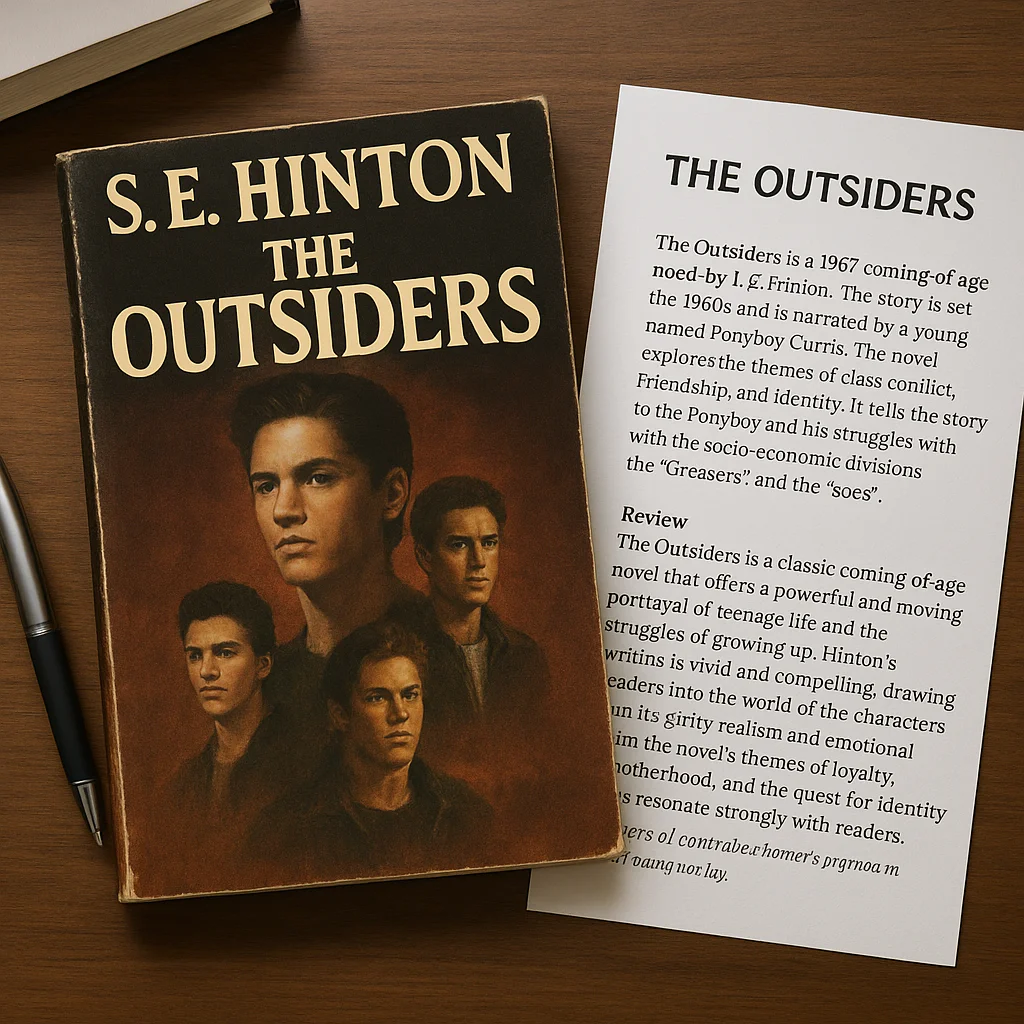
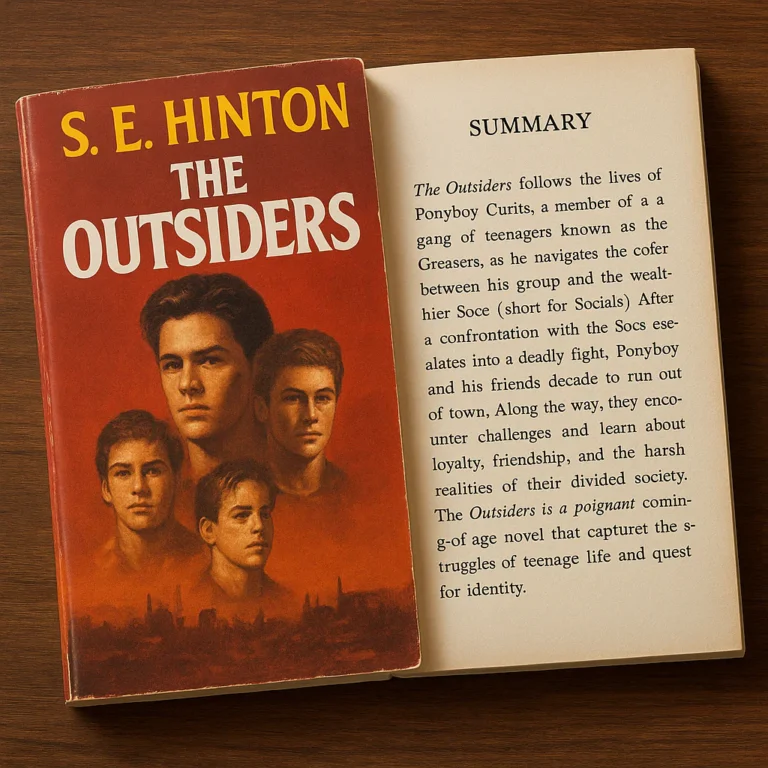
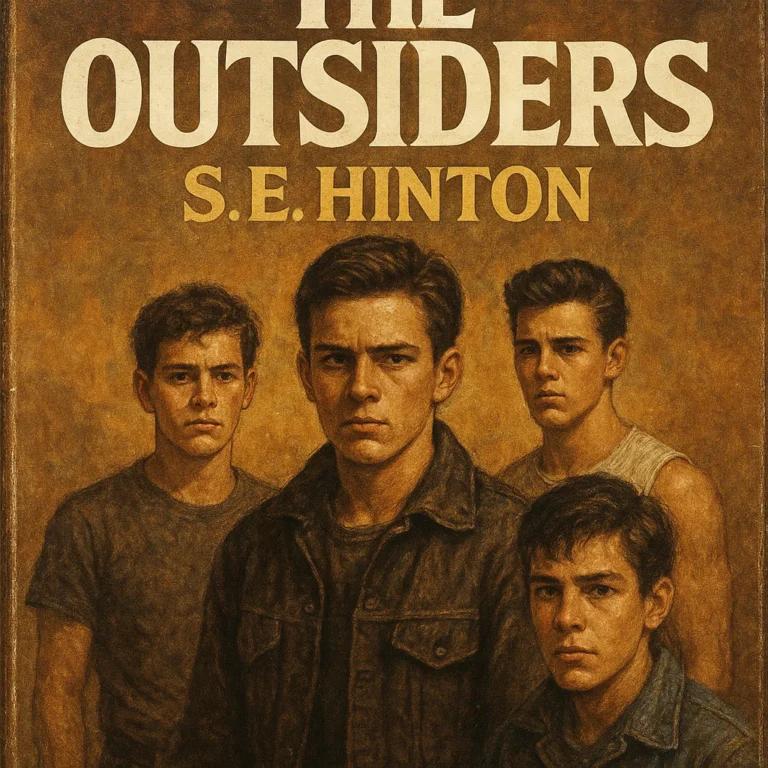
The sentence summary of The Outsiders is this: Ponyboy Curtis, a Greaser caught in a violent rivalry with the wealthier Socs, faces grief and loss before learning that empathy can cross social divides. That one line gives you the protagonist, the central conflict, and the heart of S. E. Hinton’s coming-of-age novel.
But the story is more than a rumble between two groups. Ponyboy’s bonds with his brothers and friends—and Johnny’s unforgettable plea to “stay gold”—make this short summary a doorway into a much bigger story about loyalty, class, and compassion.
Key Takeaways
- One-sentence summary: Ponyboy faces gang rivalry, violence, and loss, then learns to look beyond labels.
- Main conflict: Working-class Greasers and wealthier Socs clash, but the novel complicates the us-versus-them divide.
- Core themes: Family, belonging, grief, growing up, and the value of staying compassionate.
- A useful summary tip: Include the protagonist, central conflict, and personal change—without cramming in every plot event.
Table of Contents
- ⚡️ Quick Tips and Facts
- 📚 Background: The Outsiders and S. E. Hinton
- 📝 The Outsiders in One Sentence
- 📖 The Outsiders: Full Plot Summary
- Ponyboy’s life as a Greaser
- The park, the church, and the turning point
- The rumble and its aftermath
- Johnny’s letter and the novel’s ending
- 👥 Main Characters and Their Roles
- ⚔️ Greasers vs. Socs: The Central Conflict
- 💡 Major Themes in The Outsiders
- Class conflict and social divisions
- Family, loyalty, and belonging
- Violence, identity, and growing up
- “Stay gold”: innocence and hope
- 🔎 Symbols and Literary Devices
- 🎓 Why The Outsiders Is Still Taught in Schools
- 📚 Book vs. Movie: What Changes?
- ✅ How to Write a Strong Sentence Summary
- Sentence summary vs. book report
- Common summary mistakes to avoid
- 🔗 Recommended Links
- ❓ FAQ
- What is The Outsiders about in one sentence?
- Who narrates The Outsiders?
- What does “Stay gold” mean?
- How does The Outsiders end?
- What is the main conflict in The Outsiders?
- 📑 Reference Links
⚡️ Quick Tips and Facts
For the fuller chapter-by-chapter version, see our The Outsiders book summary; here, we’re starting with the quickest answer and then unpacking why the story has stayed with readers for generations.
| Fast fact | Answer |
|---|---|
| Author | S. E. Hinton |
| First published | 1967 |
| Narrator | Ponyboy Curtis, a 14-year-old Greaser |
| Setting | Tulsa, Oklahoma, in the 1960s |
| Central rivalry | The working-class Greasers and wealthier Socs |
| Genre | Young adult coming-of-age novel |
| Core ideas | Class conflict, loyalty, family, violence, grief, and empathy |
The one-sentence summary
In S. E. Hinton’s The Outsiders, Greaser Ponyboy Curtis struggles with class rivalry, violence, and loss, learning that empathy and human connection can cross even the sharpest social divides.
✅ Best for: A quick book-summary answer, study notes, or remembering the novel’s central conflict.
⚠️ A sentence can’t carry every important detail. The story’s gang rivalry matters, but so do Ponyboy’s brothers, Johnny’s friendship, and the question of whether people can change how they see one another.
📚 Background: The Outsiders and S. E. Hinton
S. E. Hinton began writing The Outsiders as a teenager, drawing on the social divisions and conflicts she observed around her in Tulsa. Published in 1967, the novel helped bring a more direct, teen-centered voice to young adult fiction. The Encyclopaedia Britannica biography of Hinton and the Encyclopedia of Oklahoma History and Culture provide background on the author and her work.
The book is narrated by Ponyboy, not by an all-knowing storyteller. That choice keeps the events close to his feelings and imperfect understanding: we meet the Socs and Greasers through the eyes of a teenager still working out what fairness, courage, and belonging mean.
| Book detail | What it means for readers |
|---|---|
| First-person narration | We see events through Ponyboy’s thoughts, which makes his growth central to the story. |
| Teenage protagonist | School, friends, family, and social status shape the stakes. |
| 1960s setting | The novel reflects its era, while many of its questions about class and identity remain familiar. |
| Young adult fiction | Its direct style and young characters make difficult themes accessible without making them simple. |
The book has also inspired film and stage adaptations. We compare the novel with the best-known screen version in Book vs. Movie: What Changes?.
📝 The Outsiders in One Sentence
Ponyboy Curtis, a thoughtful teenager caught between rival social groups, faces violence and grief before discovering that loyalty, family, and empathy can help people see beyond labels.
That version works for a school assignment because it includes the protagonist, conflict, and character development. If you need the shortest possible version:
A Greaser learns that people on opposite sides of a class divide share more than they think.
The shorter line is memorable, but it leaves out the story’s painful consequences. To understand why Ponyboy reaches that insight, we need to follow the events that change him.
📖 The Outsiders: Full Plot Summary
Spoiler warning: The sections below reveal major events and the ending.
Ponyboy’s life as a Greaser
Ponyboy Curtis is a teenager from the East Side of Tulsa. He lives with his older brothers, Darry and Sodapop, after their parents die in a car accident. The three brothers care for one another, although grief, money worries, and different personalities can make home life tense.
Ponyboy belongs to the Greasers, a close-knit group of working-class boys. Their rivals, the Socs—short for “Socials”—come from more privileged families. The division can seem simple at first: one side has money and status; the other has less security and more trouble with the law. But Hinton quickly complicates that picture.
After a movie, Ponyboy is jumped by Socs. His friends arrive before the attack becomes worse, but the danger is clear: the rivalry is not just teasing or posturing. It can turn physical with frightening speed.
The park, the church, and the turning point
Ponyboy and Johnny Cade later meet Cherry Valance and her friend Marcia, two Soc girls. Ponyboy talks with Cherry and begins to recognize that people on the other side of the class divide have private worries of their own. Cherry’s perspective challenges his assumption that every Soc is cruel or shallow.
After Ponyboy and Johnny spend time together at a park, a confrontation with Socs escalates. Johnny, who has previously been badly beaten, acts to save Ponyboy when the boys are attacked. Bob Sheldon dies, and the two Greasers flee in fear of what will happen next.
Dally helps them hide in an abandoned church in Windrixville. While they are there, Ponyboy and Johnny read, talk, and reflect on the kind of lives they want. Their hiding place becomes a brief pause in a story that has otherwise moved at a sprint.
Then the church catches fire, with children trapped inside. Ponyboy and Johnny help rescue them, and Dally comes to their aid. Johnny is badly injured. The rescue makes the boys local heroes, but it does not erase the consequences of the violence that brought them there.
The rumble and its aftermath
When Ponyboy and Johnny return to Tulsa, tensions between the gangs are still high. Randy, a Soc who is close to Bob, speaks with Ponyboy and questions whether the planned rumble will solve anything. His doubts give Ponyboy another glimpse of the person behind the enemy label.
The Greasers and Socs eventually fight in a rumble. The Greasers win, but the victory feels hollow: the underlying loss and anger remain. A gang fight can decide who stands at the end of one night; it cannot settle grief or repair the divide.
Johnny’s injuries worsen in hospital. When he dies, he leaves Ponyboy a message urging him to “stay gold”—to preserve his sensitivity and ability to notice goodness, even after experiencing cruelty.
Dally is devastated by Johnny’s death. He responds recklessly, and the police shoot him after he points an unloaded gun at them. His death underscores one of the novel’s hardest ideas: a person can care deeply and still be trapped in destructive patterns.
Johnny’s letter and the novel’s ending
Ponyboy struggles with grief and trauma after the deaths. He also faces the possibility of being separated from Dary and Sodapop if the authorities decide the brothers cannot stay together.
In the final pages, Ponyboy finds Johnny’s letter. Johnny’s words encourage him to hold on to beauty and compassion rather than let hardship turn him bitter. Ponyboy then begins writing about his experiences for an English assignment. The story circles back to its opening: the book we have read becomes the account Ponyboy chooses to tell.
That structure gives the ending a quiet sense of purpose. Ponyboy cannot undo what happened, but he can make meaning from it and invite someone else to see the boys as more than their reputations.
👥 Main Characters and Their Roles
| Character | Group or role | What to notice |
|---|---|---|
| Ponyboy Curtis | Greaser; narrator | Sensitive, observant, and thoughtful; his perspective shapes the novel’s understanding of both gangs. |
| Darry Curtis | Greaser; oldest Curtis brother | Strict and responsible, but his hard exterior hides fear of losing his family. |
| Sodapop Curtis | Greaser; middle Curtis brother | Affectionate and easygoing; often tries to keep peace between Ponyboy and Dary. |
| Johnny Cade | Greaser; Ponyboy’s close friend | Quiet and vulnerable, yet capable of extraordinary courage. |
| Dallas “Dally” Winston | Greaser | Tough and rebellious; his love for Johnny reveals a more tender side. |
| Two-Bit Mathews | Greaser | The group’s joker, whose humor helps build a sense of brotherhood. |
| Steve Randle | Greaser; Sodapop’s friend | Confident and mechanically skilled; part of the group’s social fabric. |
| Cherry Valance | Soc | Helps Ponyboy see that wealth does not make someone free of pain or conflict. |
| Randy Adderson | Soc | Questions the purpose of the gang rivalry and the rumble. |
| Bob Sheldon | Soc | His death becomes a pivotal event, with consequences for both groups. |
The characters are not meant to represent every teenager in their class or neighborhood. Rather, they show how labels can hide individual motives, fears, and loyalties. For more classic coming-of-age reading, browse our Classic Literature collection.
⚔️ Greasers vs. Socs: The Central Conflict
The Greasers and Socs are divided by class, money, reputation, and neighborhood. The novel begins with a sharp contrast between them, but Ponyboy’s experiences gradually reveal that social status does not neatly predict someone’s character or happiness.
| Group | General position in the novel | Important nuance |
|---|---|---|
| Greasers | Working-class boys who rely on their friends and family | Their loyalty is real, but violence and risky choices can place them in danger. |
| Socs | More affluent teenagers with social privilege | Their money offers advantages, but it does not make them immune to pain, pressure, or loss. |
The rivalry is the engine of the plot, but not the whole message. Hinton uses it to ask what happens when people treat social identity as destiny. Cherry and Randy help Ponyboy see that the supposed enemy is not a single, uniform person.
A useful reading distinction: the novel does not claim the groups have identical lives. It suggests that privilege and hardship matter, while also insisting that individuals deserve to be understood beyond the group they belong to.
💡 Major Themes in The Outsiders
Class conflict and social divisions
The Greasers and Socs live in different social worlds, and the tension between them affects where they feel safe, how others judge them, and what consequences they face. Ponyboy starts with a strong us-versus-them view, then encounters people who unsetle it.
The novel’s point is not that class differences disappear once characters talk. It is that social categories cannot explain everything about a person.
Family, loyalty, and belonging
The gang offers friendship and protection, particularly to boys whose home lives are unstable. The Curtis brothers, meanwhile, show that family love can be expressed in conflicting ways: Dary’s strictness frustrates Ponyboy, while Sodapop’s warmth makes him a peacemaker.
Readers may see the gang’s loyalty as comforting, dangerous, or both. That tension is part of the book’s honesty: belonging can protect young people, but loyalty can also draw them deeper into conflict.
Violence, identity, and growing up
Violence is not presented as a clean route to respect or resolution. The rumble may feel like a decisive contest, but its consequences continue afterward. Ponyboy’s coming-of-age involves learning that bravery and toughness are not the same thing—and that understanding the cost of violence does not mean pretending it never happens.
“Stay gold”: innocence and hope
Johnny’s final message to Ponyboy connects the novel’s hardships to a hope that he will retain his compassion. “Stay gold” is not a request to remain naïve. It is a reminder to protect the ability to notice beauty and care about others, even when life gives you reasons to shut down.
That idea echoes the poem “Nothing Gold Can Stay” by Robert Frost, which you can read through the Poetry Foundation’s text and author page.
🔎 Symbols and Literary Devices
| Device or symbol | Role in the novel |
|---|---|
| First-person narration | Keeps readers close to Ponyboy’s thoughts and changing understanding. |
| Sunsets | Offer Ponyboy and Cherry a shared point of view across social boundaries. |
| “Stay gold” | Connects innocence, compassion, and the effort to remain open-hearted. |
| The church fire | Creates a moment when the boys’ actions challenge their criminal reputations. |
| Circular ending | Returns to Ponyboy’s opening and reveals the story as his written account. |
Hinton’s plainspoken style is part of the effect. The language feels close to a teenager’s voice, which helps serious events land without a layer of formal distance. In our book summaries, we look at how plot and technique work together rather than treating them as separate homework boxes.
🎓 Why The Outsiders Is Still Taught in Schools
Teachers often use the novel to discuss narrator, characterization, conflict, theme, symbolism, and point of view. Its relatively direct prose gives students room to focus on interpretation, while the emotional stakes encourage discussion.
| Classroom topic | A useful question |
|---|---|
| Narration | How does Ponyboy’s point of view affect what we know about the Socs? |
| Character growth | Which experiences change Ponyboy’s assumptions? |
| Conflict | Does the rumble solve the rivalry, or simply continue it? |
| Theme | What does Johnny mean when he asks Ponyboy to “stay gold”? |
| Structure | Why does the ending return to the opening scene? |
There are also perspectives worth discussing critically. Some readers find the gang violence and teenage deaths intense; others value the way the book takes young people’s emotions seriously. A strong class conversation can make room for both responses without reducing the novel to either “just a gang story” or a simple moral lesson.
📚 Book vs. Movie: What Changes?
Francis Ford Coppola directed the 1983 film adaptation, which brought the Curtis brothers and their friends to a new audience. The American Film Institute catalog entry offers verified information about the film.
| Feature | Novel | 1983 film |
|---|---|---|
| Main storytelling mode | Ponyboy’s first-person narration | Visual storytelling, supported by dialogue and narration |
| Access to Ponyboy’s thoughts | Direct and sustained | More dependent on performance and voice-over |
| Character detail | Room for reflection and internal conflict | Must compress events into a feature-film structure |
| Best for | Following Ponyboy’s gradual interpretation of events | Seeing the setting and ensemble brought to the screen |
A film can show a look, a street, or a tense silence in a way prose cannot. The novel, meanwhile, gives us more direct access to Ponyboy’s thoughts. For readers comparing adaptation choices, the key question is not simply “Which is better?” but what each version makes easier to notice. Explore more in our Book-to-Film Adaptations category.
✅ How to Write a Strong Sentence Summary
A good one-sentence book summary is short, but it should still tell readers who the story follows, what challenge they face, and what changes.
Sentence summary vs. book report
| Format | Purpose | Example approach |
|---|---|---|
| Sentence summary | Captures the central story in one sentence | Name Ponyboy, the rivalry, and the lesson about empathy. |
| Plot summary | Retells key events in a shorter form | Cover the attack, hiding, rescue, rumble, losses, and ending. |
| Book report | Combines plot with analysis and opinion | Discuss characters, themes, writing, and your evaluation. |
Common summary mistakes to avoid
❌ Listing every event. A one-sentence summary is not a speed-run of the whole plot.
❌ Calling the Socs and Greasers identical. The novel points to shared humanity without erasing real class differences.
❌ Giving away the ending when it isn’t needed. For a basic summary, the central conflict and Ponyboy’s growth are usually enough.
❌ Leaving out the protagonist’s change. A summary that mentions only gang conflict misses the coming-of-age story.
✅ A reliable step-by-step method:
- Name the protagonist: Ponyboy Curtis.
- State the main conflict: rivalry between Greasers and Socs.
- Include the pressure or consequence: violence and loss.
- Capture the larger change: Ponyboy learns to see beyond social labels.
- Read it aloud: if it feels like a list of plot points, trim it.
For another reader’s perspective, the supplied video summary highlights the class rivalry, the boys’ loyalty, the rescue, and the idea that both gangs share hopes and struggles. You can compare that overview with this article at #featured-video. Its emphasis on brotherhood complements our focus on Ponyboy’s first-person growth; the novel itself gives us the most detailed access to how he processes that growth.
The supplied competitor page summaries require caution. CliffsNotes was reportedly inaccessible behind a Cloudflare block, so no plot claims or quotations from that page could be verified. The provided Quora page summary likewise reports a security screen, not an accessible answer. We therefore do not attribute a summary or quote to either page; for the plot and publication details here, we rely on the novel and verifiable reference sources instead.