Support our educational content for free when you purchase through links on our site. Learn more
Who Is the Author of *The Outsiders*? 📚

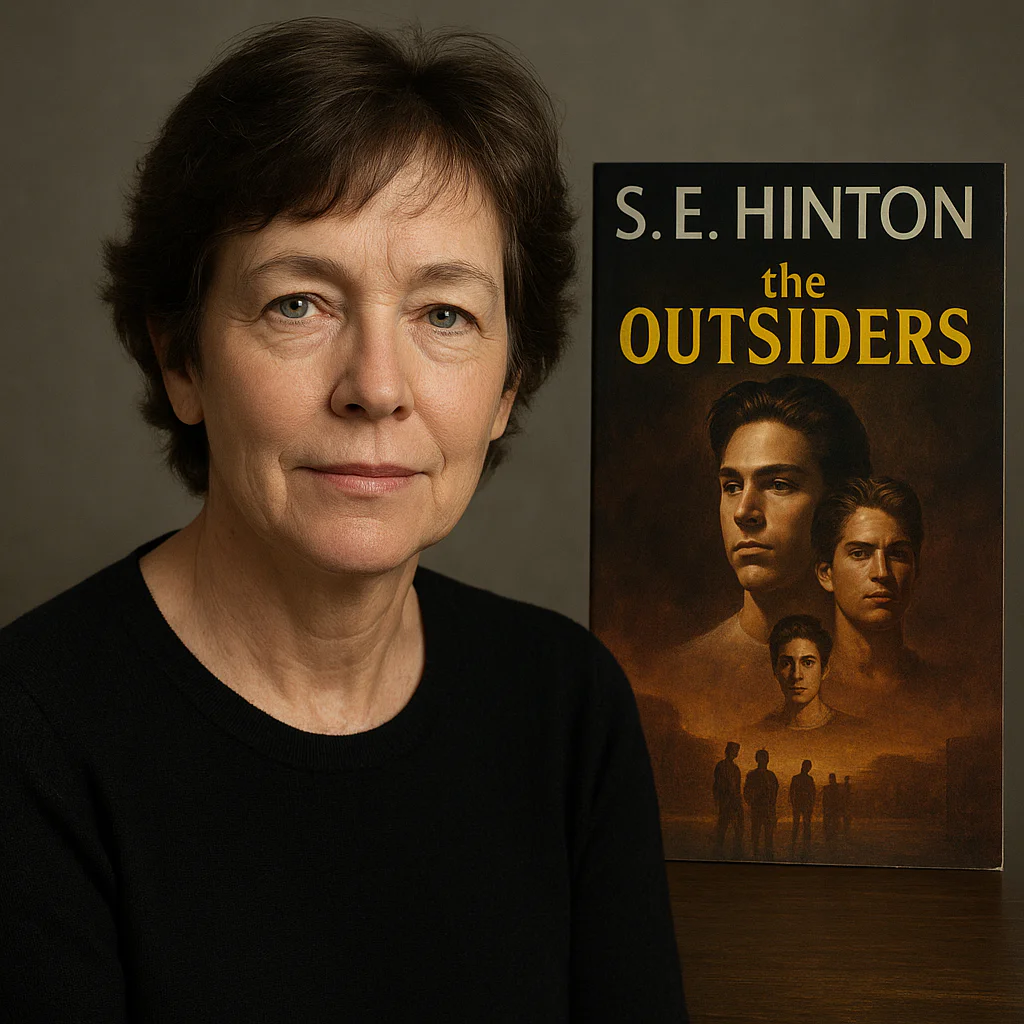
The author of The Outsiders is S.E. Hinton, the pen name of Susan Eloise Hinton. She began writing the novel as a teenager in Tulsa, drawing on the social divisions she observed—not copying a true story from her own life.
Published in 1967, The Outsiders helped make realistic, emotionally complex stories about teenagers a lasting part of young adult fiction. Hinton’s publisher suggested initials for her byline, hoping reviewers would focus on the book rather than assume a woman couldn’t convincingly write about teenage boys.
Key Takeaways
- S.E. Hinton wrote The Outsiders. Her full name is Susan Eloise Hinton.
- She began the novel as a teenager in Tulsa, Oklahoma; it was published in 1967.
- The story is fiction, inspired in part by social groups and tensions Hinton observed—not a direct account of her life.
- Hinton used initials partly to avoid gender bias among reviewers.
- Her other books include That Was Then, This Is Now, Rumble Fish, and Tex.
Table of Contents
- ⚡️ Quick Tips and Facts: Who Wrote The Outsiders?
- 📚 S.E. Hinton’s Background and the Story Behind The Outsiders
- Early Life in Tulsa, Oklahoma
- How Susan Eloise Hinton Became S.E. Hinton
- The Real-Life Inspiration for the Greasers and Socs
- ✍️ How S.E. Hinton Wrote The Outsiders
- Writing the Novel as a Teenager
- Publication, Reception, and Lasting Success
- Why Hinton Used Her Initials
- 📖 What The Outsiders Is About
- A Brief Plot Overview
- Ponyboy Curtis, the Greasers, and the Socs
- Major Themes and What the Novel Says About Belonging
- Why the Book Still Resonates with Readers
- 📚 S.E. Hinton’s Books Beyond The Outsiders
- Young Adult Novels
- Children’s Books and Short Fiction
- Adult Fiction and Other Writing
- Memoir and Personal Reflections
- 🎬 The Outsiders Adaptations and Cultural Influence
- The 1983 Film and Its Cast
- The Broadway Musical
- The Outsiders House Museum
- The Novel’s Place in Schools and Popular Culture
- 🏆 S.E. Hinton’s Awards and Literary Legacy
- 💡 10 Writing Lessons from The Outsiders Author
- 🔎 Is The Outsiders Based on a True Story?
- 📌 Conclusion
- 🔗 Recommended Links
- ❓ FAQ
- Who is the author of The Outsiders?
- How old was S.E. Hinton when she wrote The Outsiders?
- What is S.E. Hinton’s real name?
- Why did S.E. Hinton write The Outsiders?
- What other books did S.E. Hinton write?
- Is S.E. Hinton still alive?
- Is The Outsiders appropriate for young readers?
- 📚 Reference Links
⚡️ Quick Tips and Facts: Who Wrote The Outsiders?
If you’re looking for the The Outsiders book summary, here’s the essential author fact first: S.E. Hinton wrote The Outsiders. Her full name is Susan Eloise Hinton, and she began the novel as a teenager in Tulsa, Oklahoma.
| Quick fact | Details |
|---|---|
| Author | S.E. Hinton |
| Full name | Susan Eloise Hinton |
| First published | 1967 |
| Started writing it | 1965, while she was a high school student |
| Setting | Tulsa, Oklahoma, in the 1960s |
| Genre | Young adult novel; often taught as a coming-of-age story |
| Central characters | Ponyboy Curtis and the Greasers |
| Core conflict | The Greasers’ rivalry with the wealthier Socs |
| First major screen adaptation | Francis Ford Coppola’s 1983 film |
| Why the author used initials | Her publisher hoped initials would help avoid gender bias among reviewers |
Hinton was reportedly 16 when she began writing the book and 18 when it was published. The story grew from the social divisions she observed among students at her Tulsa high school. As Hinton explained in an interview with School Library Connection, she wanted to tell the Greasers’ side rather than accept the easy labels other people gave them.
A small warning before we go further: The Outsiders may be assigned in school, but it isn’t a soft-focus story about teenage friendship. It includes violence, grief, family hardship, and tough language. Those ingredients are part of the book’s honest portrait of young people trying to find a place in a divided world.
📚 S.E. Hinton’s Background and the Story Behind The Outsiders
Early Life in Tulsa, Oklahoma
Susan Eloise Hinton was born and raised in Tulsa, Oklahoma, a city that would become the backdrop for much of her fiction. She attended Will Rogers High School, where she saw social groups and rivalries that helped spark The Outsiders. The novel’s world is fictional, but its emotional ingredients—cliques, class divisions, loyalty, and the pressure to belong—were close enough to teenage life to feel startlingly real.
Hinton has described herself as an observer. She paid attention to how people spoke, behaved, and judged one another. That habit shows up in the book: Ponyboy notices sunsets, books, and small moments of kindness even while his life is surrounded by conflict. The result is a narrator who’s more reflective than the tough image others expect of a Greaser.
Hinton later studied at the University of Tulsa. She has also spoken about working in a bookstore and an office-building elevator—jobs that gave her more opportunities to watch people. For a writer, apparently, even an elevator ride can become field research. 🚪
How Susan Eloise Hinton Became S.E. Hinton
Hinton’s publisher suggested using initials because reviewers might take a young woman’s book about teenage boys less seriously. She chose S.E. Hinton, and the name stuck. Rather than switch to her full name later, she kept the byline readers already knew.
That decision offers a useful distinction: S.E. Hinton is a pen name, but it isn’t a separate invented identity. It’s Susan Eloise Hinton’s professional name. In an interview quoted by School Library Connection, Hinton explained that she liked having a private name and a public name.
The initials may have helped the book get a fairer hearing in a male-dominated publishing culture. They also became part of the author’s public identity—proof that sometimes the best-known name on a book jacket is the one that began as a practical workaround.
The Real-Life Inspiration for the Greasers and Socs
The Greasers and Socs weren’t copied one-to-one from actual Tulsa teenagers. Instead, Hinton drew on the social divisions and group rivalries she observed. In the book, the Greasers are working-class outsiders; the Socs have money, status, and social power. Both groups contain individual people, but the labels make it dangerously easy to treat them as stereotypes.
Hinton wanted readers to understand the Greasers’ point of view. As reported in accounts of her career, she felt that “someone should tell their side of the story,” so people might be less quick to judge. The novel pushes readers to look past hairstyles, clothes, and neighborhood reputations—but it doesn’t pretend that empathy instantly erases violence or inequality.
| Element in the novel | What it suggests |
|---|---|
| Greasers | Working-class identity, close-knit loyalty, and social exclusion |
| Socs | Wealth, status, and privilege, without making every character identical |
| The rivalry | How group identity can turn prejudice into conflict |
| Ponyboy’s narration | A reminder that people are more complicated than their labels |
| The sunset | A shared experience that briefly crosses the social divide |
The sunset scene has become one of the book’s most memorable symbols. The point isn’t that the Greasers and Socs are secretly the same in every way. It’s that they can look at the same sky—and that shared humanity matters even when their circumstances don’t match.
✍️ How S.E. Hinton Wrote The Outsiders
Writing the Novel as a Teenager
Hinton began writing The Outsiders in 1965, while she was still in high school. She wanted fiction that took teenagers seriously. In a Writer’s Digest interview, she recalled that the books available to her didn’t reflect the teenage experiences she saw around her. The gap between polished, distant stories and actual youth life was wide enough to drive a novel through.
One useful detail often lost in the “teenage author” headline: The Outsiders wasn’t the first book Hinton had ever written. She had practiced on earlier manuscripts, which she didn’t try to publish. That’s an encouraging lesson for aspiring writers: a first published book may not be a first attempt.
A practical version of Hinton’s process looks like this:
- Notice what feels missing. Hinton wanted a realistic story about teenagers rather than a cleaned-up version of adolescence.
- Start with people and relationships. Ponyboy’s voice and his bond with his brothers give the story its emotional center.
- Use a specific setting. Tulsa provides the novel with a recognizable social landscape.
- Keep writing before judging the work. Drafting allows the story to reveal what it is about.
- Revise toward the story you mean to tell. Hinton’s advice to writers includes resisting the feeling that an imagined audience is looking over your shoulder.
That last point is especially relatable. Most writers know the imaginary critic who appears halfway through a sentence, wearing spectacles and making disapproving noises. Hinton’s counsel is to keep the story moving instead of trying to solve every possible reader reaction in advance.
Publication, Reception, and Lasting Success
Viking Press published The Outsiders in 1967. The manuscript reached an agent through a friend’s mother, and the publisher that ultimately accepted it was reportedly the second publisher to see it. That’s a good reminder that a rejection—or a quiet first response—doesn’t predict a book’s future.
The novel became a landmark in young adult fiction, but its success built over time. In Writer’s Digest’s interview with Hinton, she described the book’s endurance as a matter of readers connecting with the emotions, even as “the names of the group change” and “the uniforms change.” That’s a more convincing explanation than claiming every new generation simply likes the same haircuts.
Hinton herself has described The Outsiders as the book that helped launch the young adult category. That description captures its influence, but it’s best understood as shorthand: YA literature had predecessors, and no single novel created the entire field. Hinton’s book helped establish the idea that stories about teenagers could be serious, emotionally complex, and written with young readers in mind.
For more reading in this vein, browse our Book Summaries and Classic Literature sections.
Why Hinton Used Her Initials
The initials were a publishing choice shaped by gender expectations. Her publisher believed that male reviewers might be less receptive to a book about boys if they knew a woman had written it. Whether that assumption was fair is easy to answer: no. Whether it reflects a real bias in publishing at the time is another matter—and it helps explain the decision.
Hinton kept the initials after the book’s success because readers recognized them. The byline also let her preserve a little privacy while maintaining a public writing career. It’s a small detail with a larger message: the name on a cover can reveal as much about the publishing world as it does about the author.
📖 What The Outsiders Is About
A Brief Plot Overview
Ponyboy Curtis is a thoughtful teenager growing up with his older brothers, Dary and Sodapop. He belongs to the Greasers, a close-knit working-class group whose members clash with the wealthier Socs. After a violent encounter changes everything, Ponyboy and his friend Johnny are forced into a chain of events involving fear, loyalty, tragedy, and difficult choices.
That’s the broad outline; the book’s power comes from how Ponyboy interprets what happens. He’s not a detached action hero. He’s observant, uncertain, and still trying to understand the adults and teenagers around him. The full book summary covers the plot in more detail.
Spoiler-light reading map:
- Opening: Ponyboy introduces his family, friends, and the rivalry between the Greasers and Socs.
- Rising conflict: A confrontation leads to consequences that force Ponyboy and Johnny to leave town.
- Turning point: A crisis puts several characters in danger and shifts how others see them.
- Aftermath: Loss and public attention complicate the characters’ lives.
- Ending: Ponyboy begins to transform his experience into the story we have been reading.
Ponyboy Curtis, the Greasers, and the Socs
Ponyboy’s name may be memorable, but his defining trait is his attention to other people. He likes books, movies, and sunsets; he also feels the pressure of violence and poverty. That mix keeps him from becoming a simple symbol of “the good Greaser.” He has blind spots, fears, and moments of anger, as real narrators should.
| Character or group | Role in the story | What to watch for |
|---|---|---|
| Ponyboy Curtis | Narrator and younger Curtis brother | His changing understanding of identity and empathy |
| Dary Curtis | Ponyboy’s oldest brother and guardian | The difference between strictness and lack of love |
| Sodapop Curtis | Ponyboy’s middle brother | The emotional bridge between the brothers |
| Johnny Cade | Ponyboy’s vulnerable, loyal friend | The cost of living with fear and abuse |
| Dallas “Dally” Winston | Tough Greaser with a hard-edged reputation | How protection and pain can coexist |
| Cherry Valance | Soc who challenges the group divide | The limits and possibilities of cross-group understanding |
| The Greasers | Ponyboy’s working-class community | Loyalty, solidarity, and the risks of group identity |
| The Socs | Wealthier teenagers on the opposing side | Privilege, peer pressure, and individual differences |
The book doesn’t ask us to decide that one side is pure and the other is rotten. It asks a harder question: what happens when group labels become more powerful than our ability to see individuals?
Major Themes and What the Novel Says About Belonging
The Outsiders is often taught as a story about class conflict, but its emotional range is wider.
- Belonging: The Greasers give one another a sense of family, especially when home life is difficult.
- Class and privilege: Money shapes how characters are treated, but it doesn’t dictate every choice or feeling.
- Identity: Ponyboy wrestles with the difference between who he is and what others assume he is.
- Violence and consequences: Fights don’t resolve the social divide; they deepen the damage.
- Family: The Curtis brothers care for one another, even when grief and miscommunication pull them apart.
- Empathy: Seeing another person clearly is not the same as excusing harmful behavior.
- Youth and change: The characters are still becoming themselves, which makes their choices consequential and sometimes painfully impulsive.
Hinton’s fiction doesn’t arrive with a tidy moral printed in bold at the end. The reader has to sit with contradictions: loyalty can protect people and trap them; toughness can hide vulnerability; privilege doesn’t remove pain, but it can change how pain is handled.
Why the Book Still Resonates with Readers
The social groups in the novel may feel specific to its setting, but the feelings are familiar: wanting to be understood, being judged by appearance, defending friends, and wondering whether a different group would accept you. In her Writer’s Digest interview, Hinton explained the book’s lasting appeal through the persistence of those emotions even when fashions and group names change.
Readers also respond to Ponyboy’s voice. He can be tough without becoming emotionally closed off. He notices beauty in moments when the plot is at its bleakest, which gives the novel a kind of oxygen. That’s one reason it can work for both classroom discussion and private reading.
For a broader look at how books travel to the screen, explore our Book-to-Film Adaptations and Book Reviews.
📚 S.E. Hinton’s Books Beyond The Outsiders
Hinton’s career includes young adult novels, books for children, adult fiction, and screenwriting. Her books often return to Oklahoma settings and young characters, but they aren’t all variations one story. The names, ages, and conflicts change; so does the mood.
| Book | Publication year | Category | A useful starting point |
|---|---|---|---|
| The Outsiders | 1967 | Young adult | Class, friendship, identity |
| That Was Then, This Is Now | 1971 | Young adult | Friendship and changing loyalties |
| Rumble Fish | 1975 | Young adult | Brotherly ties and troubled identity |
| Tex | 1979 | Young adult | Family strain and growing up |
| Taming the Star Runner | 198 | Young adult | A teenager’s connection with an older mentor |
| Big David, Little David | 1995 | Children’s book | A playful sibling story |
| The Puppy Sister | 1995 | Children’s book | A family story inspired by a dog |
| Hawkes Harbor | 2004 | Adult fiction | A darker, more mature novel |
| Some of Tim’s Stories | 2007 | Adult fiction | Short stories for adult readers |
Young Adult Novels
After The Outsiders, Hinton published That Was Then, This Is Now, Rumble Fish, Tex, and Taming the Star Runner. The first four are sometimes discussed together because they share Oklahoma settings and overlapping aspects of Hinton’s fictional world. That doesn’t mean you need a character map and a red string board to read them: each can be approached as its own story.
- That Was Then, This Is Now explores friendship as people change and their values begin to diverge.
- Rumble Fish focuses on a teenager’s difficult relationship with his older brother and his own reputation.
- Tex centers on brothers facing the uncertainty of family life.
- Taming the Star Runner follows a young person drawn into the world of an older, troubled writer.
If The Outsiders is your entry point, That Was Then, This Is Now is a natural next read. If you’re most interested in Hinton’s more introspective characters, try Rumble Fish.
Children’s Books and Short Fiction
Hinton also wrote for younger readers. Big David, Little David and The Puppy Sister let her work in a lighter register than the books most readers associate with her name. The Puppy Sister drew on family life and a dog, showing that not every story has to involve a gang rivalry or a life-altering crisis.
Her short-story collection Some of Tim’s Stories is aimed at adult readers. It’s a useful reminder that Hinton’s career didn’t stay inside the boundaries of one age category—or one famous book.
Adult Fiction and Other Writing
Hawkes Harbor is Hinton’s adult novel, with a darker and more unusual tone than her best-known young adult work. She also worked on screenplays and collaborated with filmmaker Francis Ford Coppola on the screenplay for Rumble Fish. Hinton’s experience with film included more than simply seeing her books adapted; she participated in parts of the filmmaking process and made cameo appearances in adaptations.
Readers who want the full list of her published work can consult the author’s official website and the Encyclopaedia Britannica biography of S.E. Hinton.
Memoir and Personal Reflections
Hinton is notably private, and she has not built her reputation around a conventional memoir. Interviews and author profiles offer glimpses into her approach to writing, reading, and teaching, but they should not be confused with a complete autobiographical account.
That separation suits the distinction she has described between a private self and a public author name. We can learn a lot about how Hinton thinks as a writer without treating every fictional event as a disguised diary entry. She has said that The Outsiders is not autobiographical; its emotional realism comes from observation and imagination, not a direct retelling of her own life.
🎬 The Outsiders Adaptations and Cultural Influence
The 1983 Film and Its Cast
Francis Ford Coppola directed the 1983 film adaptation of The Outsiders. Its cast includes C. Thomas Howell as Ponyboy Curtis, Matt Dillon as Dallas Winston, Ralph Machio as Johnny Cade, Patrick Swayze as Darel Curtis, Rob Lowe as Sodapop Curtis, Emilio Estevez as Two-Bit, Tom Cruise as Steve, and Diane Lane as Cherry Valance.
The movie introduced the story to audiences who might not have picked up the book. It also gave The Outsiders a long screen afterlife, sometimes so strong that people remember the film before the author. In an interview, Hinton recalled being asked whether the novel was “the movie with C. Thomas Howell.” Fair enough: that cast is hard to forget.
| Book | 1983 film |
|---|---|
| Ponyboy’s narration gives direct access to his reflections | The film relies on performance, images, and voice-over |
| Readers can pause over the novel’s language | The film compresses events into a shorter runtime |
| Hinton controls the narrative voice | Coppola’s direction shapes the screen interpretation |
| The novel encourages personal visualization | The movie supplies a particular visual world |
The film is an adaptation, not a replacement. We recommend reading the book first if you want Ponyboy’s full interior life, then watching the film to see how Coppola translates the story’s groups, mood, and memorable scenes to screen.
The Broadway Musical
The Outsiders was also adapted as a Broadway musical, bringing the story into a different performance form. A stage production can make the group dynamics and physical conflict immediate, while music gives characters another way to express emotion. The adaptation is a fresh interpretation rather than a scene-by-scene substitute for Hinton’s novel.
To learn about current productions and official materials, check the Broadway production page. Availability and casting can change, so the official listing is the best place for up-to-date details.
The Outsiders House Museum
Tulsa’s Outsiders House Museum preserves the house used in the 1983 film. The building has become a destination for fans interested in the movie’s production and the story’s Tulsa connections. Visit the Outsiders House Museum’s official website for visitor information and exhibits.
The museum is a film-related site, not the Curtis family’s real home. That distinction matters: the story and characters are fictional, while the filming location is a real place with a real history.
The Novel’s Place in Schools and Popular Culture
The Outsiders has remained a frequent school reading choice because it gives students concrete material to discuss: narrative voice, characterization, class, violence, family, and empathy. It also offers an unusually accessible point of entry into literary analysis. You can talk about the sunset as a symbol without needing to pretend every sentence is an archaeological puzzle.
The book has faced challenges and objections, often connected to language and violence. Hinton has argued that difficult content can create opportunities for discussion between young readers and adults. That doesn’t mean every family or classroom will make the same choice. It means the most productive conversation asks what the content does in the story, what readers may find upsetting, and how a trusted adult can help contextualize it.
For thoughtful discussion, readers can compare the novel, the film, and classroom responses through our Book-to-Film Adaptations collection.
🏆 S.E. Hinton’s Awards and Literary Legacy
Hinton received the Margaret A. Edwards Award from the American Library Association in 198, recognized for her contribution to writing for teenagers. The award honored The Outsiders, That Was Then, This Is Now, Rumble Fish, and Tex. Details about the award and its purpose are available from the American Library Association.
Her legacy is larger than one bestselling novel. Hinton helped show that young adult fiction could portray teenagers’ lives without talking down to them or sanding away the difficult parts. That influence can be seen in the confidence with which later writers center young narrators, social pressures, and emotionally serious questions.
| Part of Hinton’s legacy | Why it matters |
|---|---|
| Teen-centered narration | Young characters can carry complex stories |
| Realistic conflict | Books for young readers can address violence, grief, and inequality |
| Strong reader connection | A clear voice can make literary themes accessible |
| Screen adaptations | The story reached audiences beyond the page |
| Continued school readership | Generations of students encounter the novel in classrooms |
Awards help mark a career, but the most telling measure may be how often readers still ask who wrote the book—and then go looking for Hinton’s other work.
💡 10 Writing Lessons from The Outsiders Author
Hinton’s writing advice is refreshingly practical. It’s less “wait for inspiration beneath a full moon” and more “read, write, and keep going.” In Writer’s Digest’s collection of Hinton’s advice, she offers lessons grounded in her own work.
- Read constantly. Hinton’s simple formula for becoming a writer was to read often and then write.
- Write the story you actually care about. Don’t reshape every scene to satisfy an imaginary audience.
- Treat early work as practice. Hinton wrote earlier manuscripts before the book she published first.
- Keep going through a block. A small daily writing goal can feel less impossible than waiting for a perfect day.
- Begin with characters, not a list of issues. Let a person and their story carry themes.
- Know more about characters than the reader sees. Private details can make a fictional person feel complete, even if they never appear on the page.
- Let the story move. Don’t stop every few lines to label theme in giant flashing letters.
- Notice the world around you. Conversations, habits, jobs, and small reactions are rich material for fiction.
- Be patient with success. The book’s audience grew over time, not in a single overnight burst.
- Accept that your perspective shapes the story. Writers bring parts of themselves to their characters, even when the plot is invented.
Here’s the deeper point: Hinton’s advice isn’t a magic recipe for publishing success. It’s a reminder that craft comes from attention and repetition. If you’re writing, the useful question isn’t “Am I brilliant yet?” It’s “What can I notice, and what can I put on the page today?”
The first YouTube video embedded above the article, “Novelist S.E. Hinton on Crafting The Outsiders,” features Broadway.com Editor-in-Chief Paul Wontorek talking with Hinton about the novel. It’s a helpful companion if you’d like to hear the author discuss her work in her own words.
🔎 Is The Outsiders Based on a True Story?
No. The Outsiders is a work of fiction, not an autobiographical account. Hinton drew on social divisions and teenage experiences she observed in Tulsa, but Ponyboy, Johnny, Dallas, and the events of the novel are fictional.
This is where sources can seem to disagree. Some descriptions say the book was “inspired by” Hinton’s high school experience, while Hinton has said it is not autobiographical. Those claims are compatible: inspiration is not the same as a literal retelling. The setting and social atmosphere grew from things she noticed; the plot and characters were shaped through fiction.
For verification, see Hinton’s interview with School Library Connection, which discusses her observations and the novel’s relationship to her life, alongside the author information on S.E. Hinton’s official website.