Support our educational content for free when you purchase through links on our site. Learn more
Who Was the Killer in *Where the Crawdads Sing*? 🐚

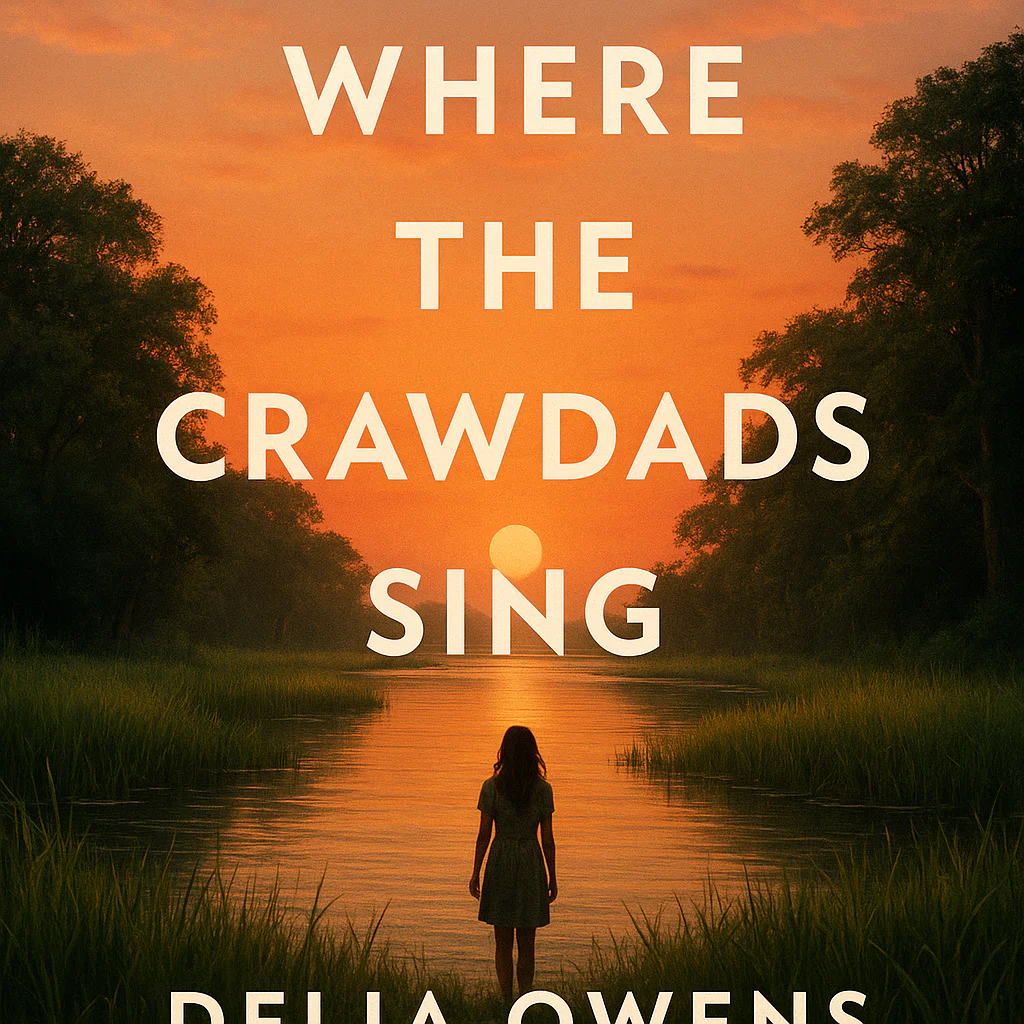
Kya Clark killed Chase Andrews, though the jury finds her not guilty and the truth emerges only after her death. So, who was the killer in Where the Crawdads Sing book? The novel’s ending points to Kya through a hidden shell necklace, a revealing poem, and Tate’s final decision to protect her secret.
That twist makes the ending more than a simple whodunit. The trial leaves reasonable doubt, while the clues Tate finds later reveal what the courtroom could not prove—and leave readers weighing survival, justice, and loyalty.
Key Takeaways
- Kya is the killer, but her guilt is revealed through clues after her death.
- The jury acquits Kya because the prosecution cannot prove its case beyond reasonable doubt.
- The shell necklace and firefly poem lead Tate to understand what happened to Chase.
- Tate hides the evidence, leaving Kya’s secret—and the moral questions around it—undisturbed.
Table of Contents
- ⚡ Quick Tips and Facts
- ⚠️ Spoiler Warning: The Ending of Where the Crawdads Sing
- 🌿 Background: Delia Owens’s Novel and the Marsh Girl
- Who Was the Killer in Where the Crawdads Sing? The Novel’s Answer
- What Happened to Chase Andrews?
- How Kya Was Accused of Murder
- The Evidence Against Kya—and the Case for Her Innocence
- How Kya Could Have Killed Chase and Avoided Detection
- The Bus Trip, the Alibi, and the Disguise
- The Missing Shell Necklace
- The Poem That Reveals the Truth
- Why Kya Killed Chase: Motive, Fear, and Survival
- Was Tate Involved in Chase’s Death?
- The Trial and Verdict: Why Kya Was Acquitted
- What the Prosecution Argued
- How Tom Milton Built the Defense
- Why the Jury Found Kya Not Guilty
- The Ending Explained: What Tate Finds After Kya’s Death
- Book vs. Movie: Is the Killer Revealed the Same Way?
- What the Murder Mystery Says About Justice and Survival
- Conclusion
- Recommended Links
- FAQ
- Does Kya kill Chase in the book?
- How does Kya kill Chase Andrews?
- Why does Kya kill Chase?
- Does Tate know Kya killed Chase?
- Is Kya convicted of murder?
- Does the movie change who killed Chase?
- Reference Links
⚡ Quick Tips and Facts
Spoilers ahead: The novel’s final pages reveal that Kya Clark killed Chase Andrews. She is acquitted at trial, but after Kya dies, Tate discovers evidence she had hidden. For a fuller plot recap, see our Where the Crawdads Sing book summary.
| Question | Short answer |
|---|---|
| Who killed Chase Andrews? | Kya Clark, although the court does not convict her. |
| How does the novel reveal it? | Tate finds Chase’s shell necklace among Kya’s belongings, along with a poem that points to the killing. |
| Why did she do it? | Chase had abused and threatened her; the book frames her choice as a desperate act of survival. |
| How did she kill him? | The ending strongly implies she lured him to the fire tower and pushed him through its open grate. |
| Was Kya found guilty? | No. The jury finds her not guilty because the prosecution cannot prove its case beyond reasonable doubt. |
| Does Tate expose her? | No. He destroys evidence and keeps her secret. |
The key distinction: the trial’s verdict is not the novel’s final answer. Kya is legally acquitted; the posthumous clues reveal what the story wants readers to infer. 🐚
⚠️ Spoiler Warning: The Ending of Where the Crawdads Sing
This discussion covers the murder, trial, and final revelation in Delia Owens’s novel. If you have not finished the book, stop here and return after the last chapter.
One reason readers debate the ending is that the book does not give us a neat confession scene. Instead, Owens lets the courtroom establish reasonable doubt, then gives Tate—and us—clues that change the meaning of Kya’s past. That shift is part of what makes the ending linger: the answer is clear enough to be persuasive, but the exact mechanics remain partly imagined.
🌿 Background: Delia Owens’s Novel and the Marsh Girl

Delia Owens’s 2018 novel follows Kya Clark, a girl abandoned by her family and left to grow up largely alone in the marshes of coastal North Carolina. The story alternates between Kya’s coming-of-age and the investigation into the death of Chase Andrews, a popular local man whose body is found near a fire tower.
The town’s nickname for Kya—“the Marsh Girl”—does more than mark her as an outsider. It shapes how people interpret her. Some see her as mysterious and dangerous; others see a resilient young woman who knows the marsh better than anyone. That bias matters when the murder investigation begins.
For more reading on popular titles, browse our book summaries and book reviews.
Two timelines, one murder mystery
| Story thread | What it follows | Why it matters |
|---|---|---|
| Kya’s life in the marsh | Her abandonment, education, relationships, and work as a naturalist | Shows why she distrusts people and values self-reliance |
| Chase’s death and the trial | The discovery of his body, the investigation, and Kya’s prosecution | Encourages readers to weigh evidence before the final reveal |
The novel’s structure is a little like watching a tide come in: each timeline adds details, and what seemed settled shifts again.
Who Was the Killer in Where the Crawdads Sing? The Novel’s Answer
Kya killed Chase Andrews. The book confirms this after Kya’s death, when Tate discovers the shell necklace Chase once wore and a poem that points toward the murder. The trial never establishes her guilt; the reader’s conclusion comes from the private evidence she left behind.
This distinction resolves the apparent contradiction between “Kya was acquitted” and “Kya was the killer.” A not-guilty verdict means the prosecution did not prove guilt to the jury’s legal standard. It does not necessarily mean the defendant was innocent.
What Happened to Chase Andrews?
Chase’s body is found below a fire tower. Investigators focus on the tower because the scene suggests he may have fallen, but they suspect the fall was not an accident. Kya becomes a suspect because she had a relationship with Chase, had reason to resent him, and knew the marsh intimately.
Her relationship with Chase turns from romance—or what she hopes is romance—into manipulation and danger. He is engaged to another woman, and when Kya rejects his advances, he becomes violent. The novel presents this history as central to understanding both the motive and the limits of the town’s willingness to believe her.
How Kya Was Accused of Murder
The investigation draws on several kinds of circumstantial evidence:
- Motive: Kya had a painful history with Chase and reason to fear him.
- Opportunity: She knew the marsh and could move through it without attracting much attention.
- Witness accounts: Some witnesses describe a person who may have been Kya near relevant places, but their identifications are uncertain.
- Physical clues: The prosecution presents fibers and details from the scene, while the defense questions how reliably they connect Kya to the crime.
- Social prejudice: The town’s assumptions about the isolated “Marsh Girl” make suspicion easier to sustain than proof.
The case feels persuasive when all the clues are stacked together. Under cross-examination, however, individual pieces woble. That difference—between a compelling suspicion and reliable proof—is the trial’s central tension.
The Evidence Against Kya—and the Case for Her Innocence
Shortform’s ending analysis describes how the defense challenges the prosecution’s timeline and witnesses. In its account, a witness who says he saw Kya near Chase concedes he may have mistaken what he saw, while other identifications are uncertain. The defense also questions the significance of fibers and the possibility that environmental conditions altered the scene.
| Evidence or claim | Prosecution’s interpretation | Defense’s challenge |
|---|---|---|
| A witness says he saw Kya near Chase | Kya threatened or confronted Chase | The witness’s interpretation and certainty can be questioned |
| Fibers on clothing | Fibers connect Kya to the crime | Their age and significance are disputed |
| The fire tower scene | The circumstances suggest foul play | A fall could be accidental, and the environment may have altered traces |
| Possible travel sightings | Kya could have returned to the marsh in time | Descriptions and identifications are not conclusive |
| Kya’s knowledge of the marsh | She could move unseen | Knowledge of the terrain is not proof she committed murder |
The prosecution offers a coherent theory. The defense does not need to prove who else killed Chase; it needs to show that the evidence is not strong enough to convict Kya. That is why the trial verdict and the ending’s revelation can coexist.
How Kya Could Have Killed Chase and Avoided Detection
The book’s ending supports a likely explanation, not a minute-by-minute forensic reconstruction. Tate imagines how Kya could have traveled, disguised herself, lured Chase to the tower, and escaped. Those details are inference, guided by the clues he finds and by what he knows about Kya.
The Bus Trip, the Alibi, and the Disguise
At trial, the defense argues that Kya was away from the marsh when Chase died. Witness testimony about buses and a possible disguise complicates the timeline: someone resembling Kya may have traveled through the area, but no identification is definitive enough to settle the question.
A plausible sequence, reconstructed from the novel’s clues, is:
- Kya leaves the area, creating the appearance that she could not have been at the tower.
- She travels under disguise, making recognition less likely.
- She returns at night, when the marsh offers cover and familiar routes.
- She meets Chase at the fire tower, where the setting provides an opportunity for the fatal fall.
- She leaves little usable evidence, aided by darkness, water, and the uncertainty of the investigation.
That sequence explains the story’s logic, but the text deliberately leaves room between evidence and certainty. We should not mistake Tate’s reconstruction for an eyewitness account.
The Missing Shell Necklace
The necklace is the most tangible clue in the ending. Kya had given Chase a shell necklace, and after his death it is missing from him. Tate later finds it hidden among Kya’s belongings.
That discovery is powerful because the object connects Kya directly to Chase and to the private story behind the public trial. It does not, by itself, prove exactly how he died. In combination with the poem and Tate’s understanding of Kya, however, it strongly confirms the novel’s intended answer.
The Poem That Reveals the Truth
Kya publishes nature writing under the name Amanda Hamilton. Tate finds a poem that uses the behavior of fireflies as a metaphor for attraction and death. The poem’s image of a lure leading a male firefly to destruction echoes Kya’s final meeting with Chase.
Metro’s ending explainer highlights lines that suggest she lured Chase to the tower and sent him falling. Read alongside the necklace, the poem makes the ending feel less like a random twist and more like a secret Kya encoded in her work.
Why Kya Killed Chase: Motive, Fear, and Survival
Kya kills Chase because she believes he will continue to threaten and hurt her. After she learns he is engaged and rejects him, he becomes violent; the novel shows her fear of being trapped again in a situation where nobody will protect her. Her choice is not presented as simple revenge. It is a chilling calculation shaped by abuse, isolation, and a belief that ordinary justice will fail her.
That explanation does not make murder harmless or morally uncomplicated. It does, however, make the reader confront the gap between what the law can prove and what a vulnerable person believes she must do to survive.
Screen Rant’s film-ending analysis frames Kya’s response through the novel’s predator-and-prey imagery. That reading fits the book’s recurring comparisons between human behavior and the natural world, though readers may differ on whether the metaphor explains Kya’s decision or risks making it seem inevitable.
Was Tate Involved in Chase’s Death?
No. The novel does not suggest Tate helped kill Chase. He is unaware of Kya’s secret until after her death, when he finds the necklace and poem.
Tate’s role comes afterward. Once he realizes what the clues mean, he chooses to conceal them. He destroys evidence rather than telling the authorities, protecting Kya’s reputation and preserving the private life they shared. Some readers see this as loyalty; others see it as an ethically troubling decision to hide a murder. The book leaves that discomfort intact.
The Trial and Verdict: Why Kya Was Acquitted
Kya is acquitted because the courtroom evidence leaves room for reasonable doubt. The verdict is not proof that the jury knows what happened; it is a legal judgment about whether the prosecution has established guilt to the required standard.
For context, the U.S. Courts’ explanation of the federal court system describes the prosecution’s burden to prove a criminal charge beyond a reasonable doubt. The novel’s fictional trial is set in North Carolina and should not be treated as a guide to every detail of real state criminal procedure, but the general distinction helps explain why a jury can acquit a defendant even when suspicion remains.
What the Prosecution Argued
The prosecution builds a circumstantial case around motive, opportunity, and Kya’s knowledge of the marsh. It asks the jury to see the pieces together: Kya’s troubled relationship with Chase, the suspicious circumstances of his death, and the possibility that she could travel unnoticed.
The weakness is that the story’s individual clues do not all carry equal weight. Several depend on uncertain witness accounts or interpretations of physical evidence. A persuasive narrative is not automatically conclusive evidence.
How Tom Milton Built the Defense
Defense attorney Tom Milton focuses on gaps rather than offering a complete alternative account of Chase’s death. He challenges:
- Witness reliability: Did anyone clearly identify Kya?
- The timeline: Could she have been elsewhere when Chase died?
- Physical evidence: Does it prove contact with Chase or merely allow for it?
- The scene: Could the fall have happened without a murder?
- Public bias: Is the town convicting Kya for being strange and isolated as much as for the evidence?
The strategy is effective because the defense does not have to solve the murder. It has to show that the state’s version has not been proved beyond reasonable doubt.
Why the Jury Found Kya Not Guilty
The jury acquits because the prosecution’s case, while suspicious, is not airtight. The witnesses and physical clues leave enough uncertainty for jurors to doubt whether Kya committed the murder.
This is one of the novel’s sharpest contrasts: the courtroom cannot prove Kya’s guilt, but the final chapter gives readers a reason to believe it. A verdict answers a legal question; Tate’s discovery answers the story’s mystery.
The Ending Explained: What Tate Finds After Kya’s Death
After Kya dies, Tate discovers the shell necklace and the poem among her belongings. He understands that she killed Chase, then chooses not to reveal what he has found. He destroys the evidence and lets the remaining secret disappear with the tide.
The ending is deliberately quiet. There is no arrest, confession, or final courtroom reversal. Instead, Tate becomes the last keeper of Kya’s secret. Readers are left to weigh his act: is it an expression of love, a final protection of Kya, or an unjust concealment of the truth?
| Final clue | What it suggests |
|---|---|
| Chase’s missing shell necklace | Kya retained an object that connected her to him |
| The firefly poem | Kya encoded the lure and fall in her nature writing |
| Tate’s response | He understands the implication and hides the evidence |
| The tide | The natural world absorbs the secret, echoing the book’s imagery |
If you want a visual recap of the broader controversy surrounding the author—not evidence about the fictional murder—the featured Inside Edition video discusses Delia Owens being sought for questioning in connection with a real murder investigation in Zambia. That separate news story concerns Owens, not Kya or Chase, and should not be confused with the novel’s plot.
Book vs. Movie: Is the Killer Revealed the Same Way?
The 202 film adaptation, directed by Olivia Newman and starring Daisy Edgar-Jones, preserves the central reveal: Kya killed Chase, and Tate discovers the secret after her death. The film changes how some clues are presented, making the final discovery more visual and compressing parts of the novel’s courtroom and emotional detail.
| Element | Novel | Film |
|---|---|---|
| The killer | Kya | Kya |
| When the truth emerges | After Kya’s death, through Tate’s discoveries | After Kya’s death, through visual clues Tate finds |
| Key evidence | Shell necklace and poem | Necklace and related visual evidence |
| Tate’s choice | Conceals the evidence | Leaves the secret undisclosed |
| Storytelling emphasis | Kya’s inner life and the marsh’s natural imagery | Performance, atmosphere, and visual suspense |
Screen Rant notes that director Olivia Newman wanted to retain the ending because it is central to the story. Readers who prefer the book may find that its interior access to Kya gives the final revelation more emotional context; moviegoers may appreciate how the film turns the clues into a concise visual ending. Explore more book-to-film adaptations.
What the Murder Mystery Says About Justice and Survival
The murder plot asks more than “Who did it?” It asks what happens when someone feels the justice system will not protect her. Kya’s isolation, the town’s prejudice, and Chase’s violence shape how readers judge her actions—but they do not erase the moral weight of killing him.
The book offers at least three perspectives:
- The survival reading: Kya sees no safe way to escape a dangerous man.
- The legal reading: The state fails to prove the charge, so the acquittal is justified under the burden of proof.
- The ethical reading: Tate’s concealment protects Kya but also prevents the truth from reaching the public.
Owens’s natural-world imagery gives these questions extra bite. The marsh is a refuge, a classroom, and a place where survival can look ruthless. That metaphor helps explain the novel’s emotional logic, but it does not settle whether Kya’s choice was right. We’re left with the same uneasy question the ending plants: if the law cannot protect someone, what—if anything—can justify taking justice into their own hands?