Support our educational content for free when you purchase through links on our site. Learn more
🔥 Fahrenheit 451 in a Nutshell: The Ultimate 2026 Guide

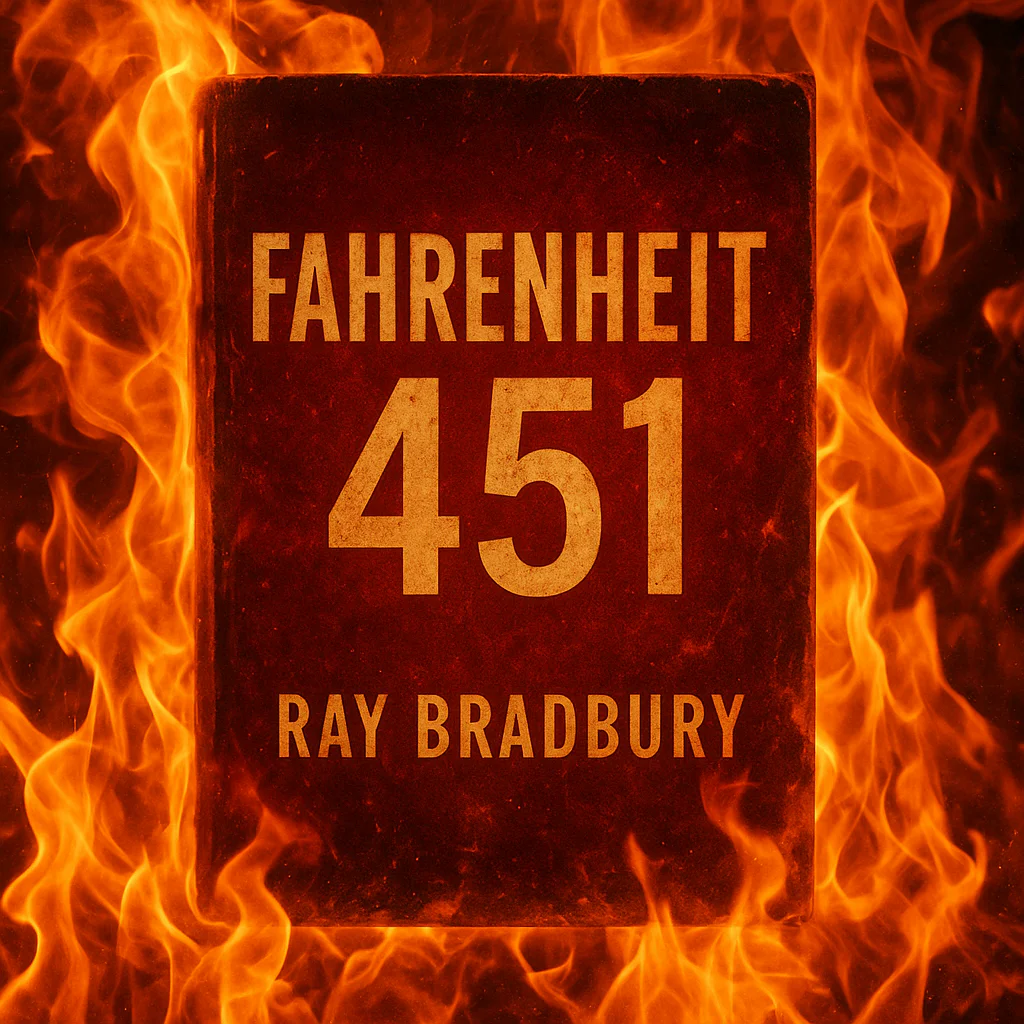
The nutshell of Fahrenheit 451 is a dystopian warning: in a future where books are banned and “firemen” burn them to enforce conformity, one man’s awakening sparks a revolution that ends in societal collapse but offers hope for rebirth through preserved knowledge. If you are wondering what is the nutshell of the book Fahrenheit 451, the answer lies in this simple truth: censorship doesn’t just come from the government; it starts when we stop reading and choose comfort over critical thought.
Ray Bradbury didn’t just write a story; he penned a prophecy while renting a typewriter in a UCLA basement for 10 cents every 30 minutes. He finished the first draft in just nine days, fueled by the fear that people were trading their minds for mindless entertainment.
Imagine a world where your TV talks to you, your earbuds never come out, and asking “Are you happy?” is a crime. That is the reality Guy Montag steps into, a place where the temperature of burning paper (451°F) is the only thing that matters.
This isn’t just a tale of fire and ash; it’s a mirror held up to our own screen-obsessed lives. As we navigate 2026, the line between Bradbury’s fiction and our reality blurs with every notification we ignore.
Key Takeaways
- The Core Message: The book argues that censorship is often self-imposed when society prioritizes happiness and conformity over truth and critical thinking.
- The Protagonist’s Arc: Fireman Guy Montag transforms from a blind enforcer of the law into a rebel who memorizes books to save human history.
- Modern Relevance: The themes of technological isolation and the decline of deep reading are more urgent today than when the book was published in 1953.
- The Symbolism: Fire represents both destruction (burning books) and rebirth (the phoenix rising from the ashes).
- The Ending: After the city is destroyed by war, a group of “Book People” survive by memorizing texts, ensuring knowledge survives for the next generation.
Table of Contents
- ⚡️ Quick Tips and Facts
- 📜 The Burning History: How Ray Bradbury Wrote Fahrenheit 451
- 🔥 The Core Essence: What is the Nutshell of Fahrenheit 451?
- 📚 Plot Breakdown: Guy Montag’s Journey from Fireman to Rebel
- 🧠 Key Themes Explored: Censorship, Technology, and the Human Soul
- 🤖 Character Analysis: Who Are the Players in This Dystopian Drama?
- 📖 Symbolism Decoded: Fire, Books, and the Mechanical Hound
- 🌍 Fahrenheit 451 in the Modern World: Why It Still Matters Today
- 🎬 Adaptations vs. Original Text: Comparing the Book to the Movie and TV Show
- 💡 7 Critical Lessons We Can Learn from Burning Books
- 🗣️ Join the Conversation: Is Your Library Safe?
- 🏆 Conclusion: The Final Word on Fahrenheit 451
- 🔗 Recommended Links: Where to Read and Discuss
- ❓ FAQ: Your Burning Questions Answered
- 📚 Reference Links: Sources and Further Reading
⚡️ Quick Tips and Facts
Before we dive into the smoke and embers of Ray Bradbury’s masterpiece, let’s get the fire started with some rapid-fire truths. If you’re looking for the nutshell of Fahrenheit 451, here is the absolute essence: It’s a dystopian tale where books are banned, “firemen” burn them, and one man’s curiosity sparks a revolution that ends in the destruction of civilization and the hope of rebirth.
But wait, there’s more to the story than just burning paper. Here are the facts you need to know to sound like a literary expert at your next book club:
- The Temperature Myth: The title refers to the temperature at which book paper catches fire and burns (451°F). However, Bradbury later admitted he might have been slightly off; modern paper actually ignites closer to 451°F only under specific conditions, but the number stuck as a powerful symbol.
- Written in a Hury: Bradbury didn’t write this in a quiet study. He penned the first draft in just nine days in the basement of UCLA’s library, renting a typewriter for 10 cents every 30 minutes. He was so rushed he finished the manuscript with only 10 cents left in his pocket!
- Not Just About Censorship: While often taught as a story about government censorship, Bradbury insisted it was actually about how people stop reading and let technology distract them until they don’t want to think anymore.
- The “Parlor Walls”: The giant television screens in the book are eerily similar to our modern wall-mounted 4K TVs and the endless scroll of social media.
- A Short Classic: As noted in Books on the Table, this novel is a perfect “short classic” that can be devoured in a single sitting, making it ideal for busy readers.
For a deeper dive into the plot mechanics, check out our dedicated book summary of Fahrenheit 451.
📜 The Burning History: How Ray Bradbury Wrote Fahrenheit 451
You might think a masterpiece like Fahrenheit 451 was the result of decades of research and a lifetime of contemplation. While Bradbury certainly had a lifetime of thoughts, the actual writing process was a frantic, caffeine-fueled sprint.
In 1950, Bradbury was a young writer struggling to make ends meet. He had already published The Martian Chronicles, but he wanted to tackle the issue of censorship and the rising tide of conformity in America. He went to the UCLA library, found a basement room with typewriters available for rent, and started typing.
“I didn’t have a typewriter. I had to rent one. I had 10 cents in my pocket. I wrote the first draft in nine days.” — Ray Bradbury
The Context of the 1950s
The 1950s in America were a time of McCarthyism, where fear of communism led to blacklists and censorship. But Bradbury wasn’t just worried about the government burning books; he was worried about people burning themselves because they preferred mindless entertainment.
He saw the rise of television and the decline of reading. He saw people becoming passive consumers of information rather than active thinkers. This fear fueled the creation of the “parlor walls” and the “Seashell radios” (earbuds) that isolate individuals in the book.
Why the Title Matters
The specific temperature of 451°F wasn’t chosen at random. Bradbury wanted a number that sounded scientific and final. It represents the point of no return. Once the paper reaches this temperature, the knowledge it holds is gone forever. It’s a metaphor for the fragility of human memory and culture.
If you want to explore how this book fits into the broader category of Classic Literature, you’ll find that its themes are more relevant today than ever before.
🔥 The Core Essence: What is the Nutshell of Fahrenheit 451?
So, you asked for the nutshell of the book Fahrenheit 451. Here it is, stripped of the smoke and mirrors:
In a future society where books are illegal and “firemen” burn them to enforce conformity, a fireman named Guy Montag begins to question his role after meeting a free-thinking neighbor. As he secretly reads books and realizes the emptiness of his life, he is hunted by his own captain, escapes the city, and joins a group of intellectuals who memorize books to preserve human knowledge for a future that has been wiped clean by war.
It’s a story about the danger of apathy and the power of critical thinking.
The Three-Act Structure in a Nutshell
- The Spark: Montag’s life is perfect until he meets Clarisse, who asks him, “Are you happy?” This question cracks his world open.
- The Fire: Montag starts stealing books, reading them, and realizing how empty his society is. He tries to convince his wife and colleagues, but they reject him. He is forced to burn his own house and flee.
- The Ashes: The city is destroyed by war. Montag finds a community of “Book People” who have memorized entire texts. They wait for the war to end so they can rebuild society with the knowledge they have saved.
This narrative arc is a perfect example of a Book Summary that captures the emotional journey of the protagonist.
But how does this story actually play out? Let’s break down the plot.
📚 Plot Breakdown: Guy Montag’s Journey from Fireman to Rebel
The plot of Fahrenheit 451 is a rollercoaster of tension, revelation, and destruction. Let’s walk through it step-by-step.
Act I: The Happy Fireman
Guy Montag is a “fireman.” In this world, firemen don’t put out fires; they start them. Their job is to burn houses that contain books. Montag loves his job. He enjoys the “sweet smell of kerosene” and the thrill of the burn.
One night, on his way home, he meets his new neighbor, Clarisse McClellan. She’s a 17-year-old who loves nature, asks deep questions, and notices things like the “man in the moon.” She asks Montag: “Are you happy?”
Montag laughs it off, but the question sticks. He realizes he isn’t happy. His wife, Mildred, is obsessed with her “parlor walls” (giant TV screens) and her “Seashell radios” (earbuds). She tries to kill herself with an overdose of sleeping pills, but she doesn’t even remember it the next day.
Act II: The Awakening
Montag starts to change. He steals a book from a house he burns. He tries to read it but finds it confusing. He seeks help from Professor Faber, a retired English professor who is terrified of the government. Faber gives Montag a two-way earpiece so they can communicate.
Montag tries to read to his wife and her friends, but they get upset and leave. He realizes that books are dangerous because they make people feel things.
Then, Captain Beatty, Montag’s boss, visits him. Beatty is a complex character who knows about books but hates them. He explains that books were banned not just by the government, but by the people who didn’t want to be offended. He gives Montag 24 hours to burn his own house.
Montag, realizing he can’t go back, kills Beatty with a flamethrower. He is now a fugitive.
Act III: The Escape and the Rebirth
The Mechanical Hound, a robotic dog that hunts down fugitives, is sent after Montag. He escapes the city and finds a group of exiles living in the woods. They are “Book People,” each of whom has memorized a book to preserve it.
Just as Montag joins them, the city is destroyed by a nuclear war. The war is mentioned briefly, almost casually, showing how disconnected the society was from reality.
The story ends with Montag and the Book People walking back toward the ruins of the city, ready to rebuild. They will use their memorized books to teach the next generation.
“There must be something in books, things we can’t imagine, to make a woman stay in a burning house; there must be something there. You don’t stay for nothing.” — Guy Montag
For more on how this story translates to other media, check out our Book-to-Film Adaptations category.
🧠 Key Themes Explored: Censorship, Technology, and the Human Soul
What makes Fahrenheit 451 a classic? It’s not just the burning books; it’s the themes that resonate across generations.
1. Censorship vs. Self-Censorship
Bradbury famously said, “You don’t have to burn books to destroy a culture. Just get people to stop reading them.” The book argues that censorship often comes from within society, not just from the government. People stop reading because they don’t want to be challenged or offended.
2. The Dangers of Technology
The technology in the book isn’t evil in itself; it’s the misuse of it. The parlor walls and Seashell radios isolate people from each other. They create a false sense of connection while actually making people lonely.
| Technology in the Book | Modern Equivalent | Impact |
|---|---|---|
| Parlor Walls | 4K Smart TVs / Streaming Services | Passive consumption, lack of critical thinking |
| Seashell Radios | Earbuds / Podcasts | Isolation, constant noise, no silence |
| Mechanical Hound | Surveillance AI / Drones | Loss of privacy, automated enforcement |
| Bassoon | Social Media Algorithms | Filtering out dissenting opinions |
3. The Importance of Memory
The “Book People” represent the idea that knowledge is not just in books; it’s in people. If we lose our ability to remember and think, we lose our humanity. The book suggests that memory is the key to survival.
4. Nature vs. Artificiality
Clarisse represents nature, while Mildred represents artificiality. The book constantly contrasts the beauty of the natural world (the deer, the rain, the moon) with the sterile, artificial world of the city.
🤖 Character Analysis: Who Are the Players in This Dystopian Drama?
Let’s meet the cast of characters who make this story so compelling.
Guy Montag
- Role: Protagonist / Fireman turned Rebel
- Arc: From a conformist who loves burning books to a seeker of truth who preserves them.
- Key Trait: Curiosity. He asks questions when everyone else is silent.
Mildred Montag
- Role: Montag’s Wife / Symbol of Conformity
- Arc: Static. She represents the society that has lost its soul.
- Key Trait: Obliviousness. She is so addicted to her screens that she doesn’t even notice her husband’s transformation.
Clarisse McClellan
- Role: Catalyst / The Free Thinker
- Arc: She disappears early in the book, but her influence is felt throughout.
- Key Trait: Authenticity. She sees the world as it is, not as society tells her to see it.
Captain Beatty
- Role: Antagonist / The Knowledgeable Oppressor
- Arc: He knows the value of books but chooses to destroy them to maintain order.
- Key Trait: Cynicism. He believes that happiness is more important than truth.
Professor Faber
- Role: Mentor / The Reluctant Rebel
- Arc: He helps Montag but is too afraid to act on his own.
- Key Trait: Fear. He represents the intellectuals who stay silent out of fear.
The Mechanical Hound
- Role: Symbol of the State’s Power
- Function: A robotic dog that hunts down dissidents.
- Key Trait: Unfeling. It represents the cold, automated nature of the regime.
📖 Symbolism Decoded: Fire, Books, and the Mechanical Hound
Symbols are the lifeblood of Fahrenheit 451. Let’s decode the most important ones.
🔥 Fire
Fire is the central symbol of the book, but it has two meanings:
- Destruction: Used by the firemen to burn books and houses.
- Rebirth: Used by the phoenix (a mythical bird that rises from its own ashes) to symbolize the hope of rebuilding society.
📚 Books
Books represent knowledge, critical thinking, and individuality. They are dangerous because they make people think for themselves.
🐕 The Mechanical Hound
The Hound represents the state’s surveillance and control. It is a machine that cannot be reasoned with, only destroyed.
🦚 The Phoenix
The phoenix is a mythical bird that burns itself and rises from the ashes. It symbolizes the cycle of destruction and rebirth. The city is destroyed, but the Book People will rise from the ashes to rebuild.
🌿 The Salamander
The salamander is a mythical creature that was believed to live in fire. It is the symbol of the firemen. It represents the idea that they can survive in the fire they create, but it’s a false sense of security.
🌍 Fahrenheit 451 in the Modern World: Why It Still Matters Today
You might be wondering: “Is this book still relevant?” The answer is a resounding yes.
The Rise of “Fake News” and Censorship
In an era of “fake news” and algorithmic echo chambers, Fahrenheit 451 feels more prophetic than ever. We are surrounded by information, but are we actually thinking?
The Distraction Economy
We live in a world of constant notifications, short-form videos, and endless scrolling. Just like Mildred, we are often too distracted to engage with deep, challenging ideas.
The Loss of Nuance
The book warns against the loss of nuance. In the world of Fahrenheit 451, books are banned because they make people feel bad or disagree with each other. Today, we see similar trends in cancel culture and the demand for “safe spaces” that avoid difficult conversations.
The Power of Memory
In a digital age where everything is stored in the cloud, we are losing our ability to remember. The Book People remind us that knowledge must be internalized to be truly preserved.
🎬 Adaptations vs. Original Text: Comparing the Book to the Movie and TV Show
Fahrenheit 451 has been adapted into film and television multiple times. How do they compare to the original text?
196 Film (Directed by François Truffaut)
- Pros: Visually stunning, captures the mood of the book.
- Cons: Changes the ending significantly. In the movie, Montag escapes to a library in the countryside, which is a different ending than the book.
2018 HBO Film (Directed by Ramin Bahrani)
- Pros: Modernized the technology, added a female fireman (Mildred becomes a fireman).
- Cons: Some critics felt it changed the core message too much. The addition of a female fireman shifts the focus from the male protagonist’s journey.
Key Differences
| Feature | Original Book | 196 Film | 2018 HBO Film |
|---|---|---|---|
| Ending | City destroyed, Book People rebuild | Montag escapes to a library | Montag escapes, but the ending is more ambiguous |
| Mildred | Wife, obsessed with TV | Wife, obsessed with TV | Fireman, Montag’s partner |
| Clarisse | Neighbor, free thinker | Neighbor, free thinker | Removed from the story |
| Tone | Hopeful | Melancholic | Darker, more cynical |
For more on how these stories translate, visit our Book-to-Film Adaptations section.
💡 7 Critical Lessons We Can Learn from Burning Books
What can we take away from this dystopian nightmare? Here are seven critical lessons:
- Question Everything: Don’t accept information at face value. Ask questions, even if they make you uncomfortable.
- Value Silence: In a world of constant noise, silence is a luxury. It allows us to think and reflect.
- Read Deeply: Don’t just skim headlines. Read books that challenge your worldview.
- Connect with Others: Technology can isolate us. Make an effort to have real, face-to-face conversations.
- Preserve Memory: Don’t rely solely on digital storage. Memorize the things that matter to you.
- Embrace Discomfort: Growth comes from discomfort. Don’t avoid books or ideas that make you feel bad.
- Hope for Rebirth: Even in the darkest times, there is hope. We can always rebuild.
🗣️ Join the Conversation: Is Your Library Safe?
We’ve covered the plot, themes, and the symbols. But now it’s your turn.
Is your library safe? Not just your physical library, but your mental library. Are you surrounded by books that challenge you? Or are you just scrolling through feeds that confirm your biases?
Think about the last time you read a book that made you uncomfortable. Did you put it down, or did you keep reading?
In the next section, we’ll wrap up our journey with a final conclusion and some recommendations for where to go next. But first, let’s see what you think. Drop a comment below and tell us: What book would you save if your house was on fire?
🏆 Conclusion: The Final Word on Fahrenheit 451

We’ve traveled through the smoke of Fahrenheit 451, from the burning houses of the past to the hopeful ashes of the future. So, what is the nutshell of the book Fahrenheit 451?
It’s a warning. A warning that if we stop reading, if we stop thinking, if we let technology distract us from the real world, we risk losing our humanity. But it’s also a message of hope. Even in the face of destruction, there is always the possibility of rebirth.
The Positives:
- Timeless Themes: The book’s warnings about censorship and technology are more relevant today than ever.
- Compelling Characters: Montag’s journey from conformist to rebel is deeply moving.
- Rich Symbolism: The use of fire, the phoenix, and the mechanical hound adds depth to the story.
The Negatives:
- Pacing: Some readers find the middle section slow, as Montag struggles with his internal conflict.
- Dated Technology: While themes are timeless, some of the technology (like the “Seashell radios”) feels a bit dated compared to our modern devices.
Our Recommendation:
If you haven’t read Fahrenheit 451, do it now. It’s a short, powerful read that will stay with you long after you finish the last page. Whether you’re a fan of dystopian fiction or just looking for a book that makes you think, this is a must-read.
For those who want to dive deeper, we recommend checking out our Book Reviews for more insights on classic literature.
🔗 Recommended Links: Where to Read and Discuss
Ready to get your hands on a copy of Fahrenheit 451? Here are some great places to find it:
- Hardcover Edition: Amazon | Barnes & Noble | Simon & Schuster Official
- Paperback Edition: Amazon | Walmart | Simon & Schuster Official
- Audiobook: Audible | Amazon
- Movie Adaptation (2018): HBO Max | Amazon Prime Video
❓ FAQ: Your Burning Questions Answered
What is the main message of Fahrenheit 451?
The main message is that censorship and conformity lead to the loss of humanity. The book argues that we must read, think, and question to remain truly human. It’s not just about government censorship; it’s about how we censor ourselves by avoiding difficult ideas.
Read more about “🔥 What Is the Main Point of Fahrenheit 451? (2026)”
What are the key themes in Fahrenheit 451?
The key themes include:
- Censorship: The banning of books and the suppression of free thought.
- Technology: The dehumanizing effects of excessive technology.
- Memory: The importance of preserving knowledge and history.
- Nature vs. Artificiality: The contrast between the natural world and the sterile, artificial world of the city.
Read more about “🔥 Fahrenheit 451 Ending Explained: Hope in the Ashes (2026)”
Who is the protagonist in Fahrenheit 451?
The protagonist is Guy Montag, a fireman who begins to question his role in society and eventually rebels against the system.
Read more about “🔥 Fahrenheit 451 Pages 1-20 Summary: The Spark That Ignites (2026)”
What happens at the end of Fahrenheit 451?
At the end, the city is destroyed by a nuclear war. Montag escapes and joins a group of “Book People” who have memorized books to preserve them. They plan to rebuild society with the knowledge they have saved.
Why was Fahrenheit 451 written?
Ray Bradbury wrote Fahrenheit 451 in response to the rising tide of censorship and conformity in the 1950s. He was concerned about the decline of reading and the rise of television, which he felt was making people passive and unthinking.
Read more about “🐷 When Was Animal Farm Written? The Shocking 1943-45 Timeline (2026)”
What is the significance of the title Fahrenheit 451?
The title refers to the temperature at which book paper catches fire and burns (451°F). It symbolizes the point of no return, where knowledge is destroyed forever.
Read more about “🔥 Fahrenheit 451 Short Summary: The Ultimate Guide (2026)”
How does Fahrenheit 451 relate to modern society?
The book relates to modern society in many ways:
- Social Media: The constant stream of information and the isolation it causes.
- Fake News: The difficulty of distinguishing truth from falsehood.
- Cancel Culture: The tendency to avoid ideas that make us uncomfortable.
- Surveillance: The rise of AI and automated enforcement.
Read more about “🐷 Why Animal Farm Still Matters: 15 Reasons It’s Vital in 2026”
📚 Reference Links: Sources and Further Reading
To ensure the accuracy of our analysis, we’ve consulted the following reputable sources:
- Ray Bradbury Foundation: Ray Bradbury Foundation
- The New York Times: Review of Fahrenheit 451
- The Guardian: Fahrenheit 451: A Classic for Our Times
- Penguin Random House: Fahrenheit 451 Official Page
- Books on the Table: January 2018 – Books on the Table
For more insights on short classics and book club recommendations, check out the Books on the Table article mentioned above, which highlights Fahrenheit 451 as a perfect choice for busy readers.