Support our educational content for free when you purchase through links on our site. Learn more
🔥 10+ Fahrenheit 451 Themes That Still Burn in 2026

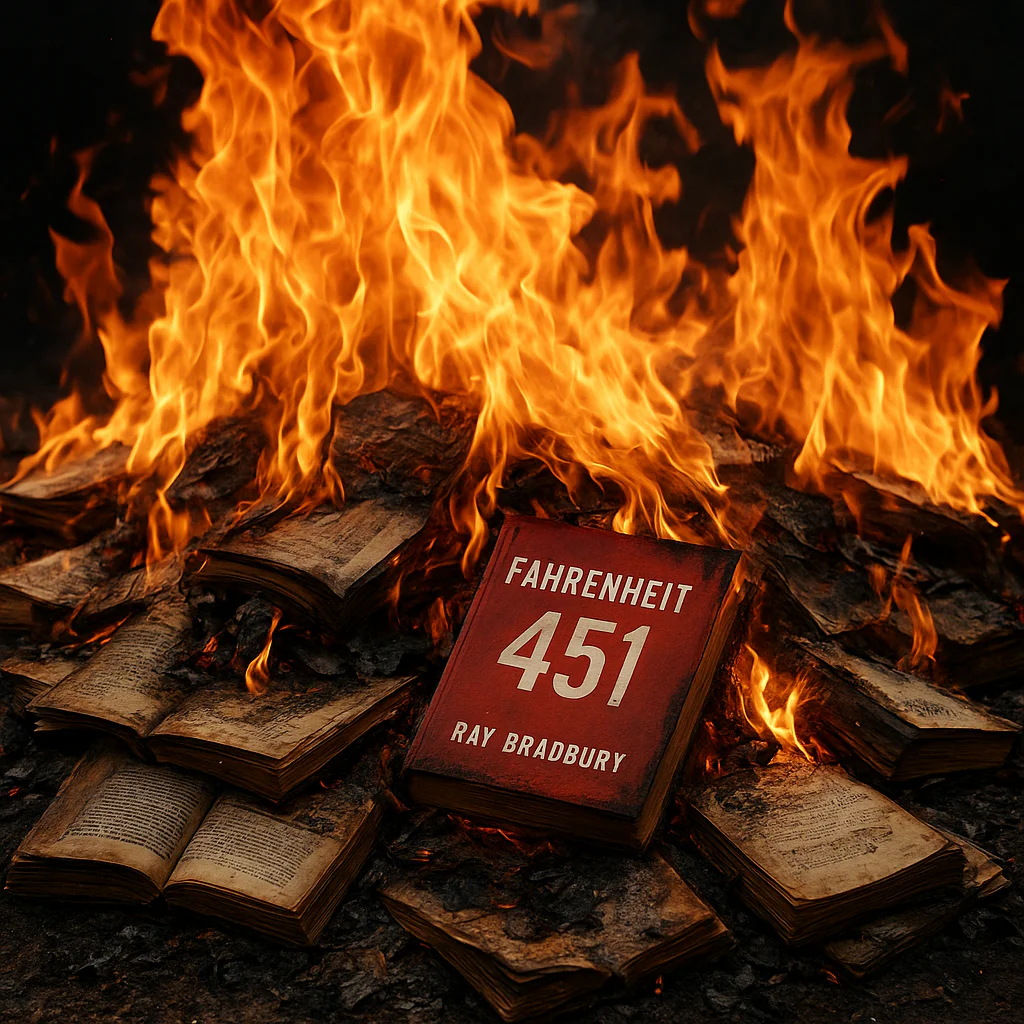
Ever feel like the world is moving so fast you can’t catch your breath, let alone think? That’s exactly the sensation Ray Bradbury captured in 1953, yet reading Fahrenheit 451 today feels less like a history lesson and more like a mirror held up to our 2026 reality. We’ve all been there: scrolling endlessly, numbing out with endless streams of content, and wondering why we feel so empty despite being “connected.” This isn’t just a story about burning books; it’s a visceral exploration of why we choose ignorance over truth and how distraction becomes a weapon.
At Book Summary Review™, we’ve dissected countless classics, but few hit as hard as this one. From the chilling mechanics of self-censorship to the desperate search for individuality in a sea of conformity, we’re unpacking every layer of Bradbury’s masterpiece. We’ll reveal how the “parlor walls” of the novel eerily predict our modern social media feeds and why the river in the story remains the ultimate symbol of rebirth. If you’ve ever wondered why a book about firemen burning books is still required reading in high schools (and why it should be on your nightstand), you’re about to find out.
Key Takeaways
- Censorship is often self-imposed: The society in Fahrenheit 451 didn’t just ban books; they stopped reading them because they preferred easy entertainment over complex thought.
- Distraction is the enemy of happiness: The novel argues that constant sensory overload prevents genuine emotional connection and critical thinking.
- Conformity kills the soul: True individuality requires the courage to ask difficult questions and stand apart from the herd, even when it’s dangerous.
- Nature offers redemption: In a world of technology, the natural world becomes the only place for clarity, healing, and the preservation of humanity.
- Action beats apathy: The story teaches that silence in the face of injustice makes you complicit; change requires the bravery to act.
Table of Contents
- ⚡️ Quick Tips and Facts
- 📜 From Page to Page: The Historical Context of Fahrenheit 451
- 🔥 The Core Conflict: Censorship and the Destruction of Knowledge
- 🤖 Conformity vs. Individuality: The Battle for the Human Soul
- 📺 Distraction vs. Happiness: The Paradox of the “Happiest” Society
- 🚶 Action vs. Inaction: When Ignorance Becomes Complicity
- 🌲 Nature vs. Technology: The Healing Power of the Natural World
- 📚 The Role of Literature: Why Books Are Dangerous (and Necessary)
- 👁️ Symbolism and Imagery: Fire, Ash, and the Phoenix Rising
- 👥 Character Analysis: How Guy Montag’s Journey Reflects Universal Themes
- 🎓 Fahrenheit 451 Themes in Modern Society: A Mirror to Our Times
- ❓ Frequently Asked Questions About Fahrenheit 451 Themes
- 📖 Recommended Links for Further Reading
- 🔗 Reference Links and Sources
- 🏁 Conclusion: Is the Fire Out, or Just Smoldering?
⚡️ Quick Tips and Facts
Welcome, fellow bookworms, to Book Summary Review™! We’re diving deep into Ray Bradbury’s chilling classic, Fahrenheit 451, a book that, despite being penned
in 1953, feels eerily prescient today. If you’ve ever wondered why books are burned or why people choose ignorance, you’re in for a treat. This isn’t just a story; it’s a stark
warning wrapped in a thrilling narrative.
Here are some quick facts to get your literary gears turning:
- Publication Year: 1953 – a post-WWII world grappling with McCarthyism and the rise of television
. - Central Protagonist: Guy Montag, a “fireman” whose job is to burn books, not put out fires. Talk about irony!
- Key Themes: Expect to grapple with censorship, the
seductive allure of distraction, the struggle between conformity and individuality, and the power (or peril) of knowledge versus ignorance. - The Title’s Significance: 451 degrees Fahrenheit is the temperature
at which paper ignites and burns. 🔥 - Bradbury’s Inspiration: A deep concern about the erosion of critical thought and the increasing influence of mass media. He even wrote an early version on a rented typewriter in the
UCLA library basement!
This novel isn’t just a read; it’s an experience that forces you to question everything. Ready to explore the embers of truth within this fiery tale? Let’s go
!
📜 From Page to Page: The Historical Context of Fahrenheit 451
Imagine
a world reeling from global conflict, where the fear of “the other” is palpable, and new technologies are rapidly reshaping daily life. Sound familiar? While Fahrenheit 451 paints a dystopian future, its roots are firmly planted in the
anxieties of Ray Bradbury’s mid-20th-century America. As experts in Classic Literature, we at Book Summary Review™ can tell you that
understanding this historical backdrop is crucial to grasping the novel’s profound insights.
Bradbury wrote Fahrenheit 451 during the Cold War era, a time marked by McCarthyism, widespread paranoia about communism, and intense societal
pressure to conform. The fear of subversive ideas was rampant, leading to blacklists and a chilling atmosphere where intellectual dissent was often suppressed. This period saw a rise in mass media, particularly television, which Bradbury viewed with a mixture of fascination and apprehension. He
worried that the passive consumption of entertainment could lead to a decline in critical thinking and a preference for superficiality over substance.
Indeed, the novel reflects “post-WII concerns (published in 1953) regarding societal intolerance and the fear
of speaking out.” Bradbury himself was alarmed by the burning of books in Nazi Germany and the Soviet Union, and the idea that a society could willingly abandon its intellectual heritage became a powerful catalyst for his story. He
saw a future where people might choose ignorance, opting for easy entertainment over challenging thought, a concept we explore further in our detailed article, 🔥 Fahrenheit 451 Pages 1-20 Summary: The Spark That Ignites.
It’s a stark reminder that the seeds of dystopia are often sown in the present, nurtured by fear, apathy
, and the choices we make about what we consume and what we ignore.
🔥 The Core Conflict: Censorship and
the Destruction of Knowledge
Ah, censorship! The burning heart of Fahrenheit 451. When we think of censorship, we often picture a tyrannical government forcibly removing dissenting voices. And while that’s certainly a component in Bradbury’s world
, the truth he reveals is far more insidious and, frankly, terrifying: the suppression of knowledge in this society “originated from self-censorship rather than initial government tyranny.”
Beatty, the fire
captain and Montag’s antagonist, chillingly explains that “people stopped reading because of cultural evolution, not forced prohibition.” Think about that for a moment. It wasn’t just Big Brother cracking down; it was
a gradual, almost imperceptible shift where society itself “gradually stopped reading as culture shifted away from intellectual engagement.” People simply chose not to engage with complex ideas, preferring instead the easy comfort of superficial entertainment
.
The Two Faces of Censorship: External Force vs. Internal Choice
| Aspect | External Censorship (Traditional View) | Internal Censorship (Fahrenheit 451’s Twist) |
|---|---|---|
| Origin | Government decree, authoritarian regime, religious dogma. | Societal apathy, cultural |
| shift, preference for ease over challenge, fear of offense. | ||
| Mechanism | Banning, burning, legal prohibition, surveillance, punishment. | Self-selection of content, avoidance of discomfort, pursuit of pleasure |
| , shortening attention spans. | ||
| Impact | Loss of freedom, suppression of dissent, limited access to information. | Intellectual stagnation, emotional numbness, inability to critically evaluate, erosion of individuality. |
| ** | ||
| Responsibility** | The oppressor (government, institution). | The individual and the collective society. |
| Example | The burning of books by firemen. | People choosing not to read |
| , demanding simpler content, embracing “parlor walls” over deep conversation. |
This idea of self-censorship is a powerful one, isn’t it? It suggests that we can, inadvertently, become our own jail
ers, willingly trading intellectual freedom for perceived peace or comfort. Bradbury warns us that if we stop seeking out diverse perspectives, if we allow our curiosity to wither, we pave the way for a world where books are burned not because they are forbidden, but because
no one cares to read them anymore. It’s a chilling thought that resonates deeply with contemporary discussions about echo chambers and information bubbles. You can explore more about how stories reflect societal values in our Book Summaries section.
🤖 Conformity vs. Individuality:
The Battle for the Human Soul
Ever felt the pressure to fit in? To just go with the flow, even if it feels a little…off? In Fahrenheit 451, this isn’t just a fleeting feeling; it’
s the bedrock of society. The culture Bradbury depicts “prioritizes pleasure-seeking and distraction over self-expression.” This isn’t a world that celebrates unique voices or unconventional thoughts. Oh no, ”
broad ranges of self-expression are not celebrated or tolerated.”
The citizens of this dystopian future are encouraged, almost mandated, to be carbon copies of each other. Hedonism and mindless entertainment are the
societal norms, creating a populace that is easily controlled because they’re too busy being “happy” to think critically. Individuals are tolerated only if they stick to pursuits requiring little thought, such as “movies, sports,
[and] racing cars.” It’s a world where thinking differently is not just frowned upon, but actively suppressed.
The Allure of the Herd Mentality
We’ve all been there,
haven’t we? That moment when it’s easier to nod along than to voice a dissenting opinion. In Montag’s world, this tendency is amplified to an extreme. The “parlor walls” (giant wall-sized televisions) constantly feed citizens a stream of shallow entertainment and government-approved narratives, effectively drowning out any independent thought. Mildred, Montag’s wife, is the epitome of this conformity, utterly absorbed in her “family” on the screens, devoid of genuine
connection or introspection.
Our team at Book Summary Review™ often discusses how this theme hits close to home. How often do we scroll through social media, seeing curated versions of reality, and feel the subtle pressure to present a similar, idealized
self? The book asks us: what are we willing to sacrifice for the comfort of belonging?
When Montag encounters Clarisse McClellan, a vibrant, curious teenager, his world begins to crack. Clarisse represents the spark of individuality that
the society tries so hard to extinguish. She asks questions, observes nature, and, most dangerously, thinks. Her presence is a powerful reminder that true individuality is not about being rebellious for rebellion’s sake, but about the courage to see
, to question, and to feel deeply. It’s a battle for the human soul, and Montag’s journey is a testament to the arduous, yet ultimately rewarding, fight for self-discovery. For more on character journeys, check out our
Book-to-Film Adaptations section, where character development is often a key focus.
📺 Distraction vs. Happiness: The Paradox of the “Happiest” Society
Ever notice how sometimes, when things get
tough, we instinctively reach for our phones, turn on the TV, or dive into a binge-watching session? In Fahrenheit 451, this impulse isn’t just a coping mechanism; it’s the very foundation of their ”
happy” society. The citizens are constantly bombarded with stimuli, living in a state of perpetual, shallow amusement designed to prevent any deep thought or genuine emotion.
Bradbury’s society is “characterized by shallowness, indifference, and conformity.”
And how do they achieve this blissful ignorance? Through a relentless barrage of specific distraction methods:
- Driving at high speeds: A frantic, sensory overload that leaves no room for reflection
. - Using “Seashell ear thimbles” (constant audio input): Imagine AirPods, but always on, always feeding you a stream of “music, talk, and more talk.”
It’s an auditory shield against quiet contemplation. - Watching room-sized, four-walled TV programs all day: The “parlor walls” are immersive, interactive entertainment systems that create a false sense of connection and reality.
Mildred is so engrossed, she barely registers Montag’s presence.
The purpose of distraction is clear: “To suppress sadness and avoid intense emotions or difficult thoughts.” Captain Beatty, ever the cynical
truth-teller, argues that “constant motion and titillation are designed to help people avoid facing reality.” They don’t want to be happy; they want to be numb. They want to avoid the mess
iness of true human experience.
The Illusion of Joy: Are We Truly Happy When We’re Always Distracted?
This is where the paradox lies. A society that claims to be the happiest is, in fact, devoid of genuine joy.
True happiness often comes from grappling with challenges, forming deep connections, and engaging in meaningful introspection – all things actively discouraged in Montag’s world.
Our team at Book Summary Review™ often finds ourselves reflecting on this. In an age of endless
scrolling, constant notifications, and personalized algorithms, are we, too, falling into the trap of mistaking distraction for contentment? It’s a question that keeps us up at night!
Speaking of creating a focused atmosphere, if you’
re looking to dive deep into a book or simply concentrate, you might find the “first YouTube video” embedded above quite helpful. It offers a calming, “haunted library” ambiance with music for relaxation, reading, or writing, a
stark contrast to the cacophony of distractions in Fahrenheit 451‘s world. You can check it out at #featured-video.
The novel forces us to confront a vital question: what
are we truly sacrificing when we choose constant distraction over quiet reflection? The answer, Bradbury suggests, is nothing less than our capacity for empathy, critical thought, and ultimately, our humanity.
🚶 Action vs. Inaction: When Ignorance Becomes Complicity
In the chilling landscape of Fahrenheit 451, the line between simply
observing injustice and actively contributing to it becomes terrifyingly thin. This novel, published in the shadow of World War II, powerfully explores the theme of “Action vs. Inaction,” reflecting “post-WII concerns…regarding societal intolerance and the
fear of speaking out.” It’s a stark reminder that silence can be as destructive as direct participation.
We see this theme vividly played out in the contrasting journeys of two key characters:
- Mont
ag: Initially a complacent cog in the firemen’s machine, Montag “learns to take action against a faltering society.” His transformation from book-burner to book-protector is a testament to the power of
awakening conscience. He moves from passive acceptance to active rebellion, driven by a growing unease with the status quo and the influence of Clarisse and Faber. - Faber: The former English professor “represents the tendency to stand by while society
deteriorates.” Faber, despite his deep love for books and knowledge, retreated into the shadows, paralyzed by fear. He acknowledges his own inaction, telling Montag, “I’ve been a coward, a lonely
man.” His character serves as a poignant warning: even those who recognize the danger can become complicit through their silence.
The Peril of Passive Observance
Bradbury’s message is clear: “The theme explores the danger
of citizens remaining silent in the face of dangerous societal changes.” It’s not enough to simply disapprove of injustice; there comes a point where inaction becomes a form of consent. The society in Fahrenheit 45
1 didn’t just happen overnight; it was built on the collective apathy of its citizens, who chose comfort and distraction over the difficult work of critical engagement.
Think about it: how many times have we seen something wrong, felt
a pang of discomfort, but then rationalized our silence? “It’s not my problem.” “What can I do?” “Someone else will handle it.” Bradbury challenges us to confront these excuses. Montag’s journey, though fraught
with danger, ultimately offers a path to redemption through decisive action. He reminds us that even a single individual, once awakened, can ignite a spark of change.
This theme is particularly relevant in our modern world, where information overload can sometimes
lead to a sense of helplessness. It compels us to ask: when does our silence become complicity, and what are we willing to do to protect the values we hold dear? For more insights into how characters grapple with moral dilemmas, check out
our Book Reviews section.
🌲 Nature vs. Technology: The Healing Power of the Natural World
In the sterile, hyper-technological world of Fahrenheit 451, nature stands as a stark, almost forgotten, counterpoint. The city
is a cacophony of speeding cars, blaring parlor walls, and the constant hum of machinery. It’s a world where people are so disconnected from their environment that they drive at breakneck speeds, barely registering the blur outside their windows. Yet
, for those few who dare to look, the natural world offers a profound sense of solace, clarity, and even a path to rediscovery.
Clarisse McClellan is our first guide to this forgotten realm. She’s the anomaly who
prefers walking, observing, and smelling the rain. She notices the dew on the grass, the changing leaves, and the man in the moon – simple wonders that are lost on the rest of society. Her connection to nature is intrinsically linked to her individuality
and her ability to think critically. “Are you happy?” she asks Montag, a question rooted in genuine human experience, not technological distraction.
The River, the Woods, and the Path to Rebirth
Montag’s escape
from the city is a literal journey into the wilderness, and it’s here that nature truly begins its transformative work. The cold, cleansing embrace of the river washes away the stench of kerosene and the ashes of his past. He floats, suspended
between his old life and a new, uncertain future, finding a moment of profound peace he hasn’t known in years.
Later, in the woods, he encounters the “Book People” – intellectuals who have memorized entire libraries to preserve them
. Their existence is intertwined with nature; they live off the land, gather around campfires, and find wisdom in the quiet contemplation that the natural world affords. This contrast is striking:
| Aspect | Technological Society |
Natural World (Montag’s Escape) |
| :——————— | :—————————————————————————————————————- | :—————————————————————————————————————————– |
| Pace of Life
| Frantic, high-speed, constant stimulation. | Slow, contemplative, observant. |
| Sensory Experience | Overload of artificial light, sound, and manufactured entertainment. |
Subtle sounds (wind, water), natural light, tactile sensations (earth, rain), natural smells. |
| Connection | Superficial, mediated through screens, isolated despite constant “company.” | Deep, genuine
connection to self, others, and the environment. |
| Knowledge Source | Controlled media, simplified narratives, government-approved “facts.” | Direct observation, personal experience, ancient wisdom preserved in memory
, introspection. |
| Emotional State | Numbness, artificial happiness, underlying anxiety. | Calm, clarity, genuine emotion, a sense of belonging and purpose. |
For Montag, the natural
world becomes a sanctuary, a place where he can finally think, feel, and begin to heal. It represents authenticity, resilience, and the enduring power of life beyond human control. It reminds us that sometimes, the greatest wisdom isn’t found in
the loudest screens, but in the quiet whisper of the wind through the trees.
📚 The Role
of Literature: Why Books Are Dangerous (and Necessary)
If you’ve ever curled up with a good book and felt your world expand, you understand, on a visceral level, why books are both dangerous and utterly necessary. In *
Fahrenheit 451*, books are the ultimate enemy, deemed so subversive that they must be incinerated. But why? What makes mere paper and ink such a threat to an entire society?
The answer, as Bradbury brilliantly illustrates, is
that books contain ideas. And ideas, dear reader, are dangerous. They provoke thought, challenge the status quo, and force us to confront uncomfortable truths. They offer multiple perspectives, historical context, and the accumulated wisdom (and folly) of
generations. This is precisely what the dystopian society fears.
The Power of the Page: What Books Offer (and Why They’re Feared)
| What Books Offer | Why They Are Dangerous to the Dystopian Society
| Books as History: They provide context, context, context! They offer a window into the past, allowing us to learn from past triumphs and mistakes. | This is dangerous because an
informed populace is a questioning populace. A society that remembers its past is less likely to repeat its mistakes – or accept the current regime’s narrative.
| Books as a Source of Truth: They present complex arguments, diverse perspectives, and challenging ideas. | This is anathema to a society built on simplified, uniform, and easily digestible information. Truth
, in this context, is whatever maintains the illusion of happiness and control.
| Books as a Source of Diversity: They expose readers to various
thoughts, cultures, and ways of life. | This is anathema to a society that values uniformity and suppresses anything that might lead to questioning or dissent. Diversity of thought is seen as a threat to social cohesion.
F