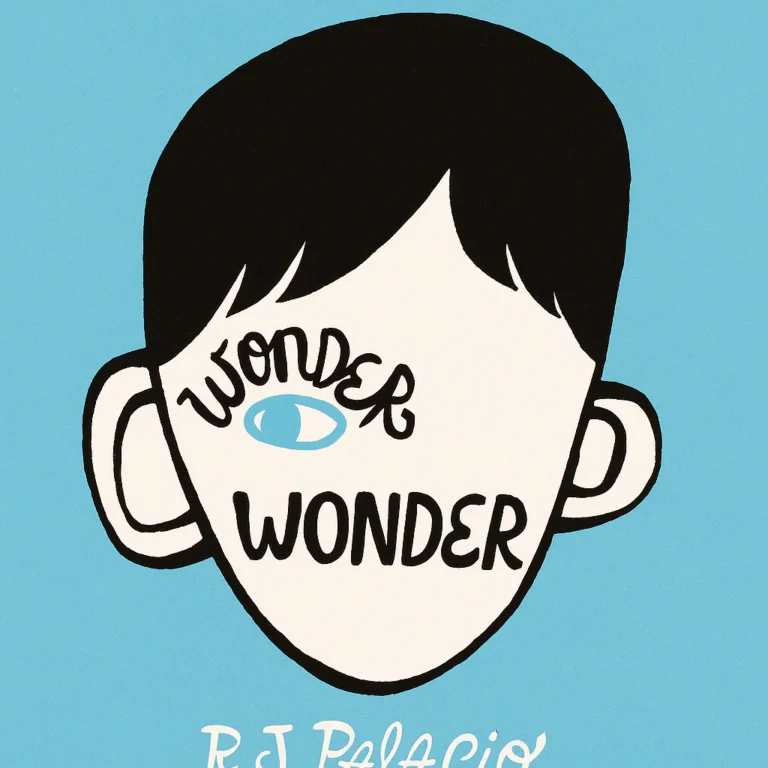
Support our educational content for free when you purchase through links on our site. Learn more
Wonder Book Summary by Chapter: 8 Parts 📚

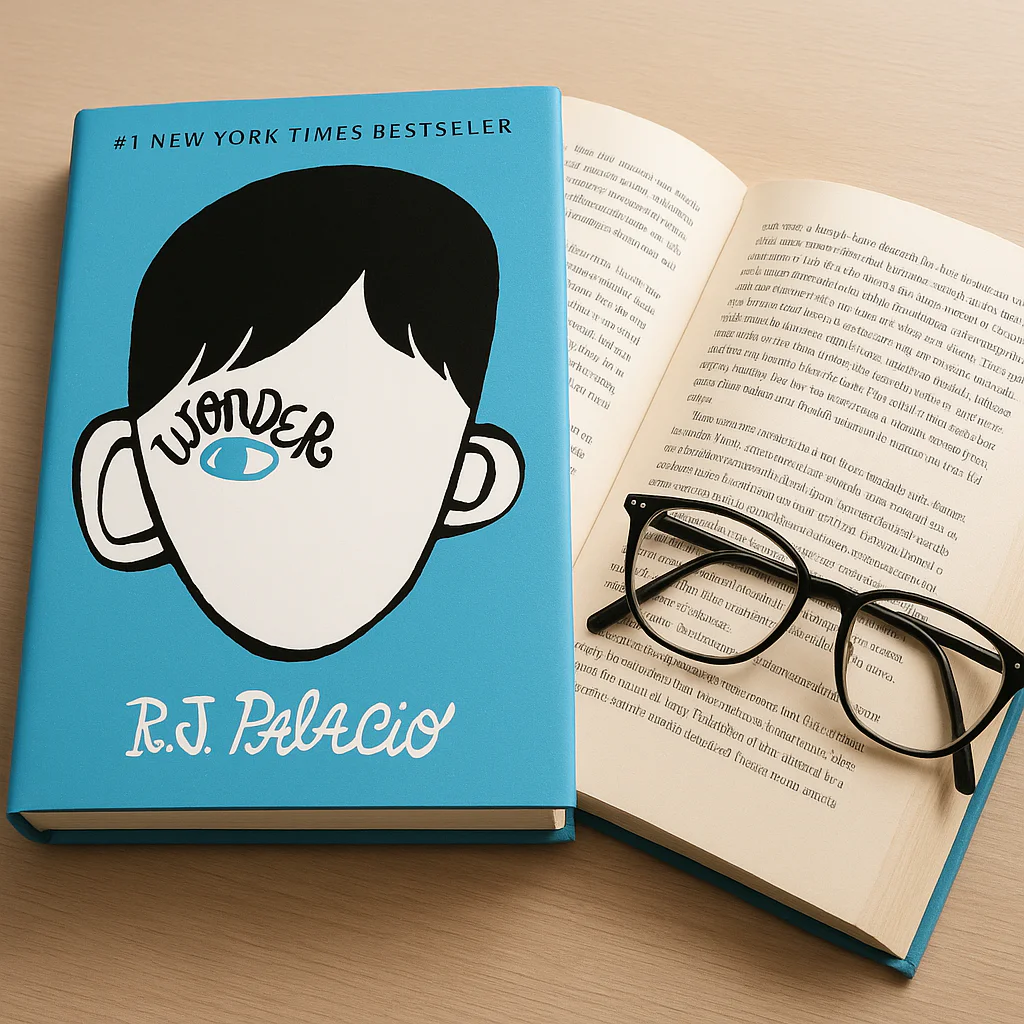

This Wonder book summary by chapter follows all eight parts of R. J. Palacio’s novel, tracing Augie Pullman’s first year at Beecher Prep through the eyes of Augie, his sister Via, and the friends who change his school life. Quick clarification: Wonder has eight major parts, each made up of shorter chapters, so this guide summarizes the story part by part rather than pretending it has only eight chapters.
Auggie wants what most kids want: friends, a place to belong, and the freedom to be more than the first thing people notice about him. Palacio makes that journey especially moving by letting us see the same school year from several perspectives—because sometimes understanding someone takes more than one seat at the lunch table.
Key Takeaways
- The novel is organized into eight parts, with multiple shorter chapters in each.
- Auggie’s first year at Beecher Prep brings friendship, bullying, family challenges, and meaningful change.
- Multiple narrators—including Via, Jack, Summer, Justin, and Miranda—add depth to the story.
- Kindness is a choice, not a slogan: the book explores accountability, empathy, and repairing trust.
- The ending celebrates Augie’s growing sense of belonging, while leaving readers with questions about how a community learns to include others.
Table of Contents
- ⚡️ Quick Tips and Facts
- 📚 Wonder: Background, Publication, and Story Setup
- Who wrote Wonder?
- Is Wonder based on a true story?
- The setting and premise
- 👥 Meet the Main Characters
- August “Auggie” Pullman
- Via, Jack, Summer, Justin, and the other key characters
- 📖 Wonder Summary by Chapter: All 8 Parts
- 1. August: Augie’s first days at Beecher Prep
- 2. Via: Family, friendship, and a new school year
- 3. Summer: Choosing kindness and friendship
- 4. Jack: Friendship, loyalty, and a painful mistake
- 5. Justin: A new perspective on the Pullman family
- 6. August: Halloween, reconciliation, and change
- 7. Miranda: The story behind Via’s old friend
- 8. August: The school trip, the award, and a new beginning
- 🌱 Major Themes in Wonder
- Kindness, empathy, and choosing how to treat others
- Appearance, identity, and belonging
- Family, friendship, and growing up
- 🔍 Important Symbols, Motifs, and Quotations
- The astronaut helmet and Augie’s face
- The precepts and the power of kindness
- 💡 What Wonder Teaches Readers
- 🎬 Wonder Book vs. Movie
- What the film changes or leaves out
- Which version should you read or watch first?
- ✅ Who Should Read Wonder?
- 📝 Book Club and Classroom Discussion Questions
- Conclusion
- 🔗 Recommended Links
- ❓ FAQ
- How many chapters and parts are in Wonder?
- What is the main message of Wonder?
- Why is the novel told from multiple points of view?
- What happens to Augie at the end of Wonder?
- What book comes after Wonder?
- 📚 Reference Links
⚡️ Quick Tips and Facts
For the complete overview, see our Wonder book summary—then use this chapter-by-chapter guide to follow Augie’s school year, the people who shape it, and the moments when kindness gets tested.
Spoiler alert: This guide covers the full plot, including the nature-reserve trip and the ending.
| Quick fact | Details |
|---|---|
| Book |
Wonder by R. J. Palacio |
| First published | 2012 |
| Main character | August “Auggie” Pullman, a fifth grader with a rare craniofacial condition |
| Main setting | Beecher Prep, a fictional school in New York City |
| Structure | Eight parts, told through several characters’ perspectives |
| Central question | How do we treat someone who looks different—and what does that choice reveal about us? |
| Best known precept | “When given the choice between being right or being kind, choose kind.” |
| Adaptation | The 2017 film Wonder stars Jacob Tremblay as Augie. |
A reading tip: Palacio’s novel is divided into eight parts, not eight chapters. Each part contains shorter chapters, so summaries that call each part a “chapter” can make the structure sound simpler than it is. The chapter-by-chapter guide below follows the novel’s eight major parts and summarizes their key developments.
Wonder is commonly shelved as children’s or middle-grade fiction, but its questions about belonging, family attention, disability, and empathy resonate well beyond the school library. It also sits naturally beside our book summaries and book reviews.
📚 Wonder: Background, Publication, and Story Setup
Who wrote Wonder?
R. J. Palacio wrote Wonder, her debut novel, after an encounter involving a child with a facial difference prompted her to think about how people respond to visible difference. She has described that moment as a starting point for the story, while making clear that Augie’s life and experiences are fictional. Palacio discusses the novel and its inspiration in her author biography and publisher materials.
The result isn’t a medical case study. Palacio focuses on the social and emotional experience of being seen, misunderstood, befriended, excluded, and eventually accepted.
Is Wonder based on a true story?
No. Augie and his family are fictional. The novel’s emotional questions, however, connect to real experiences of people with facial differences and disabilities: being stared at, having strangers ask intrusive questions, or being treated as a diagnosis before being treated as a person.
The Children’s Craniofacial Association offers resources for families affected by craniofacial conditions. Its work helps provide context without suggesting that one fictional character represents every person’s experience. Auggie’s story is one story, not a universal template.
The setting and premise
Auggie Pullman is ten when he begins fifth grade at Beecher Prep. Because he has undergone many surgeries, he has been homescholed until then. His face draws attention before he even reaches the classroom; he must decide how to handle that attention while learning the ordinary routines of school.
The novel’s opening, “Ordinary,” immediately sets up its central contrast. Augie wants ordinary things—friends, jokes, games, family time—but other people often treat his appearance as the most important thing about him. As the Scribd close-reading notes observe, the opening establishes this tension between wanting an ordinary life and being treated as visibly different.
That contrast becomes the engine of the book. But Augie isn’t the only one who feels unseen. Palacio gradually hands the microphone to people around him, and the story changes shape each time.
👥 Meet the Main Characters
August “Auggie” Pullman
Auggie is funny, observant, science-minded, and fond of Star Wars. He understands that other people react to his face, but that doesn’t mean he wants every conversation to revolve around it.
His voice is one of the novel’s strengths: he can be candid about cruelty without being defined by it. Auggie is neither a saint nor a lesson in human kindness. He’s a kid trying to get through school.
Via, Jack, Summer, Justin, and the other key characters
| Character | Role in the story | Why they matter |
|---|---|---|
| Via Pullman | Augie’s older sister | Loves Augie but wants room for her own feelings and life. |
| Isabel and Nate Pullman | Augie and Via’s parents | Support their children while struggling to balance attention and worry. |
| Jack Will | Augie’s classmate and early friend | Makes a serious mistake, then has to choose whether to repair the friendship. |
| Summer Dawson | Augie’s classmate | Choses to sit with Augie when social pressure makes that choice uncomfortable. |
| Julian Albans | Augie’s classmate and antagonist | Uses jokes and social influence to target Augie. |
| Charlotte Cody | One of the students who shows Augie around | Tries to be helpful, though she’s cautious about social risk. |
| Justin | Via’s boyfriend | Offers an outside view of the Pullman family and Via’s place within it. |
| Miranda | Via’s former friend | Her section explains her estrangement from Via and her feelings about Augie. |
| Mr. Tushman | Beecher Prep’s principal | Helps introduce Augie to school and responds to student conduct. |
The changing cast matters because Palacio doesn’t ask us to judge the school only through Augie’s eyes. We see a kind act from one viewpoint, a painful misunderstanding from another, and a family dynamic that looks different depending on who is telling it.
📖 Wonder Summary by Chapter: All 8 Parts
A note on organization: The headings below summarize the novel’s eight named parts, not every short chapter within them. This approach keeps the plot readable while respecting the book’s actual structure.
1. August: Augie’s first days at Beecher Prep
Auggie introduces himself and explains why school will be new: years of surgeries and recovery kept him from attending in person. His parents arrange visits to Beecher Prep, where Principal Mr. Tushman introduces him to students Charlotte, Julian, and Jack Will.
At first, Augie is nervous but willing to try. The school tour offers a glimpse of possibility: perhaps classmates will see him as a person rather than a spectacle. Yet Julian soon makes unkind comments, while Jack’s friendliness gives Augie reason to hope.
What this part establishes: Augie’s humor, his family’s support, the awkwardness of first impressions, and the gap between a school’s stated values and the behavior of individual students.
2. Via: Family, friendship, and a new school year
Via describes how Augie’s medical needs have shaped the family. She loves her brother, but she has often been expected to be the understanding one—the child who can wait while her parents focus on Augie’s care.
At high school, Via is also trying to find her footing. She faces changing friendships and the challenge of being known on her own terms. Her perspective complicates the idea that the Pullmans’ difficulties belong only to Augie. A loving family can still leave a sibling feeling overlooked.
3. Summer: Choosing kindness and friendship
Summer meets Augie at lunch and chooses to sit with him, even though she knows other students may notice. She doesn’t make a grand speech or treat him like a charity project. She simply starts a conversation and keeps coming back.
Their friendship gives Augie a welcome break from being judged by his appearance. Summer’s section also shows that kindness can be practical: sometimes it looks like choosing a seat and staying there.
4. Jack: Friendship, loyalty, and a painful mistake
Jack’s perspective reveals that his friendship with Augie is real—but not effortless. At school, Julian pressures Jack to fit in, and Jack makes a cruel remark about Augie when he thinks Augie can’t hear him.
Auggie does hear. The betrayal lands hard because Jack had been one of the first classmates to make school feel possible. Jack later realizes the damage he has caused and must decide whether popularity matters more than friendship.
This part makes a useful distinction: a person can do something hurtful without being irredemable, but an apology alone doesn’t erase the hurt. Trust needs action to rebuild it.
5. Justin: A new perspective on the Pullman family
Justin, Via’s boyfriend, offers an outsider’s view of the Pullman household and the relationship between the siblings. His narration also shows how Via’s private worries can be hard to spot from the outside.
At school, Via is trying to manage her changing friendship with Miranda while establishing a life of her own. Justin’s section makes the family’s emotional balancing act clearer: Augie needs support, but Via also needs to be seen as more than “Auggie’s sister.”
6. August: Halloween, reconciliation, and change
Halloween is a turning point. Augie loves the chance to wear a costume that lets him move through school without being immediately recognized. Then he overhears Jack saying something cruel about him to Julian.
Auggie withdraws from Jack and returns home hurt and angry. Via encourages him to go back to school, while the Pullman family works through its own tensions. Eventually, Jack understands why Augie has shut him out and apologizes. Their friendship begins to mend, though the betrayal remains part of their history.
Why this moment matters: Halloween temporarily hides Augie’s face, but it doesn’t hide what people say when they think he isn’t listening.
7. Miranda: The story behind Via’s old friend
Miranda’s section explains her distance from Via and offers a different view of their friendship. She has been dealing with problems of her own and feels drawn to the Pullman family’s warmth, especially to the way Augie is loved and protected.
At school, Miranda gets the opportunity to act on that affection. Her choices help reconnect her with Via and show that growing up sometimes means admitting you miss someone—and taking a risk to make things right.
8. August: The school trip, the award, and a new beginning
During a school trip to a nature reserve, Augie and Jack encounter older students who threaten and mistreat them. The situation becomes frightening, but classmates who previously joined in or stood aside step up to defend them. The danger doesn’t magically erase earlier bullying, yet the experience changes how the group sees one another.
By the end of the school year, Augie has built friendships and found a stronger place in the school community. At the graduation ceremony, he receives the Henry Ward Beecher medal for his courage and character. The award is a public sign of change, but the deeper victory is quieter: Augie has been recognized as a classmate and friend, not merely as the boy who looks different.
The first YouTube video embedded above emphasizes the reserve trip as the moment when classmates form what it calls a “circle of safety.” That’s a helpful shorthand for the group’s shift, although the novel’s achievement is less tidy: people change through choices, conflict, and repair—not by flipping a kindness switch.
🌱 Major Themes in Wonder
Kindness, empathy, and choosing how to treat others
The novel’s best-known precept says, “When given the choice between being right or being kind, choose kind.” Kindness here isn’t just good manners. It means noticing another person’s dignity, resisting cruelty that earns laughs, and taking responsibility when you cause harm.
The book is optimistic, but not simplistic. Julian’s behavior has consequences. Jack’s friendship is damaged. Augie’s hurt is real. Palacio suggests that people can grow, while still showing that growth requires accountability and time.
Appearance, identity, and belonging
Auggie’s facial difference affects how strangers and classmates react to him. The novel repeatedly asks readers to notice the difference between seeing someone and reducing that person to appearance.
That question connects to wider conversations about disability and representation. The National Center on Disability and Journalism’s disability language style guide is a useful reference for respectful language. It reminds us that wording matters—and that people’s preferred descriptions can vary.
Family, friendship, and growing up
Auggie’s family is loving, but love doesn’t mean everyone’s needs are automatically balanced. Via’s storyline gives sibling feelings room to breathe, while Jack, Summer, and Miranda each face a version of the same growing-up question: Will I do what feels safe, or what I believe is right?
Friendship in Wonder isn’t perfect. It includes awkwardness, silence, mistakes, and repair. That makes the good moments feel earned rather than handed out like gold stars.
🔍 Important Symbols, Motifs, and Quotations
The astronaut helmet and Augie’s face
Auggie’s astronaut helmet is tied to childhood imagination and a wish to move through the world without being stared at. It represents both playful escape and the burden of unwanted attention.
The point isn’t that Augie should want to hide. Rather, the helmet helps us understand how exhausting it can be when other people treat looking at someone as more important than meeting them.
The precepts and the power of kindness
Mr. Browne’s precepts—short principles for students to consider—give the novel a recurring language for choice and character. The most famous is the instruction to choose kindness when given the choice between being right and being kind.
A useful way to read the precepts is as questions, not slogans:
- What does kindness require when a friend is being mocked?
- Is staying silent neutral, or does silence help the cruelty continue?
- What should someone do after they’ve caused harm?
- Can a school’s culture change when individual students act differently?
Those questions keep the message grounded in the story’s actual conflicts.
💡 What Wonder Teaches Readers
Wonder encourages readers to:
- Look beyond first impressions. A person’s appearance is not a complete introduction.
- Think about the audience for a joke. Laughing along can make a target feel even more alone.
- Recognize that siblings have separate needs. Loving someone and wanting attention can coexist.
- Make room for repair. Apologies matter most when followed by changed behavior.
- Choose kindness without demanding a reward. Summer’s decision matters because she makes it freely.
Readers may also want to hold one caution alongside the inspiration: Augie’s fictional experience shouldn’t be treated as a substitute for listening to real people with facial differences. The Children’s Craniofacial Association provides resources that can broaden the conversation beyond the novel.
🎬 Wonder Book vs. Movie
What the film changes or leaves out
The 2017 film adaptation, directed by Stephen Chbosky, stars Jacob Tremblay as Augie, Julia Roberts as Isabel, and Owen Wilson as Nate. Like the novel, it uses multiple perspectives, though it reshapes and compresses parts of the story for a feature-film runtime. You can find the film’s official information through Lionsgate.
| Feature | Book | Film |
|---|---|---|
| Narration | Shifts among several characters’ written sections | Uses visual storytelling and selected voice-over perspectives |
| Access to thoughts | Gives substantial space to interior feelings and reflection | Communicates emotion through performance, dialogue, and scene selection |
| Pacing | Spreads events across a school year with room for side stories | Condenses events to fit a single film |
| Best for | Understanding each narrator’s inner life | Seeing performances, setting, and family dynamics played out onscreen |
The book gives more breathing room to the supporting narrators. The film makes the central family and school conflicts immediate and visible. Neither version replaces the other; they do different jobs.
Which version should you read or watch first?
We recommend reading the book first if you want the fullest sense of Via’s, Jack’s, and Miranda’s perspectives. Then watch the film and notice how acting and visual detail carry feelings that the novel puts into words.
For more adaptations, explore our book-to-film coverage. You can also look through our classic literature collection for stories that use multiple viewpoints and moral choices in similarly engaging ways.
✅ Who Should Read Wonder?
Wonder is a strong choice for:
- Middle-grade readers exploring school, friendship, bullying, and belonging.
- Families and educators looking for a story that opens discussion about empathy and inclusion.
- Book clubs interested in multiple narrators and complicated family dynamics.
- Adult readers who enjoy accessible fiction with emotional weight.
A possible drawback: some readers may find the story’s hopeful resolution too neat, and the novel’s emphasis on kindness can invite discussion about the difference between individual friendliness and broader inclusion. That’s not a reason to skip the book; it’s a reason to talk about it.
📝 Book Club and Classroom Discussion Questions
- How does Augie define “ordinary,” and does that definition change?
- Which narrator changed your understanding of the Pullman family most? Why?
- What makes Summer’s kindness different from treating Augie as a project?
- How should Jack be held accountable after the Halloween incident?
- Why might Via feel overlooked even though her family loves her?
- Does the nature-reserve trip change the school community, or reveal changes that were already beginning?
- What does the Beecher medal recognize: bravery, character, community impact, or something else?
- Which precept feels easiest to agree with—and hardest to follow?
A good discussion ground rule: Talk about what characters do and how the story presents them; avoid asking classmates to speak for an entire group of people based on appearance, disability, or personal experience.