Support our educational content for free when you purchase through links on our site. Learn more
What Is the Critical Summary of Animal Farm? 🐷 Unveiled (2026)

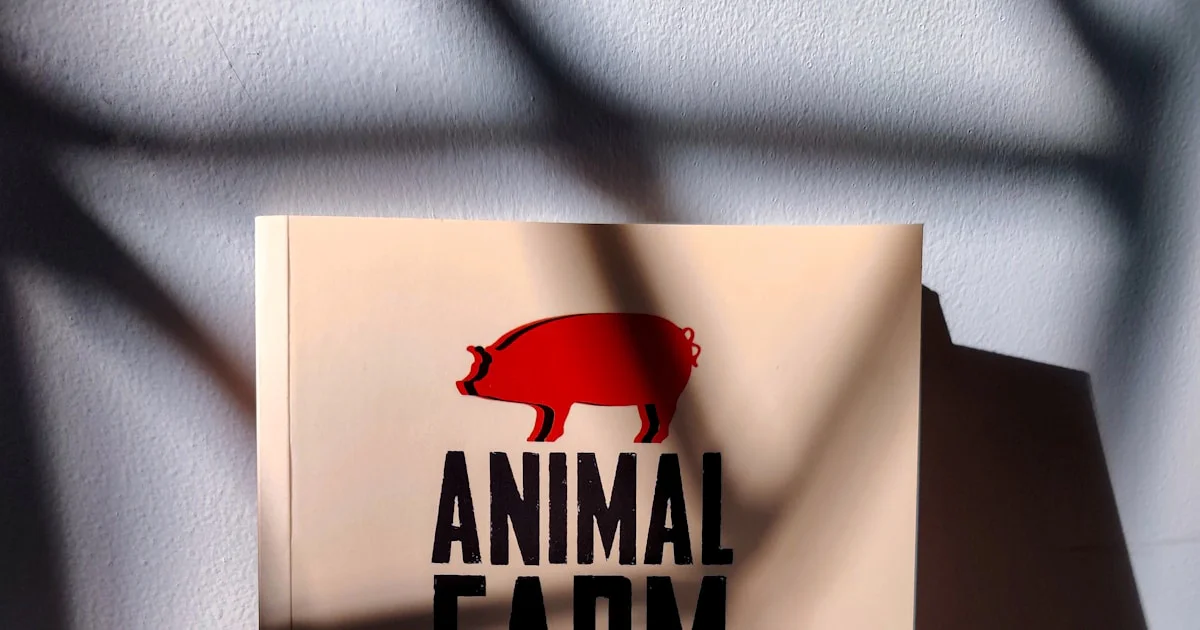

Ever wondered why a simple story about farm animals has become one of the most powerful political critiques in modern literature? Animal Farm isn’t just a children’s tale with talking pigs—it’s George Orwell’s razor-sharp allegory exposing how revolutions can betray their own ideals and how power corrupts absolutely. But what exactly is the critical summary behind this barnyard fable? And why does it still resonate so strongly in today’s world of misinformation and political spin?
In this article, we’ll unravel the layers of Orwell’s masterpiece—from the historical backdrop that shaped it, to the symbolic characters that mirror real-world figures, and the chilling themes that warn us about propaganda, manipulation, and lost freedoms. Plus, we’ll dive into why Animal Farm remains a must-read classic despite decades of censorship and controversy. Stick around to discover the 7 key themes that make this novella a timeless lesson in vigilance and truth.
Key Takeaways
- Animal Farm is a political allegory critiquing the Russian Revolution and Stalinist totalitarianism through a deceptively simple farm story.
- The famous phrase “All animals are equal, but some animals are more equal than others” encapsulates the betrayal of revolutionary ideals.
- Orwell’s characters represent historical figures and social groups, making the novella a vivid study of power dynamics.
- The book explores themes like propaganda, revisionist history, class stratification, and the abuse of power—all alarmingly relevant today.
- Despite initial censorship, Animal Farm remains a staple in education for teaching critical thinking about politics and society.
- Understanding the subtle details—like the disappearing milk or the changing commandments—unlocks deeper insights beyond summary guides.
- The story serves as a warning against blind loyalty and the manipulation of language, urging readers to stay alert to how truth can be twisted.
Ready to see how Orwell’s barnyard drama still holds a mirror up to our world? Let’s dig in!
Welcome to Book Summary Review™! We are your resident team of bibliophiles, coffee addicts, and literary detectives. Today, we’re diving into a barnyard that’s a lot less “Old MacDonald” and a lot more “Totalitarian Nightmare.”
Whether you’re a student trying to ace an essay or a curious reader wondering why everyone keeps quoting a pig named Napoleon, we’ve got you covered. We’ve spent years dissecting George Orwell’s prose so you don’t have to. Grab a drink, and let’s get into the nitty-gritty of Manor Farm.
⚡️ Quick Tips and Facts
Before we peel back the layers of Orwell’s masterpiece, here’s the “too long; didn’t read” version to get your brain moving:
- Author: George Orwell (the pen name of Eric Arthur Blair).
- Publication Date: August 17, 1945.
- Genre: Political Satire / Allegorical Novella / Dystopian Fiction.
- The “Big Idea”: It’s a biting critique of the Russian Revolution of 1917 and the subsequent Stalinist era of the Soviet Union.
- Key Symbolism: Every animal represents a specific figure or group in history.
- ✅ Pro Tip: Don’t just read it as a story about talking pigs. Read it as a warning about how power corrupts and how language can be manipulated.
- ❌ Common Misconception: It’s not a “pro-capitalist” book; Orwell was a democratic socialist who hated totalitarianism in all its forms.
- Fun Fact: Orwell had a nightmare of a time getting this published because, at the time, the UK was allies with the Soviet Union against Nazi Germany!
Table of Contents
- ⚡️ Quick Tips and Facts
- 🐷 The Genesis of a Masterpiece: George Orwell’s Battle with Censorship
- 🚜 The “SparkNotes” Version: A High-Level Plot Breakdown
- 🔍 The Critical Summary: Why “All Animals Are Equal” is a Lie
- 🎭 Decoding the Barnyard: 10 Key Characters and Their Real-World Counterparts
- ⚖️ The 7 Pillars of Orwellian Satire: Themes You Can’t Ignore
- 📱 Why Animal Farm Still Matters in the Age of Social Media
- 🚫 The Controversial Legacy: From Banned Book to Classroom Staple
- 🧠 Beyond the Basics: Why You Don’t Need CliffsNotes for a Deep Dive
- 🎓 Expert Analysis: Is it a Fable, a Satire, or a Warning?
- 💡 Conclusion
- 🔗 Recommended Links
- ❓ FAQ
- 📚 Reference Links
🐷 The Genesis of a Masterpiece: George Orwell’s Battle with Censorship
We often think of Animal Farm as an instant classic, but back in 1944, it was a “hot potato” that no one wanted to touch. George Orwell wrote the book during World War II, a time when the British public held Joseph Stalin in high regard as a “heroic ally” against Hitler.
Orwell, having seen the betrayals of the Spanish Civil War firsthand, knew better. He saw the Stalinist regime for what it was: a brutal dictatorship. He wanted to destroy the “Soviet myth” in a way that anyone—even a child—could understand. However, four publishers rejected it. One publisher even consulted the Ministry of Information, who advised against it to avoid offending the Soviets.
Eventually, Secker & Warburg took the risk, and the rest is literary history. It’s a reminder that the most important truths are often the hardest to tell.
🚜 The “SparkNotes” Version: A High-Level Plot Breakdown
If you’re in a rush, here is the “cliff notes” trajectory of the story:
- The Dream: Old Major (a prize boar) tells the animals about a dream where humans are gone and animals rule themselves in equality.
- The Rebellion: The hungry animals kick out the neglectful farmer, Mr. Jones. Manor Farm becomes Animal Farm.
- The Seven Commandments: The pigs (the smartest animals) write down the rules of “Animalism” on the barn wall.
- The Power Struggle: Two pigs, Snowball (the visionary) and Napoleon (the brute), fight for control. Napoleon uses a pack of trained dogs to chase Snowball away.
- The Corruption: Napoleon takes total control. He blames every failure on the “traitor” Snowball. The pigs start living in the farmhouse, drinking alcohol, and wearing clothes.
- The Final Betrayal: The commandments are secretly changed. The most famous one becomes: “All animals are equal, but some animals are more equal than others.”
- The Full Circle: The pigs invite human farmers over for dinner. The other animals look through the window and realize they can no longer tell the difference between the pigs and the humans.
🔍 The Critical Summary: Why “All Animals Are Equal” is a Lie
A critical summary of Animal Farm isn’t just about the plot; it’s about the mechanics of tyranny. At its heart, the book is a study of how a revolution intended to create equality can devolve into a nightmare even worse than the one it replaced.
We see the pigs use Squealer (their propaganda machine) to rewrite history. When the animals remember things differently, Squealer convinces them their memories are faulty. This is the birth of “gaslighting” in literature. The critical takeaway is that education and memory are the only defenses against tyranny. Once the animals lose their ability to question the pigs’ narrative, they lose their freedom.
🎭 Decoding the Barnyard: 10 Key Characters and Their Real-World Counterparts
To truly understand the critical summary, you have to know who’s who. Orwell didn’t pick these animals at random!
- Old Major: A mix of Karl Marx (the father of Communism) and Vladimir Lenin. He provides the ideology but dies before the revolution.
- Napoleon: Joseph Stalin. He isn’t a good speaker, but he’s great at consolidating power through fear.
- Snowball: Leon Trotsky. He’s intellectual and truly wants to improve the farm, but he’s ousted by Napoleon’s brawn.
- Squealer: The Soviet Press/Propaganda. He can turn “black into white.”
- Boxer: The Proletariat (Working Class). His mottos “I will work harder” and “Napoleon is always right” are heartbreaking because his loyalty is rewarded with a trip to the knacker (glue factory).
- Benjamin: The Cynical Intellectuals. He knows what’s happening but feels that “life will go on as it has always gone on—that is, badly.”
- Mollie: The Bourgeoisie (Middle Class). She misses her sugar cubes and ribbons and eventually flees the revolution.
- Moses the Raven: Organized Religion. He talks about “Sugarcandy Mountain” to keep the animals hopeful so they don’t complain about their current misery.
- Mr. Jones: Tsar Nicholas II. The incompetent ruler whose neglect sparks the fire.
- The Dogs: The NKVD (Stalin’s Secret Police). They don’t think; they just bite.
⚖️ The 7 Pillars of Orwellian Satire: Themes You Can’t Ignore
When we analyze Animal Farm, we look at these recurring themes that make the book a “critical” masterpiece:
- The Corruption of Language: How “All animals are equal” becomes “Some are more equal.”
- The Danger of a Naive Working Class: Boxer’s blind faith leads to his death.
- The Abuse of Power: Power doesn’t just corrupt; it attracts the corruptible.
- Revisionist History: If you control the past, you control the future.
- Class Stratification: Even in a “classless” society, the pigs create a new elite.
- The Scapegoat: Using Snowball as a “boogeyman” to distract from internal failures.
- The Loss of Individual Identity: The sheep bleating “Four legs good, two legs bad” represents the death of independent thought.
📱 Why Animal Farm Still Matters in the Age of Social Media
You might think a book about 1940s Russia is outdated. We disagree.
In an era of “fake news,” echo chambers, and “cancel culture,” Animal Farm is more relevant than ever. Squealer’s tactics are essentially the 1945 version of a viral misinformation campaign. When we see people blindly following “influencers” or political leaders without questioning the facts, we are seeing the “sheep” of Animal Farm in real-time.
🚫 The Controversial Legacy: From Banned Book to Classroom Staple
Animal Farm has been banned in various countries for decades.
- In the USSR: It was banned for being anti-communist.
- In some Western schools: It was occasionally challenged for being “pro-communist” (ironically by people who didn’t understand the satire).
- In the UAE: It was banned in schools for “images that go against Islamic values” (specifically, the talking pigs).
Despite this, it remains one of the most assigned books in the English-speaking world because it teaches critical thinking like no other text.
🧠 Beyond the Basics: Why You Don’t Need CliffsNotes for a Deep Dive
While sites like CliffsNotes or SparkNotes are great for a quick refresher, they often miss the emotional weight of the story.
We recommend reading the book with an eye for the small details. Notice how the milk and apples disappear in Chapter 3. That is the “Original Sin” of the pigs. It’s a small theft that paves the way for the grand theft of the animals’ lives. If you can spot the small injustices, you’ll understand the big ones.
🎓 Expert Analysis: Is it a Fable, a Satire, or a Warning?
The answer is: All three.
- It’s a fable because it uses animals to teach a moral lesson.
- It’s a satire because it uses humor and irony to expose human folly.
- It’s a warning because it tells us that the price of liberty is eternal vigilance.
Orwell’s genius was in making a complex political tragedy as easy to read as a bedtime story.
💡 Conclusion

Animal Farm is a mirror. When we look at the pigs, we are forced to look at the darker parts of human nature—the greed, the vanity, and the desire for control. But we also see ourselves in Boxer (the hard worker) and Benjamin (the skeptic).
The critical summary of Animal Farm is simple: Power is a dangerous drug, and language is its delivery system. If we don’t protect the truth, we end up looking through the window at the pigs and the humans, unable to tell them apart.
🔗 Recommended Links
- Buy Animal Farm on Amazon
- The Orwell Foundation – Official Biography
- British Library – Orwell’s Animal Farm
❓ FAQ

Q: Is Animal Farm a true story? A: No, it is a fictional allegory. However, it is based very closely on the real events of the Russian Revolution and the rise of Joseph Stalin.
Q: Why did the pigs turn into humans at the end? A: They didn’t literally turn into humans. Orwell uses this metaphor to show that the pigs had become exactly like the oppressive human masters they originally overthrew.
Q: Who is the hero of Animal Farm? A: There isn’t really a traditional “hero.” Snowball is the most sympathetic leader, and Boxer is the most “noble” character, but both are defeated. The “hero” is meant to be the reader’s own awareness.
Q: What does the windmill represent? A: The windmill represents the industrialization of the Soviet Union (the Five-Year Plans) and how the leaders promised that technology would make life easier, only to use it to further exploit the workers.
📚 Reference Links
- Orwell, G. (1945). Animal Farm. Secker & Warburg.
- Hitchens, C. (2002). Why Orwell Matters. Basic Books.
- BBC History – The Russian Revolution
⚡️ Quick Tips and Facts
Before we peel back the layers of Orwell’s masterpiece, here’s the “too long; didn’t read” version to get your brain moving:
- Author: George Orwell (the pen name of Eric Arthur Blair).
- Publication Date: August 17, 1945.
- Genre: Political Satire / Allegorical Novella / Dystopian Fiction.
- The “Big Idea”: It’s a biting critique of the Russian Revolution of 1917 and the subsequent Stalinist era of the Soviet Union.
- Key Symbolism: Every animal represents a specific figure or group in history.
- ✅ Pro Tip: Don’t just read it as a story about talking pigs. Read it as a warning about how power corrupts and how language can be manipulated.
- ❌ Common Misconception: It’s not a “pro-capitalist” book; Orwell was a democratic socialist who hated totalitarianism in all its forms.
- Fun Fact: Orwell had a nightmare of a time getting this published because, at the time, the UK was allies with the Soviet Union against Nazi Germany!
🐷 The Genesis of a Masterpiece: George Orwell’s Battle with Censorship
We often think of Animal Farm as an instant classic, but back in 1944, it was a “hot potato” that no one wanted to touch. George Orwell wrote the book during World War II, a time when the British public held Joseph Stalin in high regard as a “heroic ally” against Hitler.
Orwell, having seen the betrayals of the Spanish Civil War firsthand, knew better. He saw the Stalinist regime for what it was: a brutal dictatorship. He wanted to destroy the “Soviet myth” in a way that anyone—even a child—could understand. However, four publishers rejected it. One publisher even consulted the Ministry of Information, who advised against it to avoid offending the Soviets.
Eventually, Secker & Warburg took the risk, and the rest is literary history. It’s a reminder that the most important truths are often the hardest to tell.
🚜 The “SparkNotes” Version: A High-Level Plot Breakdown
If you’re in a rush, here is the “cliff notes” trajectory of the story:
- The Dream: Old Major (a prize boar) tells the animals about a dream where humans are gone and animals rule themselves in equality.
- The Rebellion: The hungry animals kick out the neglectful farmer, Mr. Jones. Manor Farm becomes Animal Farm.
- The Seven Commandments: The pigs (the smartest animals) write down the rules of “Animalism” on the barn wall.
- The Power Struggle: Two pigs, Snowball (the visionary) and Napoleon (the brute), fight for control. Napoleon uses a pack of trained dogs to chase Snowball away.
- The Corruption: Napoleon takes total control. He blames every failure on the “traitor” Snowball. The pigs start living in the farmhouse, drinking alcohol, and wearing clothes.
- The Final Betrayal: The commandments are secretly changed. The most famous one becomes: “All animals are equal, but some animals are more equal than others.”
- The Full Circle: The pigs invite human farmers over for dinner. The other animals look through the window and realize they can no longer tell the difference between the pigs and the humans.
🔍 The Critical Summary: Why “All Animals Are Equal” is a Lie
A critical summary of Animal Farm isn’t just about the plot; it’s about the mechanics of tyranny. At its heart, the book is a study of how a revolution intended to create equality can devolve into a nightmare even worse than the one it replaced.
We see the pigs use Squealer (their propaganda machine) to rewrite history. When the animals remember things differently, Squealer convinces them their memories are faulty. This is the birth of “gaslighting” in literature. The critical takeaway is that education and memory are the only defenses against tyranny. Once the animals lose their ability to question the pigs’ narrative, they lose their freedom.
🎭 Decoding the Barnyard: 10 Key Characters and Their Real-World Counterparts
To truly understand the critical summary, you have to know who’s who. Orwell didn’t pick these animals at random!
- Old Major: A mix of Karl Marx (the father of Communism) and Vladimir Lenin. He provides the ideology but dies before the revolution.
- Napoleon: Joseph Stalin. He isn’t a good speaker, but he’s great at consolidating power through fear.
- Snowball: Leon Trotsky. He’s intellectual and truly wants to improve the farm, but he’s ousted by Napoleon’s brawn.
- Squealer: The Soviet Press/Propaganda. He can turn “black into white.”
- Boxer: The Proletariat (Working Class). His mottos “I will work harder” and “Napoleon is always right” are heartbreaking because his loyalty is rewarded with a trip to the knacker (glue factory).
- Benjamin: The Cynical Intellectuals. He knows what’s happening but feels that “life will go on as it has always gone on—that is, badly.”
- Mollie: The Bourgeoisie (Middle Class). She misses her sugar cubes and ribbons and eventually flees the revolution.
- Moses the Raven: Organized Religion. He talks about “Sugarcandy Mountain” to keep the animals hopeful so they don’t complain about their current misery.
- Mr. Jones: Tsar Nicholas II. The incompetent ruler whose neglect sparks the fire.
- The Dogs: The NKVD (Stalin’s Secret Police). They don’t think; they just bite.
⚖️ The 7 Pillars of Orwellian Satire: Themes You Can’t Ignore
When we analyze Animal Farm, we look at these recurring themes that make the book a “critical” masterpiece:
- The Corruption of Language: How “All animals are equal” becomes “Some are more equal.”
- The Danger of a Naive Working Class: Boxer’s blind faith leads to his death.
- The Abuse of Power: Power doesn’t just corrupt; it attracts the corruptible.
- Revisionist History: If you control the past, you control the future.
- Class Stratification: Even in a “classless” society, the pigs create a new elite.
- The Scapegoat: Using Snowball as a “boogeyman” to distract from internal failures.
- The Loss of Individual Identity: The sheep bleating “Four legs good, two legs bad” represents the death of independent thought.
📱 Why Animal Farm Still Matters in the Age of Social Media
You might think a book about 1940s Russia is outdated. We disagree.
In an era of “fake news,” echo chambers, and “cancel culture,” Animal Farm is more relevant than ever. Squealer’s tactics are essentially the 1945 version of a viral misinformation campaign. When we see people blindly following “influencers” or political leaders without questioning the facts, we are seeing the “sheep” of Animal Farm in real-time.
🚫 The Controversial Legacy: From Banned Book to Classroom Staple
Animal Farm has been banned in various countries for decades.
- In the USSR: It was banned for being anti-communist.
- In some Western schools: It was occasionally challenged for being “pro-communist” (ironically by people who didn’t understand the satire).
- In the UAE: It was banned in schools for “images that go against Islamic values” (specifically, the talking pigs).
Despite this, it remains one of the most assigned books in the English-speaking world because it teaches critical thinking like no other text.
🧠 Beyond the Basics: Why You Don’t Need CliffsNotes for a Deep Dive
While sites like CliffsNotes or SparkNotes are great for a quick refresher, they often miss the emotional weight of the story.
We recommend reading the book with an eye for the small details. Notice how the milk and apples disappear in Chapter 3. That is the “Original Sin” of the pigs. It’s a small theft that paves the way for the grand theft of the animals’ lives. If you can spot the small injustices, you’ll understand the big ones.
🎓 Expert Analysis: Is it a Fable, a Satire, or a Warning?
The answer is: All three.
- It’s a fable because it uses animals to teach a moral lesson.
- It’s a satire because it uses humor and irony to expose human folly.
- It’s a warning because it tells us that the price of liberty is eternal vigilance.
Orwell’s genius was in making a complex political tragedy as easy to read as a bedtime story.
💡 Conclusion

So, what’s the final word on Animal Farm? This novella is much more than a simple story about barnyard animals—it’s a powerful, timeless allegory that exposes the dark side of political revolutions and the corrupting nature of power. Orwell’s sharp wit and clear prose make complex political ideas accessible, yet the emotional impact lingers long after you close the book.
Positives ✅
- Brilliant allegory that simplifies complex historical events.
- Memorable characters that symbolize real-world figures and ideas.
- Timeless themes about power, propaganda, and betrayal.
- Engaging and concise—perfect for readers of all ages.
- Highly relevant to modern political and social contexts.
Negatives ❌
- Some readers may find the ending bleak and cynical.
- The allegorical nature might require some historical background for full appreciation.
- The simplicity of the narrative can mask the depth of its political critique, potentially leading to misunderstandings.
Our Recommendation
If you haven’t read Animal Farm yet, do yourself a favor and dive in. Whether you’re a student, a history buff, or just someone who loves a good story with layers, this book will challenge your thinking and sharpen your awareness of how power can twist truth. It’s a must-read classic that remains as relevant today as it was in 1945.
Remember those unresolved questions about how Orwell’s personal experiences shaped the story or why the pigs’ transformation is so chilling? Now you know: Orwell’s firsthand encounters with political betrayal and propaganda inspired this cautionary tale, and the pigs’ final metamorphosis symbolizes the ultimate betrayal of revolutionary ideals.
🔗 Recommended Links
Ready to get your hands on Animal Farm? Here are some reliable places to find it:
-
Animal Farm by George Orwell:
Amazon | Walmart | Audible | Secker & Warburg Official Website -
Related Political Satire Classics:
❓ FAQ

What are the main themes in Animal Farm?
Animal Farm explores themes such as the corruption of ideals, the abuse of power, the manipulation of language and propaganda, and the cyclical nature of tyranny. Orwell shows how revolutionary dreams of equality can be betrayed by those who seek power for themselves, emphasizing the importance of vigilance and critical thinking.
How does Animal Farm reflect political satire?
Orwell uses satire by turning a serious political event—the Russian Revolution—into a fable with talking animals. This exaggeration and irony expose the absurdity and cruelty of totalitarian regimes. The pigs’ gradual adoption of human traits mocks the hypocrisy of leaders who claim to serve the people but become indistinguishable from oppressors.
What is the significance of the characters in Animal Farm?
Each character symbolizes a real-world figure or social group:
- Napoleon: Joseph Stalin, the dictator.
- Snowball: Leon Trotsky, the exiled rival.
- Old Major: Karl Marx/Lenin, the ideological founder.
- Boxer: The loyal working class.
- Squealer: Propaganda machinery.
- Benjamin: The skeptical intellectual.
These representations help readers understand historical events through relatable personalities.
How does Animal Farm critique totalitarian regimes?
The novella critiques totalitarianism by showing how leaders use fear, propaganda, and revisionist history to control the masses. The pigs manipulate language and rewrite rules to justify their privileges, illustrating how absolute power corrupts absolutely and how revolutions can betray their own principles.
What is the plot overview of Animal Farm?
The story follows animals on Manor Farm who overthrow their human owner to create an egalitarian society. However, the pigs seize power, manipulate the other animals, and become as oppressive as the humans they replaced. The commandments of equality are gradually altered until the famous paradox: “All animals are equal, but some animals are more equal than others.”
How does George Orwell use symbolism in Animal Farm?
Orwell uses animals and farm elements as symbols:
- The farm: Represents the Soviet Union.
- The Seven Commandments: Symbolize political ideology.
- The windmill: Industrialization and false promises.
- The pigs’ transformation: The betrayal of revolutionary ideals.
- The flag with hoof and horn: Parodies the communist hammer and sickle.
This symbolism makes complex political critique accessible.
What is the moral lesson of Animal Farm?
The moral is a warning: Power corrupts, and without vigilance, freedom can be lost. It teaches that revolutions can be betrayed by those who gain power, and that language can be weaponized to deceive and control. Critical thinking and memory are essential defenses against tyranny.
Additional FAQs
Why was Animal Farm initially rejected by publishers?
Orwell’s manuscript was rejected by several publishers because the Soviet Union was an ally during World War II, and criticizing Stalin was politically sensitive. The Ministry of Information even advised against publishing it to avoid offending the Soviets.
How does Animal Farm relate to modern politics?
The book’s themes of propaganda, misinformation, and power abuse resonate today in the context of social media, “fake news,” and authoritarian tendencies worldwide. It reminds us to question narratives and guard against manipulation.
What is the significance of the windmill in the story?
The windmill represents the Soviet Union’s industrialization efforts, particularly Stalin’s Five-Year Plans. It symbolizes grand promises of progress that often come at great cost to the working class.
📚 Reference Links
- Animal Farm – Wikipedia
- CliffsNotes – Animal Farm Summary
- LitCharts – Animal Farm Analysis
- The Orwell Foundation
- British Library – Orwell’s Animal Farm
- Secker & Warburg Official Website
These sources provide authoritative insights into Animal Farm’s history, themes, and impact. For further exploration, check out our Animal Farm book summary and related Classic Literature articles on Book Summary Review™.